


6-min read
— Seminal
Of a work, event, moment, or figure strongly influencing later developments
I love this word. It sounds elegant and speaks to actions that echo louder and louder. Several events this week may prove to be seminal moments in business, maybe history.
I Azure You, We’re a Duopoly
The most valuable firms build things (stuff) and non-things (software). Wearables and cloud are creating massive stakeholder value, and the same monopolies/duopolies seem to be the only firms able to capture tens or hundreds of billions in these categories. Why?
Apple’s ability to grow their services and wearables business speaks to Tim Cook’s management acumen — the firm is now getting nearly half their revenues from something other than the iPhone. Apple’s wearable group (YOY growth of 37%) is now bigger than McDonald’s and would be a Fortune 150 company. If spun, which it should be (if we had an FTC or DOJ), the business would likely be one of the 20 most valuable firms in the world.
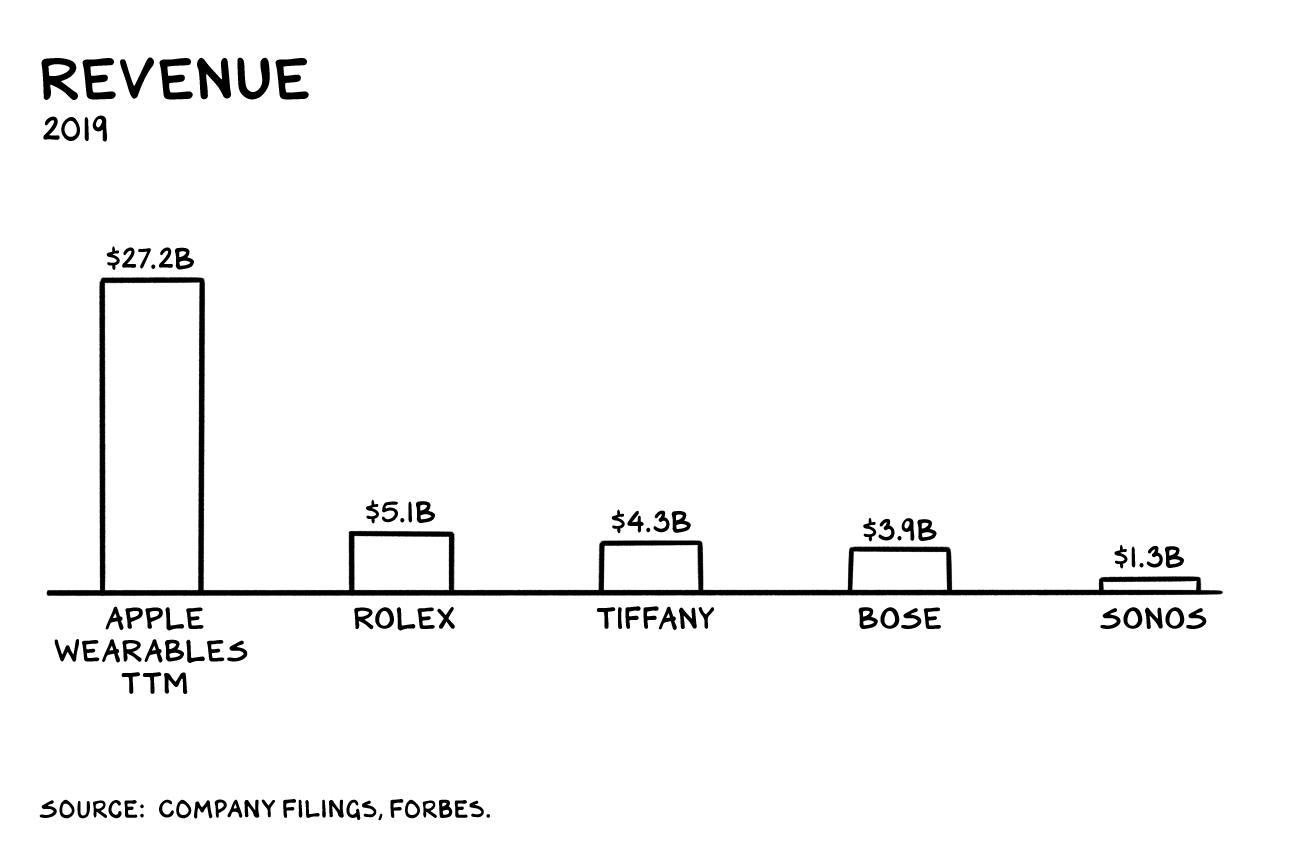
Microsoft’s Azure group grew 62% YOY vs. 34% at AWS, a signal that the original Seattle gangster, Microsoft, is in spitting distance of seizing the lead.
Wearables and cloud are adjacent (not core) businesses for these behemoths. But to forget that their success is a function of the companies’ monopoly power is to fall into a CNBC-induced coma. AirPods Pro and Azure are great products. However, Bose, Cloudflare, and Sonos are also great products — from firms that will either be acquired or begin leaking value to the Four, as they are outgunned.
In the church of our nation’s religion, innovation, we’ve been brainwashed to believe big tech’s cultures are so unique, their leaders so visionary, that only they (the chosen ones) can produce disruptive voice, cloud, and wearable products.
Another theory: It’s big tech’s control of the rails and their ability to outspend competitors, acquire upstart threats, and overwhelm regulators and media that ensure the next great thing/non-thing is theirs.
The US economy will grow by 2.2% this year, representing approximately $472 billion in additional goods and services produced. In the last 12 months, Amazon, Apple, Facebook, Google, and Microsoft have added $1.6 trillion to their market cap combined. Note: Apples to Oranges, but you get the point.
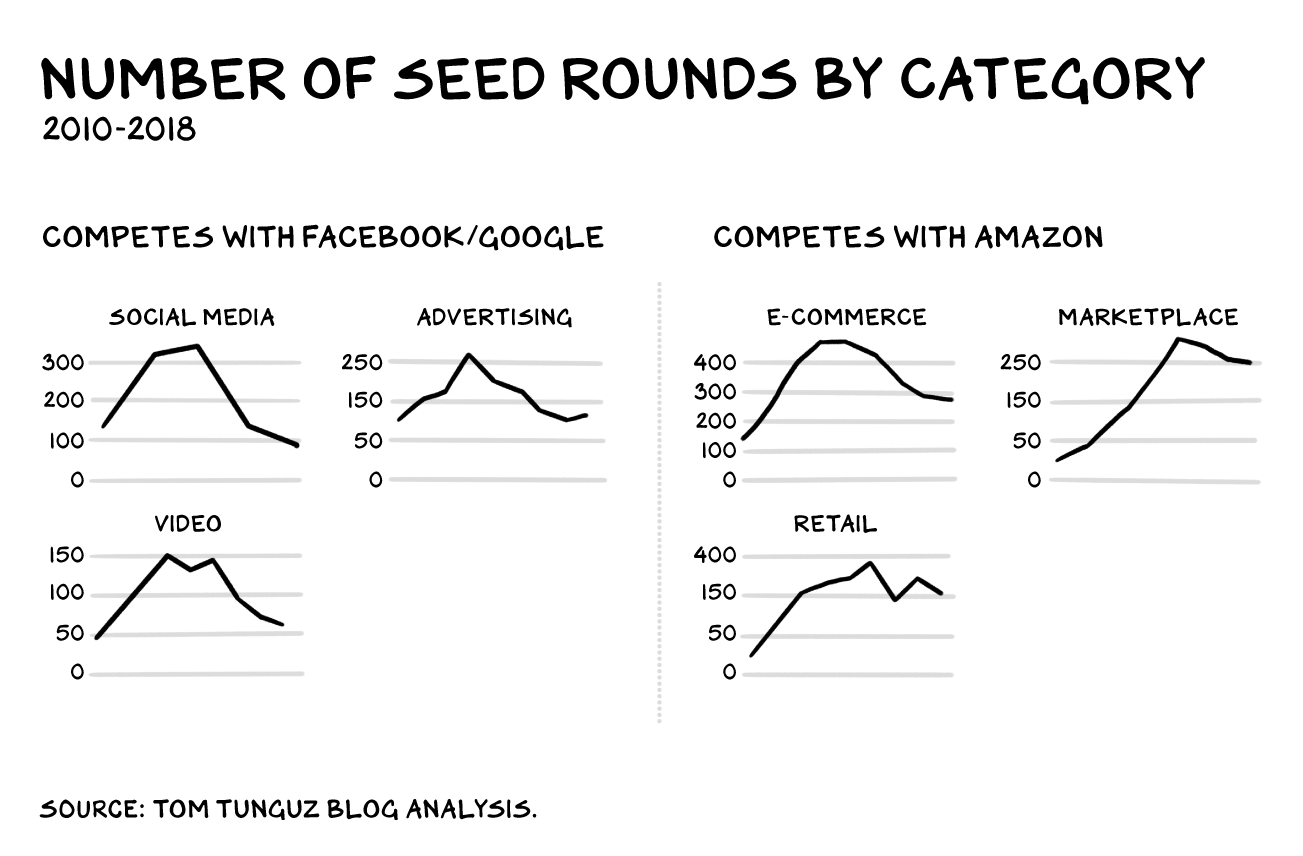
Much of this capture comes at the cost of small and medium-size firms. Small business formation is at a multi-decade low despite the NASDAQ melting up 30% in the last 12 months. The fastest-growing sectors receive scant funding from investors, who know better than to compete with unregulated monopolies.
As the big five breach nearly 20% of the value of the S&P, we risk our economy not only becoming fragile (vs. robust), but a small number of firms coopting government and media. What could go wrong?
Amazon stock was up 13% in after-hours trading, 5 minutes post the release of their quarterly earnings. So, in 300 seconds Amazon added the value of Amgen and Airbus, and Jeff Bezos’s net worth swelled by $12.8 billion, the value of Pinterest.
Bezos will not pay taxes, as he will borrow against his stock, at 1.8%, vs. sell it. The average tax rate on big tech is now 12%. Coincidentally, the Congressional Budget Office this week reported government expenditures of $4.5 trillion and tax revenues of $3.5 trillion … yielding a deficit of $1 trillion. Deficits aren’t necessarily bad, since investments (infrastructure, education, recession stimulus) can spur growth. Each of these is a bet, similar to a CEO deciding where to best allocate capital.
What is our trillion-dollar bet — where are we spending the trillion our kids will be saddled with? Simple: rich people. Lower tax rates on the wealthy and corporations (84% owned by the top 10% income earning households) were supposed to inspire growth and investment. They haven’t.
“The tax cut will pay for itself.” — Steve Mnuchin
If it feels as if there is a connection between idolatry of innovators, monopoly power, tax avoidance, Jeff Bezos being worth more than the GDP of Morocco, and your indebted grandkids … trust your instincts. We. Have. Lost. The. Script.
My Way or the Huawei
Turns out treating your allies like sh*t isn’t a great long-term strategy. The UK decided to stick with Chinese tech darling Huawei despite threats from the Trump administration to reduce the level of intelligence we share. China then threatened the UK with economic retaliation. It appears China’s economy is now a bigger stick than US intelligence or our partnership. Word is Secretary Pompeo responded by asking Boris Johnson to identify Ukraine on a map.
The greatest diminution in military might was achieved via a series of tweets and poor manners that weakened one of history’s seminal alliances (the North Atlantic Treaty). America’s leadership is best described as a 280-character, error-ridden stream of ideological profanities that responsible people would never utter to themselves, not to mention to a person, not to mention to the world.
The likely calculus of our once-steadfast ally? Determining China is a better long-term bet, as it has more regard for its future and its children. GDP growth in China is 6.5%. The deficit to GDP ratio in China is 2.8%, yielding a “rectitude index” of 2.3. US growth is 2.3%, and the deficit/GDP is 5%, a rectitude index score of 0.46. China steals IP from other nations to enrich future generations. America steals from future generations to (further) enrich today’s wealthy. Who are the bad guys?
Auschwitz
Kobe Bryant’s sudden death hit many of us viscerally — an inspiring athlete and devoted father, gone before his time. And just as we’ve been rife with national crises over the last three years, events hit us faster than we’re able to process. Media were fixated on helicopter paths, crowding out coverage of the 75th anniversary of the liberation of Auschwitz by the Russian Army. The ceremony, held at the camp, was especially significant, as it’s likely the last gathering to include heads of state along with survivors. Nothing brings texture to remembrance like the memories of people who endured crimes against humanity themselves.
When I was a preteen, my mother would take me to Temple Isaiah on Pico Boulevard in Los Angeles, and the rabbi would ask “survivors” to stand. Thirty or 40 people would rise. At UCLA, a friend’s father would show his 3-toe foot and tell the story of walking in the snow, barefoot, for weeks after escaping Bergen-Belsen. My first NYC landlord would show me the numbers tattooed on his arm at Auschwitz. It’s difficult for photographs, films, or words to have the same impact as a survivor telling their story. There are few of them left to tell it.

At the commemoration, Ronald Lauder, President of the World Jewish Congress, said that evil’s co-conspirator is apathy, and that the march to tyranny involves the collision of ideology and propaganda. The surge in anti-Semitism around the globe is not a metaphor but a recurrence.
When media and influence are no longer used for reason or truth but sold to the highest bidder, we create platforms that make state TV, radio, and amplified sound in Berlin stadiums seem quaint.
And what does this have to do with big tech? On Wednesday’s earnings call, the unelected leader of the largest disinformation-for-profit firm struck a defiant tone, saying the coming year would be a difficult one, where the company would assert its “principles.” Record fines, a “standing summons” in Canada, and a growing body of research linking social media and teen depression have not chastened Mr. Zuckerberg, but emboldened him.
Facebook’s eager willingness to continue the spread of lies, coupled with a business model built on algorithms that amplify rage, threatens our society. Technology has given a 35-year-old the singular ability to monetize propaganda by antivaxers, climate change sceptics, and Holocaust deniers. To lack the will to reign in Facebook, is apathy that enables tyranny, much less the spread of polio in Pakistan.
Voters electing officials who transfer wealth from future generations to the rich and strain alliances. CEOs who demonstrate little regard for the commonwealth, the spread of hate, teen depression, or the sanctity of our elections. And a government overrun by private power. We mourn for heroes, we long for citizens.
Life is so rich,

P.S. I’ve sold my Facebook stock.