


Three major AI headlines broke last week. First, Apple announced it will use Google’s Gemini to power an upgraded version of Siri. Rumors suggested Apple will pay Google $1 billion per year for access to the model.
Alphabet’s stock rose nearly 3% on the announcement, pushing its market cap past $4 trillion. It is just the fourth company to reach that milestone.
This transaction signals how competitive dynamics in AI are evolving. Google pays Apple roughly $20 billion annually to be the default search engine on iOS. Now Apple is the one paying — but $19 billion less. That gap suggests that despite all the hype around AI, controlling distribution is still key.
OpenAI, Anthropic, Gemini, and xAI all offer excellent models, but all four have to compete for access to users in just two ecosystems owned by Apple and Alphabet.
Then Anthropic introduced Claude Cowork, a consumer-focused version of its coding agent. It can organize files, create expense reports from pictures of receipts, clean up email inboxes, build spreadsheets, and more. Essentially, it completes tasks that interns and entry-level employees usually handle.
Its launch generated 47 million views on X. For context, that’s more views than the most-streamed game in NFL history (32 million).
What’s even more impressive is that this product literally produced itself. According to Anthropic executives, Claude Code, the company’s AI coding tool, wrote Cowork in a week and a half.
Cowork is still in research preview and available only to Claude Max subscribers, Anthropic’s $100/month membership tier.
On Friday of last week, OpenAI announced an $8 per month subscription tier, called ChatGPT Go, and said it would begin testing ads. ChatGPT Go was already available outside of the US and gives users a higher limit on memory, images and uploads. Free and Go subscribers will be subject to the new ads, which will appear under answers and suggest products relevant to user conversations.
Ads will not appear for users under 18 or for certain topics including politics, health and mental health.

ChatGPT still dominates on the surface. It has 5.8 billion monthly visits, compared with Gemini at 1 billion and Claude at 183 million. Eighty percent of US adults have heard of ChatGPT. It’s achieved what Google and Uber did before it: become a verb. You ChatGPT things, you don’t Gemini them.
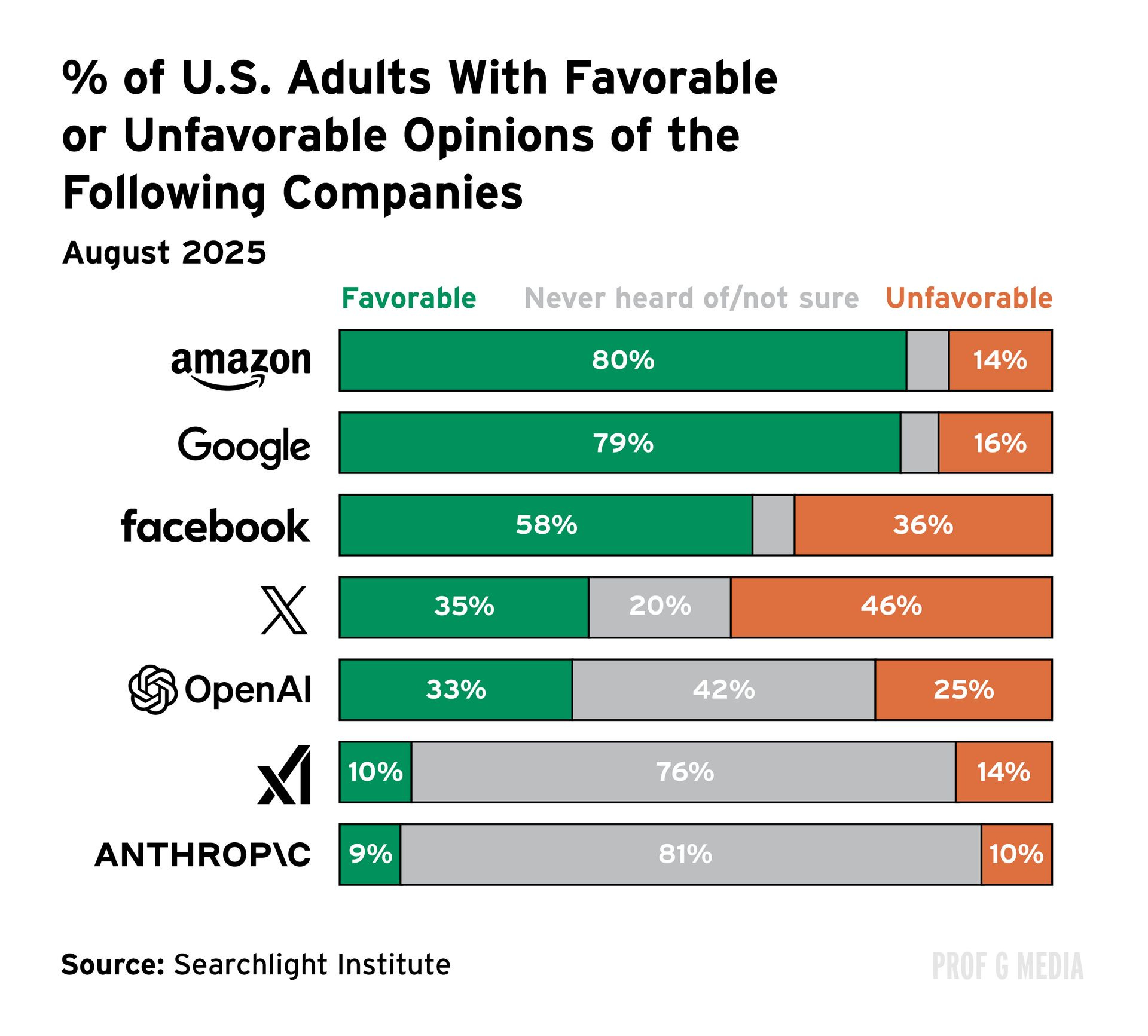
But the tide is turning. In December, traffic to ChatGPT went down while Gemini went up. Apple is now using both Google’s Gemini and ChatGPT, but Apple is paying Google $1 billion per year while ChatGPT gets nothing. This tells you something about OpenAI’s ability to make deals.
Another point that’s interesting about ChatGPT’s user base: A lot of kids are using it for homework. During the summer and over the weekends usage gets cut in half because kids are out of school.
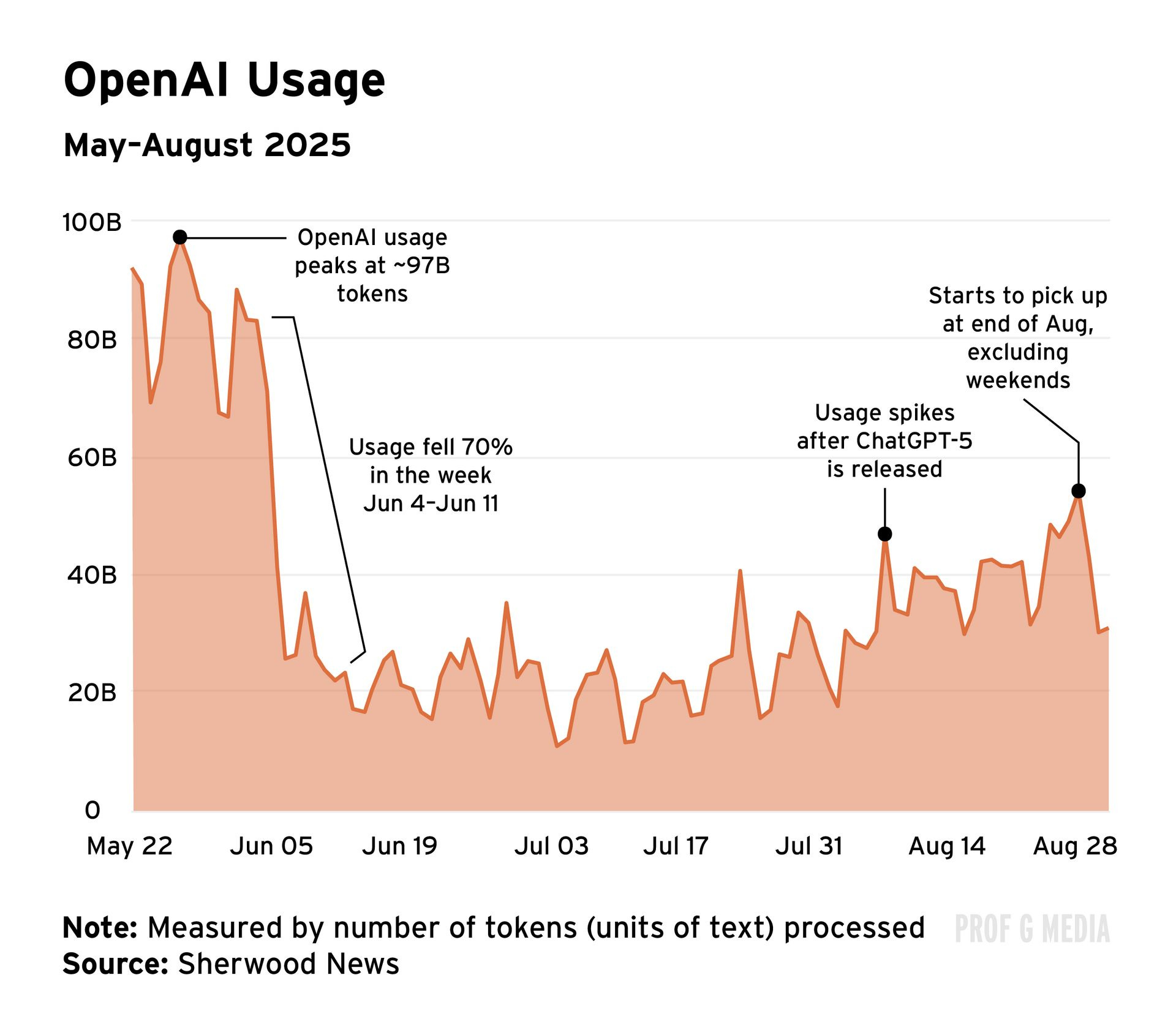
OpenAI’s real problem is enterprise. 80% of Anthropic’s revenue comes from enterprise customers. For ChatGPT, it’s 30%. OpenAI has 32x more users than Anthropic but generates less than 2x as much revenue. Everyone’s using ChatGPT, but only 5% of users pay for it. What happens when they ramp up monetization? What price are consumers actually willing to pay?