




2
Cat owners in Sweden are legally required to check on their pets at least twice per day.

What does war with Iran mean for markets?
How did turning down the Pentagon make Anthropic more valuable?
Newsletter Exclusive: A clear guide to what’s happening in private credit

How Are the Markets Pricing the Conflict With Iran?
The U.S. and Israel launched military strikes on Iran on February 28. The attacks killed Iran’s Supreme Leader, Ayatollah Ali Khamenei, and several high-ranking military officials and damaged government and defense sites. President Trump said the campaign could intensify and last for weeks, while Iran has indicated it is not willing to negotiate with the U.S.
On Sunday, Iran’s Assembly of Experts named Mojtaba Khamenei, 56-year-old son of the former supreme leader, as Iran’s new supreme leader. A mid-ranking cleric with close ties to the Islamic Revolutionary Guard Corps, Mojtaba had long been viewed as a potential successor and is expected to continue his father’s hardline regime. Trump, who said Washington should have a say in the selection, warned the new leader won’t “last long” without U.S. approval.
Iran has retaliated harder than expected. Iranian forces launched more than 500 ballistic missiles and 2,000 drones at the UAE, Jordan, Kuwait, Bahrain, Qatar, Saudi Arabia, and Iraq. Preliminary figures show 1,332 dead in Iran, at least 77 in Lebanon, and 11 in Israel. Seven U.S. servicemembers have been killed.
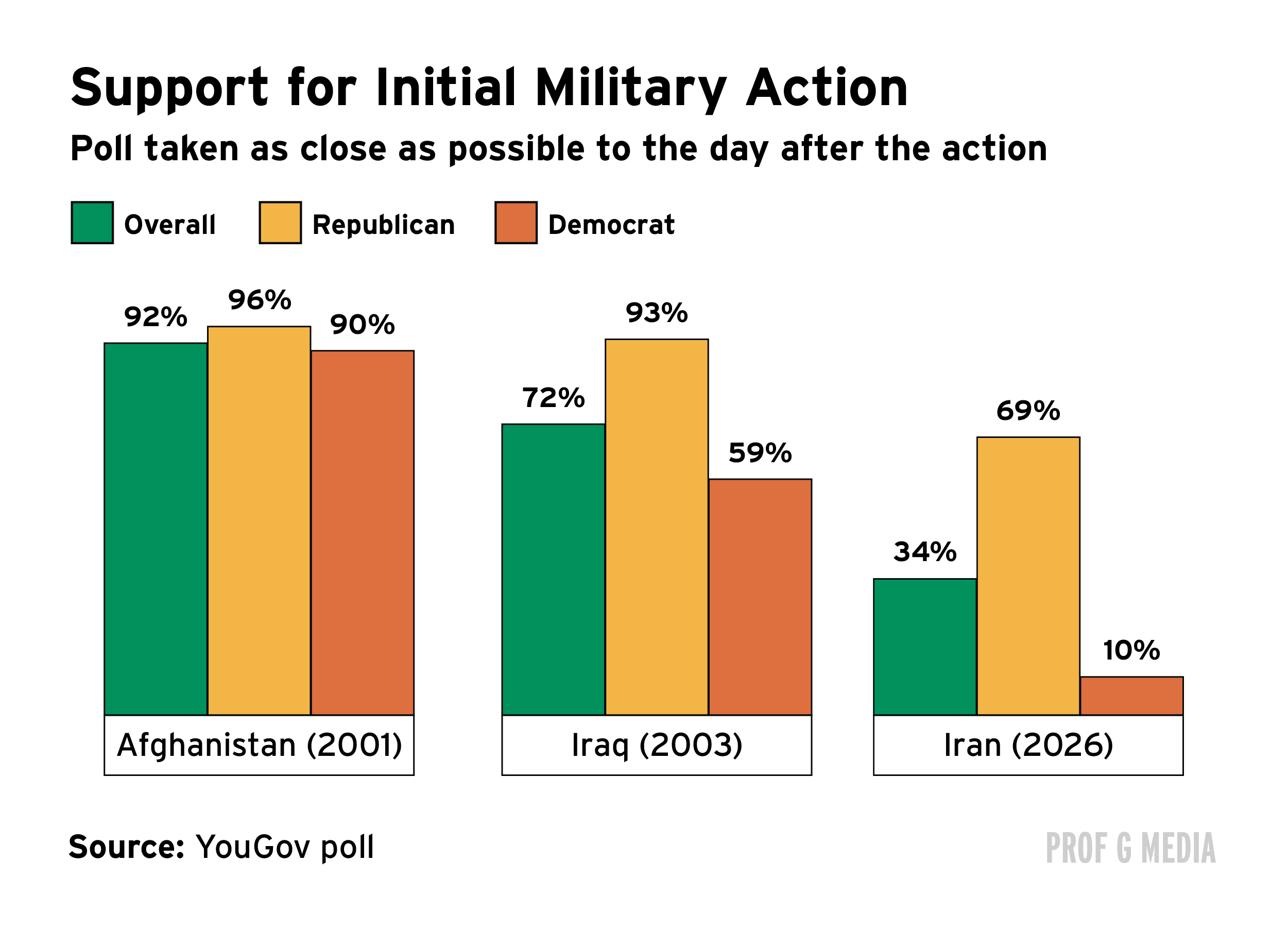
President Trump campaigned as the “President of Peace.” Polls show most Americans wish he’d lived up to that title.
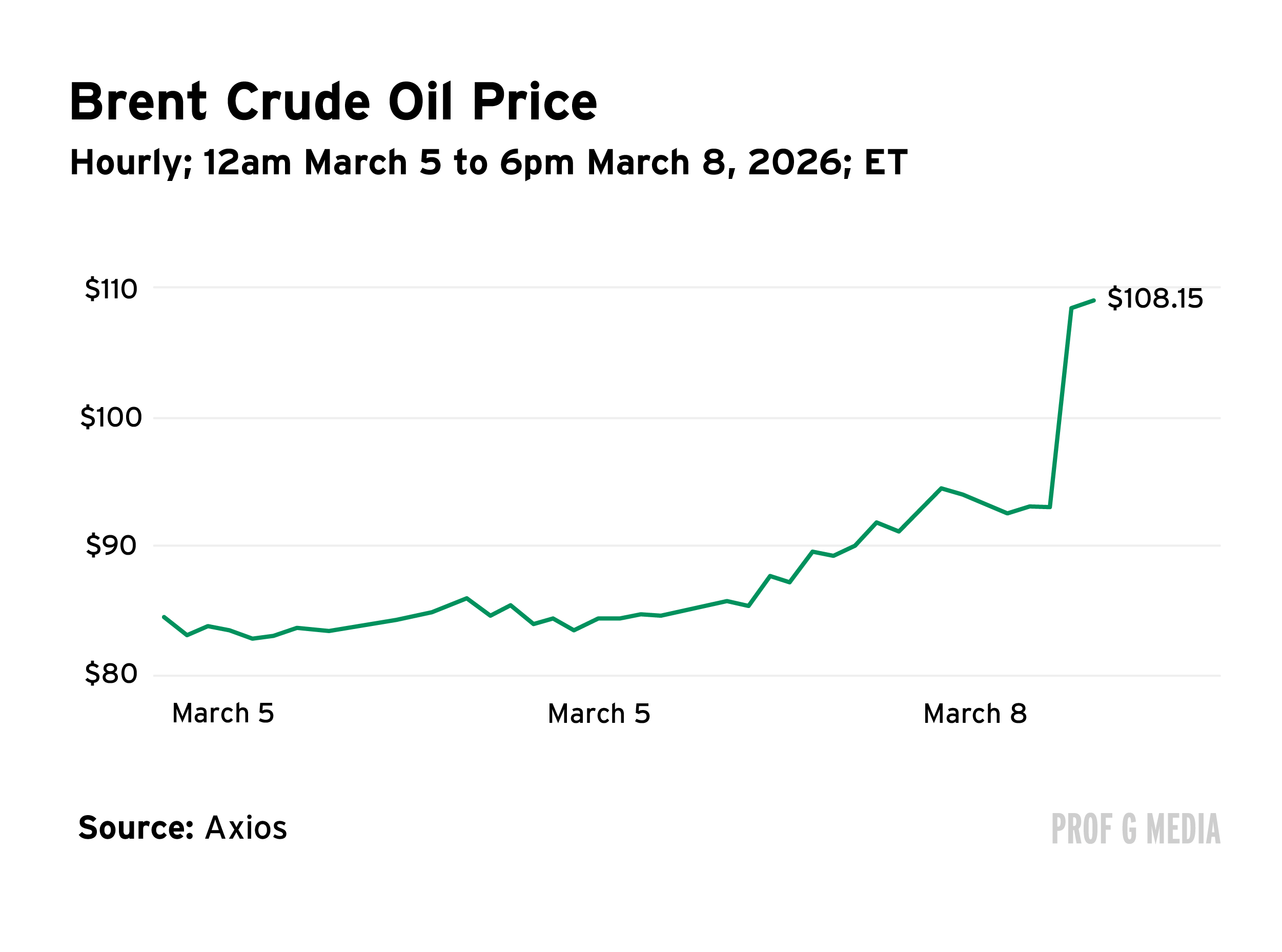
U.S. equity markets’ response has been relatively muted — the S&P is down 1.5% since the strikes began. However, in the week after the attacks, oil prices spiked almost 12%, spurred a rally in the dollar, and raised inflation expectations, pushing the yield on 10-year Treasurys up 20 basis points last week.
At the open of trading Sunday evening, oil surged past $100 a barrel. President Trump posted on Truth Social that an increase in short-term oil prices is a “very small price to pay” for destroying Iran’s nuclear threat.

The market thinks this is an interruption, not a war. Travel stocks, cruise lines, and luxury stocks have been hit hard, but the markets are not pricing in a long-term conflict.
Markets strip out emotion and tell you the truth. The truth right now is that this conflict hurts certain sectors short term, but the world will return to normalcy. My prediction: A year from now, oil is lower than when this started. If Iran’s nuclear capability and launch infrastructure are truly neutered, the Middle East is actually safer. We could see an economic boom in Iran. There will be a Four Seasons in Tehran, and private equity will start pouring in.

Three-quarters of conflicts since World War II ended with stocks in the green a year later, so the market’s reaction to this makes sense on paper.
What strikes me is investors’ conviction that this doesn’t change much. Steve Eisman, the investor who predicted the 2008 crash, told me this doesn’t change his investment strategy by a single dollar. I’m hearing that everywhere. No one is willing to contend with the downside scenarios.
What if Iran is destabilized even further? What if the nation devolves into something even worse? That is not an unlikely scenario because it is exactly what we’ve seen in most of the regime changes throughout history.
Oil has already passed $100 a barrel. Liquid natural gas prices in Europe increased 70% last week. What does that do to inflation at home and abroad? What if there are cyberattacks on U.S. infrastructure? What if 90 million Iranians flee and trigger a refugee crisis? These aren’t fringe scenarios. Polymarket was pricing a nuclear event this year at 24% before they pulled the market entirely.
Trump built his political brand on saying Iraq and Afghanistan were mistakes. He hasn’t proved this is different. And the incoherence on objectives isn’t a messaging problem. It’s a strategy problem: They don’t know what the plan is. Donald Rumsfeld, the former U.S. Secretary of Defense, said Iraq wouldn’t last six months. It lasted eight years and cost $3 trillion. We’ve seen this before, but the markets haven’t priced in any of it.


A Turning Point in the Anthropic-OpenAI Race
Anthropic’s Super Bowl ad seemed like the startup’s breakout moment. The ad went viral, racking up 5 million views on X in under 48 hours. But last week, Anthropic’s ad was superseded by a much more consequential event.
Anthropic rejected a $200 million Pentagon contract because it would not allow Claude to be used for surveillance of U.S. citizens or autonomous military strikes. After several back and forth exchanges with U.S. Secretary of Defense Pete Hegseth, the Pentagon designated Anthropic as a supply chain risk to national security and announced that U.S. military contractors must not do business with the company.
Hours after Anthropic rejected the Pentagon contract, OpenAI picked it up. A day later, U.S. uninstalls of ChatGPT surged 295%, and Claude climbed to No. 1 in the App Store.
Taking a stand against the Trump administration has triggered a wave of support — and big bump in revenue — for Anthropic. The company’s annual recurring revenue (ARR) surged to $19 billion, up from $14 billion just a few weeks ago.

For a year, I’ve been waiting for a CEO to stand up to Trump. I said it was a huge commercial opportunity. I thought it was going to be Nike, but the hero we’ve been waiting for was Dario Amodei.
He’s the first CEO who said no. Last I checked, being an American and being incorporated in America means we have to operate by rule of law, but we’re also protected by rule of law, meaning we get to make decisions about who we work with.
What’s so interesting about this is how badly Sam Altman is fumbling the ball from a PR and communications perspective. A year ago, 9% of Americans said they disliked Sam Altman. Today, that number is 20%. If you think about all the things that he’s gotten wrong: his response to that Super Bowl ad, his very awkward Senate hearings, his very awkward interview on Jimmy Fallon where he tried to present as this fun, likable, relatable guy. But then I think the worst moment we’ve seen from him happened a couple of weeks ago, when he compared training an AI model to raising a human.
What do we do about the fact that the leaders and the builders of the technology of tomorrow appear to have a fundamental misunderstanding of the point of life, of the point of why we’re all here, what existence and humanity is actually all about. I mean, what does that mean for us?


What is Private Credit?
You’ve probably seen some alarming headlines about a crisis brewing in private credit. In recent weeks, investors have tried to pull their money out of private credit funds including Blue Owl and Blackstone, raising questions about how these vehicles work, and what happens when people head for the exits all at once.
It also raises a more basic question: What exactly is private credit anyway? Prof G Markets exists to inform, entertain, and educate — so in that spirit, this week’s exclusive is a simple guide: private credit for dummies nonfinance bros.
What is private credit?
When you think of a company taking out a loan, you probably picture the loan (credit) coming from a bank like JP Morgan, Bank of America, Wells Fargo, etc. That’s what happens most of the time.
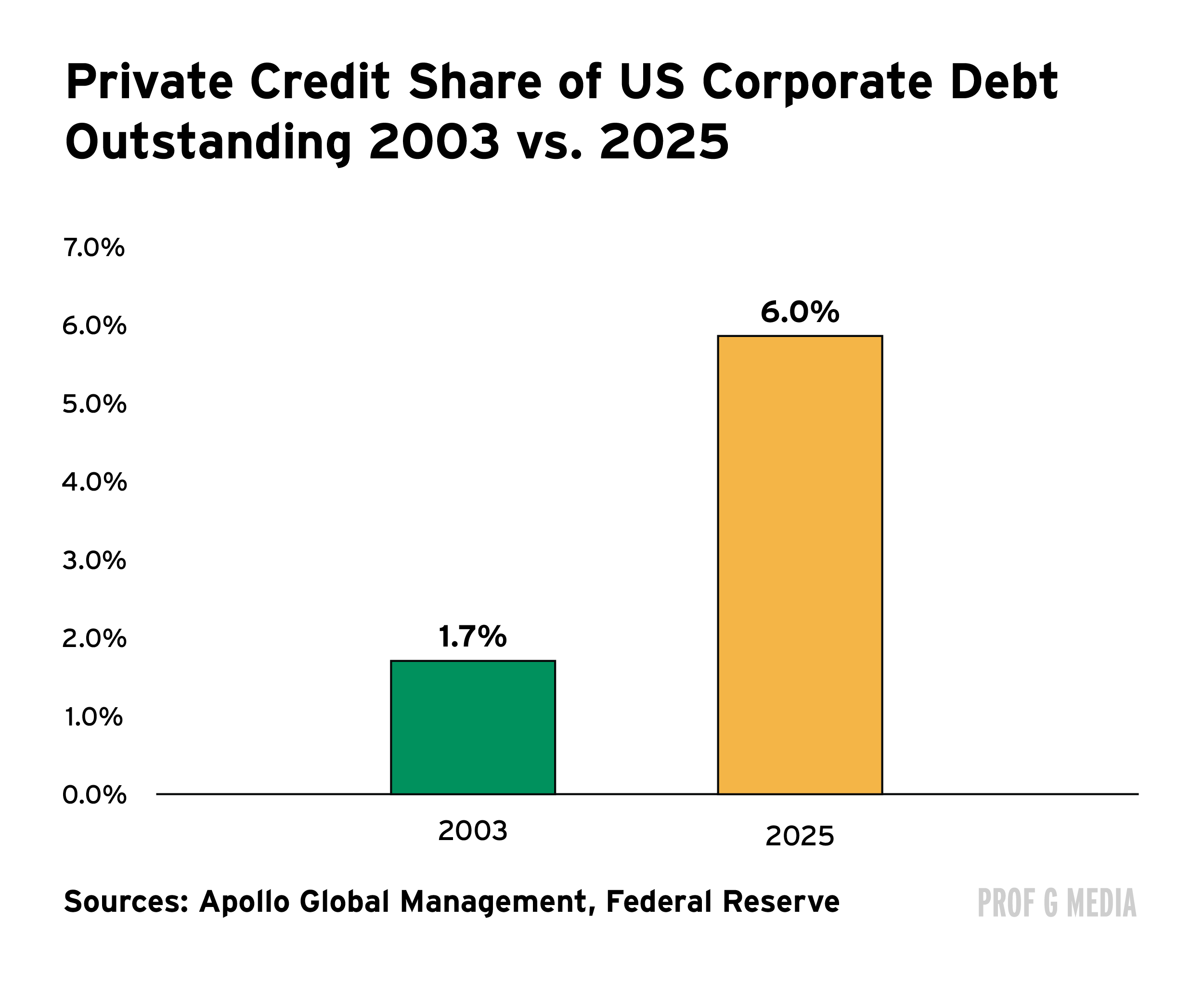
But in some cases, if companies want faster, more customized loans, they can turn to private credit. Private credit refers to tailored, often higher‑interest loans that specialist investment firms — like Ares Management, Blackstone, Apollo Global Management, and Blue Owl Capital — make directly to companies, instead of those companies borrowing from a traditional bank. It’s a fast‑growing but still relatively small segment of the corporate debt market.
When did this party start?
The modern private credit market expanded in the wake of the Great Recession of 2008. In response to the crisis, regulators raised capital and risk management requirements on big banks, making it harder for them to lend money to less-established borrowers. This created an opportunity in the market for less-regulated lenders.

In 2007, private credit funds had $108 billion in assets under management (AUM) globally. This year, AUM is expected to exceed $2 trillion.
A Quick Guide to Credit Lingo
Direct lending: a loan made directly to a company by a private fund
Floating-rate loan: a loan where the interest rate changes over time (usually every month or quarter) based on a benchmark rate. Payments go up when rates rise and down when they fall. Most private credit loans have floating rates.
Covenant: rule in the loan agreement that the borrower has to follow — like limits on taking on more debt or requirements to keep certain financial metrics in a healthy range.
Business development company (BDC): private credit fund for retail investors: They operate like closed-end mutual funds (meaning that unlike mutual funds, they don’t accept new capital after they’re formed) and are often publicly traded.
Dry powder: uninvested capital committed by investors to private credit funds
Principal: the original sum of money borrowed by a company or investor, excluding interest and fees
Yield to maturity (YTM): the annualized rate of return an investor is expected to earn if a bond is bought at its current price and held until its final due date.
The ecosystem
The private credit ecosystem has three main players: the private credit funds (like Carlyle, KKR, Apollo, etc.), the limited partners (those who invest in the private credit funds), and the businesses (who take out the private credit loans).

Private credit funds

Historically, most private credit borrowers have been small to mid-sized companies, ranging from $3 million to $100 million in EBITDA. But as private credit funds have attracted more capital from institutional and high-net-worth investors, they’ve started to underwrite bigger and bigger loans. This increased lending capacity has helped fuel the growth of private companies; before, if a large firm needed to raise a ton of money, it would go public. Now, it can turn to the private credit markets.
Private credit has also become a popular source of funding for big public companies that want flexible terms and to diversify their sources of financing.
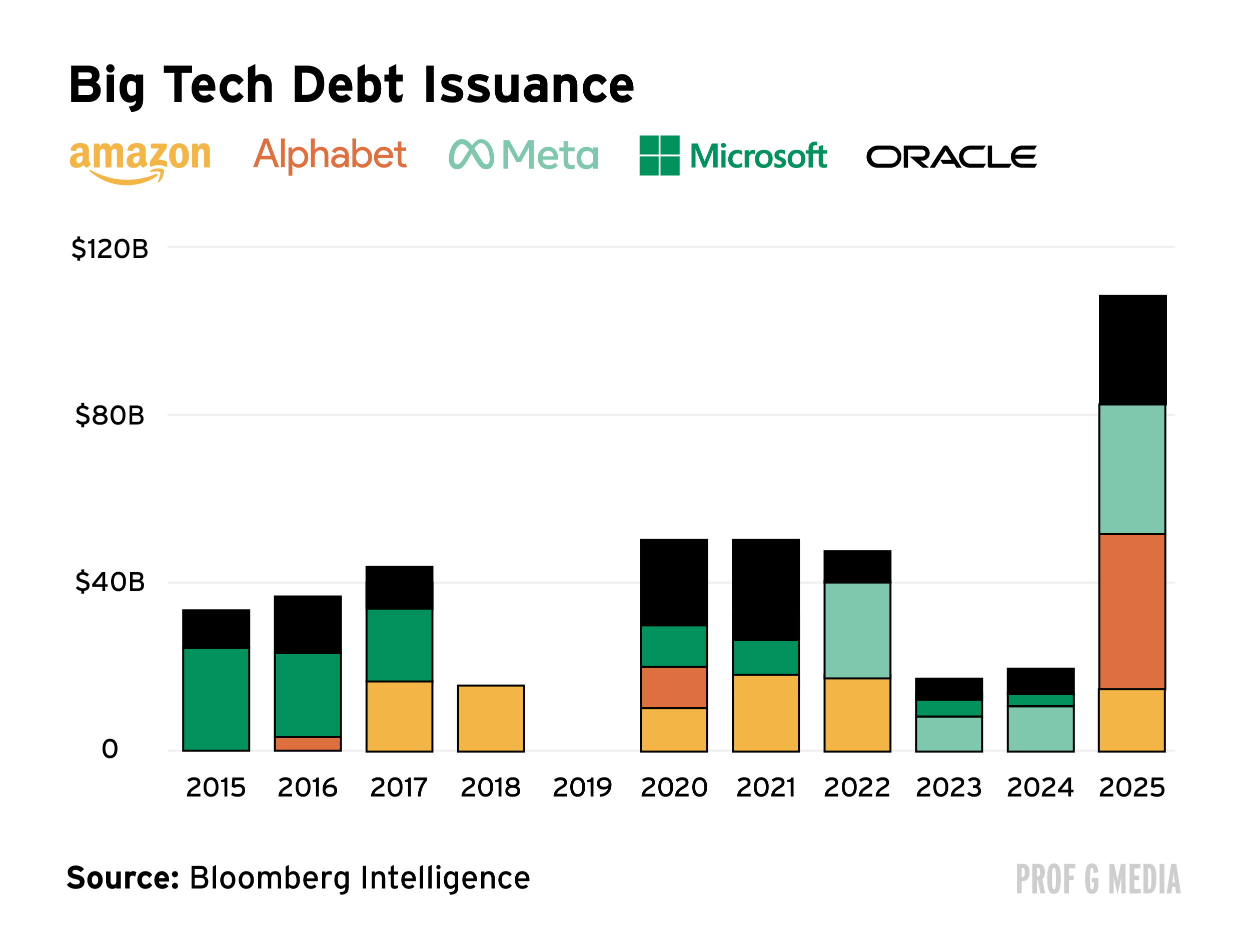
This is increasingly applicable for Big Tech. Though the biggest tech companies can generally borrow cheaply in public bond markets, there are certain benefits to private credit financing, namely, flexible terms. Instead of traditional corporate debt that would show up on companies’ balance sheets, arrangements with private credit funds can be structured such that most of the debt sits in separate legal entities called special purpose vehicles (SPV).
For instance, Meta announced a $27 billion financing deal with Blue Owl in which most of the debt sits in an SPV.
The largest investors in private credit funds are institutional and wealthy investors, including pension funds, family offices, and sovereign wealth funds.
Investors are drawn to private credit because it has historically offered a higher return than traditional fixed-income strategies like Treasurys or traditional corporate bonds. It can also improve portfolio diversification, giving investors exposure beyond the public markets.
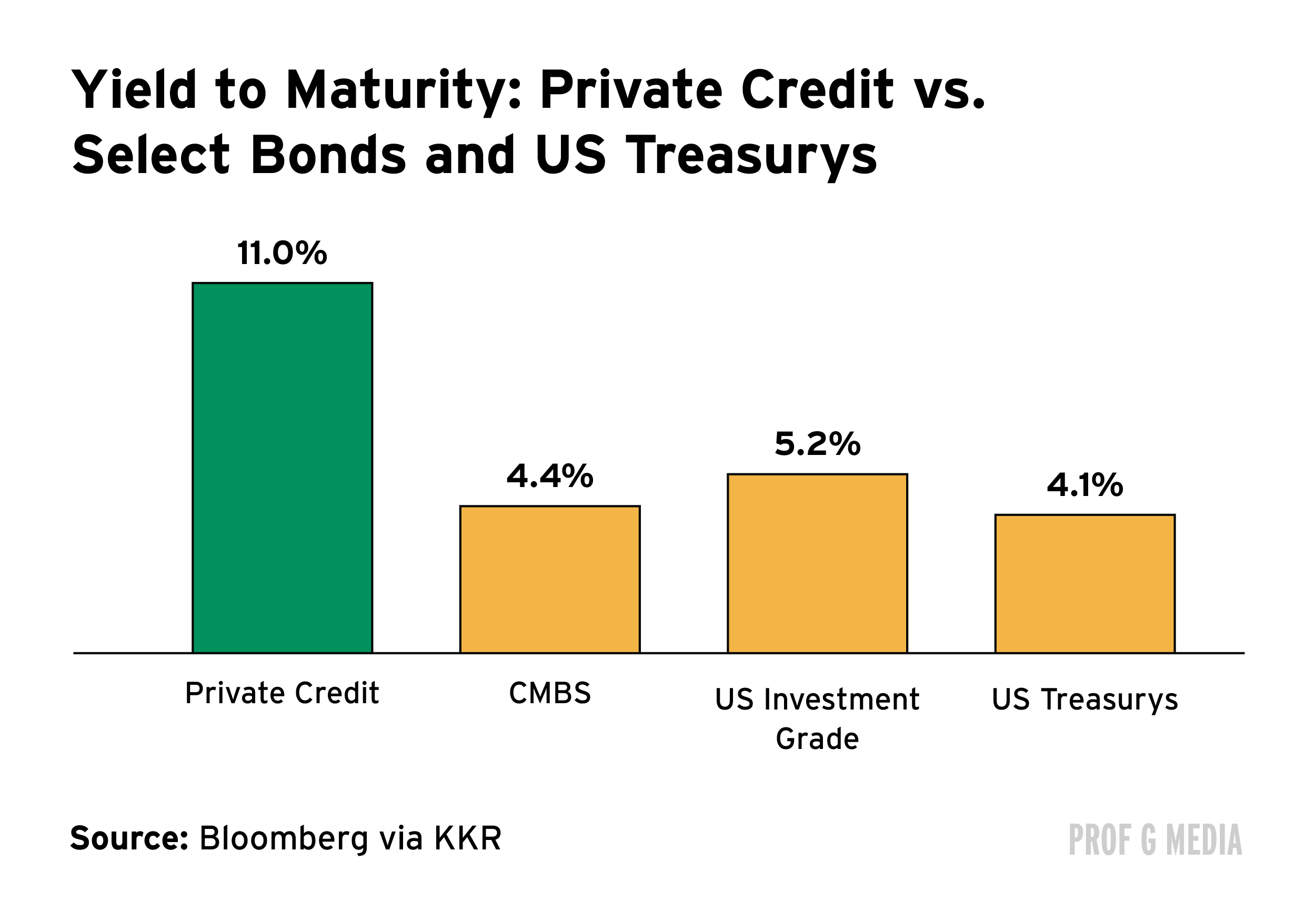
Retail investors are increasingly participating in private credit through business development companies. BDCs represent about 14% of the private credit market.
Private credit firms have gotten crushed recently. Why?
Private credit firms have had a rough 2026.
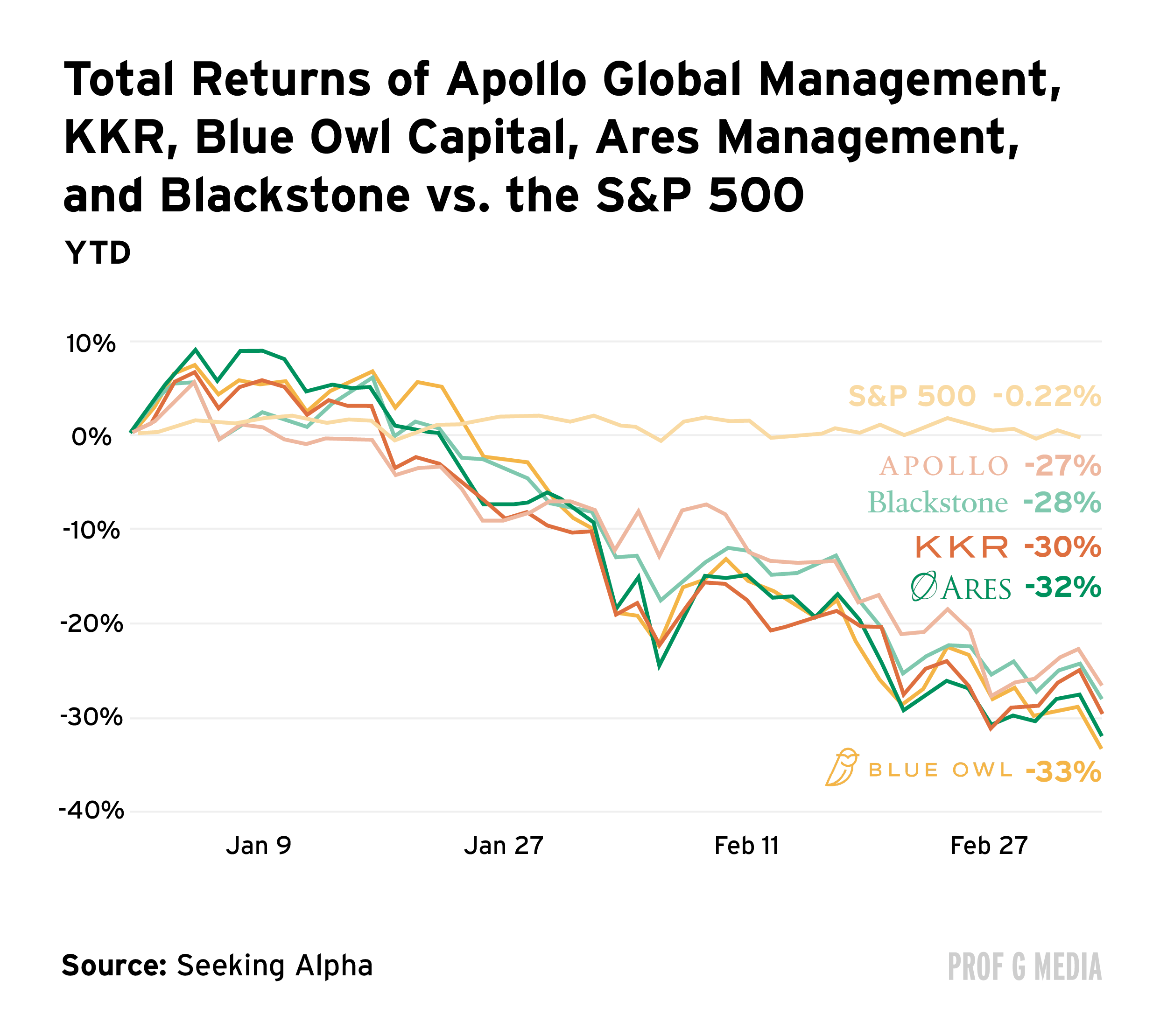
Over the past few years, lending to software companies has become a significant part of private credit portfolios. Now, investors fear that if AI weakens software firms’ businesses, they could default on their private credit loans. Earlier this month, UBS researchers estimated up to 35% of private credit portfolios faced elevated risk of AI disruption. This could hit retail investors, too: Technology firms account for approximately 24% of holdings at BDCs.

This risk is making investors nervous, and they’re starting to ask for their money back. This creates a whole separate problem. Redemptions are typically allowed on a schedule, but when requests surge all at once, private credit firms aren’t typically liquid enough to return all of their capital (investor money is tied up in long-term loans). If funds refuse withdrawals, that makes investors even more nervous.
That’s what happened late last month at Blue Owl Capital’s BDC: After redemptions spiked, the firm decided to “shut the gates” on the fund, preventing investors from pulling their cash.
Executives claim that these current challenges are merely “hiccups,” not a signal of crisis.
Others warn that investors have good reason to be concerned. “People made choices: If you wanted a higher dividend, you could take more risk,” Mark Rowan, CEO of Apollo, said recently. “That felt really good on the way up. That’s not going to feel so good on the way down.”

Rowan’s quote highlights a vulnerability that isn’t unique to private credit. After almost two decades of most assets going up and to the right, many investors — consciously or not — have come to expect that’s how things will continue. When they’re reminded that risky assets can also go down, the first crack spurs a race to exit doors that nobody thought they’d ever have to use.

Dario Amodei is going to give corporate America the confidence to say no to the Trump administration. He took Anthropic from $14 billion in ARR to $19 billion with one strategy. Over the next 30 days, I expect to see a half dozen to a dozen CEOs find their nerve and push back.

Scott and Ed are joined by Steve Eisman, investment analyst best known for his role in predicting and profiting from the 2008 subprime mortgage crisis, about long-term risks in the market. They discuss whether private credit will create the next GFC, and how war with Iran is not changing his investment strategy.

Visualizing what makes people happy
A statistical analysis of airport lounges
U.S. natural gas is insulating our markets from global shocks
This is so well written and so beautifully designed. Can I ask what tools you guys use to make the charts/graphs? They look amazing 🧡
First time reader: love this!