



TL;DR
Tech clash goes beyond AI models to the chips used to power them
Another blunder for a Western brand in the massive Chinese market
China has a sole representative at the World Cup. He’s not a player
We’re Living in a Technological Cold War
Wall Street banks JPMorgan and Goldman Sachs have reportedly cut off access to Anthropic’s models for Hong Kong staff amid pressure from the U.S. government and the AI company itself. Given the increasing dependence on AI, the decisions pose a threat to Hong Kong’s revival as an international financial center, according to the Financial Times.
While Western AI models are banned in mainland China, Hong Kong has operated largely free of Chinese censorship, with restrictions imposed by the U.S. companies themselves. Earlier this month, U.S. Commerce Secretary Howard Lutnick ordered Anthropic to suspend exports of its Mythos and Fable AI models to all destinations and foreign nationals due to concerns about potential military intelligence use in China, Russia and other countries.
In another important tech development in recent days, Washington has increased pressure on the Dutch chipmaker ASML, warning that one of its advanced chipmaking equipment machines may have reached China, in violation of U.S.-led export restrictions.
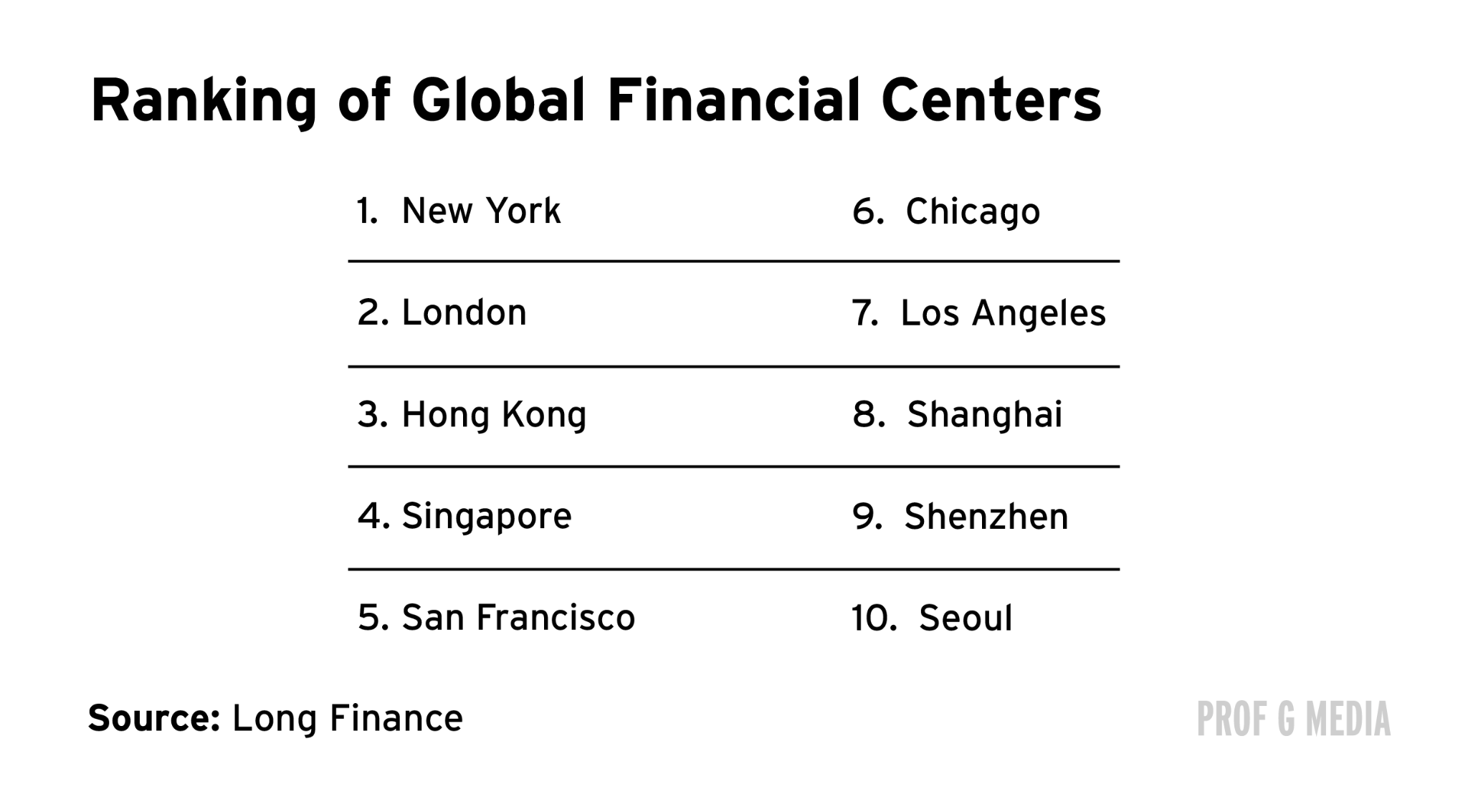
Alice’s Take: We’re in a technological Cold War, with an iron curtain falling between China and the U.S. Starting with the Wall Street banks, you can debate why Anthropic made this move and whether it’s responding to pressure from Washington. Is it motivated by politics? Or concerns over competition? But what’s clear is that Hong Kong is increasingly being lumped together with mainland China. That spells trouble for Hong Kong’s financial sector, which accounts for about a quarter of its GDP and employs more than 250,000 people. Hong Kong’s future as a global, cross-border financial hub may be in doubt. It certainly changes how I think about it.
The ASML story, meanwhile, shows that the stakes aren’t just about the models themselves — they’re about the hardware used to power them. It’s also a sign of the growing anxiety in both the private and public sector in the U.S. about China closing the competitive gap. This is just the first inning of a sustained rivalry. In Washington, lawmakers are debating legislation that would make it harder for China’s chipmakers to produce AI semiconductors, partly by establishing mechanisms to coerce allied countries to stop equipment from reaching China.
James’s Take: Both the JPMorgan and ASML stories underscore the escalating tech war between the U.S. and China. But of the two, the ASML news, if true, is more significant. The West’s superiority in making the world’s most advanced semiconductors is one of its biggest advantages. I’ve been to ASML’s factory in Eindhoven and seen the most advanced extreme ultraviolet lithography, or EUV, machine it makes — no one else can make these.
It’s important to note that ASML has denied the U.S. allegation. Still, the Commerce Department has refused to back down, presenting evidence that it says shows the company shipped specialized transport equipment and components compatible with EUV lithography to Chinese entities. The rising tensions come despite the recent Trump-Xi summit in Beijing.
I’m puzzled. You’d need a team of top ASML engineers to travel with the equipment to China. These EUV systems weigh about 180 tons and are roughly the size of a school bus. They’re shipped in huge cargo planes and require extensive installation, calibration and service support. However, if China has obtained this technology, this is a significant development, and I can’t see why the country wouldn’t be able to make the world’s most advanced semiconductors.
On the Hong Kong front, I can’t see what Washington is thinking. If you want to train a Chinese model using Claude, you don’t have to be in Hong Kong. A Chinese individual or company in Singapore or the U.S. can easily get access to Anthropic. The U.S. government’s efforts to slow China’s progress in making world-class large-language models have largely been futile.
Great Wall Drum Blows Up for Lululemon
Lululemon has been on a roll in China, a massive and growing market for the activewear brand. But in recent days, it’s stumbled. The company sparked a backlash after a promotional event at the Great Wall appeared to feature a Japanese-style drum. The mix-up went viral, generating more than 50 million views on social media site Weibo and forcing Lululemon to issue an apology. It’s another cautionary tale for Western brands operating in China.
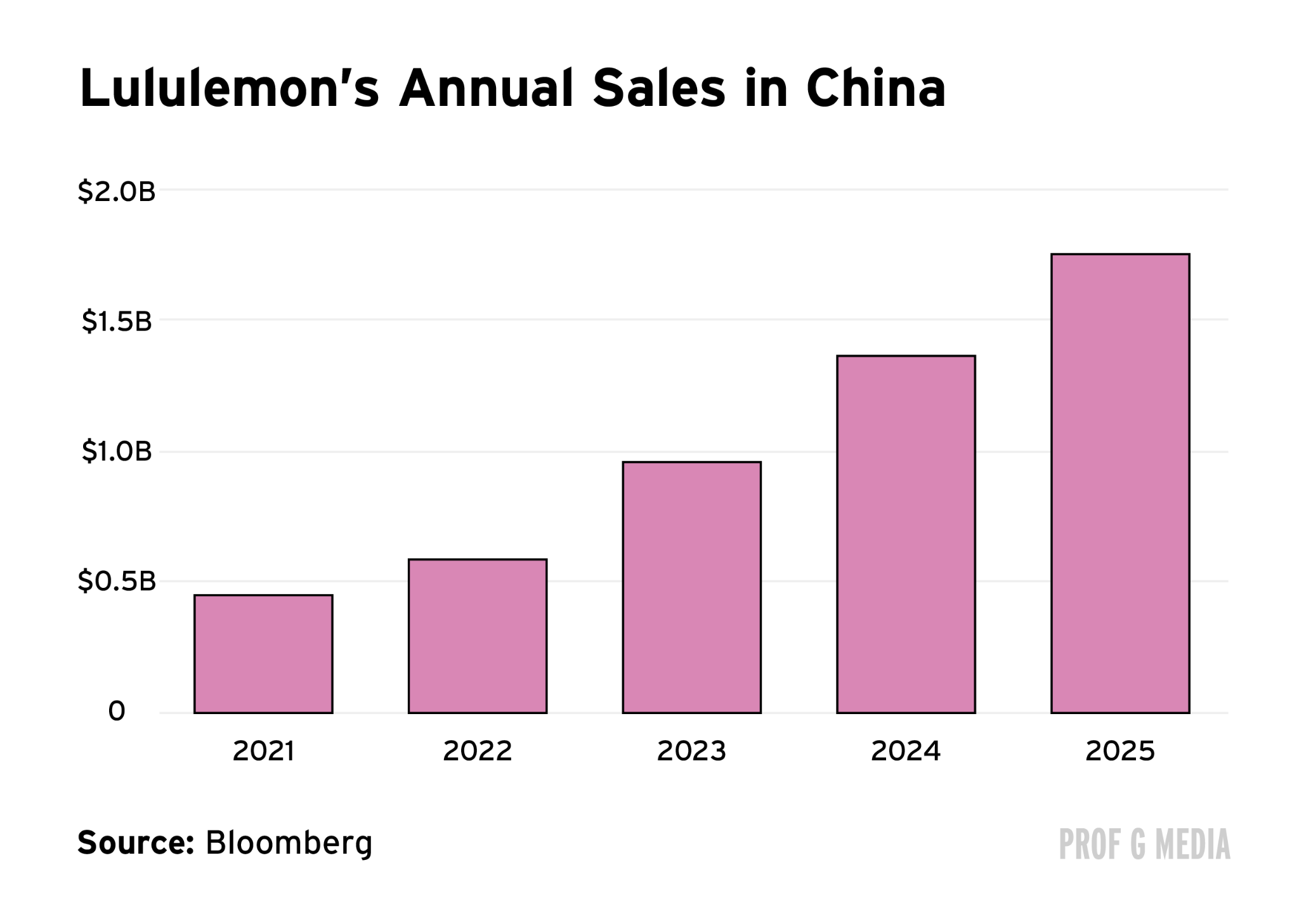
Alice’s Take: The imagery itself — Lululemon yoga mats laid out on the ancient stone of the Great Wall — was impressive. The attention to detail, not so much. The timing couldn’t have been worse. Japan-China relations are about as bad as they’ve been in about 15 years, since a dispute over an uninhabited island chain in the East China Sea and tensions over rare earths. Prime Minister Sanae Takaichi late last year triggered a row after suggesting Japan could respond with its own self-defense force if China attacked Taiwan.
This isn’t the first Western PR campaign in China to backfire. Remember the Dolce & Gabbana drama in 2018? Chinese consumers haven’t forgotten. The luxury fashion brand canceled a show in Shanghai following a furor over promotional videos featuring an Asian model trying to eat Italian food with chopsticks. Many people found the videos racist and criticized the company for trivializing Chinese culture. A year later, Versace, Coach and Givenchy sparked an outcry for producing T-shirts implying Hong Kong and Macau were not part of China.
James’s Take: It’s hard not to feel some sympathy for Lululemon. Whether this drum, played by a top Chinese actor, Zhu Yilong, is Japanese remains unclear. While online commentators said it resembled a Japanese drum, the Chinese company responsible for the installation said it was actually a replica of a drum from the Tang Dynasty, associated with an ancient ethnic minority in northwestern China and said to have been praised by the Chinese emperor of the time.
But the truth probably matters less than perception. Once anger among online nationalists reaches a fever pitch, apologizing and pulling the plug on the campaign is all but inevitable. There seems to be a communication gap between the China office and headquarters that trips up global companies on a regular basis. This is a huge market. If you’re a Western brand in China, you need to be careful. Last year, a fireworks display in the Himalayas by outdoor apparel company Arc’teryx triggered environmental concerns and a boycott. Even the smallest mistake, cultural or political, can tarnish your reputation and lead to lasting damage.
With China’s Team at Home, Spotlight Shifts to a Referee
In 2011, Xi Jinping expressed three wishes for Chinese football: to qualify for the World Cup, to host the World Cup and to win the World Cup. Chinese football, however, continues to struggle.
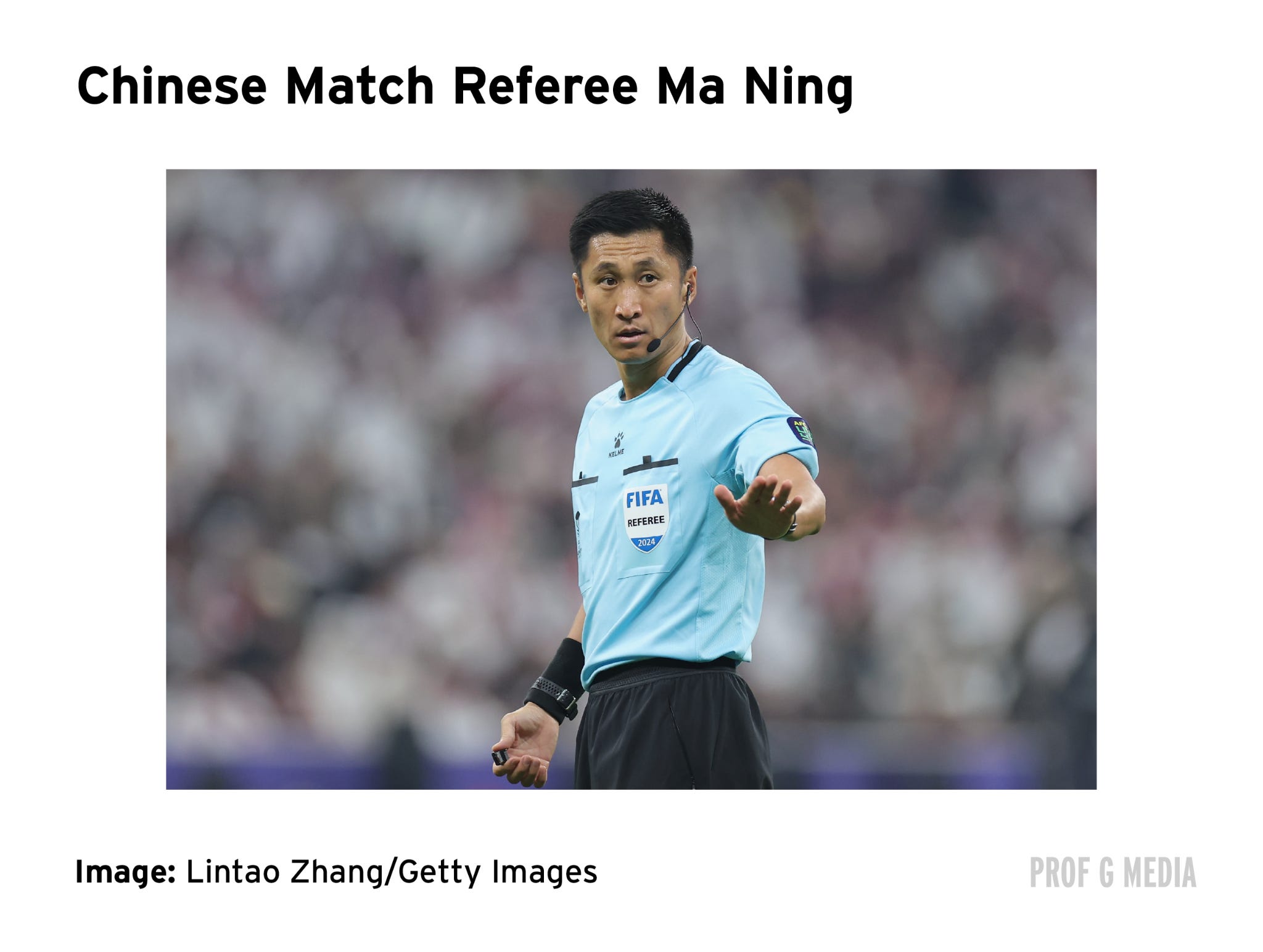
The country failed to qualify for the tournament … again. In fact, it has only appeared once, in 2002. With the Chinese team at home, far from the action, the spotlight has turned to Ma Ning, the only Chinese referee at the World Cup. Known as the “Card Master” for his strict officiating, Ma has attracted hundreds of thousands of followers on social media app RedNote and signed sponsorship deals with some of the biggest Chinese brands, including Lenovo and Hisense.
Millions of people in China are excited to watch the World Cup after social media company Xiaohongshu — seen as China’s Instagram — won the rights to stream the games for free to all users. The deal is a strategic partnership with state-owned China Media Group. CCTV’s World Cup streaming app was the second most-downloaded app this past week, the official sports-betting app ranked sixth, and companies including Tencent Cloud are responsible for about two-thirds of official World Cup broadcasting across the Asia-Pacific region.
Still, with China falling short in its quest to achieve its football ambitions, many fans continue to be disappointed. What makes it even harder to digest is the fact that this year’s World Cup expanded from 32 to 48 teams, including a record nine from the Asian Football Confederation.
Alice’s Take: I have a theory, borrowed from an economist friend, that boils down to economics. Chinese parents see a better return on investment for solo sports like golf, tennis, skiing or gymnastics, where you can identify kids with physical gifts early and the prize money is tied to individual performance, as opposed to a team sport where payouts are dependent on collective results. That explains why China excels at the Olympics but has flopped in football.
James’s Take: I lived in China as a university student and have never seen a country more football-obsessed — and I’m from the U.K. China excels at sport and loves football. How else can you explain its World Cup woes? Experts have blamed academic pressures and a lack of youth football opportunities. Corruption and coaching are among the likely culprits.
Strip away the day's particular casualty—a bank here, a blocked model there—and the same single fact sits underneath all of it: the administration trained its fire on one company. And it did so for the oldest of reasons: that company said no. Alone among the frontier labs, Anthropic drew a moral line. It refused to hand the Pentagon unchecked, un-monitored power, asking only for the narrow assurance that its models would not be turned on Americans for mass surveillance, nor wired into weapons that kill with no human in the loop. For that refusal it was punished. The campaign was then fed by the rivals and allies of the regime (and I do use that word carefully), who amplified a "jailbreak" alarm that conveniently ignored that every frontier model shares the very same flaw. That is the whole engine. A government that governs by grievance singled out the one lab that told it no, and every downstream wreck, the spooked banks, the export bans, the gift handed to Beijing, is just the blast radius.
If you want to see why I use the term regime to describe the current administration, read this: https://medium.com/@eric_1885/america-the-bell-tolls-for-thee-42c7de5f4fe4
The ASML angle is the one I keep coming back to. AI dominance is not just about who builds the best model. It depends on who controls the machines capable of making the most advanced chips. That makes ASML one of the most strategically important companies in this entire US China rivalry.