



Two things happening in California’s elections right now are making us nervous.
First, it’s been thirteen days since the state held its elections, and the vote still hasn’t been fully counted (between 92 and 98% of the votes are in, depending on the race).
Second, California has four or five competitive districts on the map this November, and control of the House could come down to any – or all – of them.
We’re lucky to have safe and secure elections in America, and that includes California.
The problem is that with those midterms just a few months away, we think Trump will take advantage of a slow count to undermine confidence in the results. That would be a disastrous outcome for our democracy.
It’s not too late for our friends out West to solve this, but time is of the essence.
Programming note: Every Wednesday at 12PM ET, Jessica and Aaron Parnas host Raging Perspectives, a weekly livestream for all our Substack subscribers. Submit questions you’d like answered live on the show in the comments section below.
Why California’s count is so slow
California is a remarkably slow-counting state. In the 2024 primaries, it took two weeks to count 99% of total votes, and the state is on track to take about as long this time around.
It boils down to three factors: mail elections, a slow verification and curing process, and state resources.
California is one of eight “all-mail” voting states, which means every one of the state’s 23 million registered voters gets a ballot in the mail (more than any other state). Crucially, the state allows voters to post their ballots as late as Election Day, so long as they’re received within a week after polls close. That’s later than every other state except Washington. No matter how fast California counts the ballots it’s received, this rule means it will always take at least a week to tally them all.
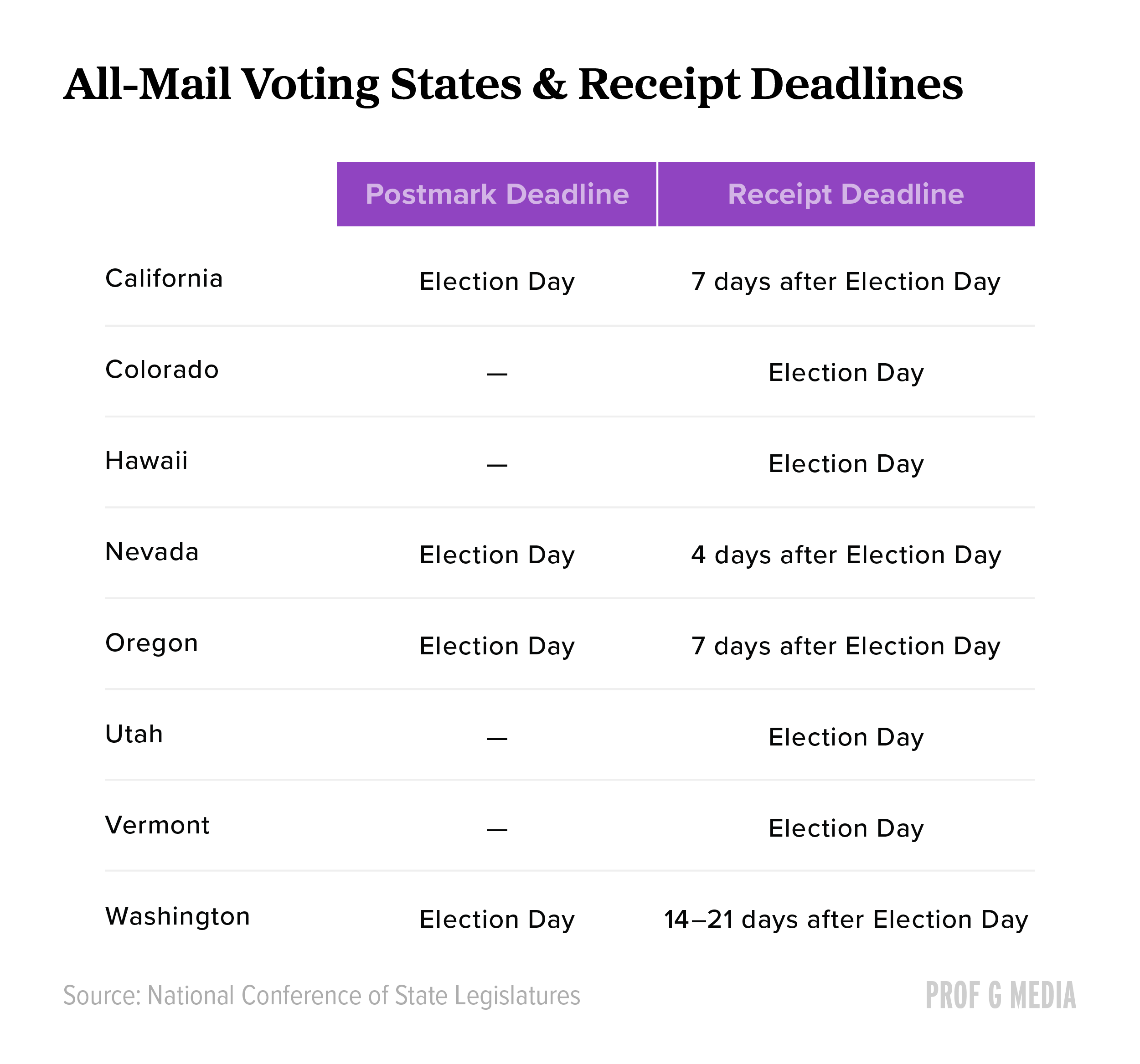
What makes matters worse is the ballot verification process. To some extent, this is a necessary evil of mail voting: when you vote in person, you verify your identity when you vote. When you vote by mail, that process only starts once officials receive your ballot. California’s process can be especially slow because voters get 22 days to “cure” their ballot (i.e. fix any errors). That naturally makes it harder for the major networks to project a winner.
Then there’s a lack of resources. Some counties lack the staff, space, and equipment to process ballots quickly. Jesse Salinas, the registrar of voters in Yolo County, near Sacramento, has been vocal about this in local and national media:
“If I had more space, if I have more staff, and I had more equipment to scan, I could pick up some of the speed… there’s a capacity issue and a resource issue.”
He also described having knocked down a wall in a storage building a few years ago just to make space for the growing number of ballots.
There are also staff and scheduling issues, and labor agreements play a role too: on the first weekend of counting, only a “fraction” of California’s 58 counties updated their vote totals at all, according to the New York Times.
How Trump is taking advantage
When Trump ‘sat down’ with Kristen Welker last week (he couldn’t get through the interview without storming off), he lied again about the 2020 election, and made California’s slow count exhibit A in his claim that it’s “happening” again in 2026:
The election was rigged. It was a dirty election. And it’s happening again right now in California.
Then, on Fox & Friends last Thursday, he doubled down and offered a prescription:
You know, they announced that they wouldn’t have the results for a week to two weeks… I just want to say to the public, it’s a rigged election. We need the SAVE America Act, period.
The SAVE America Act is the worst possible solution to this problem. It would do nothing to speed up ballot counting in California, but it would make voting a whole lot harder: the act requires voters to provide proof of citizenship when registering and photo ID when voting. For most people, that means registering with either a passport or a birth certificate plus ID.
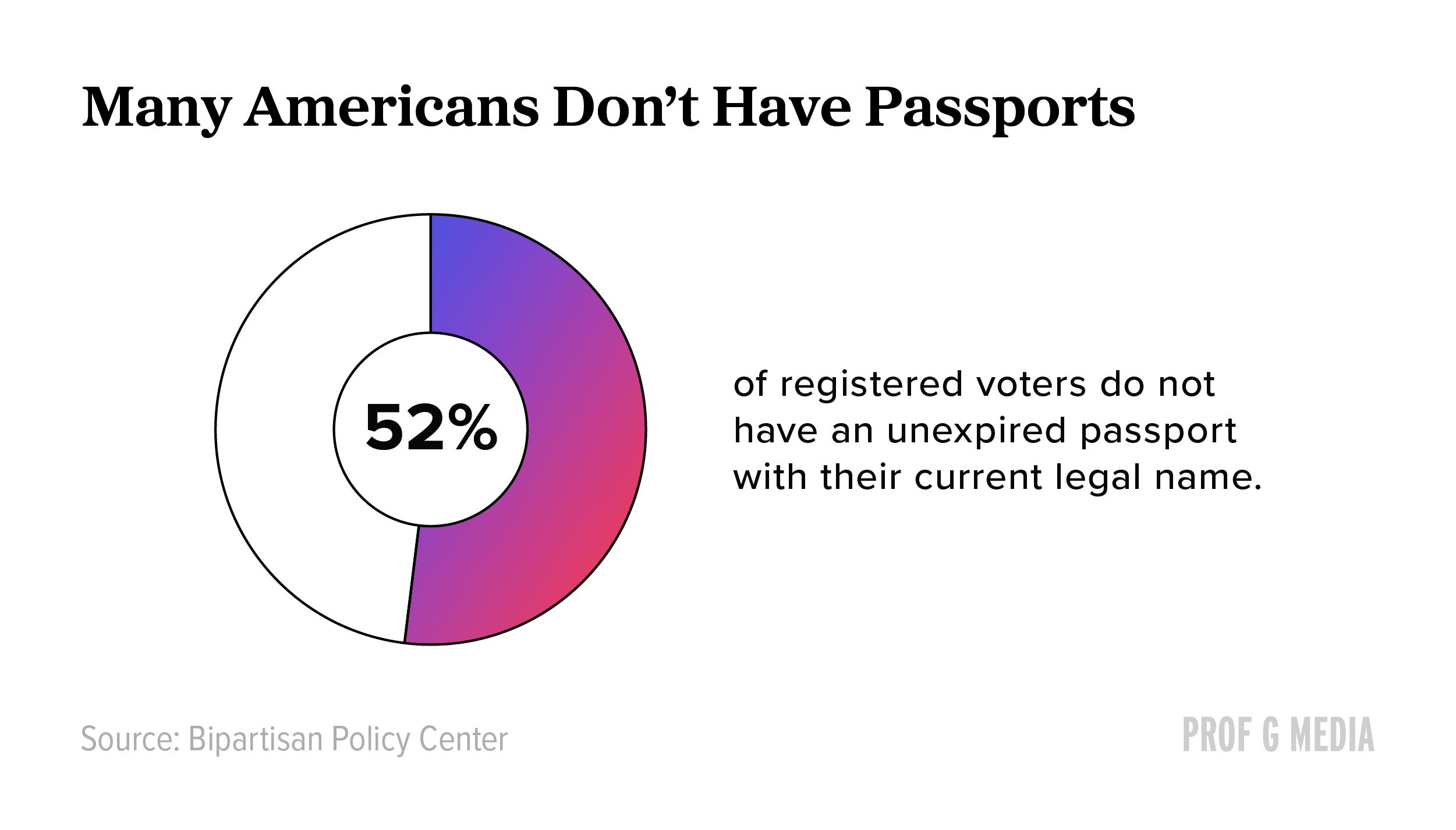
That will make it more difficult for millions of Americans to vote. According to the Bipartisan Policy Center, 52% of registered voters don’t have a current passport in their name, and 11% don’t have access to a birth certificate. Even if you have a birth certificate, you might’ve changed your name, rendering it useless in satisfying the requirements of the bill. It would be an unmitigated disaster. We’re fortunate that the bill doesn’t have the votes to pass the Senate, but the longer California takes to count, the more Trump and the Republicans keep pushing it.
What this means for November
This is not a new issue. Governor Gavin Newsom is aware that his state is behind the curve on counting. As he wrote in a letter addressed to election officials in May:
We must acknowledge that the longer the voting count takes, the more mis- and disinformation spreads. That means we must do all that we can to tabulate votes quickly and accurately. Time is of the essence in preventing election lies from taking hold.
In a piece written by its Editorial Board, the Times was even blunter. The newspaper said California’s slowness is a “failure of governance,” and that none of the officials’ myriad excuses were persuasive.
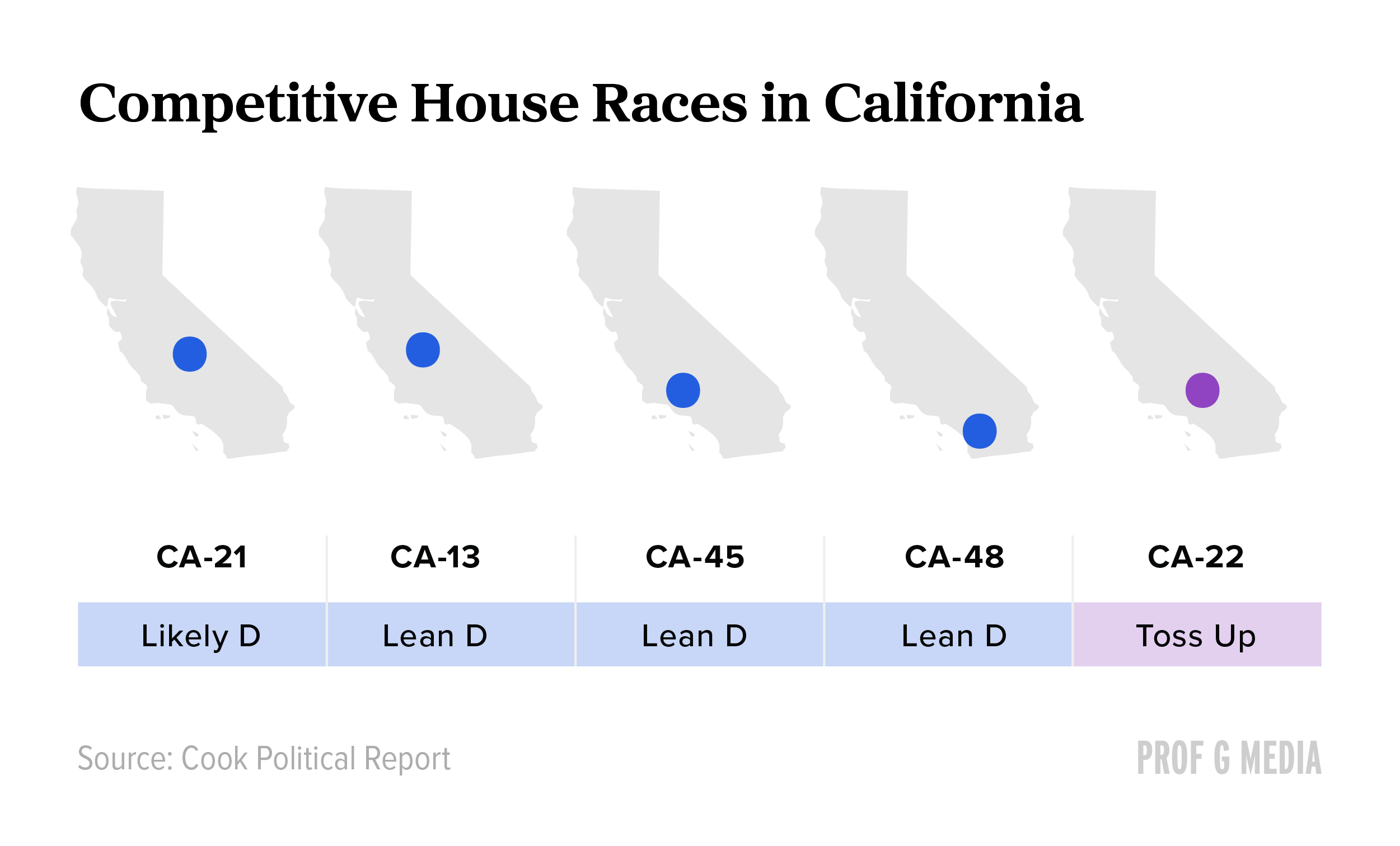
These calls are understandable. If nothing changes between now and November, California could become the epicenter of another false “stop the steal” campaign. The race to control the U.S. House could come down to four or five seats, and California alone has at least as many competitive districts. If the “218th” win comes from California’s 13th, 21st, 22nd, 45th, or 48th district, and a call doesn’t come on election night, get ready for more “rigged” rhetoric from the White House.
It’s not too late to fix it
The ‘simplest’ fix to this problem is to change the ballot receipt deadline to election day, as several other states require. That could only be accomplished by passing an urgency statute, which requires a two-thirds vote in each house, plus Newsom’s signature. It’s possible, but a tall order.
The second solution is giving more funding to local officials to speed up the count. That has already happened in Los Angeles and Orange counties. The former counted 77% of its ballots a week after Election Day in 2022. Thanks to better equipment, it counted 97% of its ballots in the same time frame in 2024.
If all else fails, officials will have to nudge voters to return their ballots earlier. The people most frustrated by slow counting will undoubtedly be the voters in those districts. Making them aware that their ballot return date impacts a call is better than nothing.
California’s elections are safe, but they’re too slow. A glacial count has already given Trump room to lie and it leaves voters room to doubt. California can and should act now to close the gap.
I like that it’s slow. Who gives a damn what Trump says. I say go even slower just to make him and his little dweeb sycophants hyperventilate. Maybe he’ll even have a stroke.
They could and should try to resource better. Changing for the Traitors in Chief is compliance and bows to his lies. He will be gone soon