



12.5 million
An estimated 12.5 million American adults will take the day off on Thursday for the release of Grand Theft Auto VI.

Jensen Huang, former Nvidia CEO, is embroiled in scandal following reports of three affairs.
Anthropic goes public Thursday at a valuation of up to $1.5 trillion.

A Suspected Chinese Spy Brought Down the CEO of the World’s Most Important Chip Company
Jensen Huang, co-founder and former head of the company at the center of the AI race, resigned last week after reports of two affairs came to light, one with a woman who is suspected of being a Chinese spy, and another with a subordinate at Nvidia. A third affair with another Nvidia employee surfaced after his resignation. The scandal affects national security and the AI race between the U.S. and China, exposes Nvidia’s weak corporate governance, and raises questions about conflicts of interest at the highest levels of the Trump administration.
Even after the first affair came to light, commentators argued that Nvidia could not do without Huang. Bloomberg’s Matt Levine called him “irreplaceable.” Axios’ Dan Primack wrote that no one can “imagine” separating him from Nvidia. Stephen Witt, who authored a book on Huang and Nvidia, wrote in a New York Times op-ed: “Nvidia without Jensen Huang is like the Bulls without Michael Jordan.”
Jensen Huang’s accomplishments are undeniably impressive: He co-founded Nvidia in 1993, and under his leadership, the stock returned 700,000% and became the most valuable public company in the world.
Huang made himself appear irreplaceable by design. He boasted about having as many as 60 direct reports, more than 3x the average for a CEO of a large company. And on a podcast this year, when asked about a potential successor, he responded: “There will never be one like me.” Apparently, he did not believe in succession plans. In 2023, he told reporters that he could run the company for three or four more decades. He is 63 years old.
These statements are particularly notable given that Huang engaged a crisis communications firm known for handling public scandals a year ago, according to reporting by WIRED.
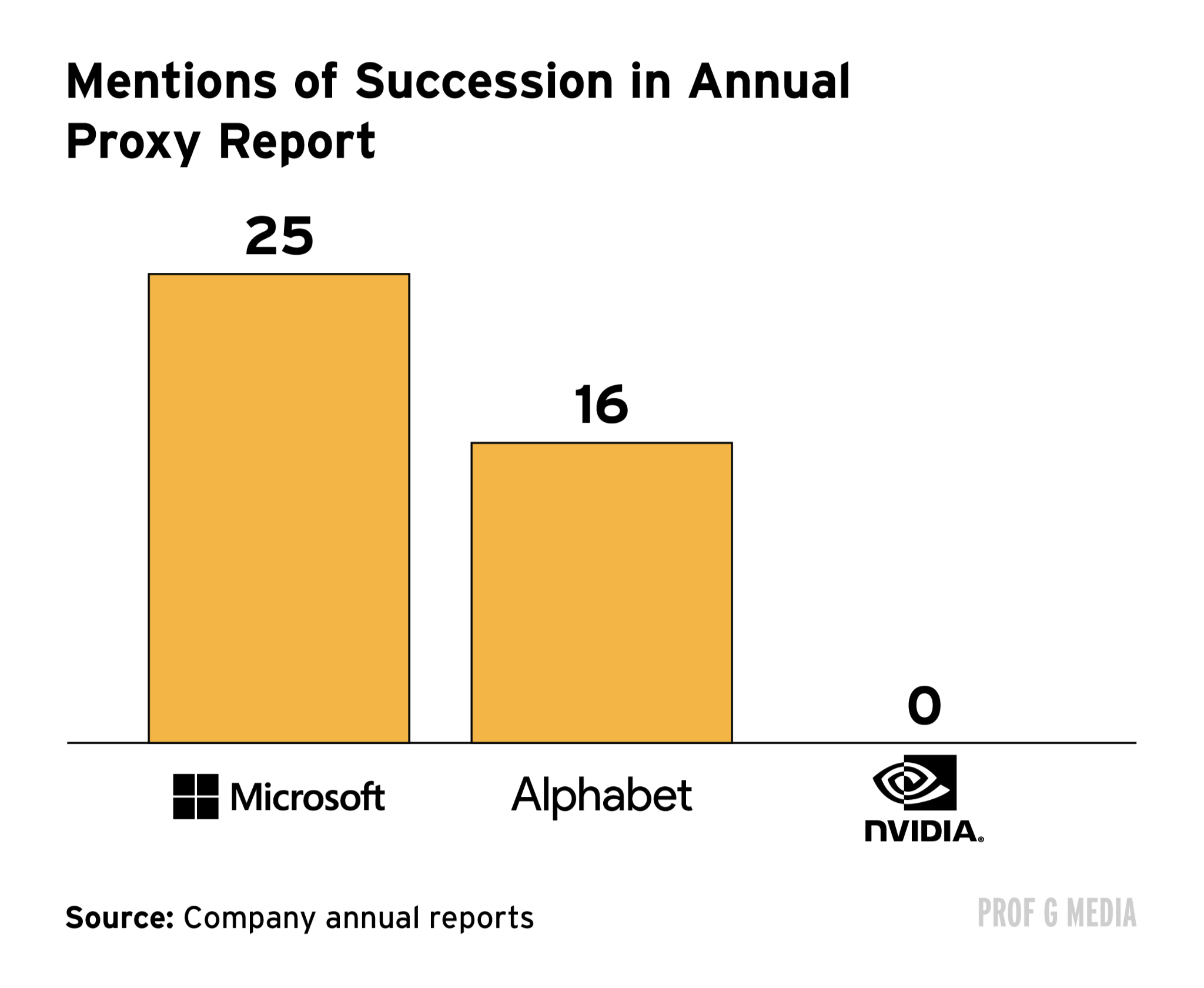
The lack of a succession plan could hurt Nvidia and its shareholders, and part of the blame lies with the board. An independent board exists to oversee management and hold it accountable on behalf of shareholders.
Nvidia’s board did not hold Huang accountable, even when the warning signs were there. Of Nvidia’s 10 independent directors, none have been S&P 500 CEOs, and none have national security experience. One corporate governance ranking put Nvidia 609th out of more than 650 companies, far below its Big Tech peers.
But Nvidia’s and Jensen Huang’s problems go far beyond succession.
U.S. intelligence officials believe Alice Huang, one of the women with whom Jensen Huang had an affair, was recruited by China’s Ministry of State Security. Officials suspect she had two goals: gather information about Nvidia’s AI chips and influence Jensen Huang’s views on selling chips to China.
It is not clear which objectives she achieved.
What we do know is that Alice Huang became a managing director of Megaspeed, a Singapore-based data center company, after a career as a TV reporter for Chinese state media. Shortly after she was appointed, Megaspeed’s assets grew to nearly $3 billion from about $33 million at the end of 2023 and the company became one of the largest Nvidia customers in the world.
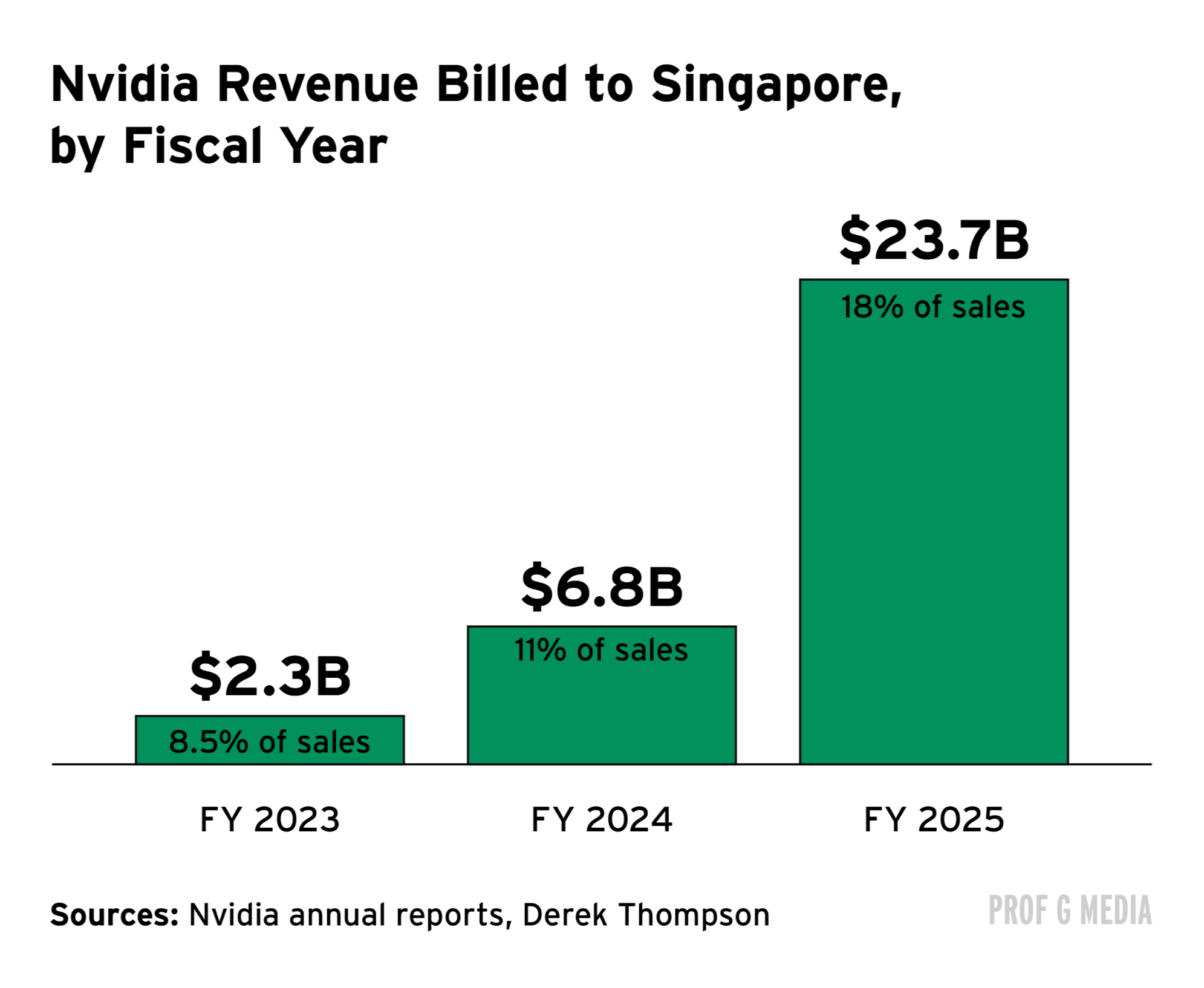
Selling chips to companies in Singapore is legal. But U.S. officials have long suspected that many chips sold in Southeast Asia end up at Chinese companies. That would be illegal, because the U.S. has blocked China since 2022 from buying Nvidia’s most-advanced chips.
One of Alice Huang’s jobs may have been to help get around the ban. According to The Information, companies tied to Alice Huang invested in DeepSeek, the Chinese AI company, so they could supply it with Nvidia’s Blackwell chips. And according to a Bloomberg report, a Chinese company founded by Alice Huang smuggled Nvidia chips into a Shanghai data center that had links to Megaspeed.
The U.S. government suspected Megaspeed of violating U.S. export controls and began investigating the company two years ago. However, the probe was delayed and handed over to the Justice Department after Nvidia’s general counsel asked about the case. Nvidia chip shipments to Megaspeed continued, despite Nvidia itself putting the company on an internal block list.
Culper Research, a short seller, estimates that more than 20% of Nvidia’s compute revenue in its last fiscal year was driven by Chinese demand, through chip smuggling and middlemen in Southeast Asia. Nvidia has denied any diversion.
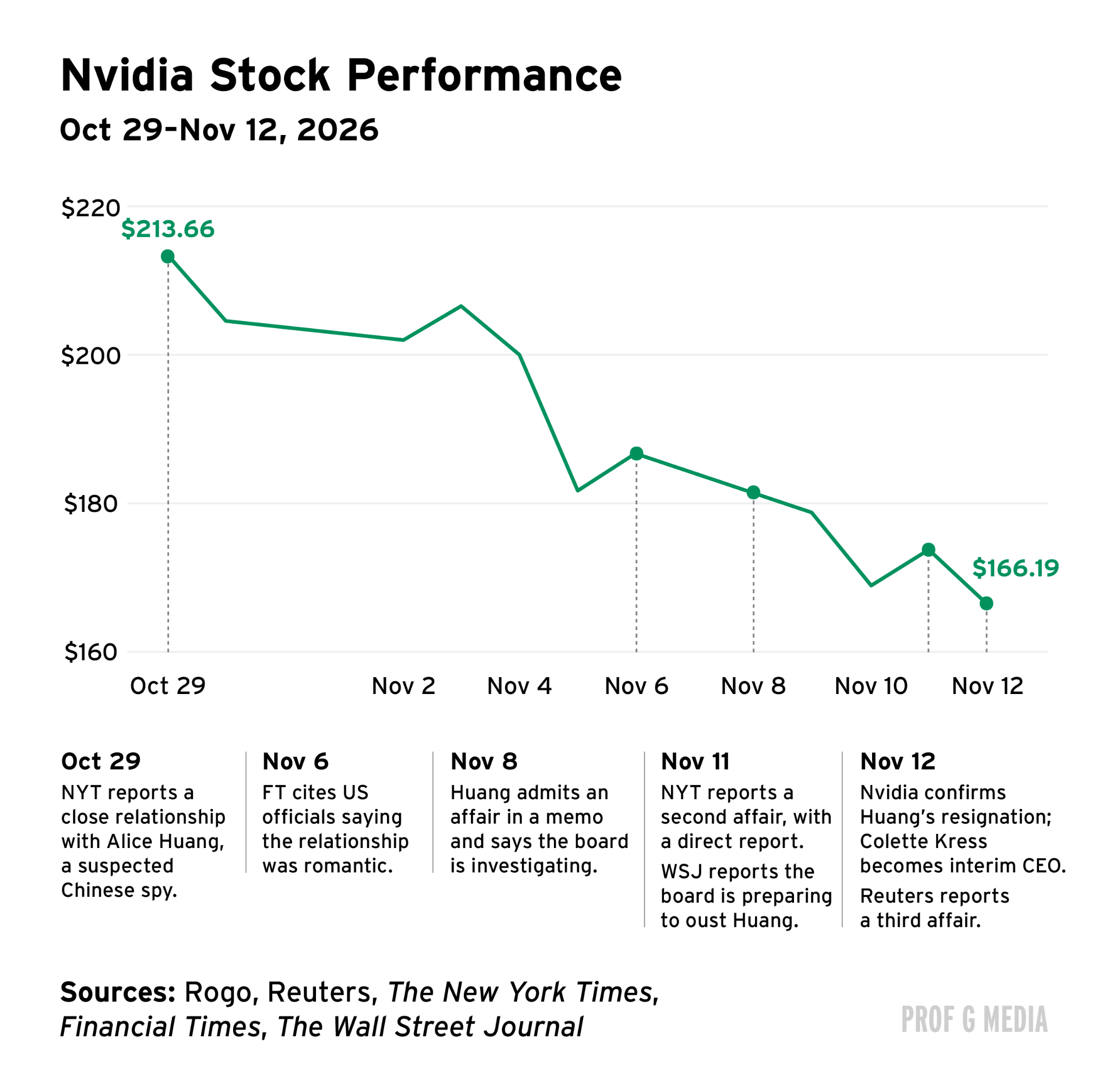
The scandal has unnerved investors. Nvidia has lost more than $1 trillion in market cap — nearly a quarter of its value – since The New York Times first reported on October 29 that Jensen Huang had a relationship with Alice Huang. Over the same period, the S&P 500 has declined only 2%. The divergence between the fate of the index and its most prominent constituent is dramatic and underscores that the strength of U.S. markets comes not from one hero company or CEO, but from the sum of its parts, both remarkable and unremarkable.

At first, Nvidia’s board stood behind a CEO who had an affair with a suspected Chinese spy. That makes sense once you realize how much money he made them.

Singapore, Malaysia, and Thailand were the second-, fourth-, and fifth-largest importers of AI chips in the world this year, bringing in about $80 billion combined. Why are those countries so thirsty for GPUs? It’s very hard to argue that a significant share of Nvidia’s revenue from that region isn’t chips being diverted illegally to China.
Megaspeed has become the poster child for this problem, but I see no reason to believe it isn’t the tip of the iceberg. If the problem goes far beyond Megaspeed, investors have to question all of the revenue Nvidia earns outside the U.S. and its allies.
The scandal on top of the scandal is that the government knew. President Trump was briefed on this. The Commerce Department was investigating Megaspeed. But at multiple steps in the process, one person was standing in the way, and that person was Commerce Secretary Howard Lutnick.
He clearly covered for Nvidia throughout this investigation. Why did he do that? One potential reason is that Nvidia is the third-largest single stock holding of Cantor Fitzgerald, the firm Lutnick ran for more than three decades and his sons now run.
The amount of corruption from within this administration is truly astounding. Now that we have a Democratic House and a Democratic Senate and they’re gonna investigate this, I think Lutnick will be out in the next three months.
In partnership with

Financial clarity for your small business

Successfully running a small business means staying on top of every cost, all day long. But to do that, you need something more powerful than a spreadsheet. Xero is a small business accounting and financial management platform that makes managing business finances easier from day one. Accounting, payments, payroll and analytics are available in one connected platform. Reports, visual dashboards, forecasts and AI insights help owners better understand cash flow and make smarter decisions.

Anthropic Could Raise $100 Billion in Its IPO, the Most of Any IPO Ever
Anthropic is expected to make its public debut on Thursday, and is reportedly targeting a roughly $1.3 trillion valuation. However, demand from investors has been so strong that its bankers are preparing to increase that target to $1.5 trillion. That would push the total amount raised in the IPO above $100 billion, surpassing SpaceX’s record $86 billion raise in June.
The valuation has been a moving target, especially following the post-election sell-off. Anthropic initially floated a $2 trillion valuation in September, before that figure reportedly dropped to $1.1 trillion after the market downturn.
At $1.5 trillion, Anthropic would trade at roughly 18.5x its $81 billion revenue run rate as of October. That’s about where Broadcom and AMD trade, and their revenues are growing 86% and 45%, respectively, versus Anthropic’s 1,127%.
Early investors will be among the biggest winners. Amazon and Google have invested $18 billion and $33 billion in Anthropic, respectively, since 2023. If Anthropic prices at the high end of its IPO range, their stakes could be worth a combined $411 billion, about 8x what they put in.
Anthropic is selling only a small piece of the company. The shares on offer are about 6% of those outstanding. Tech companies have historically floated 10% to 20% of their shares in an IPO, though that number has shrunk in recent years. SpaceX floated about 5% in June.
The company is also reserving 20% of the shares for retail investors, well above the typical 5% to 10%.
Investors have been anticipating Anthropic’s IPO for months. Its debut will be the first time public investors have access to shares in a pure-play AI company. Given the pent-up demand and relatively small supply of shares, it’s hard to imagine the stock won’t pop on Day 1.
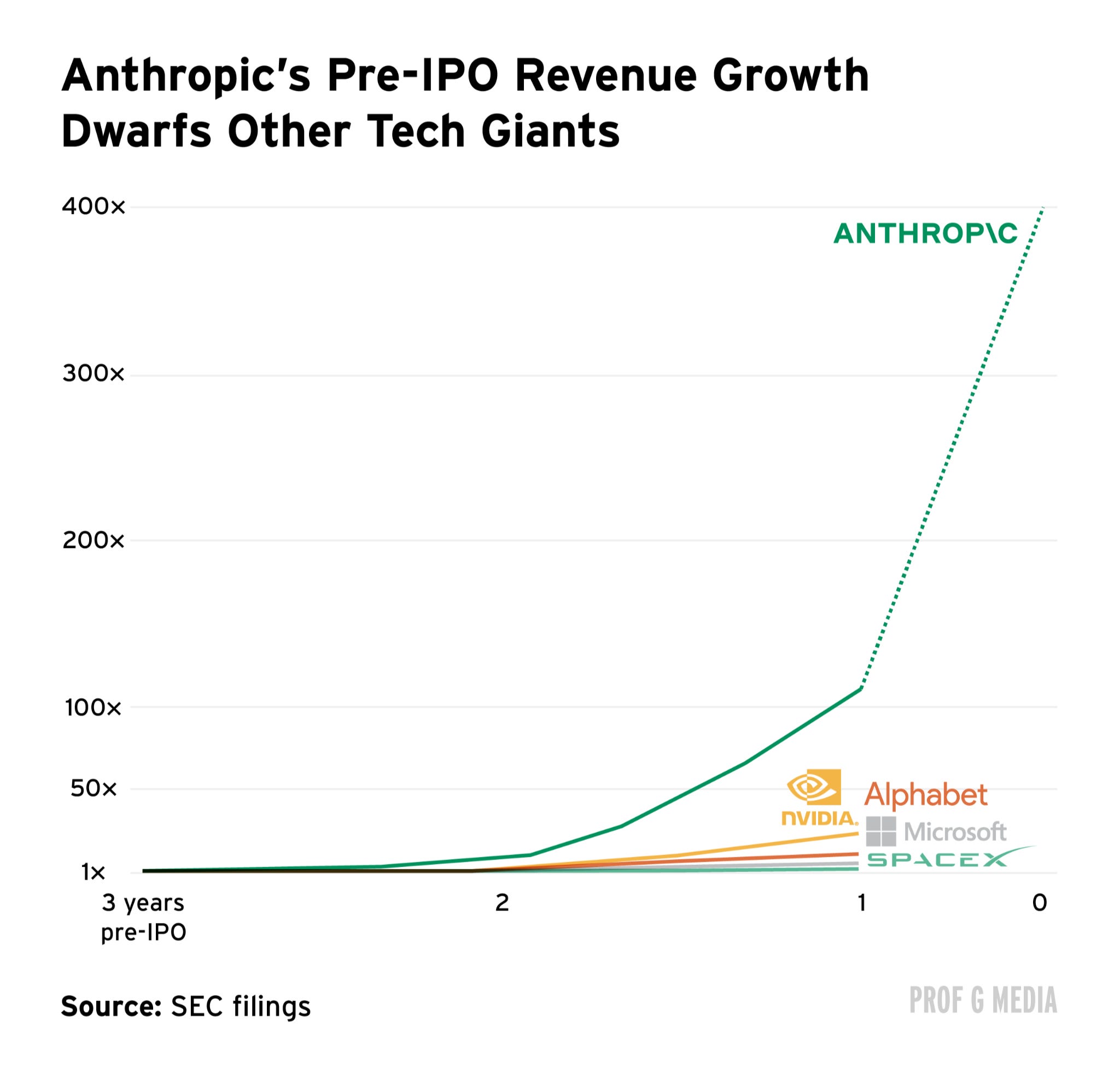
Where will Anthropic be in two or three years? Honestly, I don’t know. I can make a case either way. But I know what will happen on the first trade:
IPOs are a rigged game. Bankers set the price at a level where the stock goes up as soon as it starts trading.
Like SpaceX,

Saying “Google it” makes you sound old
There’s less party loyalty in this new political era
Democrats ditched woke politics