



TL;DR
China May Emerge From Iran Disruption as a Winner
Can China’s Universities Become Truly International?
F1 Sparks Headlines in Beijing as Well as Hollywood
Newsletter Extra: To the Moon: AI Developer’s Valuation Soars
China Plays the Long Game as War in Iran Escalates
Just last year, U.S. Defense Secretary Pete Hegseth pledged to work more closely with Indo-Pacific allies to strengthen the region’s security and deter China from trying to seize disputed territory, including Taiwan. “No one should doubt America’s commitment,” he said. Today, however, the escalating war in Iran and a shift in U.S. firepower to the Middle East are raising questions about whether the U.S. will remain focused on the region — and giving China an opening it will likely be able to exploit.
About one-third of China’s oil and a quarter of its gas imports pass through the Strait of Hormuz, where maritime traffic almost stopped in the wake of the U.S. and Israeli strikes on Iran. But China has a buffer. The country is sitting on some of the world’s biggest stockpiles of oil and other strategic commodities, while investments in clean energy are providing the country with additional insulation. China has shifted from gas-powered cars to electric vehicles faster than any other major economy. The country has another advantage: Although the war in the Middle East has disrupted wider supplies, Iran has reportedly continued to send significant quantities of oil through the waterway to China.
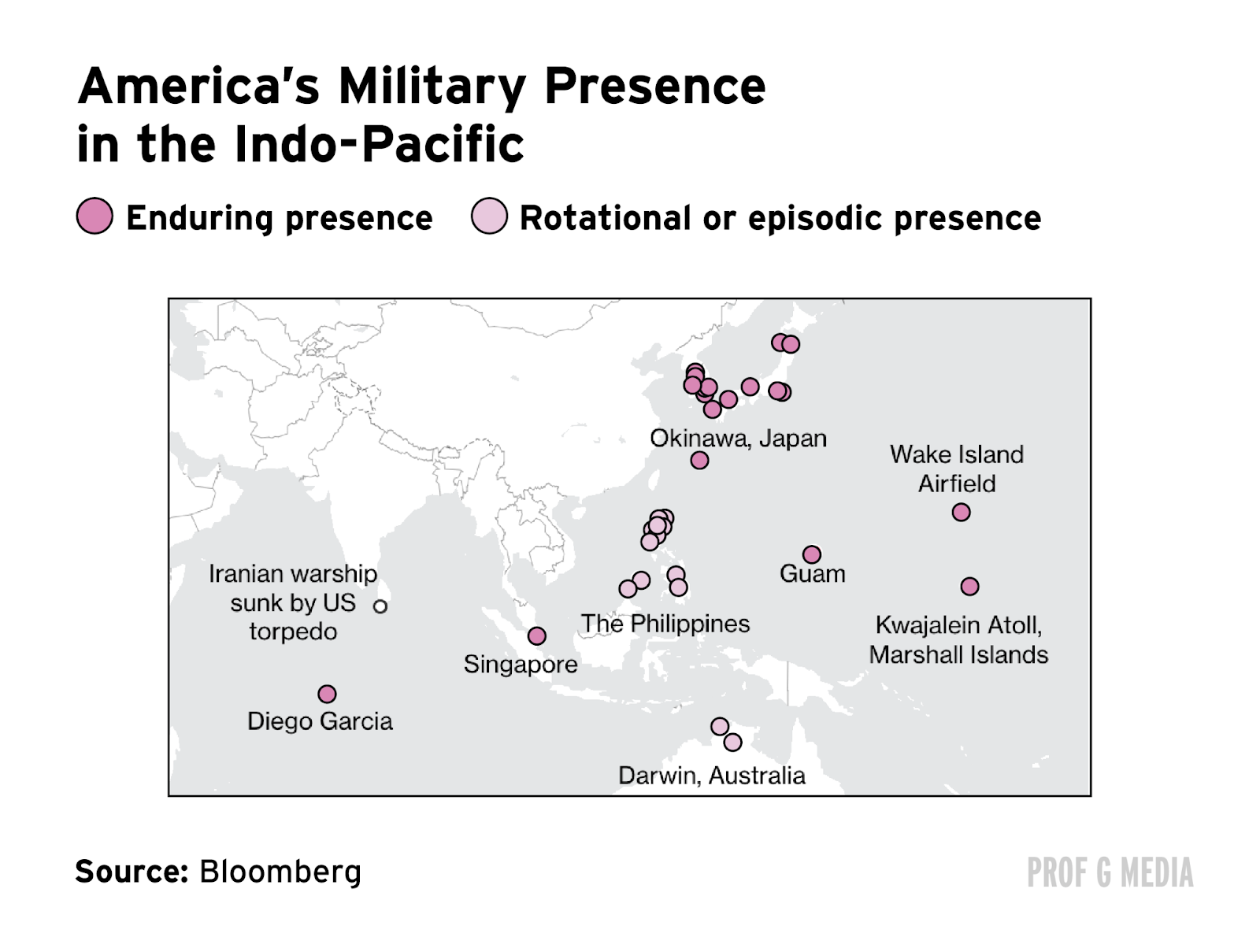
How the war plays out and what happens to Iran remain uncertain. However, Dr. John Sfakianakis said what is clear is that the Middle East will be fragmented and even more unstable when it’s over. The Gulf Research Center’s chief economist is willing to make another prediction: China will emerge from the chaos as “more of a winner than a loser.” Beijing is playing the long game. The country, he told us, is likely to take its time on Taiwan and stay out of a conflict that could be more drawn out and deeper than the U.S. had anticipated.
Chinese Universities Jump Ahead in Global Rankings
Those aren’t the only opportunities China sees today. Decades of Chinese investment in the country’s top universities is paying dividends. While the Trump administration reduces funding for U.S. institutions, attacks science, and undermines America’s traditional advantage in attracting the world’s best and brightest, China is leaping ahead in the global rankings.
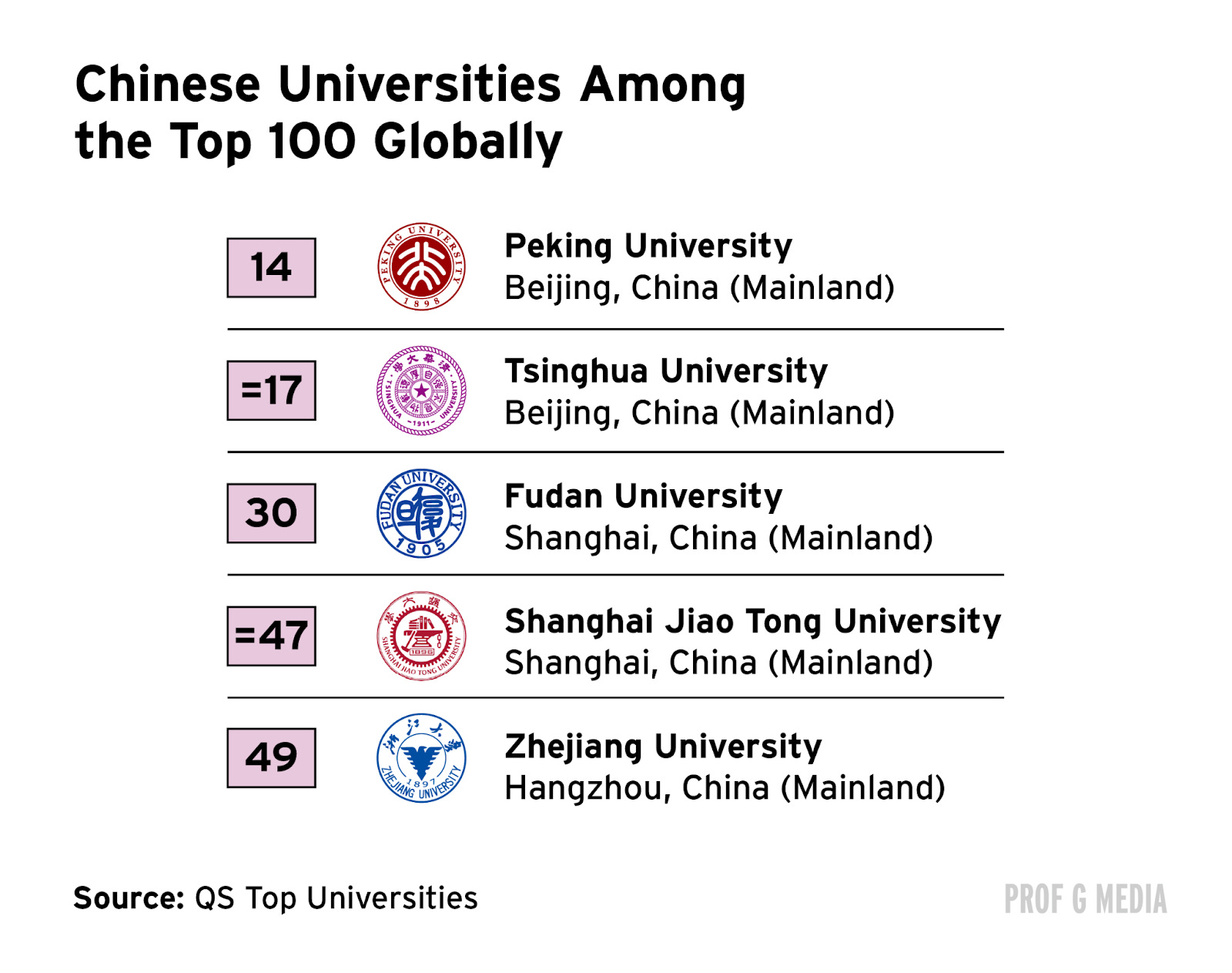
In 2010, only one mainland Chinese institution ranked in the top 50 of the QS World University Rankings. By 2025, the number had risen to five, as Chinese universities narrowed the gap with elite U.S. and U.K. institutions such as MIT, Imperial College London, Stanford, Oxford, and Harvard. The CWTS Leiden Ranking, meanwhile, found that 19 of the top 25 global universities are Chinese. Another report — the annual Times Higher Education list — showed the number of universities in China and Hong Kong ranked in the top 100 doubled to 12 over the past six years. The number of American universities slipped to 35 from 40.
James’s take: The rise of Chinese universities isn’t a coincidence. It’s a strategy. These universities may be independent, but there’s no doubt they’ve benefited from the Chinese Communist Party’s effort to raise their profile. You need to look at the rankings one-by-one. The Leiden report focuses on research, while the QS list is more comprehensive, looking at an array of factors such as internationalization. This is a category in which China falls short. Trust me, I know. I went to a Chinese university. (As foreigners, we were a rare breed.)
Some observers challenge the findings of the global rankings and the quality of Chinese research. The FT cited data from Retraction Watch, which tracks publication trends. The co-founder of the organization recorded almost 3,000 retractions of Chinese-authored papers in 2024, compared with 177 for U.S. authors. Others rightly argue that you can reach almost any conclusion you want based on the criteria you include. Times Higher Education — a British organization — unsurprisingly rates Oxford and Cambridge as No. 1 and No. 3.
Still, it doesn’t matter which list you rely on. The story is clear. Even the skeptics acknowledge that Chinese universities have made significant strides. Researchers at Princeton’s Paul and Marcia Wythes Center on Contemporary China have estimated that 80 to 90 professors in the U.S. return every year to China. Among the prominent scientists are Nieng Yan, a Princeton biologist who headed to Shenzhen Medical Academy of Research and Translation, and Song-Chun Zhu, a computer scientist who left UCLA for Peking University.
Alice’s take: I went to universities in the U.S. for both my undergraduate and graduate degrees, so I can’t speak from personal experience. But the conversations I’m having reinforce the data that show China is outpacing everyone else in AI research. In 2024, AI publications produced by China-based scholars exceeded the output of the U.S., U.K., and EU combined — but the sheer volume of research also raises questions about the quality. China has also been distancing itself from the U.S. in the number of STEM PhD graduates it produces. However, how do you measure the productivity and innovation that results? That’s not easy to answer.
One of the biggest questions for Chinese universities is the extent to which they can truly become international. I’m skeptical. For now, Chinese institutions can’t compare with their American and British peers. Fewer Americans today want to study in China. We’re mostly seeing foreign-educated Chinese students and professors return to China. That’s often for personal reasons — because they want to be closer to their aging parents, for example. I’m planning to take part in an event soon at NYU Shanghai. From what I understand, this program is reliant on Chinese students who want the NYU brand name on their CVs.
The Next Big Tech Disruption in China?
The F1 movie, co-produced by seven-time world champion Lewis Hamilton, won an Academy Award for Best Sound after being nominated for four awards. But while F1 generated a lot of buzz in Hollywood, the sport also captured headlines in China.
Seeking to boost its global brand, BYD, the Chinese company known for its electric and hybrid vehicles, is now looking into Formula One and other motorsport options, Bloomberg reported last week. That’s big news in a sport long dominated by European and American teams and comes at a time when BYD is expanding globally after overtaking Tesla in global EV sales. Still, gaining access to the sport won’t be easy. It often takes years of negotiations and costs as much as $500 million a season.
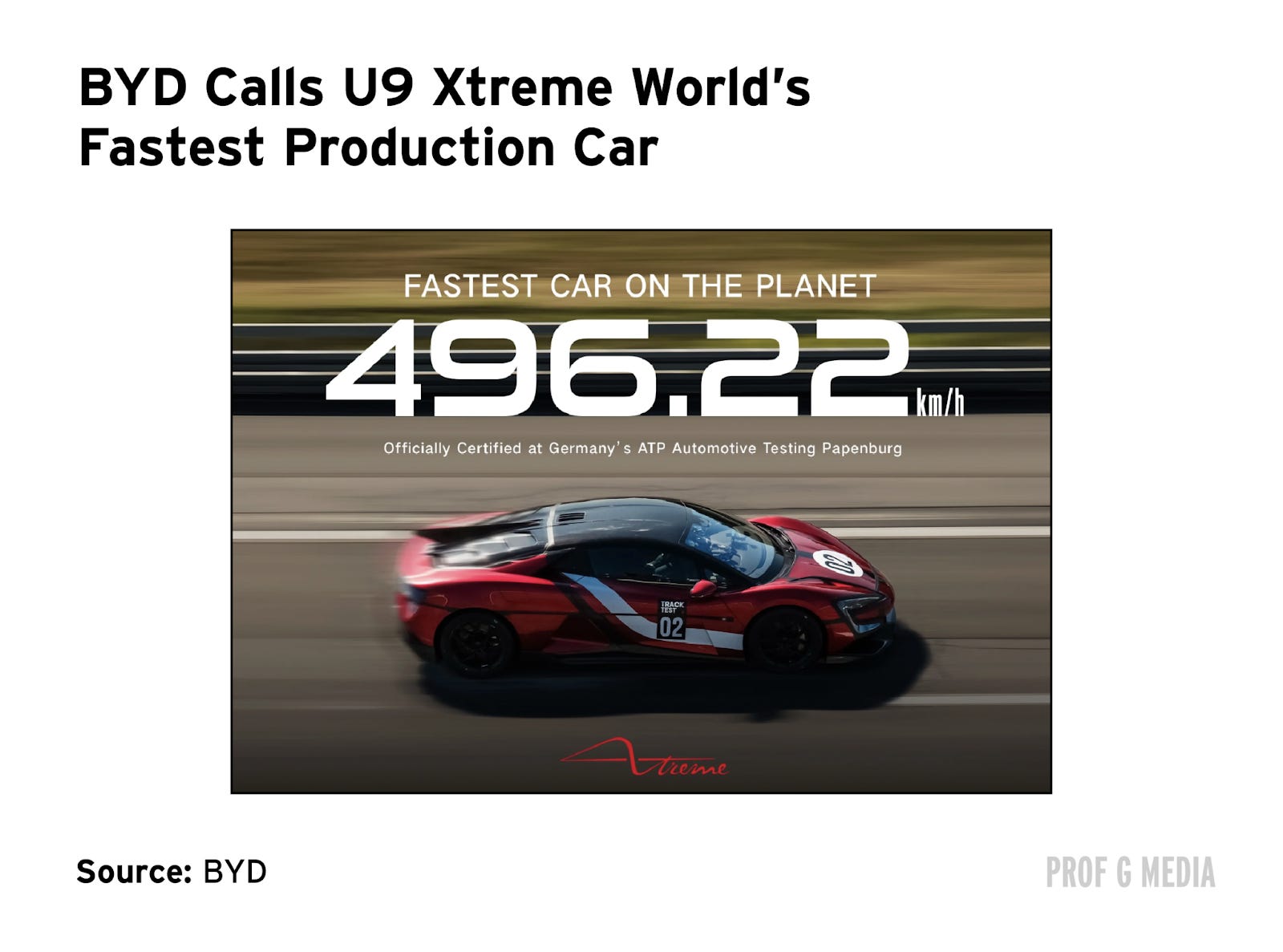
James’s take: BYD’s electric Yangwang U9 Xtreme recorded a top speed of more than 308 miles per hour (496 kilometers per hour) in a test last year in Germany. Speed isn’t the only factor. But based on that measure alone, this electric supercar on an open road would lick any modern F1 car with a combustion engine.
When I heard the news about BYD’s ambitions, my mind immediately turned to ByteDance’s AI video model, Seedance 2.0, which is generating hyper-realistic, cinema-quality clips from a few written prompts. F1 is potentially the next Chinese tech disruption story. Chinese consumers are fascinated with technology — it’s not uncommon for people to ask questions about your devices. Imagine racing technology combined with the glitz and glamor of the sport. This couldn’t be better designed for a Chinese audience.
Alice’s take: It’s clear Chinese consumers are crazy about F1, especially young women. Consider the Chinese Grand Prix in Shanghai. The three-day event attracted more than 230,000 spectators, the highest attendance reported by the Chinese financial center in almost two decades. The government is keen to back spectacles like the Grand Prix to spur spending. Trip.com reported huge increases in inbound tourists and hotel bookings.
Hamilton, who wasn’t able to attend the Oscars because of the F1 event in China, won over fans with his travel posts raving about the country’s natural beauty. But China has a local hero, too. Zhou Guanyu, who became the first Chinese F1 driver in 2022, is hugely popular. These anecdotes all point in one direction: Motorsports will probably take off, just as snow sports surged in popularity with support from the Chinese government.
It’s unclear whether an EV maker will gain entry into the sport. I love Formula 1 Drive to Survive, and I have to say it’s hard to beat the roar of a conventional motor. Can an electric vehicle deliver the same satisfaction? I doubt it. But the head of F1’s governing body has floated the possibility, and you have to take BYD seriously.
If a Chinese company gets the green light, BYD would be in pole position.
Eye-Watering Valuation for Chinese AI Developer
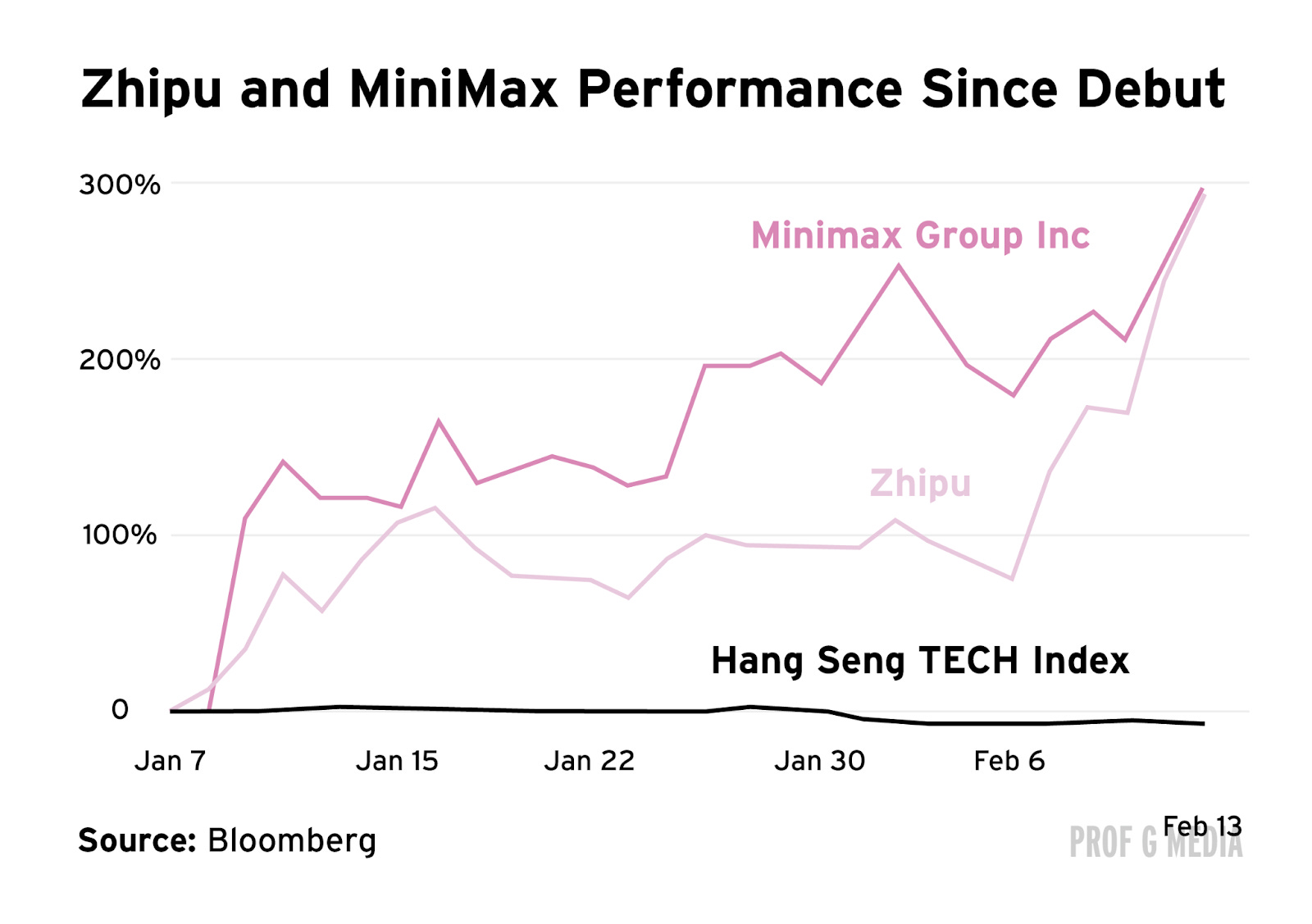
In another sign of the mounting interest in Chinese AI developers, Moonshot AI is seeking to raise money in a funding round that would value the company at an eye-watering $18 billion. Bloomberg reported that the company behind the popular Kimi chatbot aims to raise as much as $1 billion after securing more than $700 million earlier this year. In Hong Kong, meanwhile, competitors Zhipu and MiniMax have traded at valuations ranging from $30 billion to $40 billion.
As these Chinese AI companies expand globally and seek to take on the Silicon Valley giants, they’re also running into roadblocks. Anthropic last month accused Moonshot, DeepSeek, and MiniMax of improperly extracting capabilities from its Claude model to advance their own. With China spending billions to transform itself into an AI superpower and betting on the technology to drive economic growth, the story about the country’s AI companies is just beginning.
Alice’s Prediction: I expected Trump’s scheduled visit to Beijing to be delayed. Now the U.S. president is saying he plans to push back his trip by about a month due to the conflict in Iran. “It’s very simple,” he said. “I have got a war going on.” But what happens next is anything but easy, and the stakes are significant. If the summit with China’s Xi Jinping doesn’t happen, it opens the door to new risks for the U.S.-China relationship.
James’s Prediction: Virtual companions are already popular in China. This year, they’re going to take off. The market for AI avatars that remember your birthday, lend a sympathetic ear, and never ghost you will grow to about $1 billion this year, almost doubling from last year’s levels. I’ve yet to try one of these apps, but I might have to give it a go.