



This Friday, May 15 at 10 a.m. ET, Alice and James will by joined by Kevin Xu, author and founder of Interconnected, a bilingual newsletter exploring the intersections of tech, business, money, geopolitics, and U.S.-China relations.
Want early (unedited) access? We’re livestreaming the conversation on Substack, only for Prof G+ subscribers. Register here.
TL;DR
Does Xi have the upper hand in high-stakes meetings with Trump?
Tallying up trillions in overseas investment by Chinese companies
Xi’s military purge continues with two suspended death sentences
The Super Bowl for US-China Watchers Is Over — Many Questions Remain
Donald Trump and Xi Jinping are tackling a sprawling agenda in their long-awaited summit in Beijing, covering trade, rare earths, semiconductors, aviation, and artificial intelligence. Scott Kennedy, a senior adviser at the Center for Strategic and International Studies, said the Trump team arrived with a focus on five Bs: Boeing, beans, beef, the Board of Trade, and the Board of Investment. For China, it was the three Ts: Taiwan, tariffs, and technology.
But after what could be the first of four meetings this year, the main question is whether the world’s two major powers are moving toward a carefully managed coexistence or outright confrontation. To say the backdrop is complicated is an understatement. The war in Iran remains unresolved, while Taiwan, trade, and AI continue to be contentious topics.
Alice’s Take: This is the Super Bowl for followers of China-U.S. relations. There was a lot of analysis on the road leading up to the event, with commentary about who has the upper hand going into overdrive this week. I see the playing field as roughly even. My take on China’s priorities, having just spent a month in the country, boils down to three crucial issues. One is tariffs. China will want a modest reduction in the effective tariff rate. Secondly, they will likely push for more clarity on export controls. And the last point centers around the “Board of Investment” strategy. China is pressing for companies such as BYD and CATL to be able to set up plants in the U.S., either wholly owned or through joint ventures.
But there’s a second tier of issues important to China. Those include a resolution to the conflict in the Middle East — even though China would prefer to remain in the background — and, of course, Taiwan. Finally, there could be an attempt to connect North Korea and Washington, which could lead to a conversation between Trump and ‘Rocket Man’ Kim Jong Un.
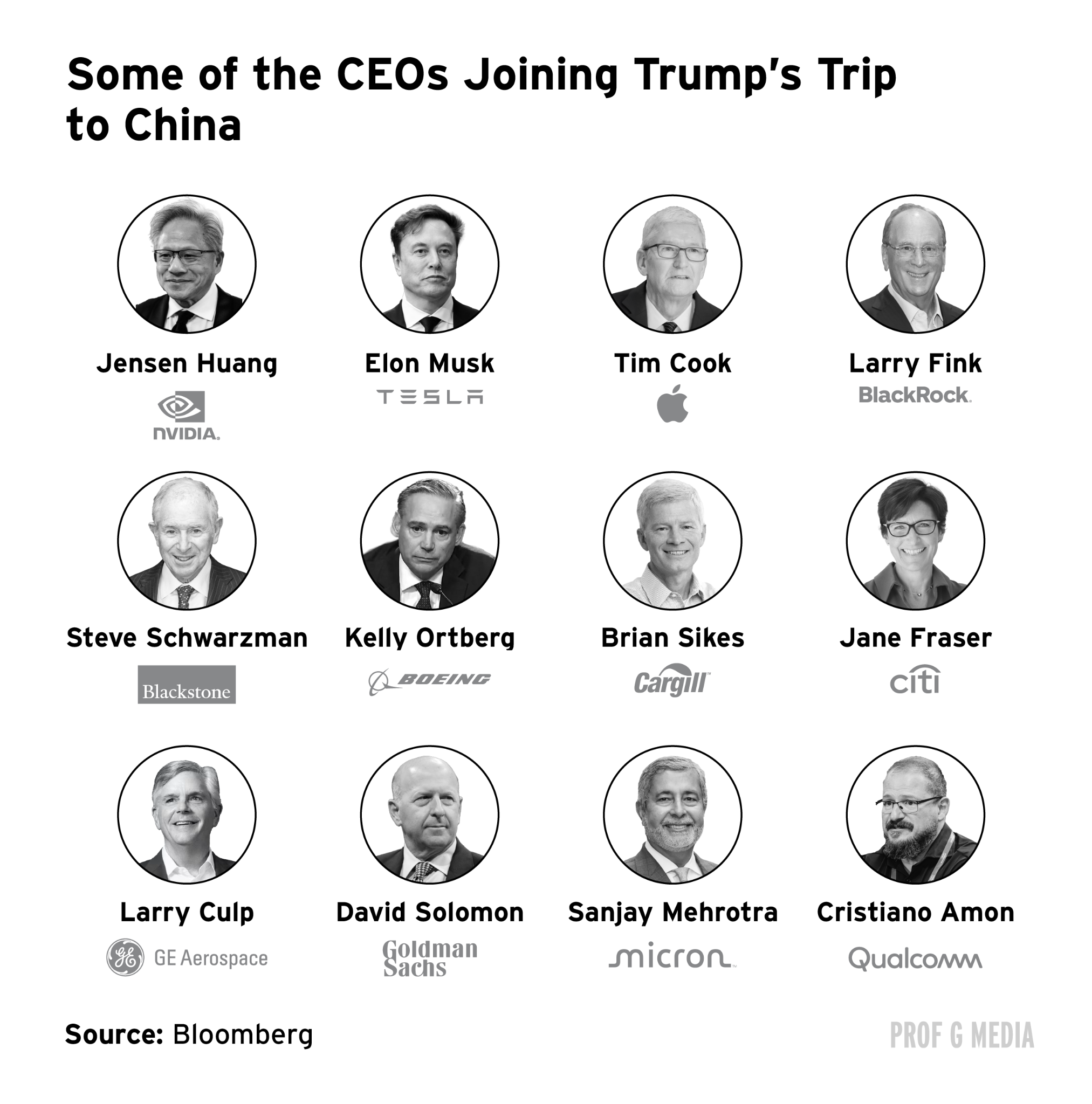
On the U.S. side, Trump needs a win. Behind him in Beijing is an entourage of American CEOs, including a surprise last-minute addition to the list: Nvidia’s Jensen Huang. Among names such as Tim Cook and Elon Musk are Boeing’s Kelly Ortberg and Cargill’s Brian Sikes. The White House has signaled it would like to see more agriculture and aviation purchases. You can also expect discussion about reducing the trade deficit, although the stats show bilateral trade volume in 2025 dropped by the most since 1979, the year when the U.S. and China officially established diplomatic relations. The U.S. share of Chinese exports to the world has fallen sharply since Trump last visited China in 2017. The conversation, meanwhile, is shifting more to dual-use technologies, which have both civilian and military applications.
James’ Take: I’d argue that this is the first U.S.-China summit in history where the Chinese leader sits down with the stronger hand. I’ll also go back to the 1970s. When Richard Nixon visited China in 1972, U.S. GDP was roughly 11 times China’s. When Trump headed to China in 2017, the U.S. was unambiguously the more powerful of the two. In nominal terms, the U.S. economy remains larger. But adjusted for purchasing power parity, China has eclipsed the U.S. In manufacturing, China accounts for roughly a third of global output, compared with about a sixth for the U.S. And when the Liberation Day tariffs hit 145%, China’s threat to restrict critical mineral exports was enough to bring those tariffs down to around 47%. That episode showed who blinks first. Today, Trump’s hand is relatively weaker, and Xi’s is relatively stronger.
Both sides see each other as an implacable adversary, and suspicion runs deep. But the rhetoric in public will be positive. The U.S. and China need each other. Each side seeks stability. The U.S. realizes China can play a critical role in resolving the conflict in Iran and unblocking the Strait of Hormuz. China is focusing on Taiwan. What Xi wants exactly remains unclear, but he will push for something more concrete. China is playing for big stakes.
How China Has Ascended the Tech Ladder Through a Back Door
A sweeping new study has found that Chinese companies have accumulated roughly $3.3 trillion in global corporate assets, far more than previously known. A significant portion of those funds is held through subsidiaries registered in the Cayman Islands and other tax havens — a structure that effectively masked the true ownership, the report found.
The study of almost 162,000 firms in 159 countries, led by researchers Jennie Bai, Luc Laeven, Yaojun Ke and Hong Ru, shines a light on a vast and largely hidden web of investments through which Chinese investors absorbed Western know-how.
Alice’s Take: This report demonstrates that cheap manufacturing and exports aren’t the only drivers of China’s economic transformation. There’s another factor behind China’s rise, raising the question of whether America helped build the competitor it is now seeking to contain.
This is like a modern-day version of “Slater the Traitor.” Samuel Slater was a skilled British textile engineer who is known as the father of the American factory system. However, the story is more complicated. Despite British laws preventing workers from sharing the secrets of the country’s textile mills, the Derbyshire, England-born factory worker headed to America and replicated the success of the British mills from memory. This is how the game is played. Take the research know-how and bring it back home to boost productivity and accelerate innovation. Whether these entrepreneurs are seen as heroes or traitors depends on where you live.
I see a few other key takeaways. The report shows how official stats fail to capture the true extent of China’s global acquisitions. But it’s also interesting because it challenges the conventional China narrative. This is a story of Chinese enterprises taking the initiative and going out into the world to bring innovation back home — rather than investments driven by top-down, state-led decisions. Chinese ownership of foreign manufacturing companies apparently tripled between 2019 and 2021, after decoupling rhetoric began in earnest.
James’ Take: This study is groundbreaking, revealing a massive back door that China has apparently used to make acquisitions and vault itself up the technological ladder. It’s also a significant contribution to our understanding of how the global economy truly works.
The headline findings are stunning. But what makes this paper even more remarkable is the way these researchers analyzed the operations of Chinese companies registered in tax havens. I have no idea how they’ve pulled this off. Probably every China journalist under the sun has tried to shine a light on the secret tax haven activity of Chinese companies. It’s incredibly difficult, seemingly impossible, to identify the companies and their investments.
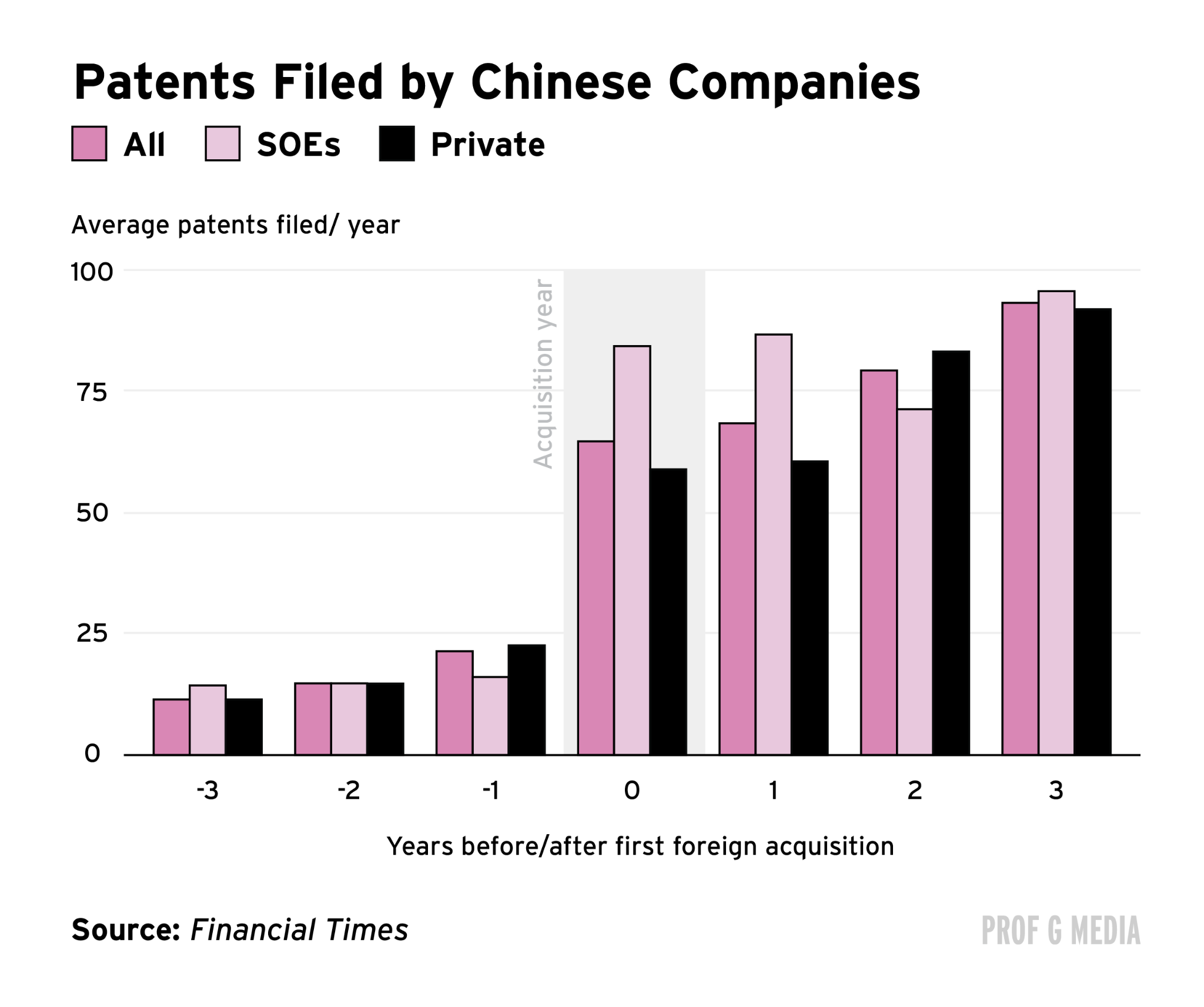
These weren’t random acquisitions. The strategy is striking. The investment targets were disproportionately research-intensive firms in Europe and North America, apparently chosen for their pre-patent intellectual property. After the investments, patent filings surged in China. In 2024, China’s IP office received 1.8 million patent applications, more than three times the number submitted to the U.S. Patent and Trademark Office.
Xi’s Corruption Crackdown Zeroes in On Two Senior Officials
China sentenced two former defence ministers to death with a two-year reprieve over graft charges, meaning they will likely spend the rest of their lives in prison. Wei Fenghe and Li Shangfu are the most senior officers so far to be targeted in Xi’s corruption crackdown.
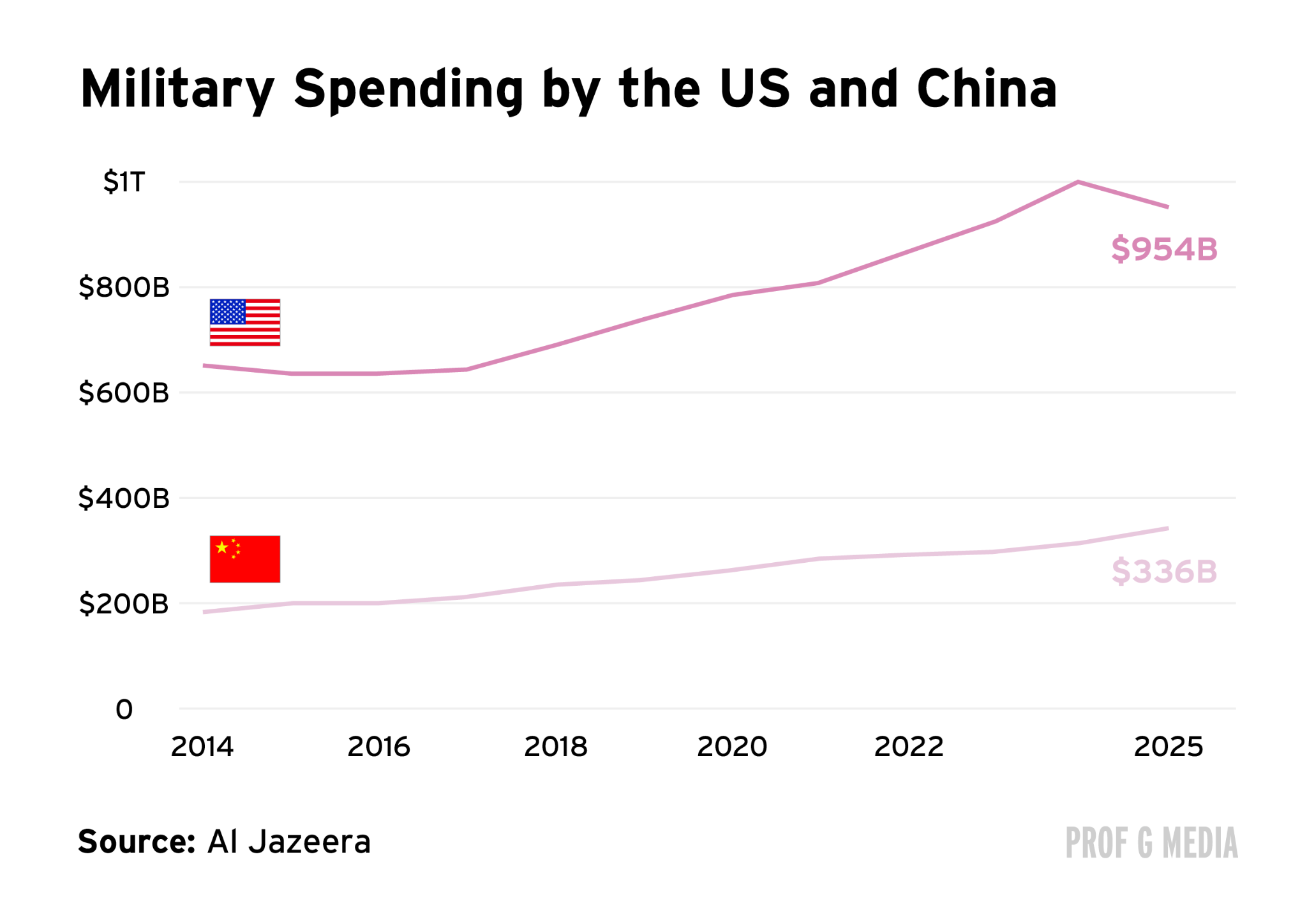
About 100 officers in the military’s top ranks have been removed or investigated in Xi’s campaign, with some disappearing from public view without any explanation. The purge has raised questions about the readiness of the country’s armed forces, hollowing out the military’s leadership at a time when Xi is trying to build a world-class fighting force.
Alice’s take: The sentences are officially tied to corruption. But this purge increasingly looks like it’s about loyalty, control and preparing the military for a potentially dangerous geopolitical era ahead. One of the main concerns is the emergence of rival power factions within the People’s Liberation Army resulting from internal promotions by top senior officials.
The Central Military Commission has gone from seven members in 2022 to just two: Xi and Zhang Shengmin, who has served as the top anticorruption investigator in the military. That will need to be replenished, probably in the next Communist Party congress in late 2027. The upshot is that a showdown over Taiwan would be too risky for China in the next year or two.
James’ Take: Li Shangfu and Wei Fenghe are the most senior Chinese Communist Party officials to be imprisoned in Xi’s sweeping purge. They’re likely headed to Qincheng, a prison on the outskirts of Beijing — a facility I remember visiting as a journalist, at least to the perimeter.
For the former elite, including Bo Xilai, the former Politburo member who was once considered a potential rival to Xi, the conditions are reportedly more comfortable than what ordinary inmates would expect: private cells of around 20 square meters, access to television, better food and sometimes en suite bathrooms. That’s a sharp contrast to the experience of foreigners I’ve met who’ve spent time in Chinese prisons, a uniquely harrowing experience. Sidney Rittenberg, an American and one of the few non-Chinese people to become a senior member of the Chinese Community party, served 16 years in solitary confinement, accused of being a spy.
James’ Prediction: Chinese exports of solar power technology, batteries and electric vehicles will rise by at least 30% this year compared with 2025 levels. That will follow an average gain of 70% for those three categories in March. The war in Iran has been a boon for those exports as the crisis in the Strait of Hormuz hits oil supplies. Eventually, the tensions will ease, however, and the impetus to buy renewable energy technologies from China will cool off.
Alice’s Prediction: At first, Jensen Huang’s absence from the CEO delegation signaled that an announcement of Chinese acceptance of Nvidia’s H200 chip imports was off the table — a setback for his ambitions in China. Nvidia is awaiting approval to begin shipping the AI chips. Now he’s joining the president. But it’s still unclear whether the two leaders will discuss Nvidia. China will continue to publicly suggest it doesn’t need U.S. chips and pour its support into domestic semiconductor alternatives. The public and private market momentum behind China’s chip champions is real, and I see further upside in Chinese semiconductor stocks.