


5-min read
I interviewed Professor Jonathan Haidt yesterday on the Prof G podcast. Professor Haidt, as he does, made several interesting points on the state of play concerning what is going on with … us.
Our Superpower
Bees, wasps, ants, the naked mole rat, and humans are thriving superspecies because of a remarkable attribute: cooperation. This superpower is never more evident than when under attack from a physical enemy. As Russell Crowe proclaimed in Gladiator, “Whatever comes out of these gates, we’ve got a better chance of survival if we work together. If we stay together, we survive.” Reagan also said our differences would disappear if aliens invaded.
So, cooperation in the face of a sentient enemy brings out the best in us — the good news. The bad news: a bigger threat can augur poorly. More people have died from pathogens than war and violence. As a result, disgust (what makes us want to puke) is an effective adaptive system for disease avoidance behavior. So if Spock were president, the budget for the CDC would be $727 billion (National Defense Budget) vs. $7.3 billion. However, fighting pathogens makes for boring half-time flyovers (vs. F-15s) and dull uniforms (think hazmat). Granted, Contagion was a decent film. However, I speculate the payoff for most of us was seeing Gwyneth Paltrow’s character die.
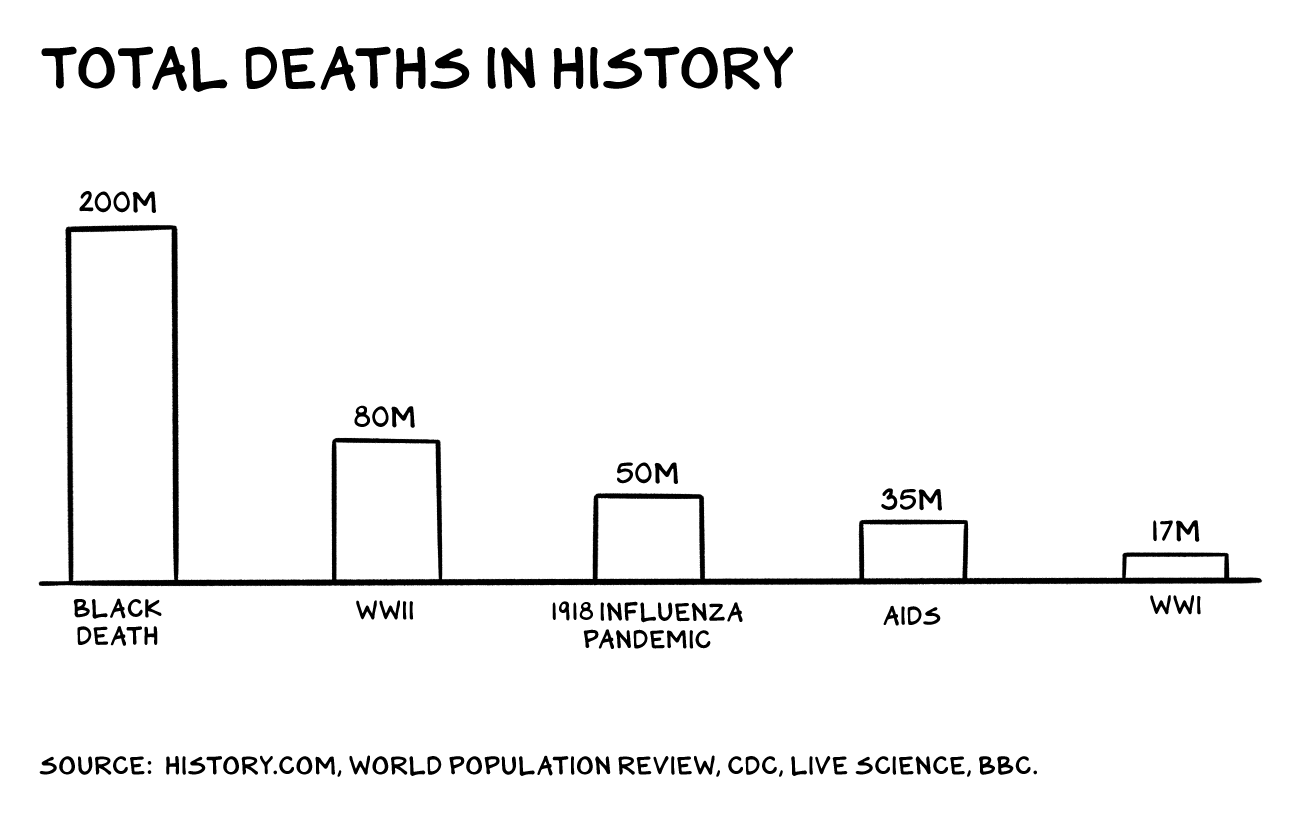
When confronted with a pathogen, vs. an Ork, we see the person next to us as a threat and not an ally. This leads to division and racism, as evidenced by the president calling corona “the Chinese virus” and the Chinese spinning rumors that the US Army started the virus. This, coupled with a political system and social media algos that garner votes and earnings via division, and our superspecies turns feral. Governors competing with each other for ventilators, because the government refuses to federalize the supply chain — chaos. Our lizard brain takes over. The Glock my college roommate just bought won’t help much. Fairly certain single-strand-RNA viruses are not intimidated by handguns.
Jon Haidt mentioned that the “demo” in “democracy” means people, and people, in isolation, make shitty short-term decisions — I want lower taxes and more payments transferred to (wait for it) me. A liberal democracy is meant to inject institutions that slow our thinking and look ahead. The stimulus package is an example of our institutions working. It would appear that threats to our economy inspire our collective humanity, but threats to our health inspire division. In sum, your Benjamins are safer than his descendants.
The Platinum Lining
Each year, a million people don’t die because of the measles vaccine. Vaccines are first-ballot Hall of Fame for things we’ve done right. It sounds obvious in hindsight, but take pause and wonder at the crazy genius notion that to prepare for an enemy, we introduce a small amount.
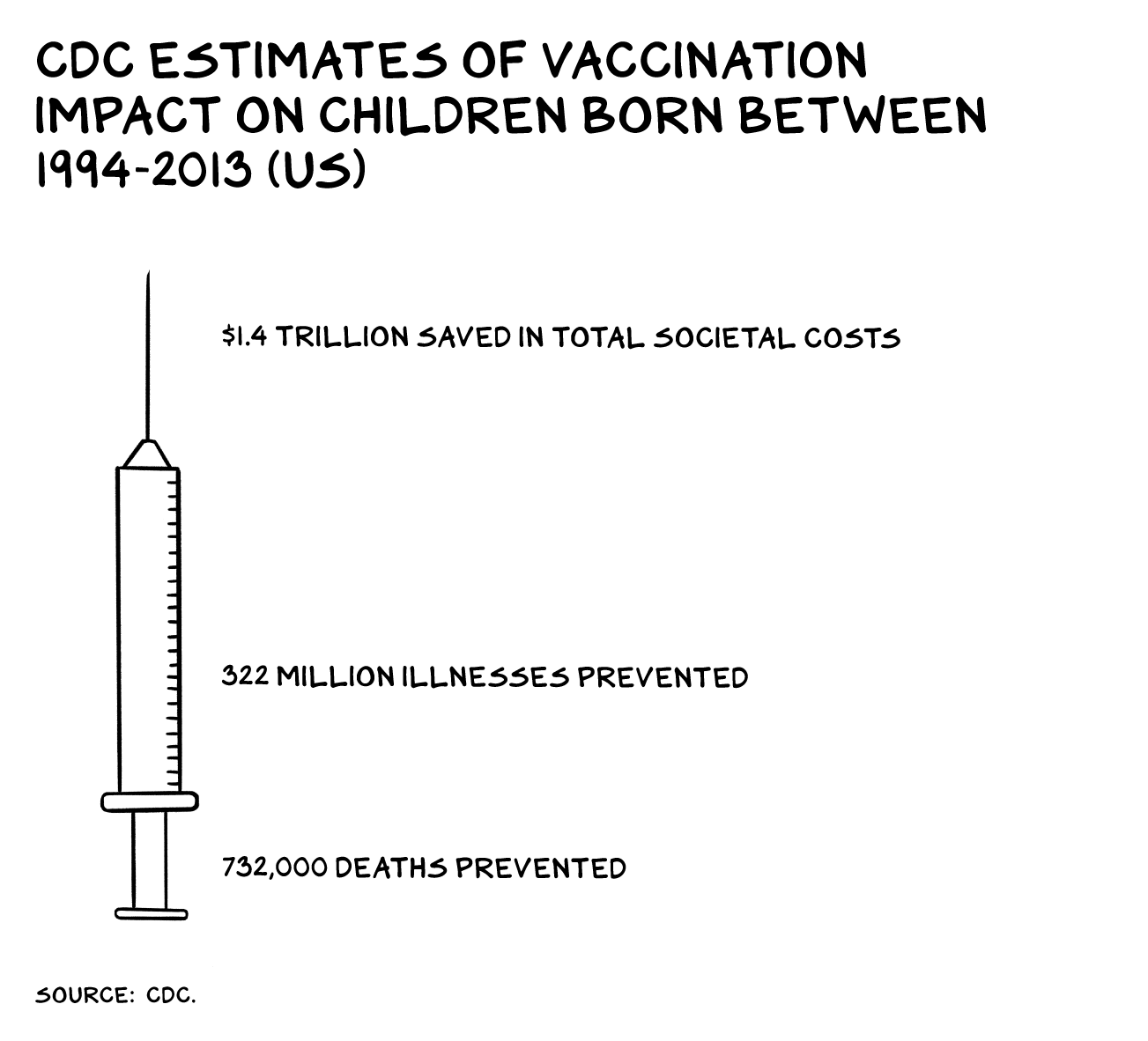
Could corona be the vaccine for our age?
If/when this pandemic ends, might we emerge with a stronger immune system: the ability to ramp hospital beds and ventilators, enhanced systems for learning and cooperation, and a generation that places more importance on cooperation, and less on borders, political ideology, or number of Instagram followers?
The millennial generation is accused of being expectant, and Gen Z is prone to depression due to a mix of social media and helicopter parenting. Might this move a generation from fragile to antifragile (robust)? Our music preference and worldview are imprinted between the ages of 13-19. Will a product of this crisis be a generation of leaders that, post-crisis, embrace innovation (vaccines, supply chain agility), empathy, and cooperation that better prepare us for the many challenges our growing world will face?
Will we learn and adapt? We have an opportunity to take something that kills .1% of us and have it make 99.9% of us stronger. Don’t waste it. A virus that kills millions, but serves as a wake-up call for billions? Is COVID-19 a vaccine?
Many of us are distilling the meaningful (economic security, political ideology, global competition) down to the profound — the well-being of people we love. I’d like to think the strongest, most fortunate among us are transitioning from our heels to our toes to ensure our legacy as parents, bosses, and citizens was to reduce the suffering of people we never met.
The Line Between Joy and Terror
Sheltering in place has made me more empathetic for the sick, people caring for the sick, and medical professionals on the front line of this battle. After 11 days 24/7 with my kids, I also have more empathy for mothers who drive their kids, and themselves, into a lake in a minivan. It’s always a minivan.
I have it relatively easy, and have convinced my family that I must stay focused on work as the world needs more cooperation, ventilators, and … podcasts. There are board games and ultimate frisbee during the day. But the official changing of the guard is the hour pre-bedtime, when my sons’ mother sneaks out and shelters in (any other) place with a bottle of rosé.
While Mom was socially distancing from us last night, my oldest screamed “Roach!” and both my boys (no joke) jumped up on the table. Where did they even learn to do that, a cartoon? We’re staying at a friends’ house. I found a leaf blower in the garage earlier this week. Each day, I strap the glorious hunk of machine on my back, gas it up, and it’s time to spread a little Scott around the backyard. I tour the property and bluster anything in my way. I’m a one-man tempest. The rival dads in the neighborhood must be impressed.
As I have a new sense of my own macho, I grabbed a shoe and turned the waterbug into juice with antennae. I then pretended to scoop it up and ran toward my kids with my hand extended as if pursuing them with a machete. The chase was on.
After several laps around the dining table they found sanctuary outside and attempted to barricade the door with outdoor furniture. I retreated to the kitchen, turned out the lights, exited through the garage, snuck up behind them, and screamed, with the hand of roach juice extended, “Roach MAN!” My oldest screamed, ran, and erupted in laughter. The kind of laughter every parent wants to remember in their last moments on earth. Nothing else, no other thought, just this singular sound that requires no interpretation.
My youngest, in contrast, screamed, collapsed, and began sobbing. It appears the line between joy and terror is around 11 years old. Youngest and oldest sons, terror and joy respectively. These conflicting emotions put me very much in the moment.
My youngest retreats to his room. I run after him. He’s in bed under the covers crying: “I told you not to do that.” He didn’t, but that’s besides the point. It’s a weird feeling, being “Scary” Dad. In that moment, you’ve failed. Your only real job is to protect, vs. threaten, your offspring. The solace is your mistake is fixable. After consoling him, we reattach to our father-son dynamic: pajamas, brushing teeth, reading, and adjusting his back. We’re good again.
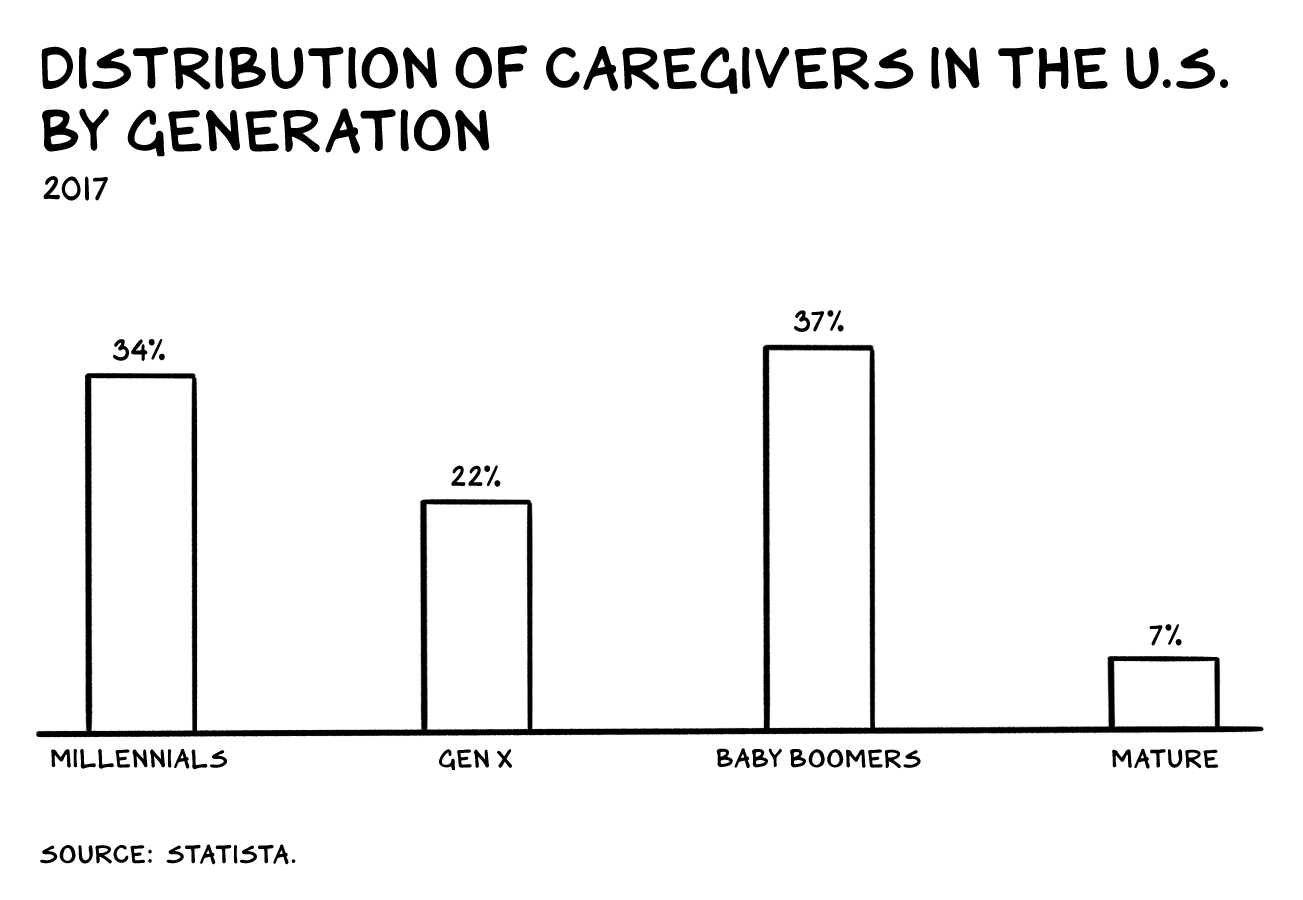
Caregivers live longer, and are happier, than anyone. I had kids late in life and never really comforted anybody until I was in my late thirties, when my mom was dying. And now with kids. The species chooses prosperity, and its foundation is people irrationally passionate about the well-being of someone else.
The rewards of comforting others are primitive, and immense. For a moment, it all (specifically your role here) makes sense. Our healthcare workers are exposing themselves to substantial stress and risk. I’d imagine it’s also very rewarding as, simply put, they matter, a great deal.
Most of us are in a position to offer relief, help to another. To not comfort someone is to deny yourself something wonderful — connection and meaning. This is a stressful time. Put yourself in the moment and comfort someone. You deserve it.
This pic was taken in Morristown, NJ, this week:

Life is so rich,

P.S. Hear my whole conversation with Jonathan Haidt on Apple, Spotify, or wherever you listen to podcasts.