


Software stocks got pummeled last week. The S&P 500 Software and Services Index declined 8%, dragging the Nasdaq 100 into its biggest three-day slide since last April. Though stocks recovered on Friday, Salesforce, ServiceNow, and Atlassian are still down 25%, 30%, 40%, respectively, so far this year.
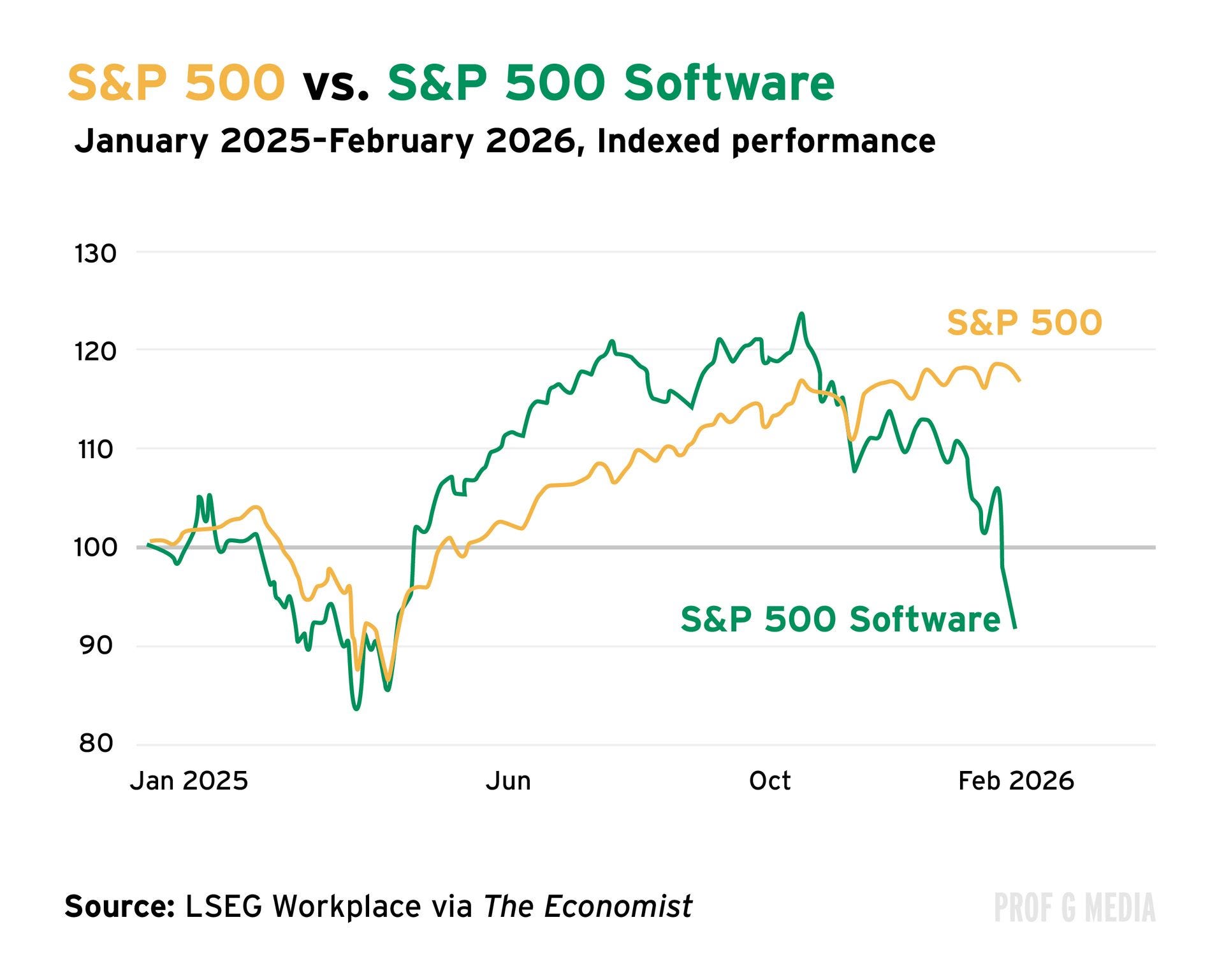
The sell-off was triggered by a wave of new AI tools that spooked investors. Anthropic rolled out industry-specific products for legal, finance, and customer service. OpenAI launched a more powerful, multi-agent version of its coding tool and a new platform to help companies deploy AI agents.
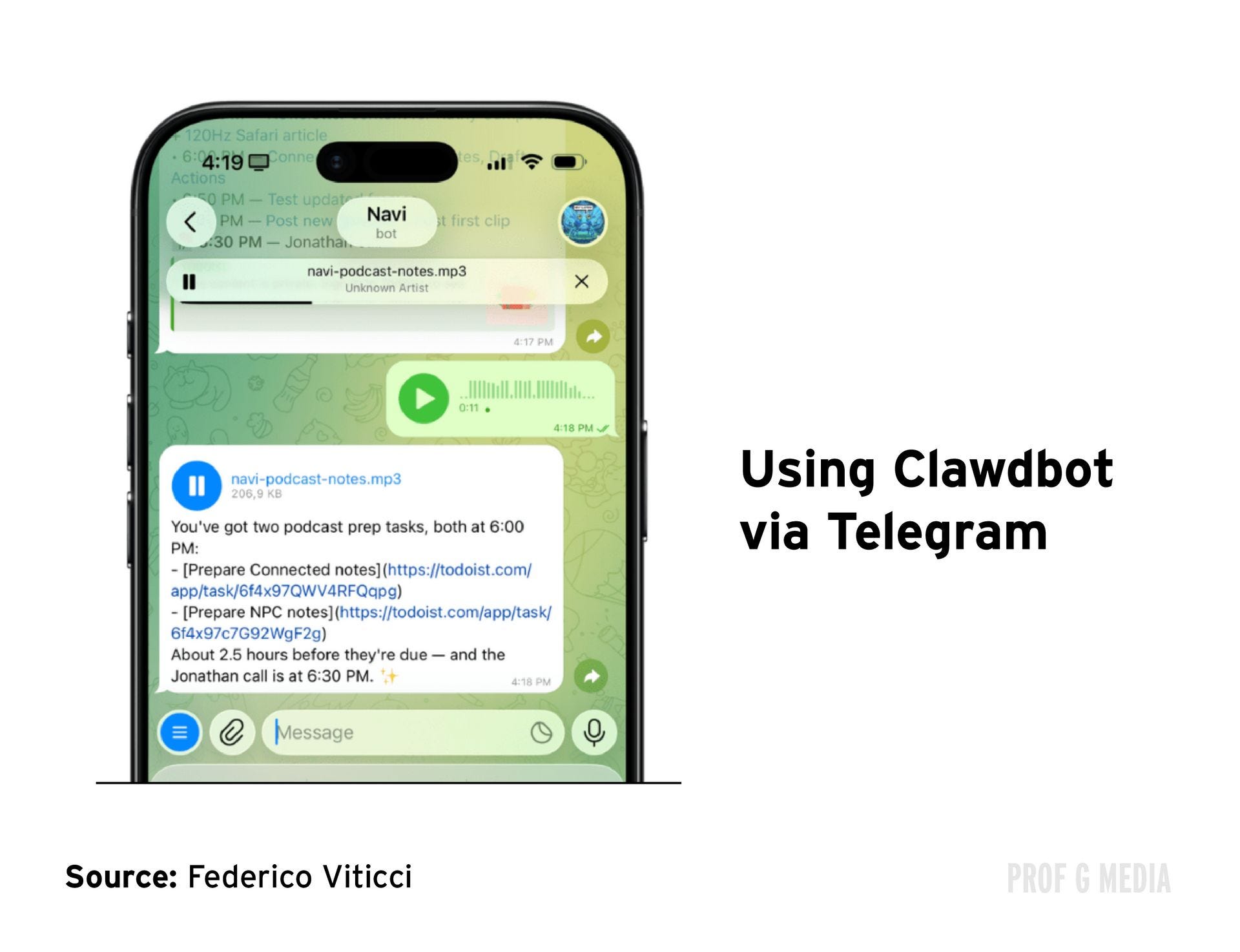
To top it off, OpenClaw, a new, open-source AI assistant, exploded on social media. Self-dubbed “the AI that actually does things,” it can execute tasks on its own and remember past interactions, allowing it to learn user preferences and perform personalized actions.
Unlike ChatGPT or Claude, users tell OpenClaw what they’d like it to do via tools they already use daily — WhatsApp, Telegram, Discord, Slack, iMessage, and over a dozen other messaging platforms.
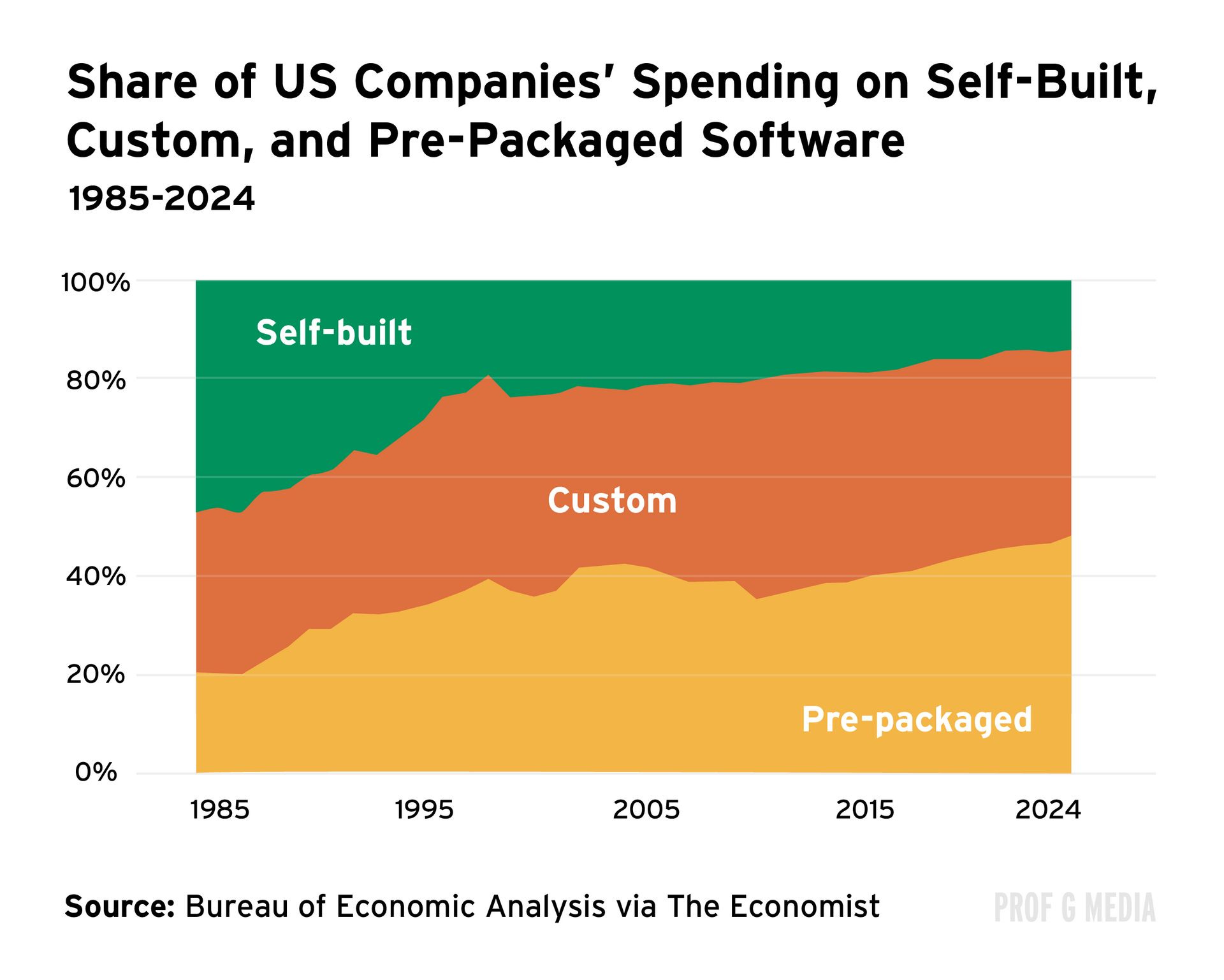
The sell-off reflects growing concern that AI agents could disintermediate the entire software-as-a-service industry. If companies can build their own software with AI, why would they keep paying for traditional SaaS products?
There are signs that software company revenues are already softening. So far this earnings season, just 71% of software companies in the S&P 500 have beaten revenue expectations. That compares with 85% for the overall tech sector.
Robert Armstrong, the Financial Times’ U.S. financial commentator and frequent Markets guest, observed that last week’s carnage was part of a structural shift out of the tech sector and into lower-growth, more defensive categories. While the S&P 500 is down almost 1% so far this year, the equal weight S&P 500 is up nearly 4%, and “unsexy” sectors like household and personal care, discount stores, and construction machinery are up 10%, 16%, and 24%, respectively.

This is panic selling. It’s very similar to what happened when ChatGPT came onto the scene. Everyone decided that search was dead, and Google stock cratered. But since then, Google has risen 280%. They learned from ChatGPT, they invested in AI, and their search revenue is up 50% since ChatGPT was released.
The same thing is happening here. Software isn’t dead. Nothing is stopping these companies from integrating AI into their existing products.
The other point that people aren’t recognizing is that switching costs are huge for enterprises. It takes on average more than half a year to find a new service provider. Executives need to sign off on the decision. It also costs money. If you’re going to terminate the contract, then you can expect to pay 100% of the remaining fees.
The other thing they’re counting out is trust. They don’t have those same relationships with the newer startups. As the old saying goes, “Nobody ever got fired for going with IBM” — in this case, it’s Salesforce or Adobe.
But everyone started selling because they’re nervous, and they can’t tell what’s going to happen in the future. Markets hate uncertainty. That’s when you want to dive in.
You can read more about the opportunities I see in the market after the software sell-off in my latest edition of Simply Put, out tomorrow. Subscribe here.