


A few months ago, I wrote about powerful people’s ability to override guardrails. Just as badmouthing your ex is poor form, turning on the institutions that are the bedrock of your success is bad for the commonwealth and plain tacky. Coco Chanel said the opposite of luxury is not poverty, but vulgarity. The culture among our “innovators” is the opposite of luxury.
The “idolatry of innovators,” leads to the misguided notion that people (usually men) of great achievement (usually in tech) should not be criticized, are not bound by a code of ethics, and are above the law. This is bad for society and, eventually, for the innovators themselves. Constraints are essential to enduring innovation. Corruption and economic growth are inversely correlated. Resistance builds strength, and a level playing field rewards talent vs. cronyism. Humans operate poorly in the absence of limits/structure, and given free rein we lean into narcissism and dissipation.
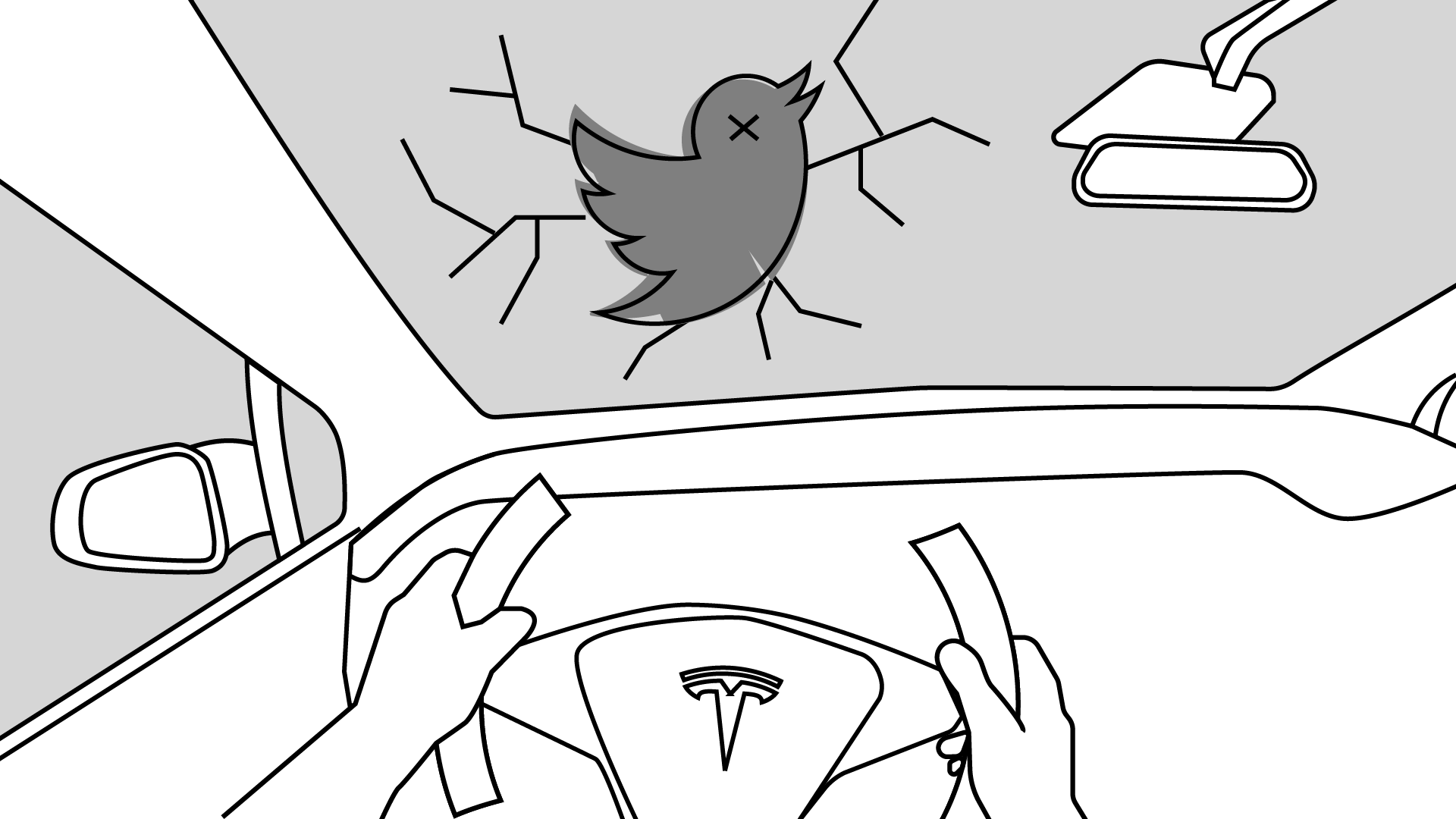
Worse than the absence of guardrails: the presence of enablers.
Say Anything
Dr. Merete Wedell-Wedellsborg, a psychologist who studies powerful executives, military operatives, and law enforcement personnel, has found the action (or more often inaction) of those surrounding powerful leaders is critical to their unethical behavior. Enablers develop a “cultural numbness” to the behavior of their leaders (whose past successes justify liberties) that eventually gets baked into the culture of an organization.
Ken Auletta’s biography of Harvey Weinstein, subtitled The Culture of Silence, explores how abusers foster “a culture that normalizes the abnormal.” Powerful people have typically demonstrated outsize talent or made a large contribution to society, so there’s always cloud cover or even some justification for their missteps. We’ve developed an entire mythology around artists and innovators whose excesses are positioned as features not bugs. Picasso was terrible to his romantic partners (two committed suicide), but Wikipedia launders his misogyny: “The women in Picasso’s life played an important role in the emotional and erotic aspects of his creative expression, and the tumultuous nature of these relationships has been considered vital to his artistic process.” No, he was an asshole.
Since Steve Jobs, the gestalt in tech is that a talented, nice CEO … is talented. A talented CEO who is unreasonable is a genius. The powerful skirt guardrails, and remove them altogether with enablers. For enablers, criticism of the leader, no matter how justified, feels like criticism of the followers who’ve accepted his behavior. Shamelessness becomes the leader’s superpower. The willingness to flout critics draws followers who lack the same power and conflate malformed behavior with leadership and validation of their success.
New Phone, Who Dis?
Enablement is shitty work as the loyalty runs one way. When consequences come for the powerful — and they usually do — enablers are cannon fodder. The January 6 hearings have featured a parade of Trump’s abandoned enablers. This week we heard from two men who stormed the Capitol, caught up in the proximity and promise of the most powerful man in the world. After months of consuming Trump’s “Stop the Steal” dross on social media, Stephen Ayers spent 10 minutes inside the Capitol on January 6, recording the event on his phone. For that, he’s lost his job and house, and gained a criminal record. (He pled guilty to disorderly conduct.)

While nearly a thousand foot soldiers languish in the criminal justice system, earned ruination has yet to come for Trump’s most powerful enablers. In Thank You for Your Servitude, Mark Leibovich paints a dispiriting picture of the abasement of Republican leadership at the feet of the former president (“Trump leg-humpers”). With few exceptions, the GOP power structure has made a trade: Proximity to Trump’s power is more valuable than fealty to their oath of office, or self-respect. So far, they’ve been right.
Valley of the Damned
Roger McNamee, an early investor in Facebook, has spent the past decade calling attention to the dangers spawned by tech. After Elon announced his intention to renege on his contractual obligation to buy Twitter for $44 billion, Roger said on CNBC:
I view Elon Musk as being the figurehead for a business culture that has just gone completely off the rails. We’ve gotten into this mode in Silicon Valley that we use technology to exploit human weakness rather than empower people, and we’ve supported a management culture that is so self-centered it has no respect for the people who are touched by the product, has no respect for the rules. And in the long run, that’s bad for investors, bad for the economy, and bad for the country.
Examples that support Roger’s point are ubiquitous. Travis Kalanick built Uber by violating transport and labor law — until finally the bro-yest bro in bro-ville became too much for even his feeble board of directors. Zuck, more disciplined than Kalanick, has maintained an iron grip on his dangerous and destructive business, monetizing teen depression and cultural rage. Crypto, at this moment, feels more like a pyramid scheme built on other pyramid schemes, vs. an innovation that creates enduring value.
And then there’s Elon. Musk’s diversions are not on the order of Weinstein’s or Trump’s, but as his Twitter misadventure illustrates, he too has leveraged success to replace guardrails with enablers.
The boards at Elon’s companies are a disgrace to the term. A board is charged with managing the CEO – hold them accountable for meeting business targets, coach them through difficulties, and act as fiduciaries for stakeholders. Committing securities fraud, as Elon did when he lied about the funding to take Tesla private, is a breach of the CEO’s fiduciary duty. Firing Elon wouldn’t have been in the best interest of the Tesla shareholders … but neither was doing nothing.
Demagoguery relies on a manufactured sense of aggrievement. Many of Elon’s semi-anonymous keyboard flock may or may not own a Tesla or Tesla stock, yet they are rallying to the defense of their hero — the wealthiest man in the world. Elon and his enablers need the criticisms of infidels to justify their culture of attack. His actual positions are fatuous. His professed love of free speech has nothing to do with actual civil rights, real civic engagement, or his own conduct. His reasons for abandoning the Twitter deal have been described by financial observers as “risible” and “absurd … stupid.” Elon was no more going to “fix” Twitter than Trump was going to force Mexico to pay for the wall.
There’s a lesson for critics and those of us on the left who are outraged at the lack of outrage. Engaging with Elon, or any person who commands a keyboard army, only feeds those who find rallying to his support so satisfying. I’m guilty of this. Feeding the beast is also what happens every time we hear the national anthem of Wokistan. Policing every misstep from the approved orthodoxy can ruin careers — just ask college instructors how comfortable they feel having a real discussion about a social justice issue (i.e., exploring/acknowledging both sides). It’s the same sort of tribal intolerance and serves the interests of the powerful, not the powerless, as it rallies their enablers and deepens that bond. Intolerance should be the target of progress, not its tool.
The woke mob’s Guardians of Gotcha crusade is so inconsistent and hypocritical, it gives rise to personalities whose invidious behavior is conflated with leadership … standing up to the mob. A senator and comedian are expelled and sanctioned, respectively, for playing grabass and not picking up on nonverbal cues during a tryst. But 3 births, 2 women, 1 subordinate, 1 hush money payment, and 6,000 employees toyed with like Kong balls, in the same quarter, that’s “Elon being Elon.”
Net Gainers
Technology and the economic prosperity it’s created are gifts to the world. We are net gainers from the Valley and Big Tech. The problem is with the word “net.” Roger McNamee put his finger on it. Demagoguery and the predations of the powerful have been a problem for society since societies first existed. But they’ve reached a fever pitch in tech.

The confluence of social and mobile that brings us all into a 24/7 shouting match has made the tower of idolatry higher and the blast area wider.
Guard & Rail
Re Twitter, however, Elon has hit a guardrail that won’t give way. I believe the Delaware Court of Chancery is the barrier Elon and his enablers can’t intimidate. He’s trying to exit a hermetically sealed contractual obligation to pay Twitter’s shareholders $54.20 a share. His arguments are laughable.
Twitter has sued him in Delaware, which, for bizarre historical reasons, often has jurisdiction over these corporate disputes. The Twitter complaint is compelling and reeks of truth. Also, the chancellors (i.e., judges) don’t give a shit what Elon, his followers, or Valley sycophants laundering his BS think of them.
Within a few months — the Court of Chancery is built for speed; no jury, no opening arguments — expect Elon to be on the hook for $44 billion. Either he’s the new owner of Twitter, after paying twice its market value, or he’ll settle with Twitter’s board for billions (plural). That’s clearly what the market believes: Twitter’s stock is trading around $36, above when Elon began acquiring shares, while the stocks of its peer group are off 15% to 60% since then. Similar to Yahoo and MicroStrategy, which became tracking stocks for Alibaba and Bitcoin, Twitter is now a tracking stock for a contract law case.

The likely natural level, sans Musk, of Twitter’s stock is around $20 per share. The difference is the market’s realization that shares in Twitter represent not only ownership in the IP and cash flows of the platform — but also a binding contract that will compel the richest man in the world to pay them $54.20/share.
Twitter shares will increasingly become a proxy for the veracity of the company’s case against Musk. And the case against Musk is strengthening. Since Tuesday, when the complaint was filed, the market is flat/down. Twitter’s stock, however, is up 12%. Why? The (strikingly similar) conclusions of legal scholars is that the court is not interested in bearing Elon’s children or prostrating themselves, but upholding the agreement he signed. We are a nation of immigrants, innovation, and liberty. Also, we are a nation of laws.
Life is so rich,
P.S. Eric Ng helped rebrand Airbnb — and he’s our newest professor. Sign up for How to Write a Great Creative Brief, happening next Friday.