



TL;DR
Challenges — and Opportunities — for China After U.S. Attacks Iran
China’s New Five-Year Economic Plan and the Race for Self-Reliance
How a Fatal Crash and Safety Reckoning Impacts China EV Industry
Newsletter Extra: Who’s the Winner in the Anthropic-Pentagon Fight?
China Denounces Trump. Now Xi Jinping Gets Ready to Host Him
After sending special forces into Caracas to capture Venezuelan President Nicolas Maduro, Donald Trump has taken out a second leader with close ties to Beijing, ordering strikes on Iran that killed Ayatollah Ali Khamenei. The joint U.S.-Israel assault has drawn condemnation from China and raised doubts about Trump’s planned visit to Beijing, which would mark the first trip to the country by a U.S. president since 2017.
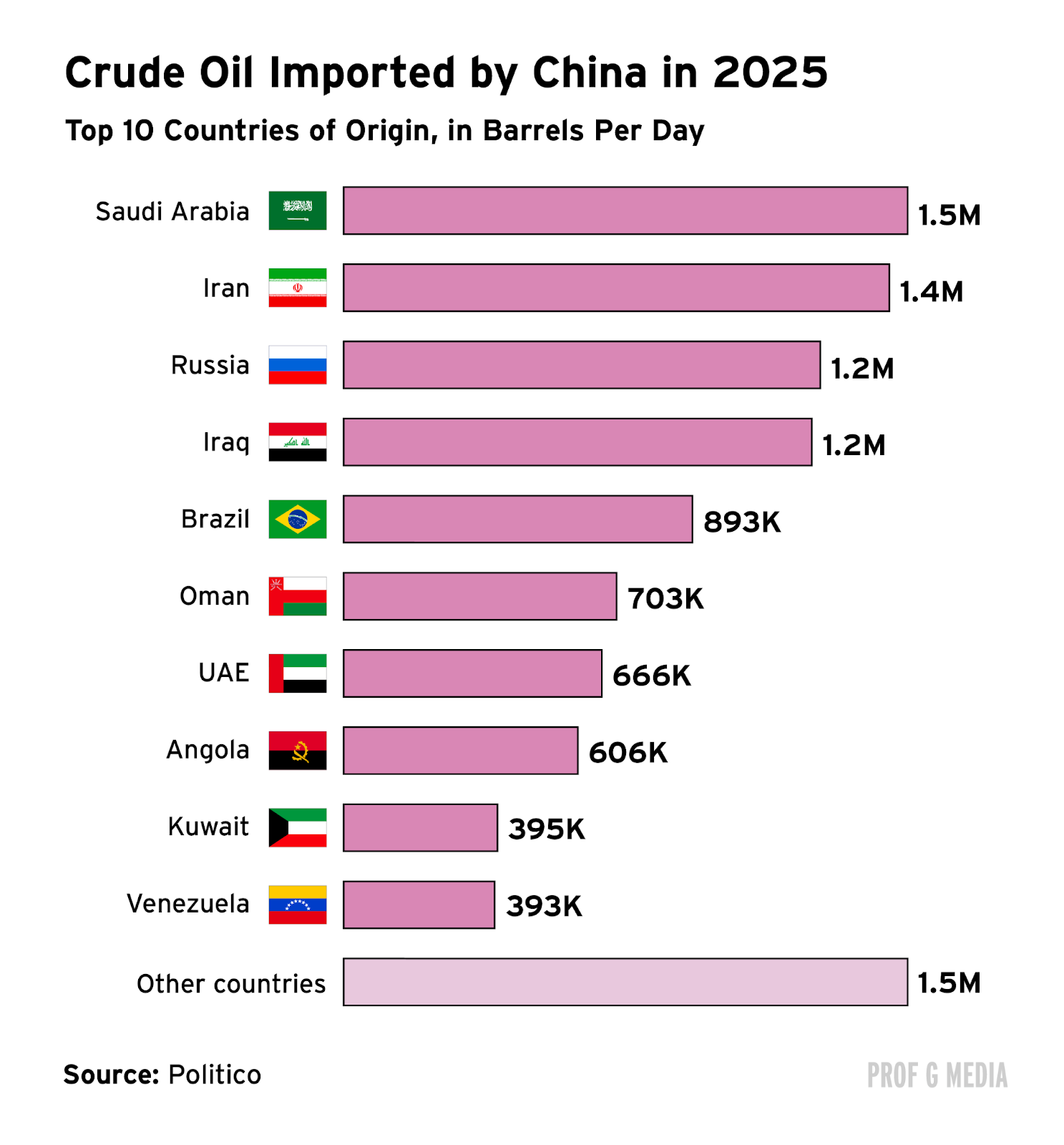
The U.S. attack has also sparked concerns in China over the supply of oil. Venezuela and Iran combined accounted for about 17% of China’s oil purchases last year, although it’s hard to know the actual scale of imports with some Iranian supplies masked as shipments from other countries to avoid U.S. sanctions. Still, China is positioned to withstand any shocks — and take advantage of opportunities amid the turmoil.
Alice’s take: Don’t fully bet on Xi Jinping rolling out the red carpet for Trump on March 31. China was definitely taken aback by the U.S. military action in Iran, calling it “unacceptable to openly kill the leader of a sovereign country and institute regime change,” and the government doesn’t like instability in the lead-up to important leader-level negotiations. That could increase the odds of a delay.
China, however, isn’t walking away. Beijing doesn’t want simmering tensions with the U.S. to reach a boiling point over trade and technology and will likely pursue an equilibrium strategy to maintain engagement, even if it’s more symbolic than substantive. U.S. and Chinese trade negotiators, meanwhile, are set to meet in the middle of this month in Paris in a sign of the countries’ commitment to make this summit happen despite the strikes against Iran.
And while the turmoil clearly puts pressure on China — oil prices surged as the U.S. and Israel stepped up their war against Iran and Tehran vowed a full closure of the Strait of Hormuz — Russia is far more important. China has spent months building up stockpiles of oil and bolstering its strategic buffers, and it’s likely to adopt a wait-and-see approach.
James’s take: Trump’s campaigns targeting China’s allies, following U.S. support for Ukraine in the conflict against Russia, raise an important question: Is the U.S. on the verge of a proxy war of some kind with China? The president’s comments floating a “friendly takeover” of Cuba add fuel to the debate. While it’s fair to ask whether a “new Cold War” is warming up, it’s probably not the primary driver of Trump’s moves in Iran and Venezuela.
The upheaval poses challenges for China, which has invested billions of dollars in overseas projects in a bid to court U.S. rivals. A $400 billion China-Iran strategic partnership signed in 2021 could be in jeopardy. But it also presents an opportunity for China to tout itself as the more predictable and stable superpower at a time when the Trump administration is blowing up the rules-based system that the U.S. helped to build and carrying out military action without the backing of international law. At the World Economic Forum, Vice Premier He Lifeng called for economic globalization rather than a return to the “law of the jungle.”
AI Will Be a Cornerstone of China’s Five-Year Economic Plan
China this week adopts its next five-year plan — its 15th — outlining Beijing’s ambitions to spur the economy and support sectors including artificial intelligence and clean energy. The blueprint, unveiled at China’s most important annual political gathering, will provide clues on how and where the world’s largest consumer of commodities plans to expand, signaling a sharper focus on resilience, supply-chain security, and advanced technologies.
Alice’s Take: The five-year plan is always worth reading. In the past these roadmaps have unleashed support for wind turbines, solar panels, EVs, batteries, and other technologies.
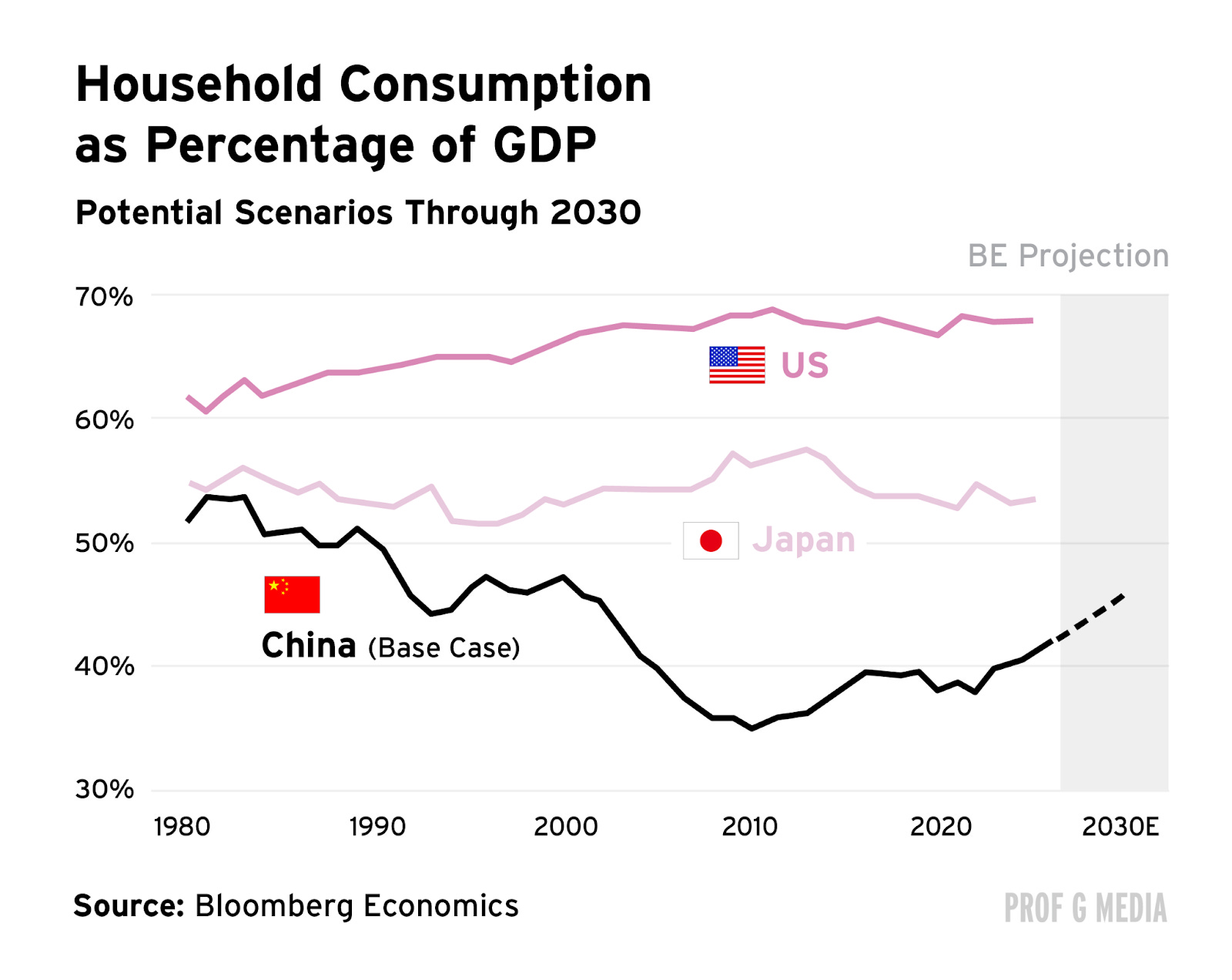
This time these KPIs take on even more importance. One question: Is the government putting its money where its mouth is in supporting consumption and the services sector?
The document will also shed light on China’s military spending and strategic direction following Xi’s purges of senior officials, with implications for both Taiwan and the U.S. More than half of the People’s Liberation Army’s top leadership has been purged since 2022, according to the Center for Strategic and International Studies, raising questions about the army’s capabilities and whether the military is at risk of being hollowed out.
James’s Take: Self-reliance was already at the top of the agenda for Xi. Trump’s intervention in Iran only strengthens the case. Achieving breakthroughs to reduce China’s dependence on Western technologies, including AI, semiconductors, quantum computing, aerospace, 6G telecom, biomanufacturing, robotics, and other sectors will be critical.
The five-year plan puts the spotlight on China’s “AI Plus” strategy, which is aimed at integrating AI into every sector of the economy. By 2030, China wants to achieve an AI penetration rate of 90%. By 2035, it hopes to achieve a complete AI transformation. What kind of products is China embracing in the race to deploy AI? Alibaba’s smart glasses are a prime example. The new technology, powered by its Qwen AI model and app, provides everything from real-time translation to instant price comparisons while browsing in shops.

Source: South China Morning Post
A Crash and Fatal Fire Raise Questions for China’s EV Sector
China’s electric vehicle industry is facing scrutiny following a fatal crash involving Xiaomi’s bestselling SU7 sedan. Investigators found that the door handles of the EV failed and trapped the car’s driver in a fire in 2025. The tragedy could have a ripple effect for the EV industry at a critical moment.
James’s Take: Stronger safety regulations are emerging, Xiaomi is responding, and China’s overseas expansion is going to continue. However, this tragedy — and the dramatic footage of the fire and chaotic rescue attempt — are likely to make consumers nervous both in China and beyond, dealing a blow to the country’s EV success story.
Alice’s Take: There’s no doubt this is a PR crisis for Xiaomi. But it’s not going to stop the advance of Chinese EVs, which have a competitive advantage over their European and American peers. We’ve seen Chinese EV sales rise sharply and BYD overtake Elon Musk’s Tesla as the world’s biggest seller of EVs, marking the first time it has outpaced U.S. rivals in annual sales. That trend is likely to continue — and intensify — in the coming months. You can also expect BYD to launch more of its luxury vehicles under different names. Those advances, combined with efforts to minimize association with Chinese brands, will help overcome the bad PR and win over customers around the world.
The next questions are safety and data security surrounding autonomous vehicles as they start to be rolled out more widely and regulators try to keep pace. As China rapidly innovates, the country is bound to encounter more setbacks.
Newsletter Exclusive: The Journal Declares China the Winner in Pentagon-Anthropic Dispute
China is surely keeping a close eye on an ugly fight over military AI that’s playing out in the U.S. The San Francisco-based startup late last month accused three Chinese competitors — DeepSeek, Moonshot and MiniMax — of improperly extracting large amounts of data from its AI technologies. The company said the three companies used 24,000 fraudulent accounts to generate more than 16 million conversations with its Claude models that could be used to teach skills to their own chatbots, relying on a practice known as distillation. The company said the activity raised national-security concerns for the U.S.
That was just the start of the drama for Anthropic. Trump on Feb. 27 ordered all federal agencies to stop using AI technology made by Anthropic, describing the company as a “radical Left AI company run by people who have no idea what the real World is all about.”
Soon after Trump’s announcement, Defense Secretary Pete Hegseth designated Anthropic a “supply-chain” risk to national security,” an unprecedented action against a U.S. company, after it refused to give in to demands about the use of its technology. Who else has previously been deemed a supply-chain risk? Chinese companies including Huawei.
The WSJ’s editorial board wrote that if there’s any winner, it’s China. “The administration is making what is a modest dispute over the military uses of AI into a self-destructive show of brute political force that will hurt the U.S. military and the rest of the government.”
Alice’s Prediction: North Korea could return to Donald Trump’s radar. The president may opt to exert more pressure on North Korean leader Kim Jong-un or seek to revive negotiations with him over nuclear containment. Kim at the same time may be more emboldened to expedite his nuclear program as he watches the attacks unfold in Iran.
James’s Prediction: The space race with the U.S. is going to shift into high gear this year. China is aiming to launch its uncrewed Chang’e-7 mission to explore the lunar south pole this year as it sprints toward its goal of sending Chinese astronauts to the moon by 2030. The U.S. has its own plans to put humans back on the moon.