



Welcome to The Monday Rage, our new home to talk politics as we kick off each week of the podcast.
If you follow politics closely, and guessing you do since you’re here, then you’ve heard that the odds of a strong midterms for Democrats are good. Like, “over a 50% chance to take the Senate in the betting markets” good.
As more cautious data-driven types, and in an effort to actually be able to tell our friends where their ActBlue donations would be best spent, we thought that the first installment of The Monday Rage should be focused on the races we should be paying attention to this year.
And not just the ones you’re already thinking about. You’ve read about Maine, North Carolina, and our dreams of flipping… gasp… Texas. But what else matters? Where are Democrats playing defense, and what other opportunities does the party have to expand the map?
Among the many races that are worth your time, these five really stand out.
Ohio Governor
We sometimes hear Democrats talk about Ohio as a lost cause. They have a case: Harris lost the most recent presidential race here by 11 points, and it’s been eight years since Ohioans last supported any statewide Democratic candidate (Sherrod Brown, who’ll be back on the ballot this year). The state is a case study in the rightward drift of white voters without a college degree, who make up a majority of voters and last backed President Trump by 35 points.
The fundamentals work against the party, but everything else about this race makes it a real contest. Start with the national environment, which is increasingly horrific for the GOP: Trump is polling in the 30s and as low as 28% on inflation, the raison d’etre for his reelection. Then add in the GOP’s candidate: not Mike DeWine, the term-limited moderate governor, but Vivek Ramaswamy, a man whose political experience amounts to a ten-week stint at DOGE.
DeWine has endorsed Ramaswamy, but it’s an uneasy alliance. Weeks after Ramaswamy said there were “too many” public universities in Ohio, dismissing them as an area of “excess spending,” DeWine pushed back, saying he wasn’t in favor of consolidating colleges. He has good reason not to: they generate $69 billion in economic output and employ one in eight residents.
Ramaswamy has to make promises like these because his headline proposal is to eliminate the state’s income tax, which we know disproportionately benefits the wealthy while pushing the cost of decent health and education higher. That’s the affordability angle that Democratic challenger and physician Dr. Amy Acton is using, buttressed by Ramaswamy’s comment in 2024 that the creation of Medicare and Medicaid were a “mistake.”
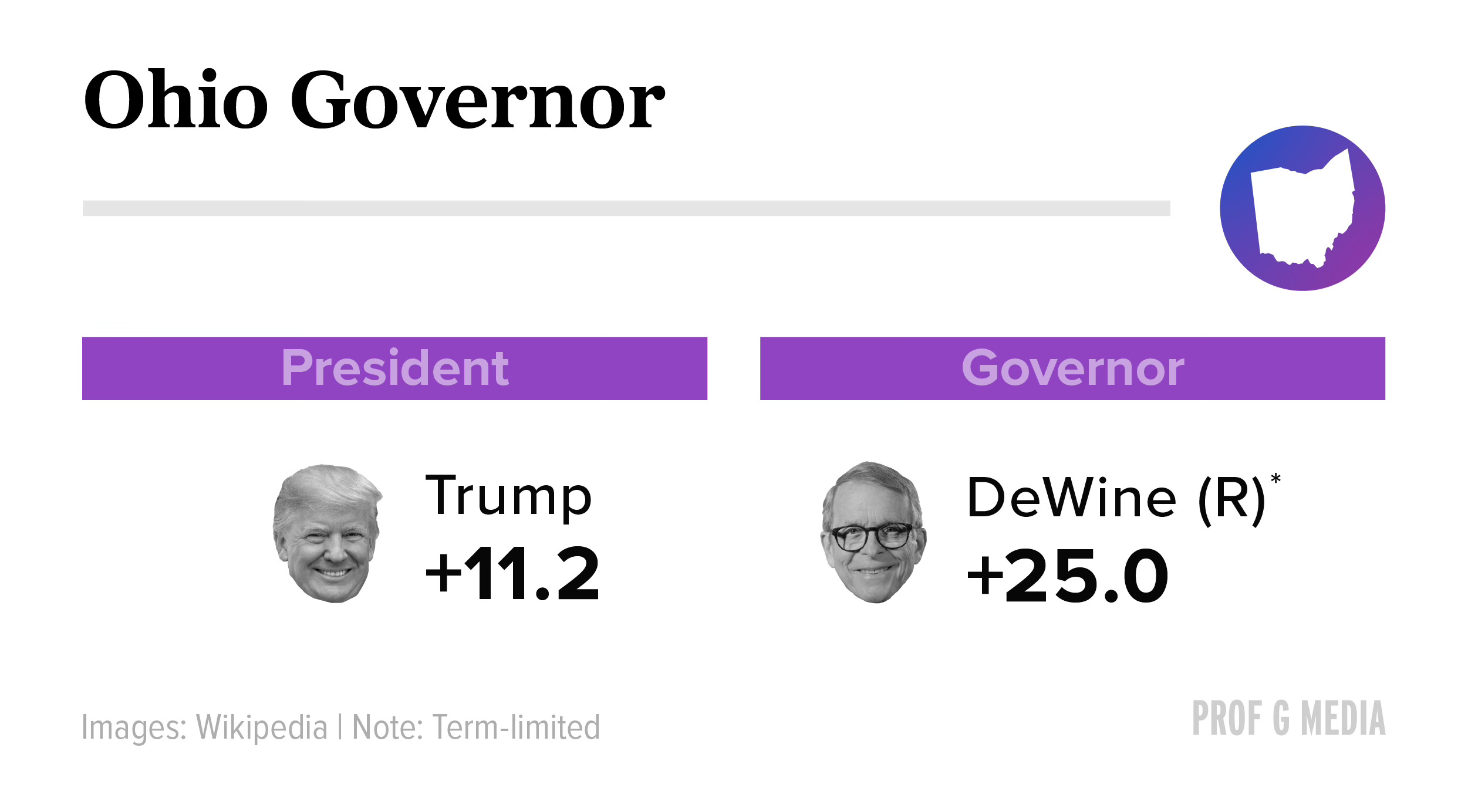
Acton, meanwhile, has a strong bipartisan case: she was an early leader of the state’s COVID-19 response, appearing alongside DeWine at daily press briefings.
Arizona Governor
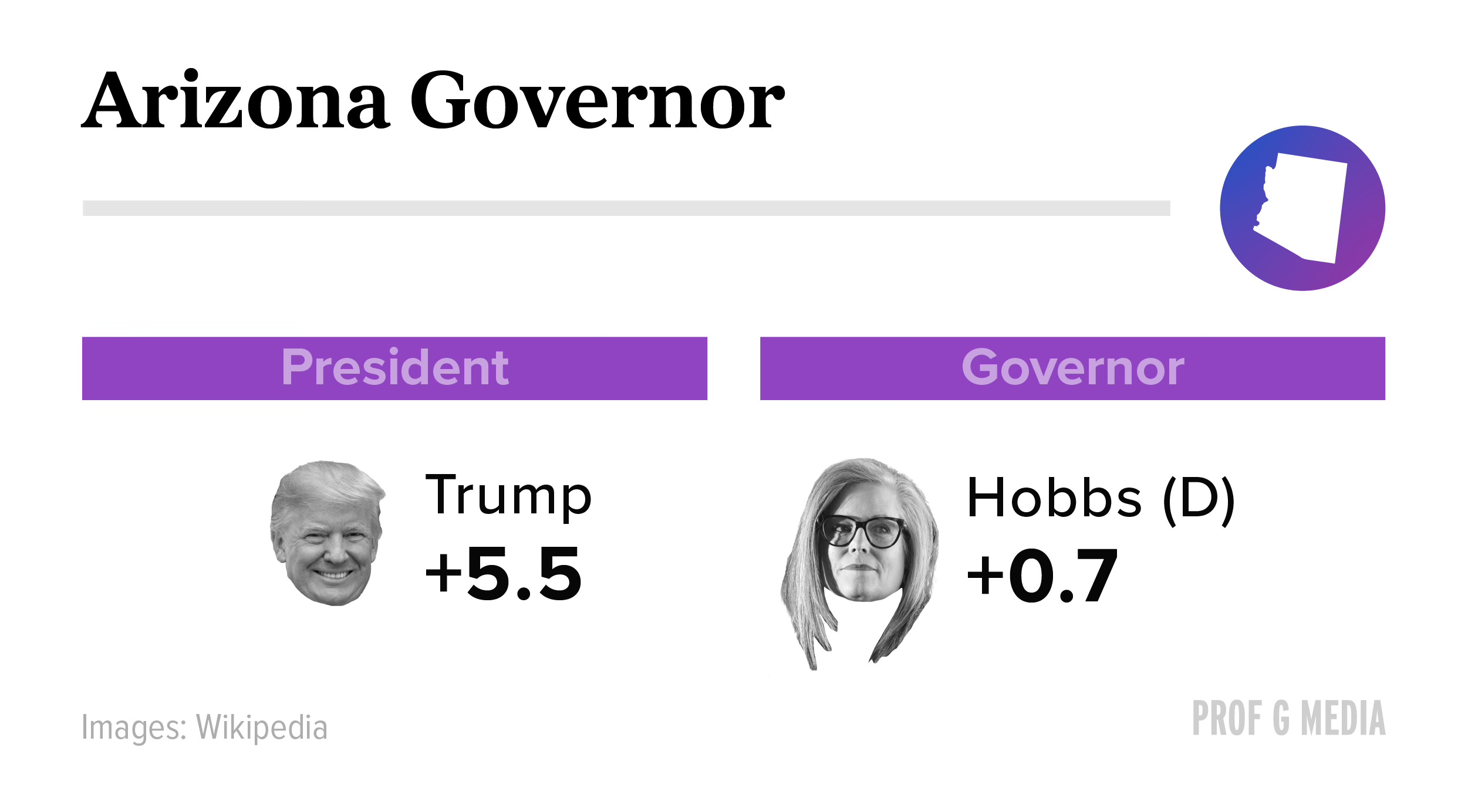
While Ohio has drifted right, Arizona has gradually tilted left. Democrats’ presidential vote share has crept up over the past three decades from the low to high 40s, peaking at 49.4% when President Biden won it in 2020. Still, the majority of Arizonans haven’t chosen a Democrat for president in nearly a century, and like the other competitive Sun Belt states, voters signed up for another Trump term in 2024.
It’s the kind of state where every misstep matters. The good news for Democrats is that while incumbent governor Katie Hobbs hasn’t always been the strongest competitor, Arizona is where Trump insists on running his worst candidates.
This story began with Kari Lake, who Trump endorsed not once, but twice for statewide races (Governor in ‘22, when she lost by less than a point, and Senate in ‘24, when she lost by more than double that with Trump on the ballot). He’s back at it again in ‘26 with Andy Biggs, the candidate with the most baggage in a field that had electable conservative alternatives.
Biggs currently sits in Congress, where he has been a cheerleader for the second Trump administration. He voted for the Big, Beautiful Bill, the latest step in his crusade to reduce spending on Medicaid and repeal the Affordable Care Act.
You might be more familiar with Biggs’ full-throated efforts to overturn the 2020 election. He objected to the electoral college vote count, promoted stolen election theories, and according to the January 6th Committee, was involved in planning the protest that led to the riot at the Capitol.
It’s a reminder of the stakes in every gubernatorial election: the power to certify ballots rests with the states, and people like Biggs cannot be trusted to oversee a fair election.
Georgia Senate
Democrats are, of course, hungry for a shot at a Senate majority. We get that, but again, don’t forget: you can only expand once you’ve taken care of business in the states you’re defending. The toughest is Georgia, where Jon Ossoff is seeking a second term after a one-point win in his last race back in January 2021.
Like Arizona, Georgia is one of five states where voters ordered a Trump sandwich: he won in 2016, lost to Biden in 2020, then took his revenge in 2024. Biden’s win – by a famous 11,779 votes – was on a much lower margin than either of the two Trump victories. And one of the reasons Trump retook the state was an eight-point gain in support from Black voters, making this race a test of the Democrats’ standing with an important voter group.
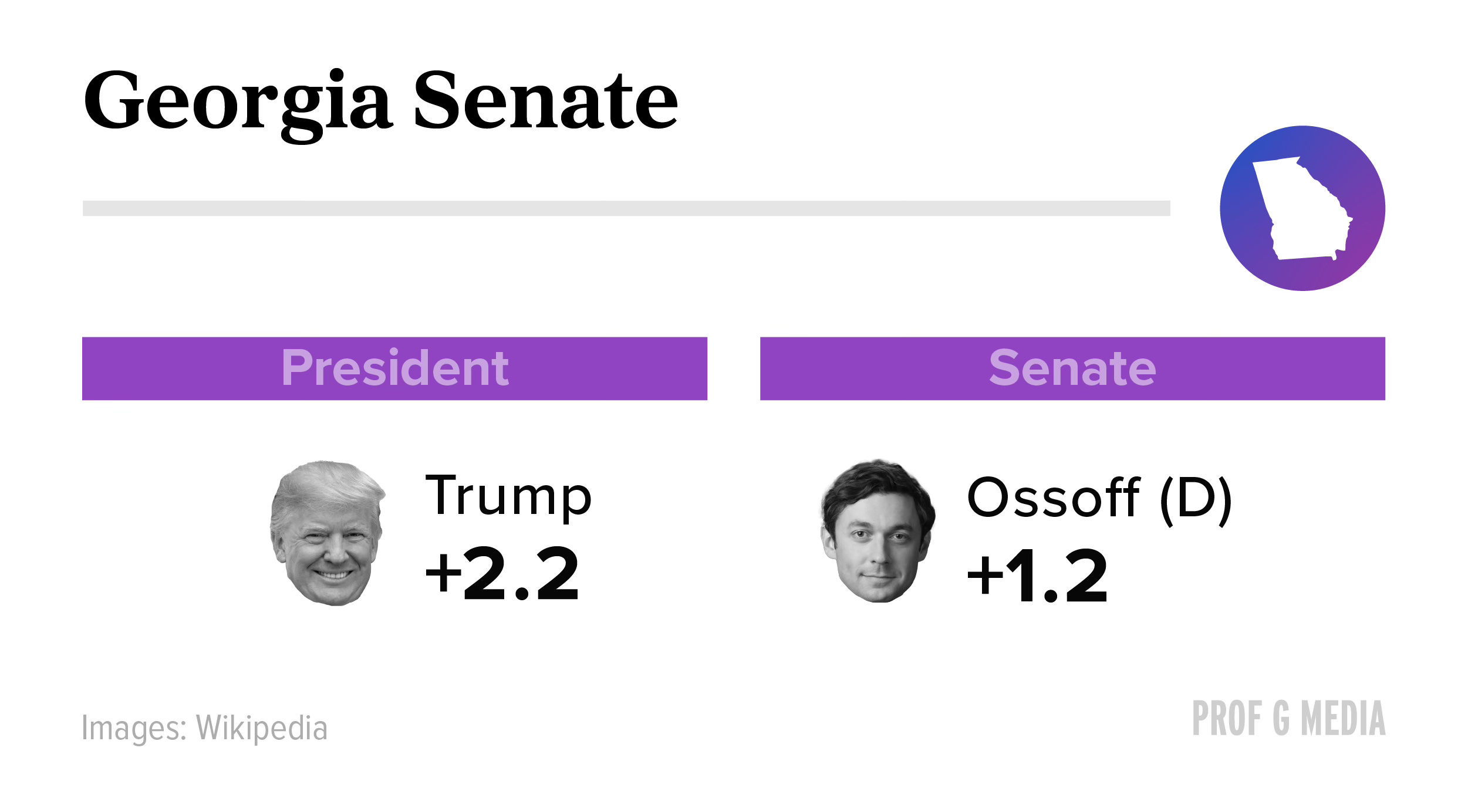
Unlike Arizona, Trump hasn’t made the same endorsement mistake he did in the last midterms. While the Republicans have a crowded primary field – one where none of the candidates are named Brian Kemp – none of the frontrunners are named Herschel Walker either.
The biggest question for Democrats is whether Ossoff could be a strong presidential candidate as well. He has a strong record of working across the aisle (a study last year named him the most bipartisan member of Congress) and is a very polished speaker. Some strategists wonder if he’s too calculated to capture the hearts and minds of the Democratic base, and too polished for the general electorate.
New Hampshire Senate
Democrats are also playing defense in New Hampshire. It’s easy to assume that this state is already in the bag. Despite talk last cycle that the Granite State could surprise, voters gave Kamala Harris a 2.8 point victory. The state’s healthy supply of college-educated voters should help keep it in the party’s hands.
Here, though, the party must contend with one of the most powerful political dynasties in the country: the Sununu family. Between them, they’ve won seven gubernatorial elections and a U.S. Senate seat, held a position at the White House and controlled party and school boards. For many years, the Sununu name has been “the most prominent brand” in state GOP politics; a brand defined by traditional conservative governance.
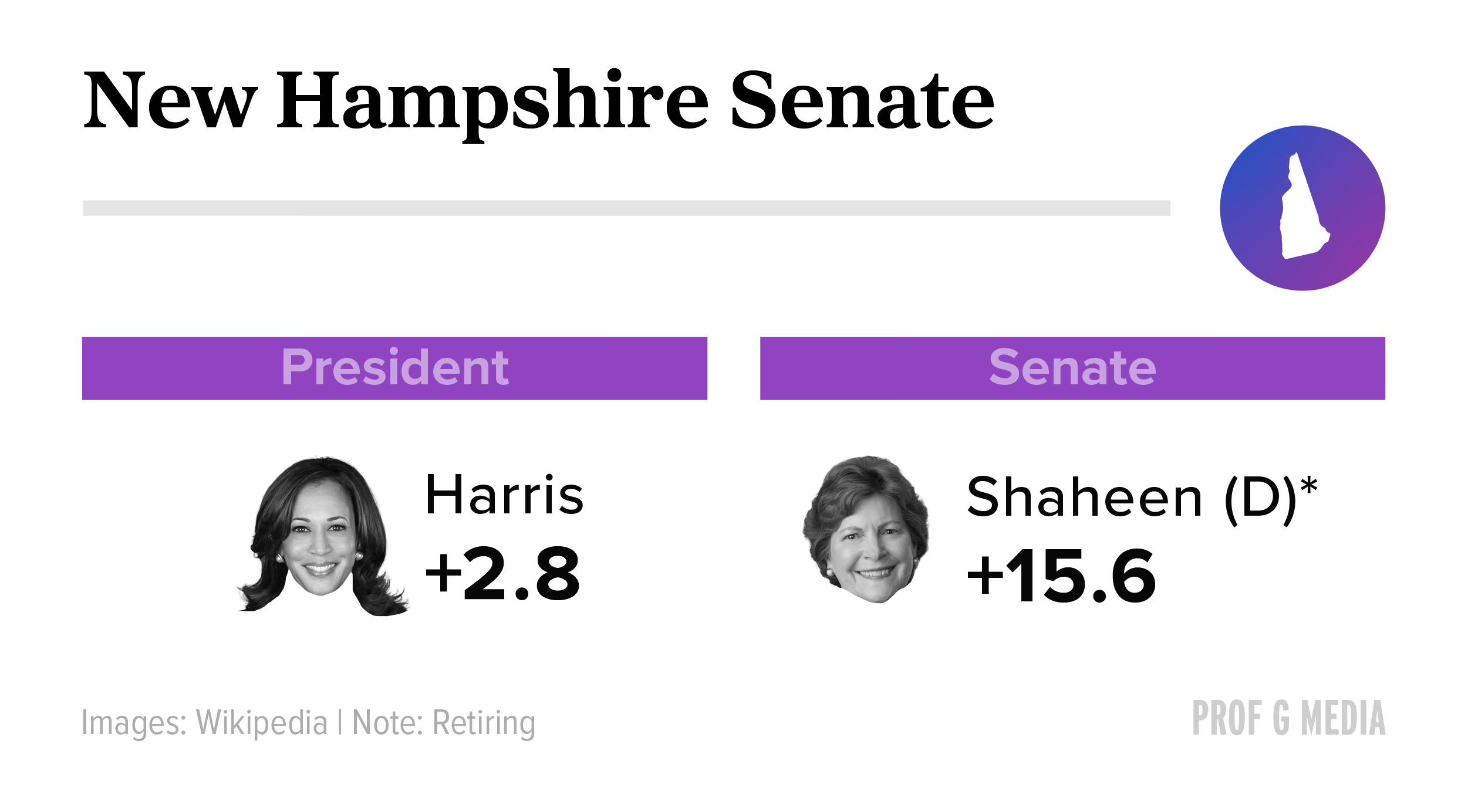
John E. Sununu, who is responsible for the Senate seat in that trophy cabinet, is running again nearly two decades later. If he can survive a primary, where MAGA voters usually rule the day, he will be a formidable, well-financed opponent to the Democratic ticket. U.S. House Rep. Chris Pappas, a Raging Moderates guest, is the overwhelming favorite to become the nominee.
Nevada Governor
Finally, Nevada, where the venerable Reid Machine – or rather, vulnerable – should be on everyone’s mind this midterm.
After decades of reliably producing statewide Democratic wins, the Silver State’s Hispanic voters lurched to the right in 2022, delivering Sheriff Joe Lombardo the keys to the Governor’s mansion. That came after two years of lockdowns and shutdowns that badly damaged the Nevada economy and the hospitality workers who power it.
In 2024, the machine broke down again, when Trump became the first Republican to win the state in two decades, and by a relatively healthy 3.1 points. (It never hurts to promise a tax cut targeted at one state’s voter base.)
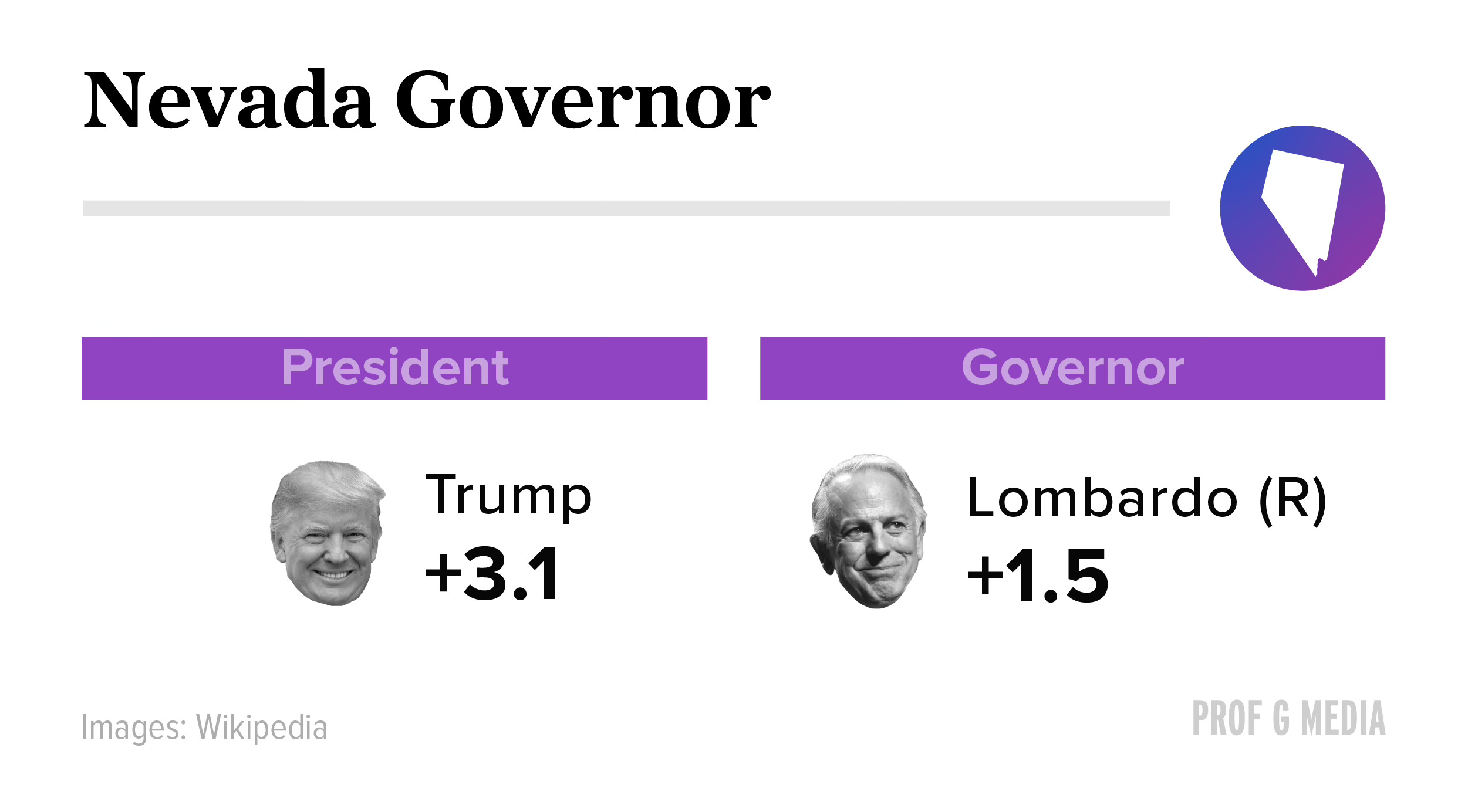
For Democrats, getting back to the White House means winning back support from Hispanic voters, and specifically the kinds of working-class voters who live here. This race, where Lombardo will face the likely Democratic nominee and Attorney General Aaron Ford, is the most important test of that support.
We could go on. And undoubtedly will, here in The Monday Rage and on Raging Moderates. Iowa deserves its own newsletter column frankly, and so does the Alaska senate race. Good news that we’ll do this again next week!
You’re receiving The Monday Rage newsletter because you subscribe to Prof G Media on Substack. Not interested in this content? Customize your Prof G Media notification settings here to hear only from your favorite hosts and shows. Looking for even more rage? Be sure to opt in to podcast alerts for Raging Moderates to get notified each time a new episode drops.