



59%
That’s the percentage of Americans who say they will not watch any World Cup matches.

Google is planning the largest public stock sale in history
Fast food is in crisis, and GLP-1s might be to blame
The Prof G Markets tour is over. Here’s what we learned

The Biggest Stock Sale in History
Google is planning the largest public stock sale in history — an $85 billion equity offering — to fund its AI buildout. The raise was initially announced at $80 billion, and then upsized after the first tranche was so oversubscribed that it raised $45 billion on its own. Around $10 billion of that is expected to come from Berkshire Hathaway, which will receive a 6.5% discount on shares. Google stock fell 4% after the announcement.
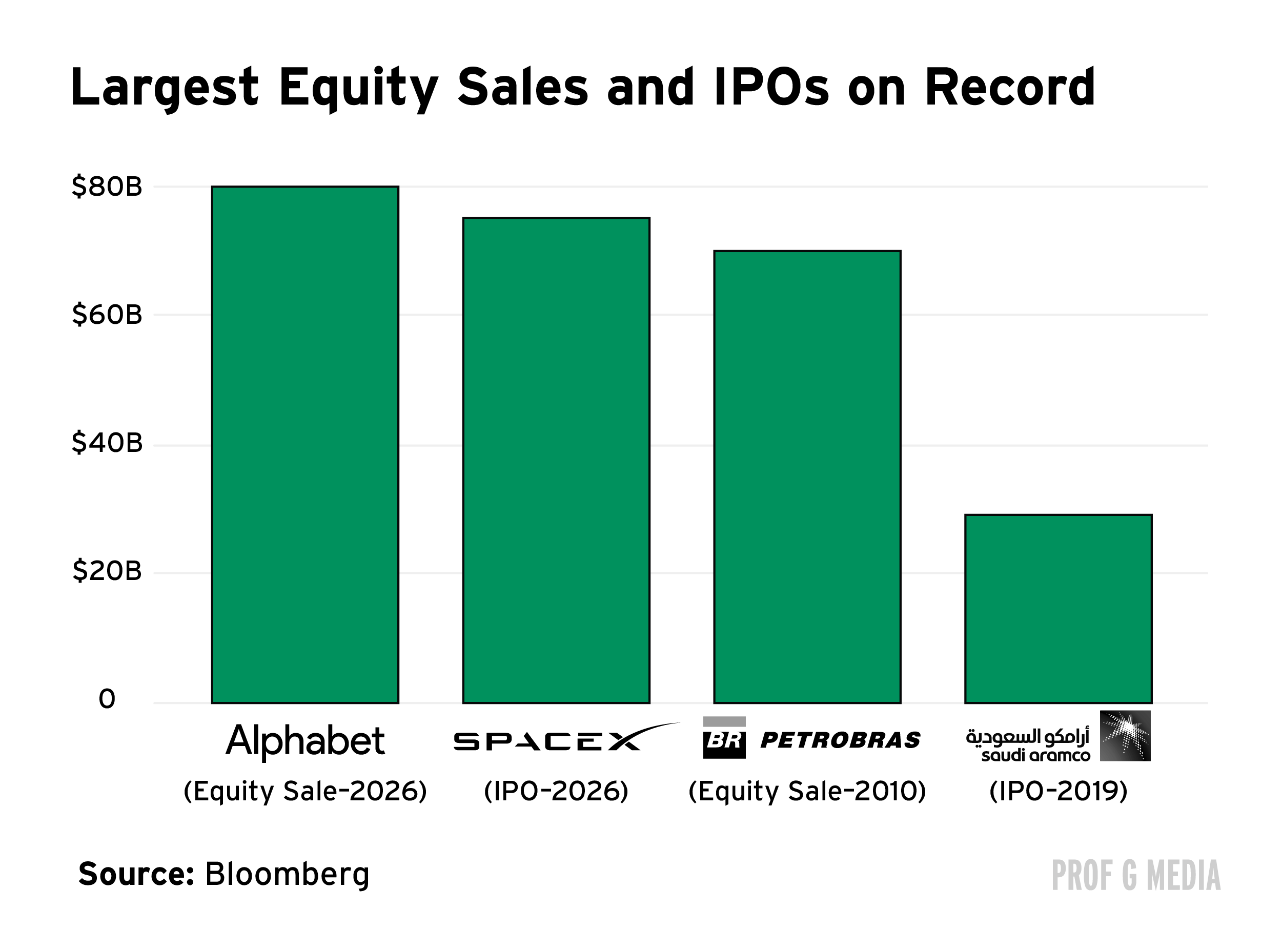
The move comes as Gemini has surpassed nearly 900 million monthly active users and Google has already projected capital expenditures of $180 to $190 billion for the year, with 2027 expected to be even higher.
At the same time, SpaceX and Anthropic have both filed for IPOs. SpaceX is targeting a $75 billion raise at a $1.75 trillion valuation, with shares set to trade on Nasdaq as early as June 12. The offering bundles its rocket business, Starlink, and xAI, the AI company Musk merged with SpaceX earlier this year. Anthropic filed confidentially last week just days after closing a $65 billion Series H that pushed its valuation to $965 billion, with a debut above $1 trillion now the base case. OpenAI is expected to follow later this year.

Ruth Porat, Google’s President and Chief Investment Officer, doesn’t get enough credit. Google could probably fund this off its balance sheet; it’s one of the most cash-generative companies in the world. But why do that when you can raise $80 billion in cheap capital, and step in front of everyone else doing it? Every resource is finite, including investor appetite for AI infrastructure bets. Google just took $80 billion off the table before Anthropic or OpenAI could.
The pitch to investors is simple: you want exposure to the AI buildout, but you are not sure Anthropic or OpenAI are worth those multiples? Buy Google. It is already one of the greatest businesses ever built, priced reasonably by comparison, and it gives you the upside with a fraction of the downside. If AI disappoints, Alphabet does not disappear. You cannot say that about the others.

The supply dynamic here is what keeps me up at night. The largest IPO year ever was 2021, when roughly $140 billion was raised. We are about to triple that in a single wave — and that is just the headline names. When you add Google’s offering and the rest of the 2026 pipeline, total issuance could top $400 billion. That is 9x what the IPO market raised all of last year. At some point, supply outstrips demand and prices come down. That is Econ 101.
If you are an investor wondering whether to buy at the public offering, across 30 major IPOs, the average maximum drawdown within a year of going public was 55%. That does not mean these companies are bad long-term bets. But it does mean that the IPO moment is peak hype, peak demand. You are competing with every fund manager on the planet for shares that everyone wants right now. The smarter play is usually to wait for the hype to fade and find your entry when fear is higher than greed.


Fast Food’s Real Problem
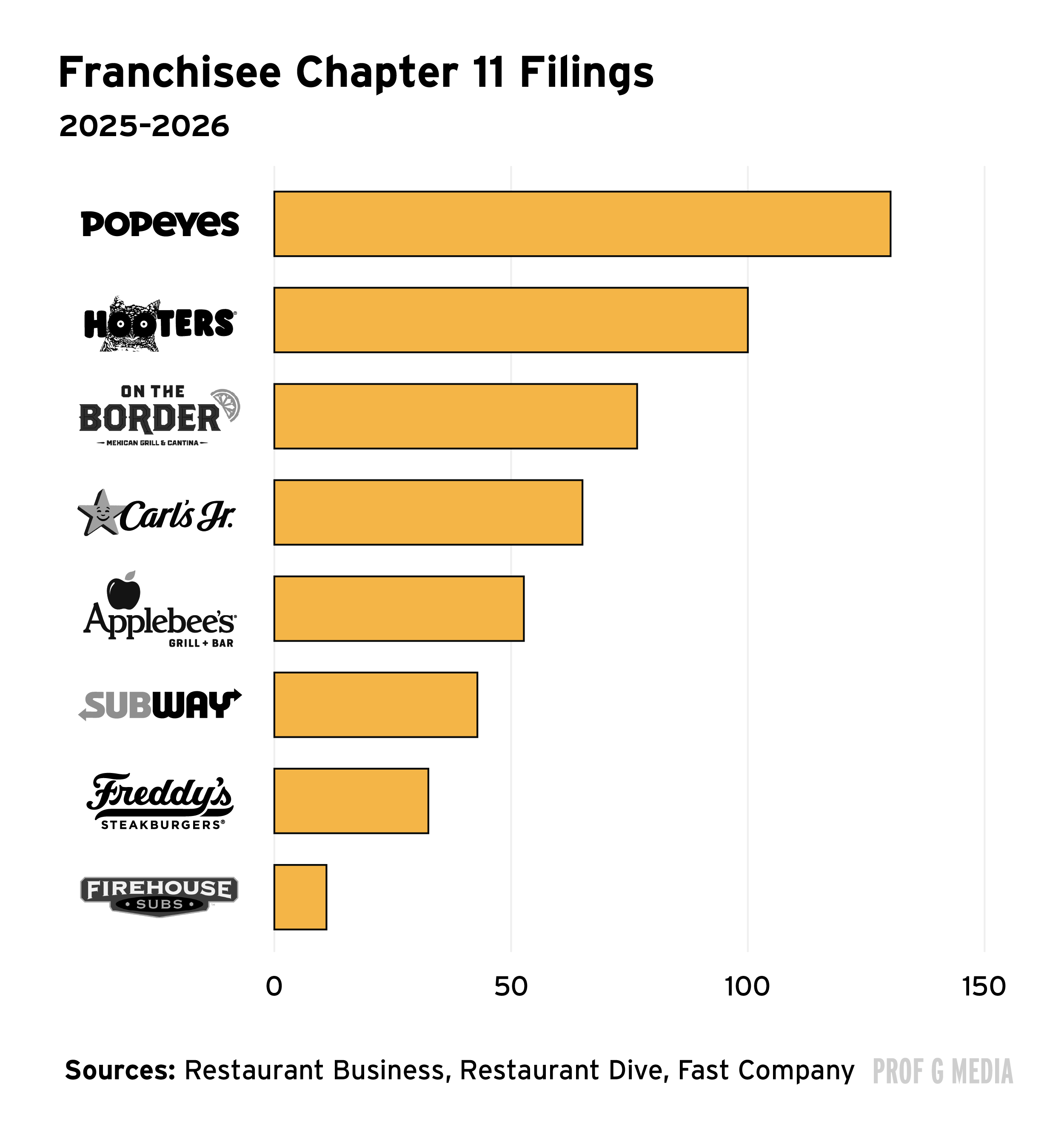
It has been a rough year for fast-food franchise operators. In January alone, a 43-unit Subway franchisee and a 130-unit Popeyes operator both filed for bankruptcy, followed by a 53-unit Applebee’s operator in March and a 59-unit Carl’s Jr. franchisee in April. Some operators are blaming the franchise model, with McDonald’s franchisee saying operators cannot absorb rising costs, fund discounting programs, and still pay for restaurant renovations.
McDonald’s has responded with an initiative called McDonald’s > NEXT, focused on making restaurants easier to run and better for franchisees. Given that franchised and affiliated locations account for more than 95% of its restaurants, the health of its operators matters a great deal to the company.
But foot traffic data suggests the problem runs deeper. Fast-food visits fell more than 1% last quarter and around 2% the quarter before. Even chains posting positive sales, like McDonald’s with 3.9% same-store sales growth in Q1 2026, are doing it through price hikes and value promotions, not more customers walking in.
I don’t think this is primarily a story about the franchise model. I think it’s about GLP-1s. One in eight American adults (30 million people) are now on GLP-1 drugs. That is the population of Texas. Fast food has always relied on the fact that cheap, engineered, salty, fatty food is hard to resist. GLP-1s are changing that calculus.
Think about what happened to newspapers. The New York Times thought its problem was the LA Times or the Chicago Tribune. It was not. The real threat was a structural shift in how people consumed news, and by the time the industry understood that, it was too late. Fast food is facing the same thing. This is not a competitor problem or a franchise model problem. It is a demand problem.
I want to be clear about what I think the math looks like here. Four in five Americans eat fast food at least once a month. Around two in three eat it weekly or more, roughly 140 million adults. If 30 million of them are now on GLP-1 drugs, you are reducing the addressable market by roughly 27%. That number is only going up. At some point these companies are going to have to stop saying they are not worried about GLP-1 penetration and start answering it.
I agree with the GLP-1 thesis.
There is also a downstream winner worth flagging: Victoria’s Secret stock rose 40% last week after reporting revenues up 15% to $1.56 billion, with sales increases across every income group. We have been talking for years about GLP-1s creating downstream beneficiaries in apparel and fitness. The theory is that when people lose weight and feel better about themselves, they want a new wardrobe. It is difficult to prove causation from one quarter, but it is also difficult to look at that number and not wonder.

What We Learned On Tour
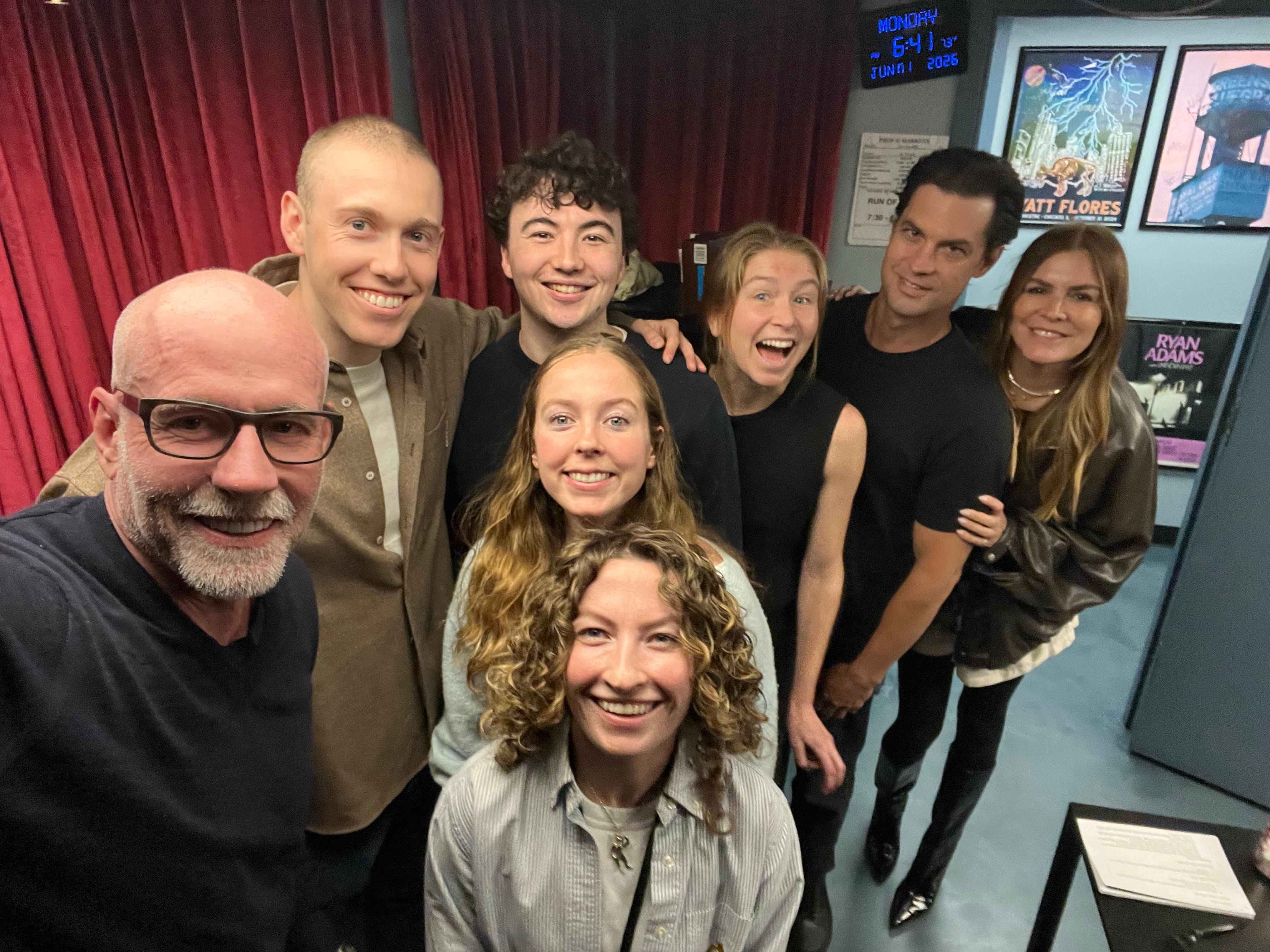
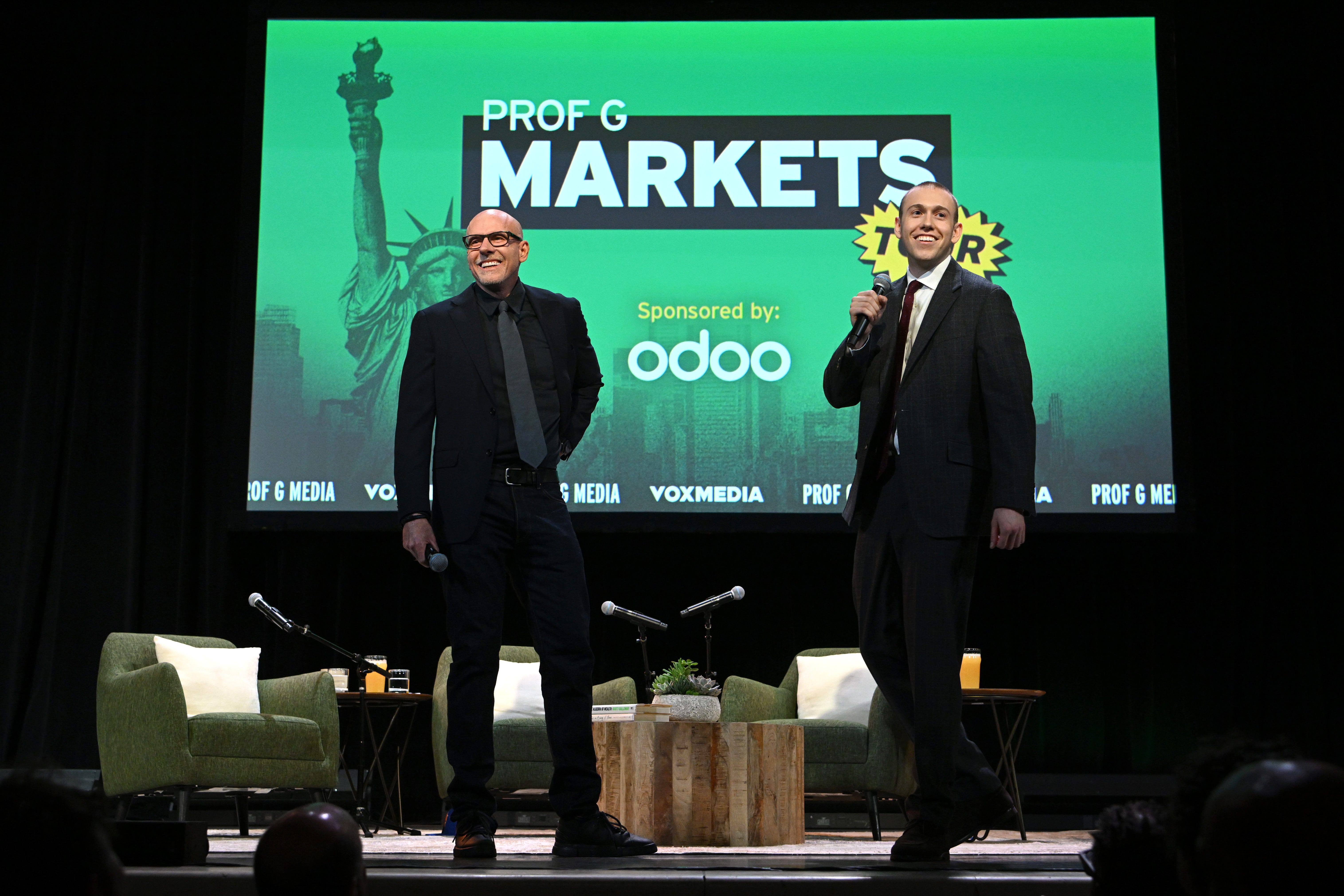
Over the past two weeks, Prof G Markets traveled to five cities: San Francisco, Los Angeles, Miami, Chicago, and New York. We met listeners, talked about markets, and got a firsthand look at what people around the country are thinking about the economy. It was a blast.
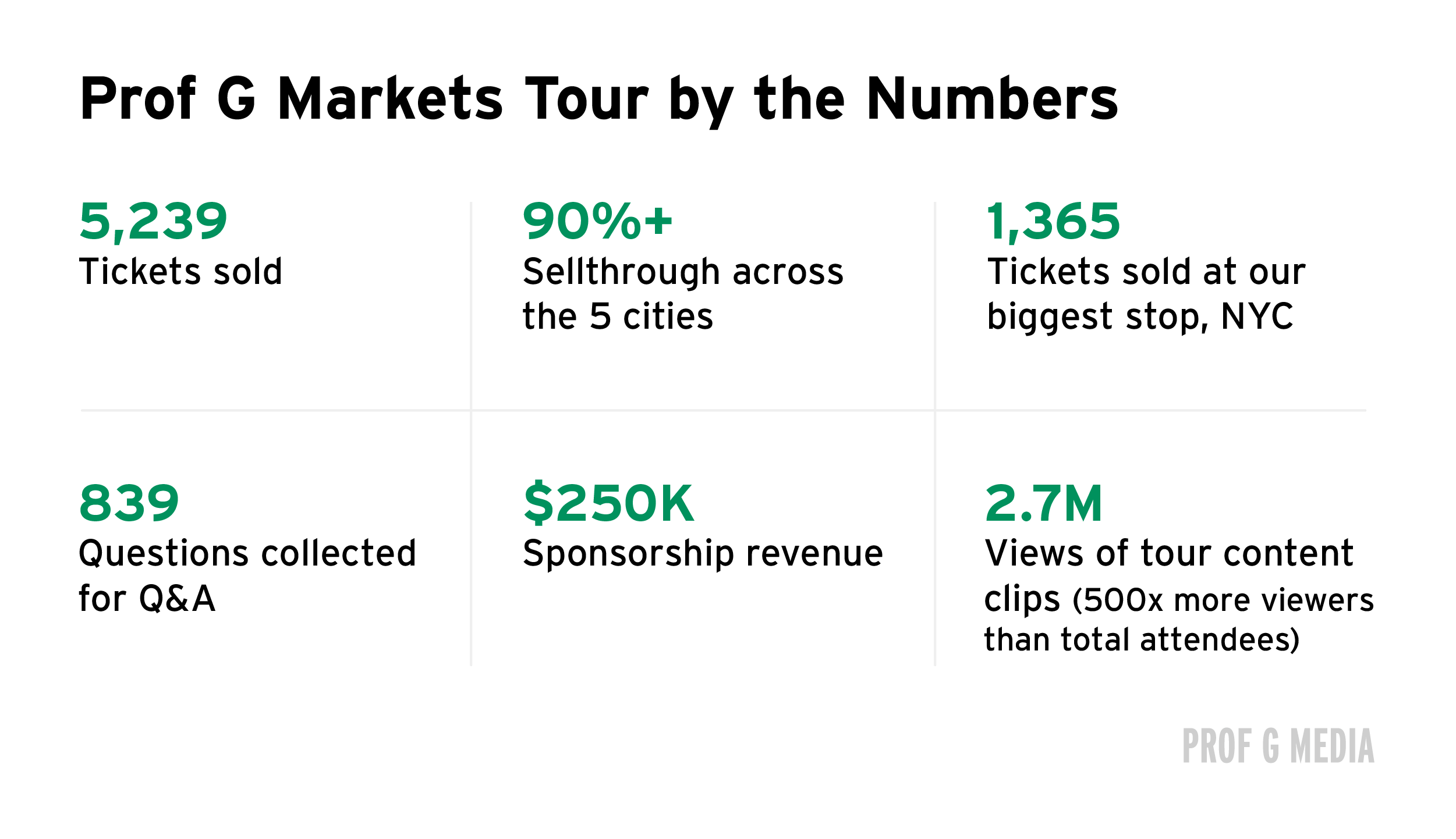
The experience was stressful but ultimately very rewarding. If you record a podcast and it bombs, the listener can turn it off and go back to walking their dogs. When you have 1,200 people show up for an event and they’ve spent $100 or more, you really want them to enjoy themselves.
A couple observations: Live events are booming, because people want to get out and touch grass. That’s why Flexjet is doing well and LVMH isn’t: People are realizing that they overestimate the happiness they’ll get from things and underestimate the pleasure they’ll get from experiences. Also, every brand needs a certain number of evangelists. Getting out there and finding them is important.
There’s been an interesting transition in the Q&A. A few years ago, people wanted stock tips — it was about greed. Now, it’s more about anxiety. People were asking about AI, housing, and, quite frankly, whether their kids are going to do as well or better than they did. The catastrophizing coming out of the AI community is working.
It was also great bonding for all of us. I felt like Mick Jagger traveling around with NSYNC.
It’s important to note: This doesn’t make that much sense for us financially. The tour is profitable, but we could do other things that would be a lot more profitable, But, there are some important reasons why it pays off for us to do this in the long run.
First, it’s a lot of fun! Boosting team morale is essential when you have a team working as hard as we are, producing content every day. Second, it’s really important for us to understand who the audience is, to connect with them, and to deliver a payoff for our superfans.
In the business of advertising, there are two things that you want to do. One: You want to get as many downloads and clicks as possible. Two: You want to demonstrate to advertisers that there is a depth and strength in your relationship with the audience, and that the audience has a level of loyalty to you. If you can show that 1,300 people in New York showed up on a Tuesday night and paid hundreds of dollars for a ticket to your show, that’s very meaningful. It was also genuinely so fun meeting everyone who listens to this show.
Finally, we got a lot of clips from the tour. We wanted to inspire a massive sense of FOMO among anyone who wasn’t showing up to these live events, and I think we accomplished that.

People care about issues more when they feel personal — even in the context of a business podcast. Scott is very good at bringing data down to the “every-person level.” For example, when talking about inflation data, he would make it personal by telling the crowd to imagine how a single mom would afford her child’s asthma medication and also an extra $400 per month in fuel costs.
Also, “fake it till you make it” is one of the most powerful techniques in the world. We started this podcast knowing next to nothing about markets. We worked hard and frankly pretended to know more than we knew at the beginning, and now we are cogent analysts selling out live shows.

It’s hard to feel close to an audience you’ve built online. It’s especially difficult when the loudest among them are often the most negative. But hearing our audience’s laughter, questions, and heckles in person, across the nation, reminded me that not only is our audience real — they are wonderful people.
In Miami, on the third stop of our tour, Scott answered a question about relationships. He gave the answer you might expect: the most important decision you’ll make is who you choose to partner with. While he delivered that message, I watched from the wings as couples in the front row moved to put their arms around each other. Being there with our audience in each city made me realize that our podcast is actually bringing people together, even when we can’t see them in front of us.


If I were to rank the three big IPOs, I think that Anthropic has the biggest first-day pop.

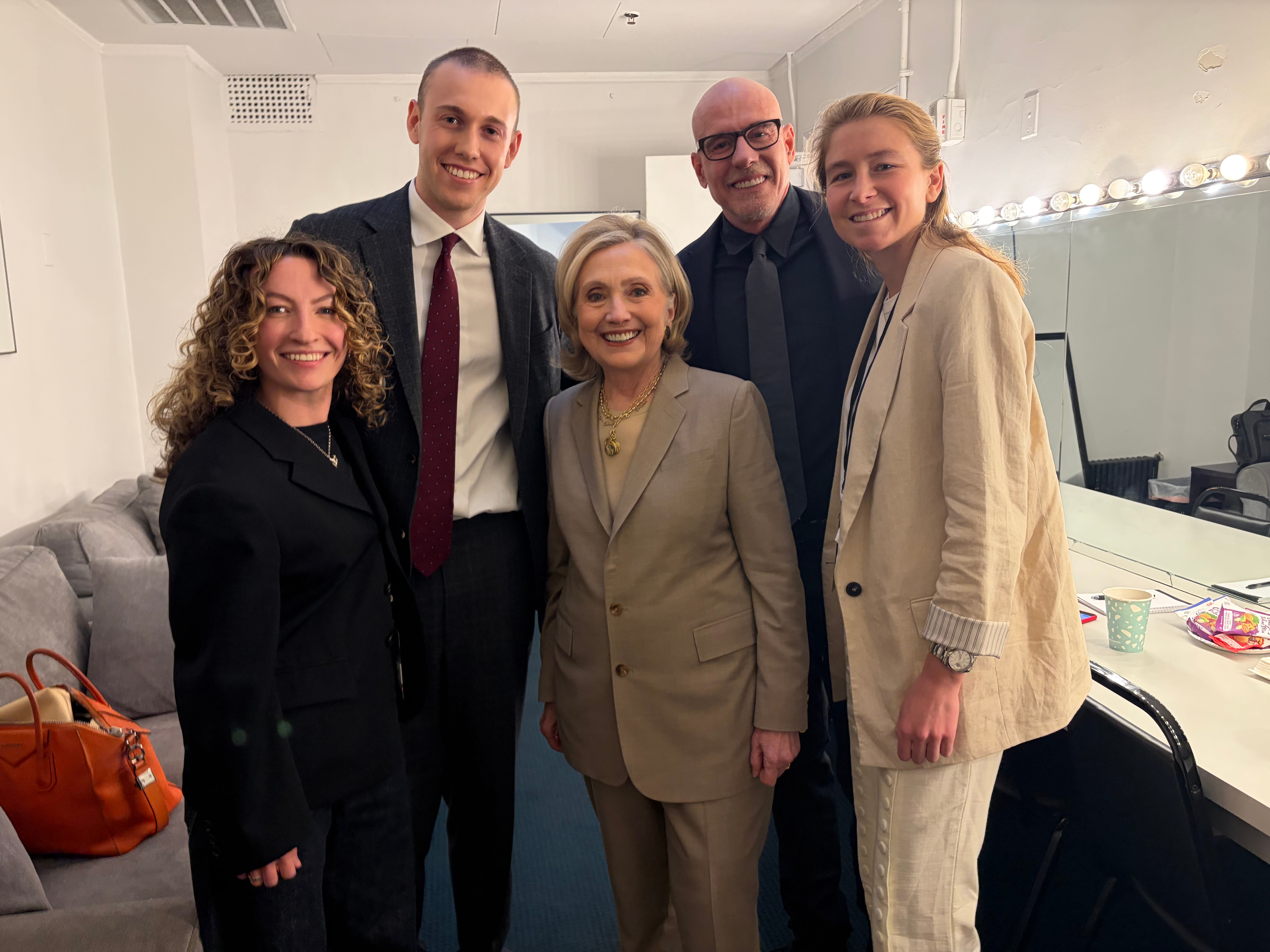
Check out this week’s live episode from New York City, the final stop of the Prof G Markets tour, where Scott and Ed were joined by surprise guest Secretary Hillary Clinton. Watch here.
Mia, don't sell yourselves short... you're not faking anything; intelligent people know how to solve problems, overcome obstacles, and generally just "figure things out." You may have "faked" knowing how to market your team's insights, but Scott & Ed (Ed especially!) show their market knowledge every time they open their mouths (or type their commentary on a computer). Congrats on a successful tour. Keep the ideas and good vibes flowing!
Hope you make it back to Minneapolis/St. Paul soon!