


Since the recovery of six hostages’ bodies in Gaza, I’ve been pondering grief. As others have said, grief is the price we pay for love, a testament to the depth of our connection. It isn’t just about losing a loved one; it’s about losing what they represented to our family, community, and nation.
Grief, Apes, and DNA
We share 98% of our DNA with chimpanzees, including our capacity to grieve. Scientists have observed mourning in various species — cats, dogs, dolphins, and primates. Natalia, a chimp in a Spanish zoo, carried the body of her deceased infant for months. That’s grief, raw and undeniable.
Anthropologists argue that the anticipation of grief is key to attachment. Our fear of losing a child drives us to ensure their well-being. We cooperate and treat each other well to avoid the pain of loss. Paradoxically, mourning also brings us together and fosters community. On a larger scale, many wars end when the collective grief becomes unbearable, highlighting grief’s power to both divide and unite.
This capacity for mourning is deeply personal. When our Vizsla, Zoe, passed, our other dog, Gangster, retreated to his crate for days. More disturbingly, our youngest son began making his bed and following every parental instruction — a clear sign of distress.
Burial Rites
Burial rituals predate civilization and aren’t limited to Homo sapiens. In Spain, researchers found a 430,000-year-old Neanderthal burial site. The earliest known human burial, roughly 100,000 years old, was discovered in Qafzeh, Israel, where archeologists unearthed 15 skeletons — seven adults and eight children. A 12-year-old boy lay in a rectangular grave, arms folded, with deer horns placed on his chest. The care taken speaks volumes about the love felt for this child.
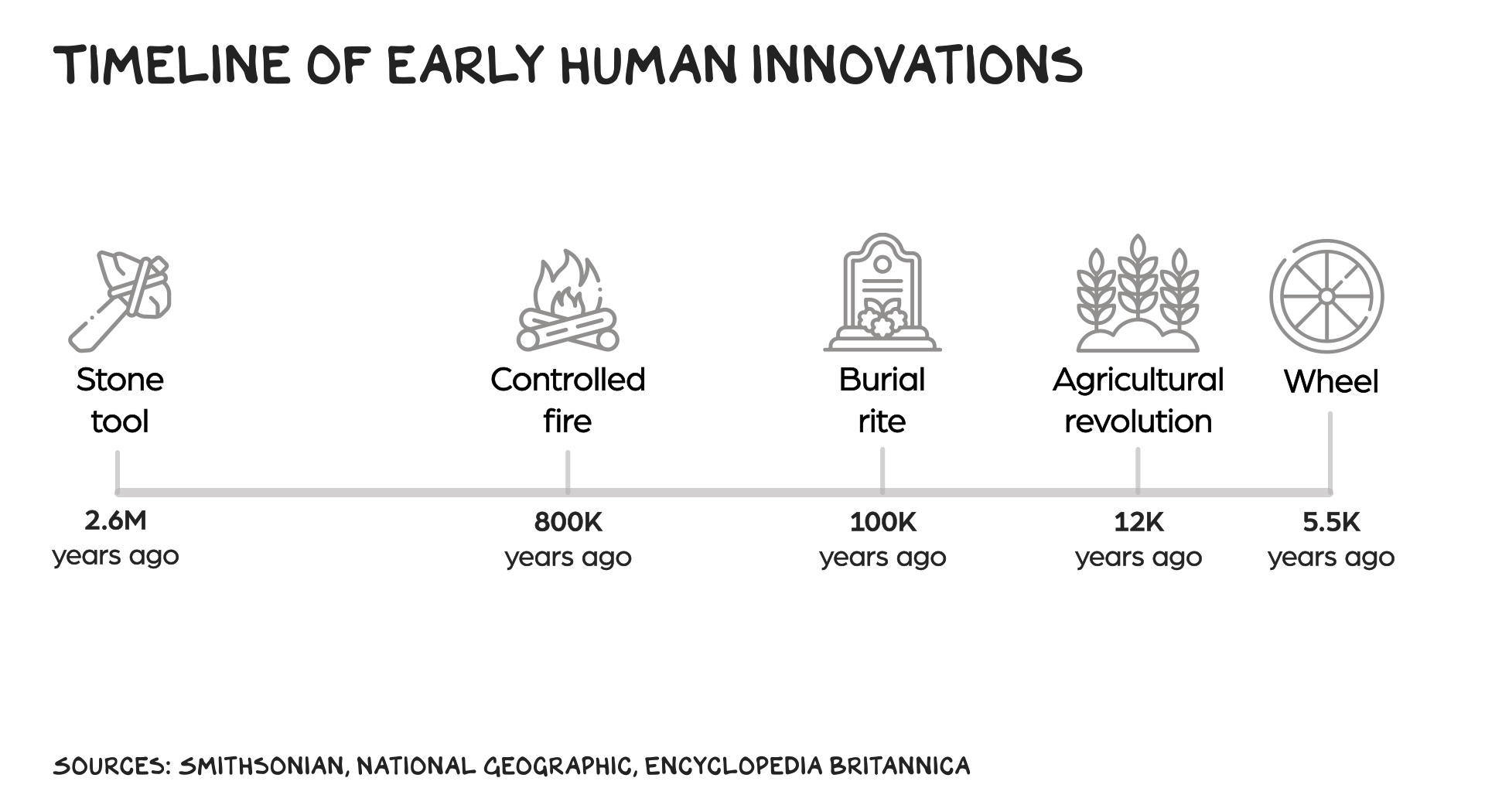
From Mesopotamia to Rome, Egypt to China, burial rites have been integral to preserving human dignity and fostering community. Even today, actor Nicholas Cage has constructed a pyramid mausoleum in New Orleans — his iconic performance in Leaving Las Vegas perhaps granting him some eccentric latitude.
Resilience and Coping
Our empirical understanding of grief comes largely from George Bonanno, a clinical psychologist who challenged the traditional Kübler-Ross model. Instead of five stages that are understood to be universal, Bonanno identified four distinct trajectories: resilience, recovery, chronic dysfunction, and delayed grief, or trauma. Resilience, by far the most common, is a trait Bonanno argues we’re hard-wired for. It’s messy, hence his phrase “coping ugly.”
Mo Gawdat, former chief business officer at Google’s X Development, shared his process for grieving his son’s death:
Grieve fully, allowing all emotions.
Research and accept the finality of death — “committed acceptance.”
Take a leap of faith, believing in something beyond the physical.
Mo’s approach, while idiosyncratic, reflects the universal human experience of seeking meaning beyond death. “Acceptance means understanding that this is your new baseline,” Mo explained. “I will never receive another hug from my son. I will not hear his voice on the phone or see him play music ever again. That’s my new baseline. I will stop pretending otherwise. Committed means I can still improve my own life and the lives of those around me.”
The Israel-Hamas War and Collective Grief
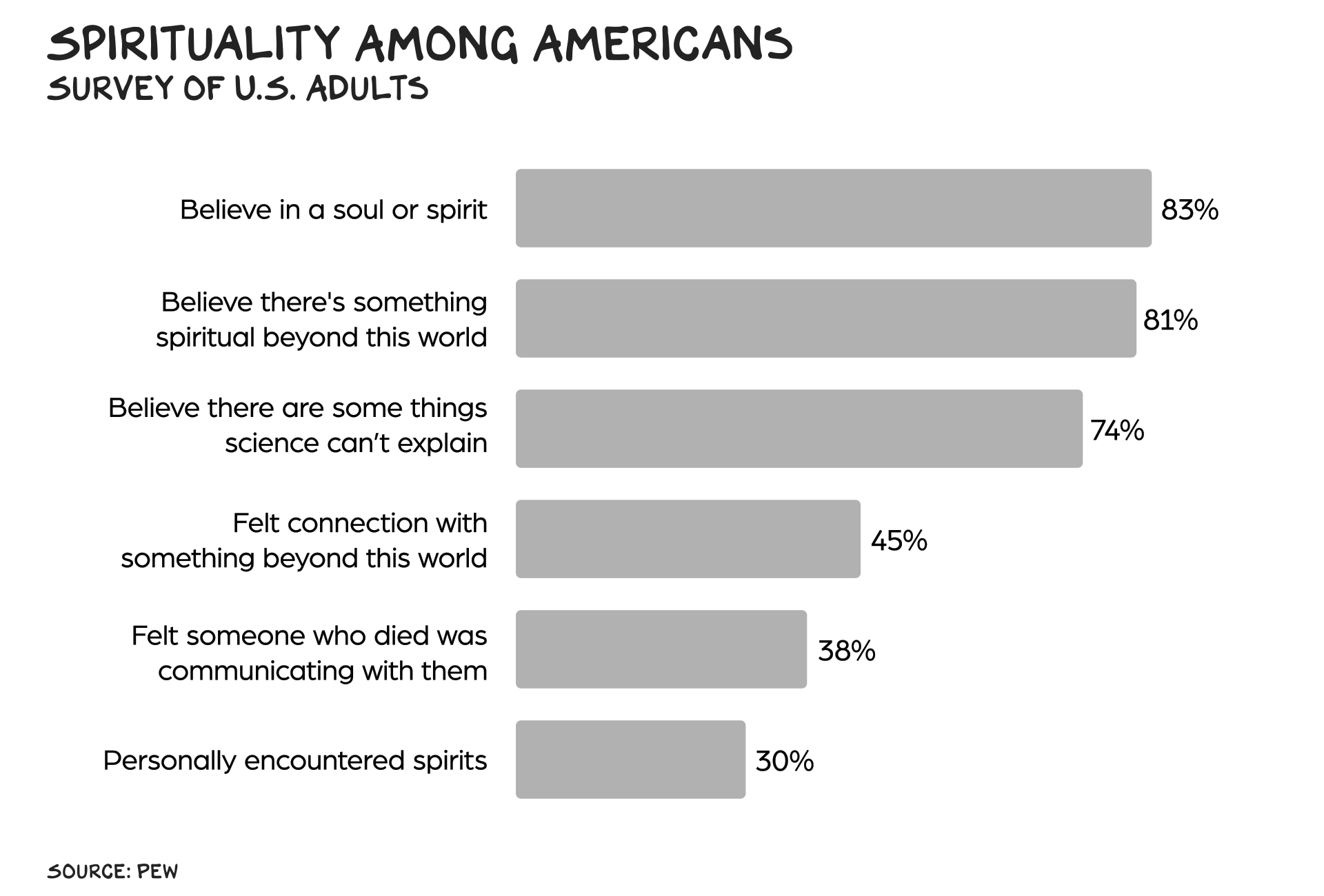
The ongoing conflict in the Middle East has caused immense grief on both sides. Israel’s trauma on October 7 likely had a wider and deeper impact than 9/11 did in the U.S., given the relative size of the populations. There has also been staggering loss and grief registered by the residents of Gaza.
The recent recovery of six hostages’ bodies from Gaza’s tunnels sparked the first general strike in Israel since the war began. Tens of thousands are demanding a ceasefire and the return of remaining hostages. This outpouring of grief might be a turning point, illustrating how grief can both drive us to war and compel us to seek peace. Note: I’m skeptical.
Packing my son for his return to boarding school earlier this week was emotional. Putting away his size 10 New Balance shoes, cologne, and first razor I thought again about a different, darker parental pain — the anguish of Hersh Goldberg-Polin’s parents. Seeing them speak at the Democratic National Convention, when Hersh was reportedly still alive, made the abstract parade of death painfully real. As Stalin cynically noted, “One death is a tragedy, a million deaths is a statistic.”
Arlington
Arlington National Cemetery, with over 400,000 graves, is a microcosm of American history. It conducts about 150 funerals weekly, with the 3rd U.S. Infantry Regiment guarding the Tomb of the Unknown Soldier 24/7/365.
From Civil War soldiers to freed slaves, astronauts to Supreme Court justices, Arlington honors a diverse array of Americans who’ve shaped our nation. It’s not just a cemetery but a place of healing for families of the fallen, a testament to national gratitude and respect.
During the Civil War, the Union seized an estate belonging to Confederate General Robert E. Lee, building a cemetery there for thousands of soldiers killed by forces under Lee’s command. Arlington was also the site of Freedman’s Village, a refugee camp for former slaves that evolved into a thriving community. Section 27 holds the graves of an estimated 3,000 Black Americans who escaped slavery.
President John F. Kennedy rests there, honored by an eternal flame. General George C. Marshall, Winston Churchill’s “organizer of victory” in World War II, lies nearby. Admiral Hyman G. Rickover, the “father of the nuclear navy,” and Ira Hayes, a Native American from the Akimel O’odham tribe who was one of the six Marines who raised the flag at Iwo Jima, also call Arlington their final home.
Desecration
The Veterans Health Administration serves 9 million veterans across 1,300 facilities. Arlington, in its way, is a health facility for grieving families. The resources and ceremony committed to it comfort those who’ve lost loved ones. It’s 355 million Americans saying to military families: We recognize your loss. Your sacrifice has meaning, and we care.
By custom and law, Arlington is off-limits for political content. Yet, during a ceremony marking the anniversary of an attack that killed 13 U.S. troops in Afghanistan, the Trump campaign saw an opportunity for content. When stopped, they became abusive. Trump advisor Chris LaCivita later posted footage of the event, hoping to “trigger the hacks” in the Army.
This desecration of Section 60 poured salt on open wounds. As Ben Kesling, a former Marine officer, wrote, “Section 60 is one of the most sacred places for this generation of troops. It is where those who were killed in Iraq and Afghanistan are buried. Those graves are visited not by tourists looking for historical figures, but by mothers and fathers visiting their fallen son or daughter. In Section 60, wounds are still raw.”
Trump’s actions dishonored not just those who served, but America itself. The man who called U.S. troops killed in combat “losers” and “suckers” has found a new low. His disrespect for America, and for those who’ve made the ultimate sacrifice in its defense, is increasingly common. However, this specific behavior at Arlington is unique in its callousness.
Grief is the price we pay for love. Our grief testifies to the depth of our connections — to individuals, communities, and nations. There’s a word for Trump’s actions at Arlington: desecration.
Life is so rich,

P.S. This week I spoke with Simon Sinek about leadership, mentorship, and the struggles men face in building meaningful relationships. Listen on Apple or Spotify
P.P.S. I’m doing an Ask Me Anything with Section on September 26 on building wealth, companies, and happiness. It’s free — RSVP here. I recommend submitting your questions early.