


Dallas Cowboys quarterback Roger Staubach made history in 1975 when he threw a pass that would come to be known as the first Hail Mary. The Cowboys were down 14-17 against the Vikings with 24 seconds left on the clock. Staubach saw his wide-receiver, Drew Pearson, nearly fifty yards away. He closed his eyes, said a Hail Mary, and launched a bomb that Pearson caught for the game-winning touchdown. From that point forward, that type of pass was to be known as a Hail Mary. Specifically: “a very long forward pass, typically made in desperation, with a very small chance of achieving a completion.”
Why is a UK-born markets commentator who knows nothing about NFL talking about the Hail Mary? Two reasons: 1) Superbowl’s coming up (exciting), and 2) it is the perfect analogy for what’s happening in American politics right now. To be blunt, President Trump is Roger Staubach in the fourth quarter right now: He’s losing, and he’s throwing Hail Marys.
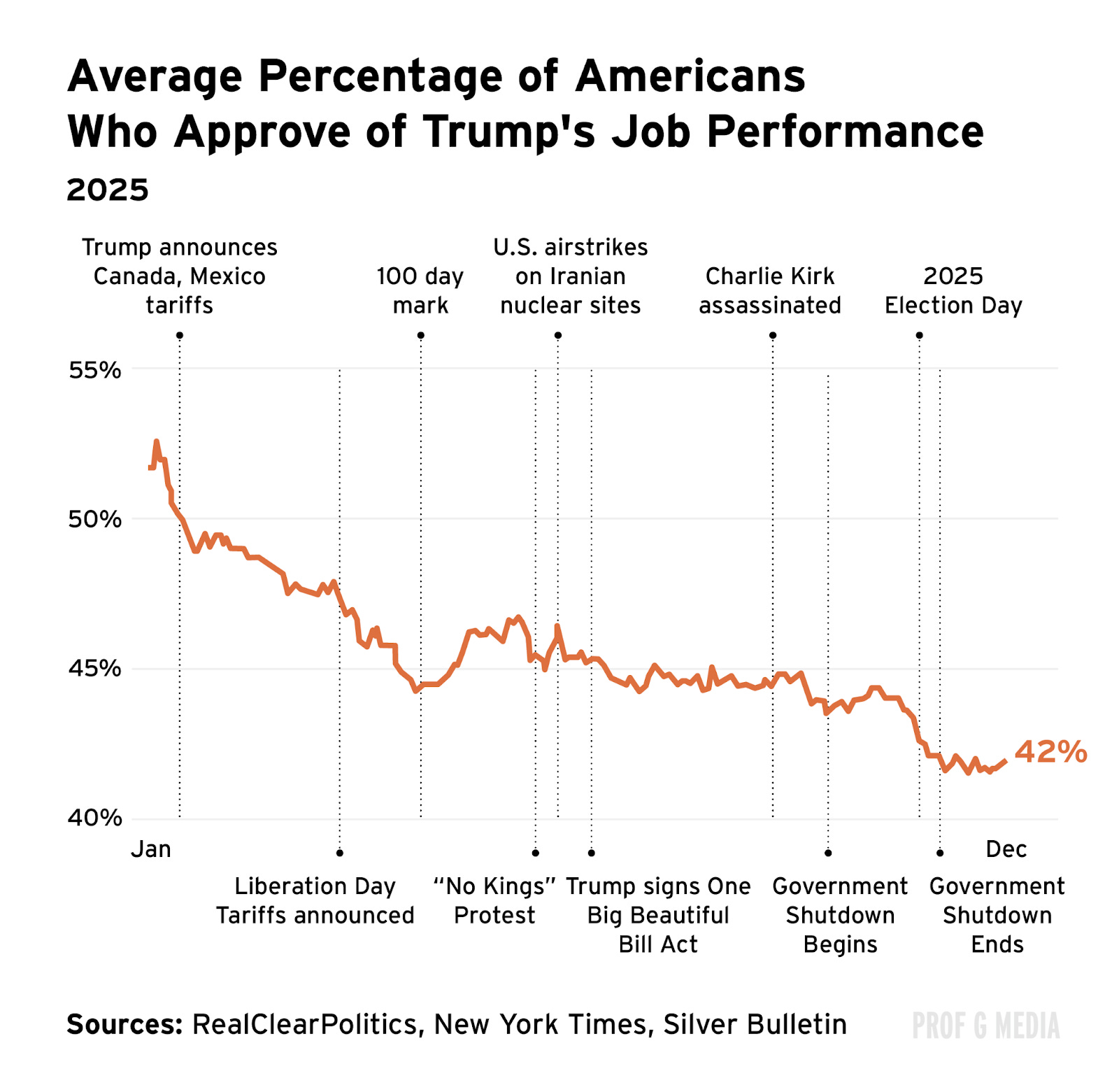
Much of this was revealed at Davos, as well as in Trump’s recent slate of proposals to address affordability. We will unpack those in a moment. But before that, let me make sure we’re all on the same page about the point we discussed last week: that Trump is losing — and losing badly.
Generational L
We’ll start with my generation (Gen Z). You may remember how young people helped Trump get re-elected. New data from CBS reveals that this trend has completely reversed. The President’s net approval rating among young people went from +10% in February to -32% today — a more than forty-percentage point decrease in less than twelve months.
Across other generations, his approval rating has also collapsed. A new New York Times/Siena poll found most Americans think Trump is doing a bad job handling immigration, the economy, the Israeli-Palestinian conflict, our relationship with other countries, and (most sharply) the cost of living. In fact, one analysis from Strength In Numbers found that Trump is the most unpopular second-term president in the history of the United States, except for Richard Nixon. Keep in mind, all of this polling was taken before what transpired in Minneapolis, and has likely gotten much worse.
Davos L
Recent events have rubbed salt in the wounds. Last week we discussed Trump’s crushing defeat to Jerome Powell, one of the few times where the President lost to a nerd. Well, last week, it happened again — only this time he lost to Mark Carney, the Prime Minister of Canada who also happens to be a central banker. Like Powell, Carney delivered a calm, data-driven address at Davos that simultaneously fired shots at the President while rallying the rest of the world against him. It was widely regarded as the best speech of the event, and possibly the best of all time. But more importantly, the White House was reportedly “livid” about it.
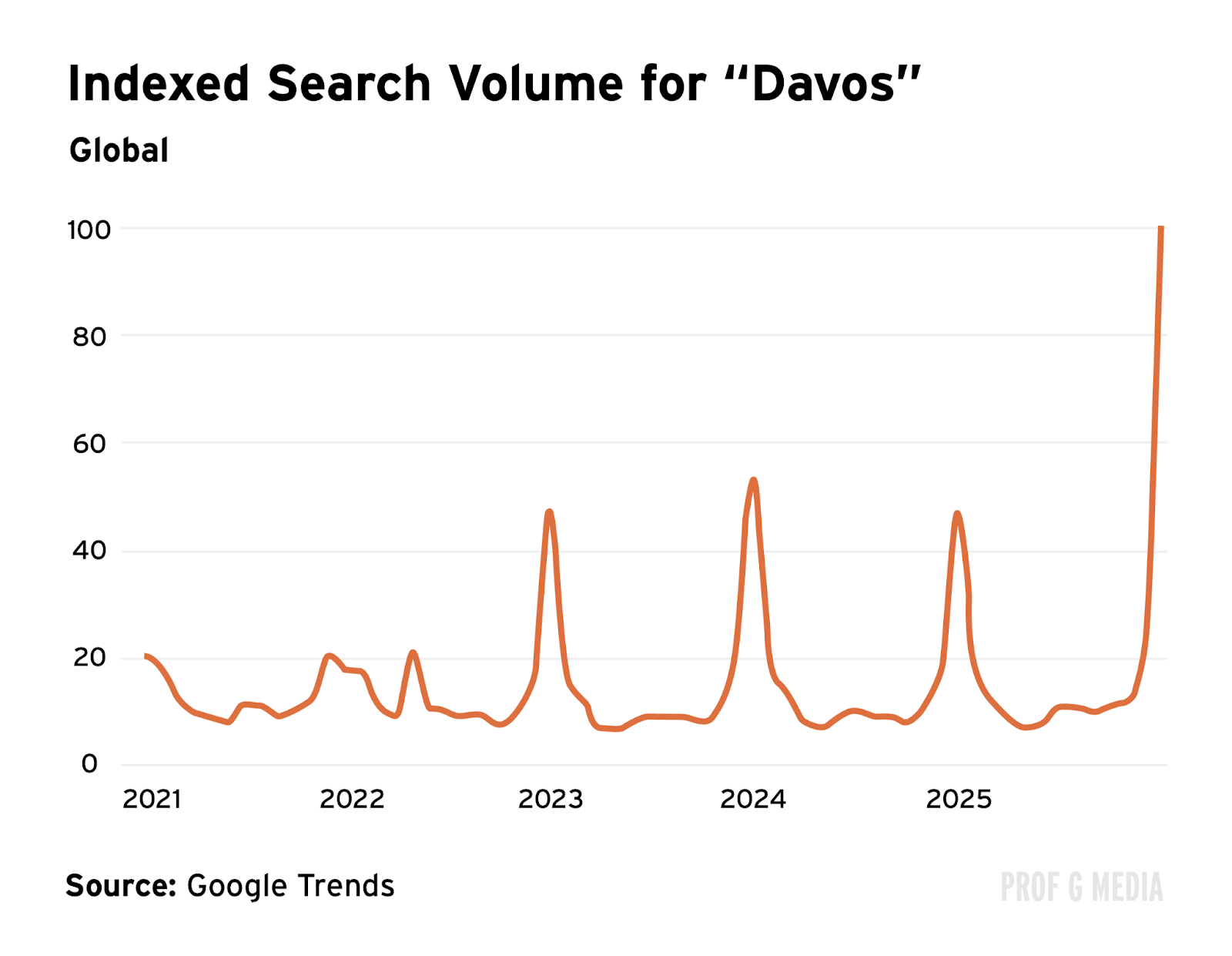
In addition, this humiliation was not private. This year’s Davos was unlike any other in that everyone was watching. Carney reached tens of millions of people. So did Emanuel Macron (his sunglasses sparked a $4 million stock rally), and Scott Bessent (went viral for calling Governor Newsom a “Sparkle Beach Ken”), and Howard Lutnick (made headlines after he was “heckled” at a dinner). In fact, search interest for this year’s Davos was nearly three-times higher than years previous. The bottom line: We all saw what happened.
Trump’s speech at Davos was equal parts horrific and boring. Highlights include: confusing Greenland with Iceland four times, questioning the intelligence of Somalians, and calling himself “daddy.” Many attendees left early. Jumbled among the drivel, however, he revealed something important, his true concern. “I’m sorry to do this to you,” he said. “Many of you are good friends of mine … I’m sorry,” he repeated again. Then, the entrée to a Hail Mary: “But you’ve driven up housing prices by purchasing hundreds of thousands of single-family homes.”
Act Like You Care
Trump introducing specific policies addressing affordability is unusual. Trump agreeing with Elizabeth Warren is more unusual. Trump apologizing is the most unusual. He’s doing all of this because he knows he’s losing. It’s clear that he also knows the issue on which he is especially losing: the cost of living. That is why he must now channel his inner Staubach and launch the ultimate Hail Mary: He must now pretend to care about affordability.
Some would call me cynical at this point. Why is he necessarily pretending? Isn’t it possible he actually does care? Perhaps. But let’s now examine his affordability proposals. You’ll soon see they could not possibly have come from a man who cares.
Operation Affordability
There are four main proposals: 1) a 10% interest rate cap on credit cards, 2) a new health care plan, 3) purchasing $200 billion worth of mortgage bonds, and 4) banning institutional investors from buying single-family homes.
Let’s start with #1. I’ll put it plainly: This will never happen. A 10% cap wouldn’t just “complicate” the banking business model — it would destroy it. This isn’t hyperbole: the average U.S. credit card rate is 20%. Everyone on Wall Street knows this won’t happen, and so does everyone in Washington. In fact, the idea has already been floated before, and it was not only ignored but never made it out of committee.
#2 is also unserious. In addition to lacking almost any detail, the detail that does exist is implausible bordering on satirical. Spencer Perlman, a director of health care research at Veda Partners, put it best: “We think it is intended to demonstrate that the White House is doing ‘something’ about affordability … but we believe the policies either stand little chance of being enacted by the current Congress or will have a minimal impact if enacted.”
#3: Unserious. The housing crisis is a function of prices, not rates. Purchasing $200 billion in mortgage bonds will fractionally reduce rates, thus artificially boosting demand and ultimately resulting in even higher home prices.
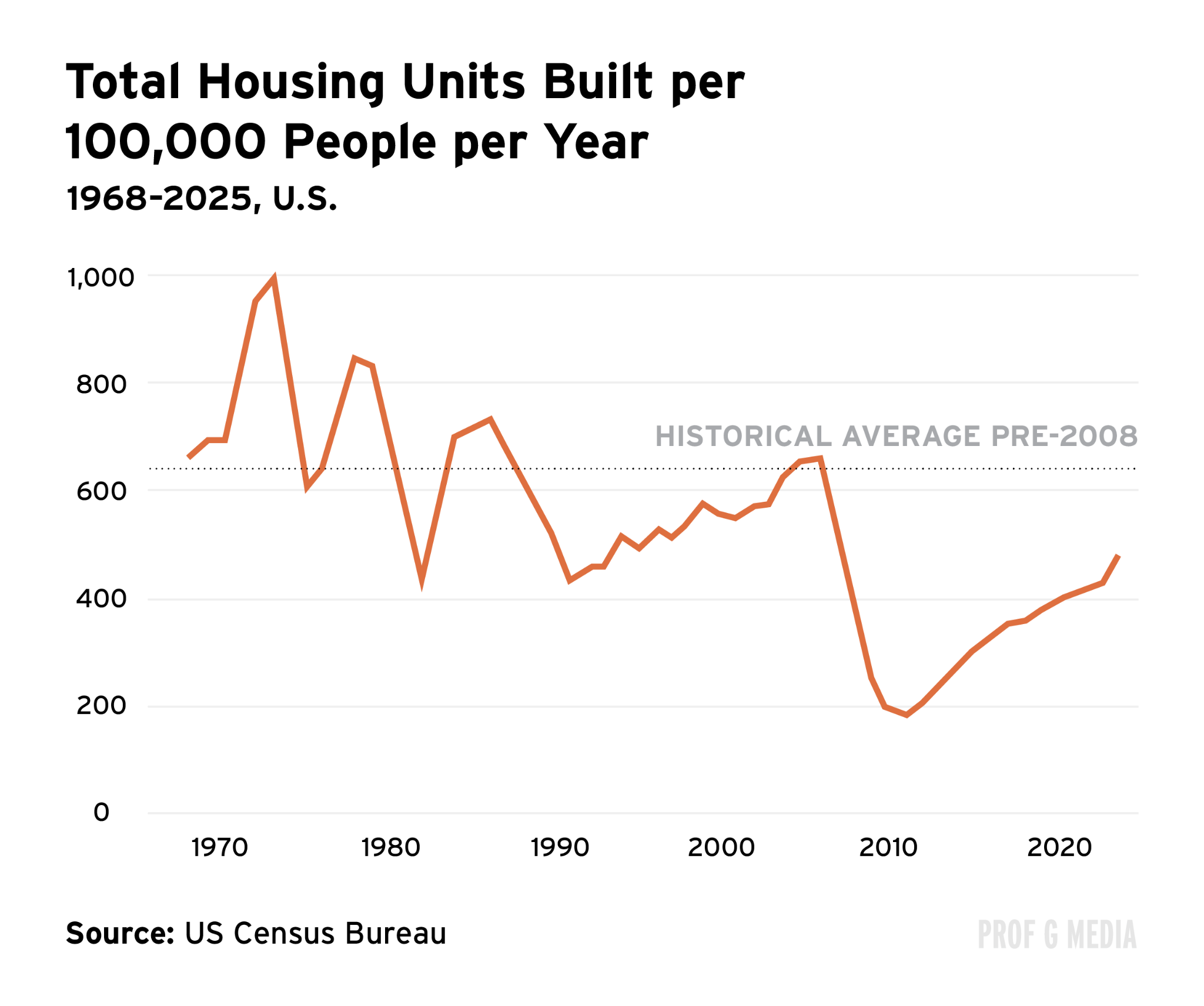
#4: Unserious but for different reasons. I’m not directionally against banning institutional investors from buying houses. However, institutional investors only own less than 1% of single-family homes in America, so this wouldn’t move the needle. If you really wanted to bring down housing costs, you’d increase the supply. It’s very simple: Build. More. Houses.
Every proposal shares two common traits: 1) They aren’t serious, and 2) They make enemies out of entities that are widely disliked. The interest rate cap targets the banks, the health care plan targets Big Pharma, the homebuying ban targets Blackstone and the big investment firms. Under no circumstance will these “takedowns” ever actually materialize, but that’s not the point. The point is, it all makes for a good show.
Trump is a blackbelt in this artform. During the campaign, he promised to put Main Street ahead of Wall Street, only to deregulate the banks and spur them on to their greatest year in decades. He also promised to reign in the bureaucracy and balance the budget, only to explode the deficit with the OBBBA by more than $3 trillion over the next decade. Trump’s figured out that what matters most in politics isn’t what you do, it’s what you say.
Odds Are
Will it work? Trump has a big platform, and one should never underestimate America’s hatred of large financial institutions. At the same time, however, Trump’s lying has been pretty brazen recently. Plus, the notion that the guy who reignited the affordability crisis with overnight tariffs suddenly cares about affordability might be too ironic a pill for the American people to swallow.
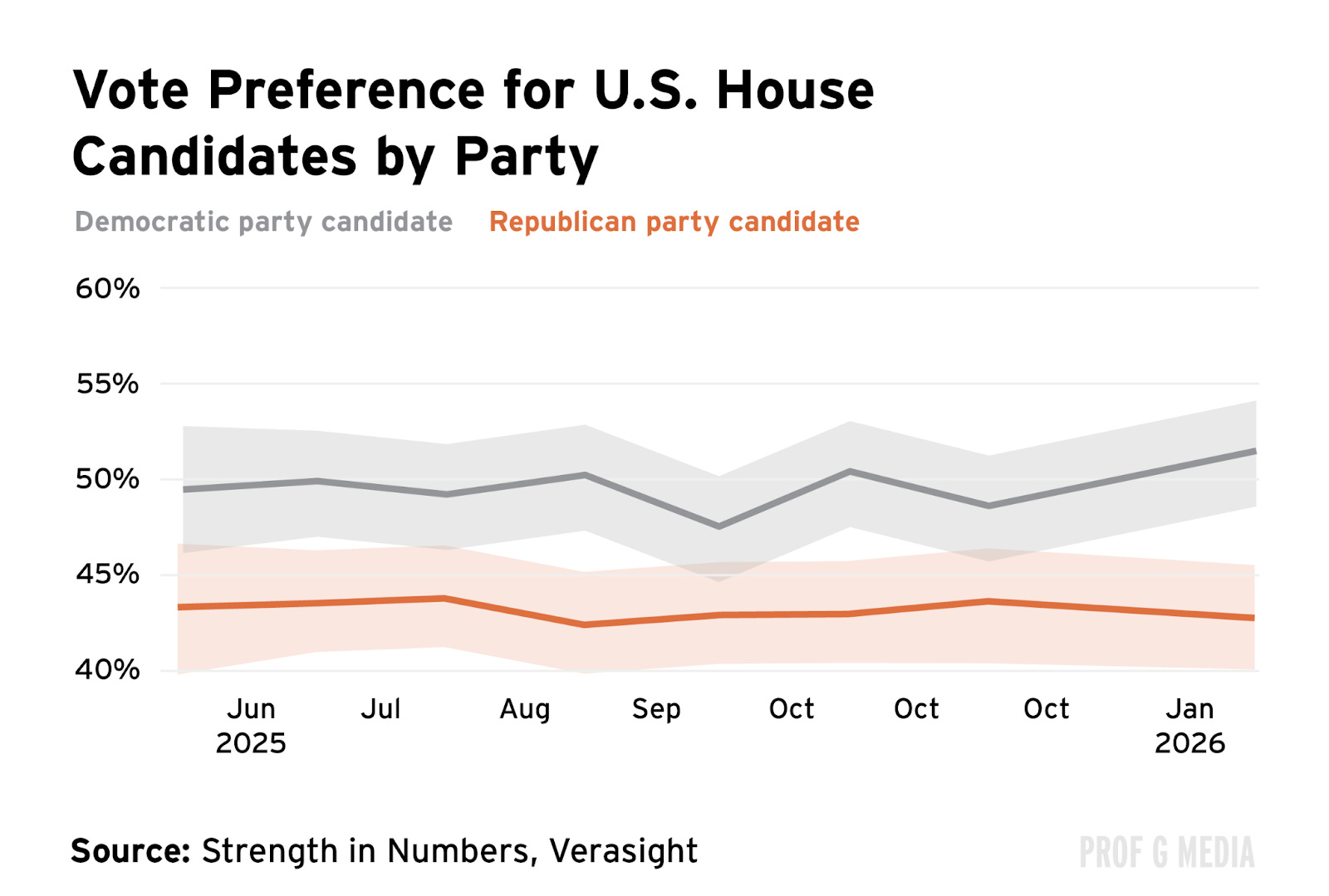
But he needs to do something... His approval rating continues to decline, and the midterms are just a few months away. Meanwhile, every poll shows that Democrats are set to deliver a decisive victory.
In NFL terms, there’s 24 seconds left on the clock and Trump’s down six points. His only hope is to throw a very long forward pass with a very small chance of achieving completion. His only hope is a Hail Mary. Again, will it work?
I’ll leave you with one final statistic: One in twelve Hail Mary attempts succeed. It’s possible, but I wouldn’t bet on it.
Until next week,
Ed