



Time flies when you’re building the future.
Just last week, we said the narrative that Democrats were divided over Hakeem Jeffries was overblown. Now we have proof: Jeffries won House Democrats’ nomination for Speaker on Wednesday. It was a thumping victory. Jeffries won 251-11, putting him one vote away from becoming the first Black Speaker of the House.
(The process will be complete when the House selects its next Speaker in January. This was a caucus vote to determine who Democrats would nominate.)
It’s a big accomplishment, and a clear repudiation of the idea that Jeffries would face a serious rebellion or leadership challenge.
Today, we’re exploring how Jeffries got it done: the coalition he built and promises he made to get himself in this position, and what it should mean for the next two years of Democratic congressional rule.
We’re also going to look at the pitfalls he needs to avoid even with such a strong majority. As we’ve pointed out before, political parties rent offices. They don’t own them. The party has to deliver on its core promises to survive.
For now, we’re 41 days away from a new era in American politics. We couldn’t be more excited.
How Jeffries got the votes he needed
Two things happened before Jeffries secured his victory last week. First, five colleagues representing the ideological and demographic diversity of the Democratic caucus nominated him for Speaker. They included progressives and moderates, veterans and members representing different racial and ethnic backgrounds.
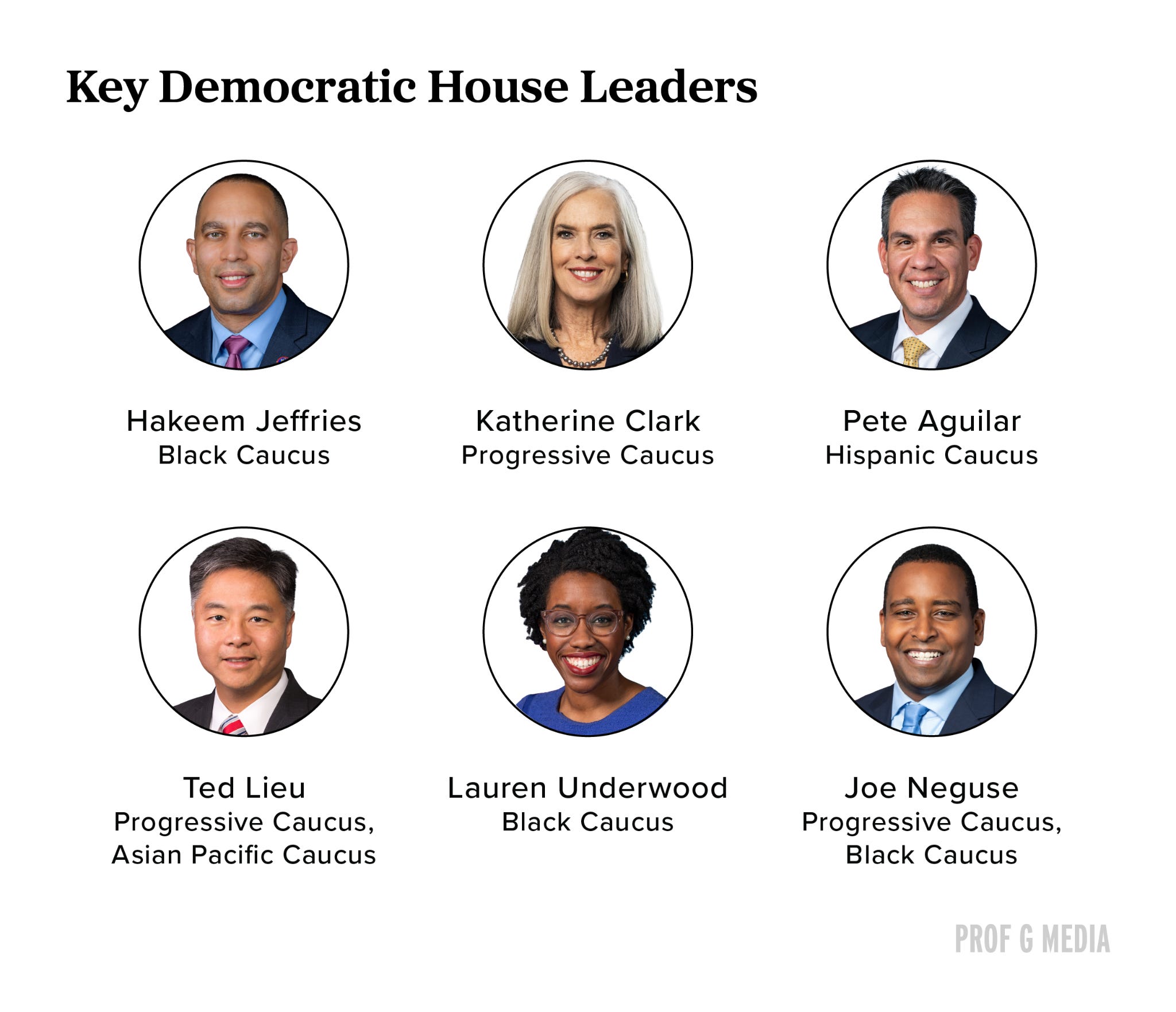
You couldn’t ask for a wider coalition of ideologies and identities, and that’s by design. At his core, Jeffries is a consultative leader. Consider the three major moves he made after these elections to secure his victory:
1. Meetings with every major party faction
One day before the vote, Jeffries reportedly held meetings with the leaders of the major ideological caucuses, including the Congressional Progressive Caucus, the New Democrat Coalition, and the fiscally conservative Blue Dogs. In his own words, he said he would “embrace those conversations.”
2. Negotiating with dissenters
Of the 11 Democrats who voted against Jeffries, 7 put out a joint statement explaining their reasoning. They were clear about their objections: Jeffries hadn’t committed to Medicare for All, nor had he made enough progress on “stopping ICE terror, getting money out of politics, or ending the genocide in Gaza.”
Even so, the statement revealed that Jeffries had entered into “good-faith conversations” with them, and they have seen “meaningful progress.”
3. Personal outreach to every House Democrat
Yes, believe it or not, Jeffries reportedly spoke individually with nearly every House Democrat ahead of the Speaker vote, including dozens of incoming freshmen.
Something else happened before the vote: Rep. Jim Clyburn, one of the five colleagues who nominated Jeffries for the role, delivered a speech about the importance of this moment.
Clyburn is a uniquely powerful figure in the Democratic caucus. According to Jeffries, when the former majority whip spoke, “you could hear a pin drop” in the room. Clyburn talked about the significance of electing the first Black House Speaker, and that choosing Jeffries amounted to a continuation of civil rights leader John Lewis’ legacy.
The relationship between Jeffries and Clyburn could prove critical to Jeffries’ leadership. For now, it’s clear the two are on the same page. With Clyburn in his corner, Jeffries has the backing of one of the most influential figures in the Democratic Party, as well as an important bridge to its Black political establishment.
What lies ahead for House Democrats
Democrats certainly hope that this will put an end to the leadership question. A Speaker vote will take place on January 3, then the real work begins.
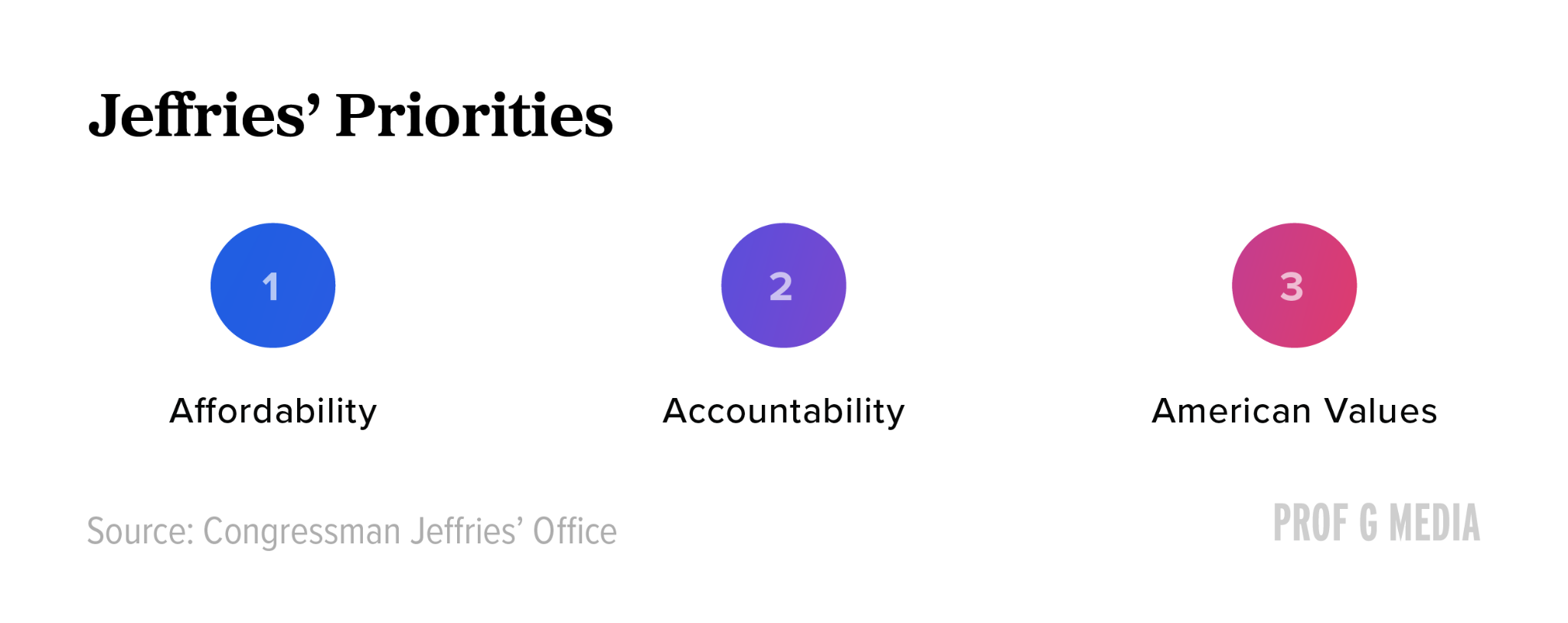
Jeffries has already signaled what he wants to get done for the American people over the next two years. It’s a Triple-A agenda:
1. Affordability
The Speaker-designate has a few ways to tackle this problem right out of the gate: ending the war in Iran, removing tariffs, reversing healthcare cuts, and restoring SNAP funding. Great start.
The list doesn’t end there. In his letter to colleagues, Jeffries also identified five areas in which Democrats could work to end this crisis: housing, healthcare, groceries and goods, gas and utilities, and caregiving.
Since we’re talking about coalition-building, take note of who he’s already put in charge. Take healthcare, for example. Jeffries selected Reps. Alexandria Ocasio-Cortez (NY-14) and Terri Sewell (AL-7) to lead the working group for that issue, and they’ve sent options to Jeffries on lowering costs and expanding health coverage.
2. Accountability
What a difference eight years makes. Impeachment eventually dominated Democrats’ first House majority under Trump. This time, Jeffries wants to begin with oversight focused on the issues Americans care about.
Per Jeffries: “We must root out corrupt price gouging, clean up the mess at the Supreme Court and ban Members of Congress from trading stocks. Accountability begins at home.”
And his words on the Trump administration itself: “Anyone who is stealing from the American people, ripping off the American people or screwing over the American people can no longer hide. We are going to hold the crooks accountable.”
3. American Values
Here, Jeffries kept it simple. At the top of his list are restoring values like liberty and justice for all, equal protection under the law, and the “unfettered right to vote in a representative democracy,” along with our heritage as a nation of immigrants.
We can all be realistic about this. Without the power of the presidency, the odds of Democrats making progress on these issues are low. But what we like about this agenda is that it signals what Democrats could accomplish with that power.
Action on big-ticket affordability issues like housing and healthcare. Real oversight. Restoring our rights. It’s an optimistic vision of the future.
Majority rule won’t always go smoothly
Finally, one quote that stood out to us last week from Josh Turek: “we’ve got to go up there and provide results on cost, corruption, and kitchen table issues – otherwise we are all renting these seats for just a few years.”
That’s the fundamental challenge ahead for Jeffries. Nobody will blame him if President Trump vetoes everything he passes. But passing meaningful reforms is a big ask in itself.
Jeffries has his weaknesses. As Punchbowl’s Jake Sherman pointed out last week, “Jeffries is cautious and sometimes overly deliberative,” and that could be a problem given his lack of experience negotiating complex legislation like omnibus bills or reconciliation packages.
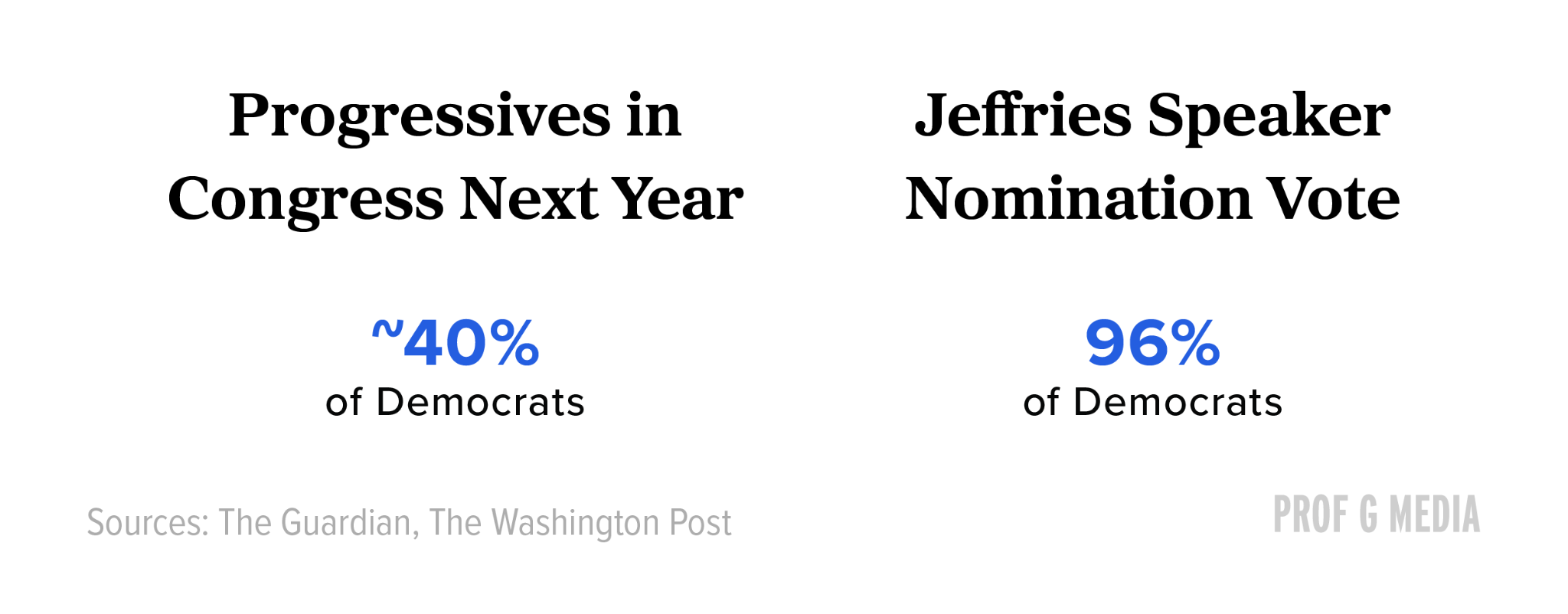
It could become a bigger problem if the far-left wing of his party decides to make it one. The DSA is a small part of this House, but they’re a much bigger part of Jeffries’ home base in Brooklyn. Per Sherman, “if he gets crosswise with progressives, Jeffries may face pressure back home.”
We’re sure Jeffries will learn to be decisive on the job. But chances are the left wing won’t just go away altogether. He’ll need to find some common ground with them and deliver results over the next two years.
Why did Jeffries secretly meet with white collar thug Jared Kushner?
Hope King Jefferies Accomplishes the AAAs. Best wishes