


The Vatican is a country without an army or a legislature. With barely 1,000 citizens and so little territory that you can walk across it in 15 minutes, Vatican City is one of the smallest countries in the world. Yet, it’s led by one of the most influential people on the planet. For more than a century, the pope hasn’t just been the spiritual leader of Catholicism — he has also helped to shape scientific and technological transformations.
That’s right. The Pope doesn’t just opine about religion. His words have influenced how 1.4 billion Catholics globally (18% of the human population) think about nuclear physics, climate change, globalization, and, most recently, AI.
Earlier this year, Pope Leo XIV signed his first “encyclical,” a document establishing the Church’s position on a matter of moral weight. He titled it Magnifica Humanitas, or “Magnificent Humanity.” The subject? AI and the human condition.
But how exactly does the Vatican interact with scientists, and how does the Pope determine his technological teachings? And once he does, how much does his guidance really change the world?
An Ancient Tradition: The Church and the Scientists
Pope Leo’s Magnifica Humanitas is part of an ancient tradition of the church attempting to understand the impact of scientific inquiry on human life.
The pope’s modern scientific body, the Pontifical Academy of Sciences (PAS), traces its lineage all the way back to 1603, when 18-year-old Roman prince Federico Cesi founded the Accademia dei Lincei — the Academy of the Lynxes. Its founding members included Dutch naturalist and physician Johannes van Heeck; the mathematician Francesco Stelluti, who conducted some of the earliest studies of microscopic life; and Galileo Galilei, the father of modern science.
Today, it’s composed of 80 members appointed for life by the pope. They’re drawn from 36 countries, some religious and some not. Current members include Francis Collins, former director of the National Institutes of Health and a past director of the Human Genome Project, and Aaron Ciechanover, Nobel laureate in chemistry.
PAS’ sister body, the Pontifical Academy of Social Sciences (PASS), founded by John Paul II in 1994, bridges ethics, the common good, social justice and sustainability. Both share a Renaissance villa, called Casina Pio IV, inside the Vatican walls. “They’re in close and direct communication to facilitate the pope’s thought process, develop and refine his view, and formally put his position forward as the official policy of his papacy,” Jacquie Corbelli, an advisor to PASS told me.
PAS and PASS work closely with the Roman Curia — the central governing body of the Catholic Church. The Curia consists of the Secretariat of State and 16 dicasteries (departments), alongside tribunals and financial offices. Fewer than 3,000 people work in the Curia, also known as the Holy Father’s “long arm,” helping the pope to carry out his ministry. “The pope is both a prophet and a diplomat,” Monsignor Anthony Ekpo, assessor for general affairs of the Secretariat of State said.
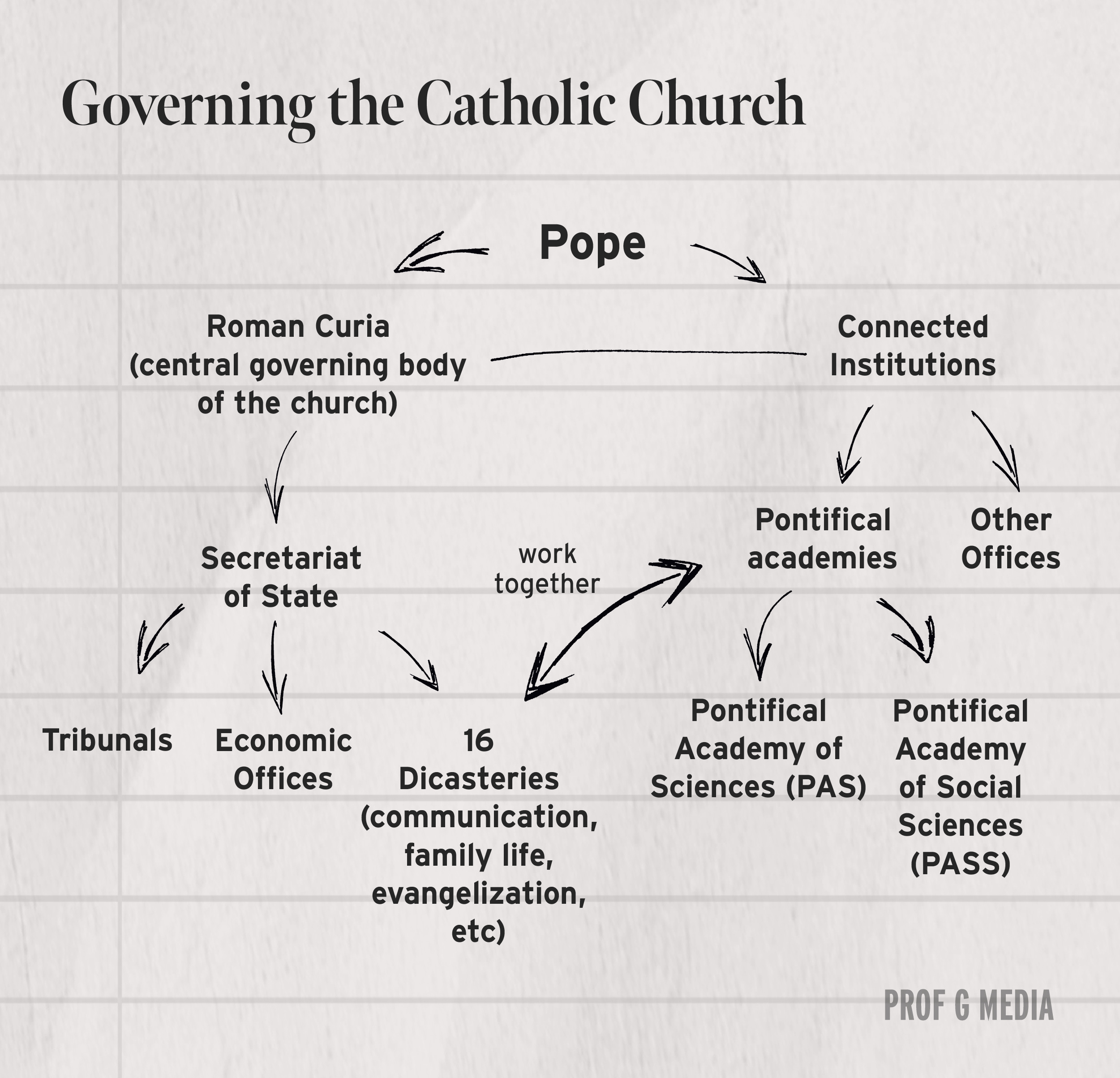
Because artificial intelligence isn’t purely a scientific matter, several dicasteries helped shape the pope’s thinking. In May, just before the encyclical’s release, the pope launched an “interdicasterial commission” on AI made up of representatives from seven Vatican bodies, including the doctrinal, education, and human development departments. Deference to expertise is emphasized in the new encyclical. Pope Leo XIV cites St. John Paul II, who wrote that the church welcomes the contributions of the social sciences in order “to draw from them concrete insights that help her carry out her magisterial office.”
The Church and AI
The church started paying attention to artificial intelligence earlier than most institutions. Ten years ago, a group of Silicon Valley executives, including LinkedIn co-founder Reid Hoffman, approached a French priest, Eric Salobir, and asked how they could contact the Vatican. They wanted to warn the church that AI was progressing fast, and that it would be transformative. The meeting that followed was the first of the Minerva Dialogues, organized by the Vatican’s Dicastery for Culture and Education. It became an annual gathering that brought Silicon Valley and the church together for discussions on the impact of digital technologies on society.
In 2020, the Pontifical Academy for Life convened its RenAIssance gathering and produced the Rome Call for AI Ethics, a shared set of principles signed by Microsoft, IBM, and the Italian government. In 2024, Pope Francis attended the G7 summit and called for autonomous weapons to be banned. A year later, the Dicastery for the Doctrine of the Faith and the Dicastery for Culture and Education jointly published a 30-page note called Antiqua et Nova (Ancient and New) that reflected on the relationship between AI and humanity. It tackles AI and healthcare, warfare, deepfakes, labor, and other ethical challenges posed by the technology, instructing believers to act as moral agents who use AI to promote human dignity and the common good.
Magnifica Humanitas argues that AI is not intrinsically bad, but that it takes on the aims of those who build and use it. Pope Leo lists concrete risks of AI — job destruction, misinformation, autonomous weapons, and more — and then points to a deeper issue: our relationship with life itself is in crisis. He insists that, contrary to popular belief, our flaws and limits aren’t defects to be corrected. “Humanity flourishes not despite limitations, but often through them.” Pope Leo encourages listeners to work perseveringly on the “construction site of our times,” to join forces in building up the common good. He ends by asking readers to reflect on AI’s place in their daily life: Does it help me build genuine closeness in relationships? Does it help me promote justice and peace?
‘Of New Things’
The most famous encyclical was written during the height of the Industrial Revolution. Deemed the Magna Carta of Christian social action, Rerum Novarum reckoned with the changing relationship between capital and labor that came with “the marvelous discoveries of science.” It affirmed the right to private property, while defending labor unions and the right to a living wage, rejecting both laissez-faire capitalism and socialism. It is still considered the foundation of Catholic social teaching: an ethical framework for addressing social, political, and economic issues.
Its author, Pope Leo XIII, wrote of “the enormous fortunes of some few individuals, and the utter poverty of the masses; in the increased self-reliance and closer mutual combination of the working classes; as also, finally, in the prevailing moral degeneracy.”
To inform his writing, Pope Leo gathered opinions on the condition of modern (1880s) labor from theorists, practitioners of social justice, and the Jesuit community.
Rerum Novarum had lasting political influence, informing New Deal legislation in the U.S. and shaping Europe’s Christian Democratic parties.
Pope Leo XIV also drew from outside expertise to craft Magnifica Humanitas. Leo said it was “born from listening” to scientists and engineers excited about the technology, parents and teachers fearful for younger generations, and “very troubled voices” warning of autonomous weapons and algorithmic discrimination. He cited St. Paul VI, who warned that “the most extraordinary scientific progress, the most astounding technical feats and the most amazing economic growth, unless accompanied by authentic moral and social progress, will in the long run go against man.”
Anthropic and the Pope
One particular lay person stood out at the encyclical’s presentation: Chris Olah, Anthropic co-founder, interpretability researcher, and an atheist. He sat just a few seats away from the pope and, during his remarks, asked the church to keep watch over his industry: “We need informed critics who will tell the labs when we are failing,” he said. “We need moral voices that the incentives cannot bend.”
It wasn’t the first time Olah had worked with Catholics. In March, Anthropic hosted 15 Christian leaders to teach them how AI models are built, trained, and operated, and to ask the leaders for guidance as they developed Claude. A few Catholic thinkers — a priest, a bishop, and a theologian — directly helped to draft Claude’s constitution. The constitution defines the model’s “values” and is what employees at Anthropic refer to as the model’s “soul doc.” To be clear, the Church does not believe in AI consciousness, and Antiqua et Nova specifically warns against anthropomorphizing the technology. The religious advisors were there to provide moral formation insights that would enable Anthropic to build a tool oriented toward the good: “I think we have to help these machines be tilted towards good,” said Brendan McGuire, a Silicon Valley priest and former executive who took part in the talks. “Otherwise they’re just going to reflect back the good and evil of the world—that’s a horrifying thing, right?”
Fourteen Catholic theologians and scholars also defended Anthropic in an amicus brief after Trump declared the company a “supply chain risk.”
So, Does It Matter?
Encyclicals are how the Church communicates its position on social issues. But does making a statement actually change anything?
The data shows that recent encyclicals haven’t directly changed public opinion. When Pope Francis released his climate encyclical, Laudato Si, in 2015, he had a 70% favorability rating among all Americans and 90% among U.S. Catholics, per Pew. A University of Pennsylvania study found that among people who were aware of the encyclical, there was no direct effect on their beliefs about the seriousness of climate change; however, the study found that it did raise perceptions of the pope’s credibility to speak about climate change with authority.
Rerum Novarum shows that the Church’s real influence runs through the people and institutions who translate doctrine into policy. The clearest historical example is Monsignor John Ryan, a Minnesotan priest who came to be known as the “Right Reverend New Dealer.” He published A Living Wage in 1906, arguing that unless the state set a wage floor, employers would pay workers below subsistence — a direct application of Rerum Novarum. He drafted Minnesota’s minimum-wage law, which was then copied by several other states and eventually embraced by the federal government during the New Deal.
The encyclical’s ideas reached the New Deal because Catholic actors carried them into the machine of policy. That’s what we should watch for now. Once an encyclical is published, it gets circulated across the church’s institutions and into the global debate — in this case, the AI debate.
We’ve seen it happen before: Pope Francis’ Laudato Si was published just a couple of months before the United Nations talks that yielded the Paris Agreement — the international treaty to combat climate change. “He’s been one of the strongest voices, pushing to get things done,” former U.S. climate envoy John Kerry said of Pope Francis. Former Vice President Al Gore once said in an interview: “I’m a Protestant, but I’ll tell you, because of Pope Francis, I really could become a Catholic. He is really an amazing spiritual leader.”
Catholics’ influence in the U.S. government is substantial. Catholics make up 28% of the 119th Congress, with 126 in the House and 24 in the Senate. Six of the nine Supreme Court justices are Catholic. While only two Catholics have ever become president, many more have held influential positions in presidential administrations and throughout the executive branch.
Five years after Pope Francis’ Laudato Si was published, the church released a guide for acting on it, with a section on “investing in renewable energy.” Divestment is a concrete action in service of the church and humankind and “in line with the proposals of the encyclical Laudato si‘ related to the search for an Integral Ecology,” Fr. Míceál O’Neill, Carmelite prior general, said in a statement. More than 300 Catholic institutions have divested from fossil fuels, catalyzed by the encyclical.
Encyclicals also inspire others to vote with their dollars. Eli Lilly & Co.’s largest shareholder, the Lilly Endowment, gave nearly $1.3 billion to religious causes in 2025. In December, it gave a $50.8 million grant to the University of Notre Dame to help develop a faith-based ethical framework for AI use. When accepting the award, the university’s president said, “Pope Leo XIV calls for us all to work to ensure that AI is ‘intelligent, relational and guided by love.’ … Notre Dame is well-positioned to build bridges between religious leaders and educators, and those creating and using new technologies, so that they might together explore the moral and ethical questions associated with AI.”
A Moment Like 1891
While 20% of U.S. adults are Catholic, nearly half of Americans claim some connection to the faith. Recently, Catholic churches have seen a surge in conversions, especially among young people.
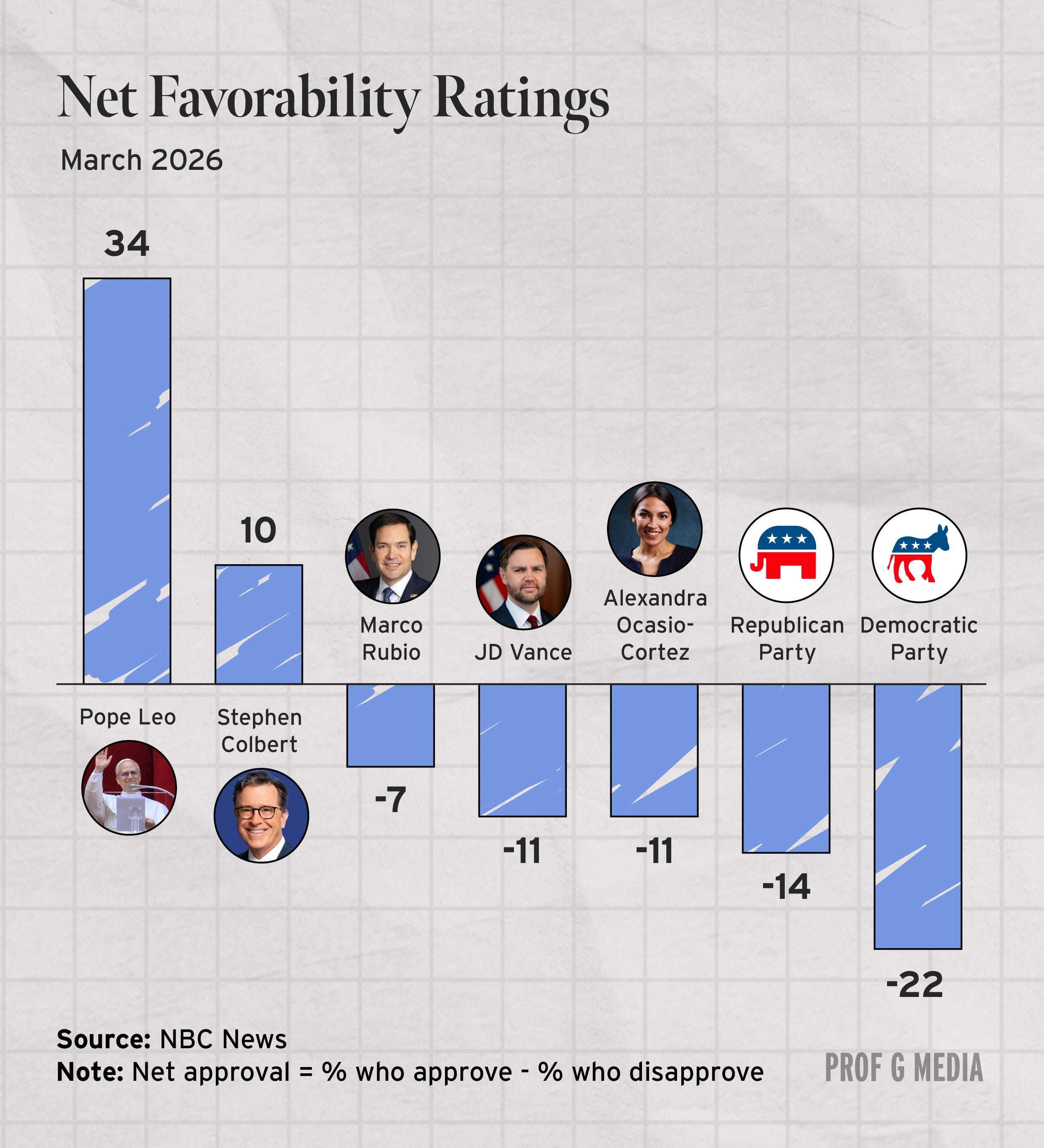
It’s not just Catholics turning to the pope for moral leadership. A recent NBC poll found that U.S. voters view Pope Leo more favorably than Stephen Colbert, Secretary of State Marco Rubio, California Gov. Gavin Newsom, and President Donald Trump. Pope Leo’s likeability makes sense — he’s more relatable than previous church leaders. He’s the first American pope, and he’s a White Sox fan from Chicago. In October, Pope Leo XIV livestreamed with high school students, answering their questions — an almost unimaginable feat for one of his predecessors.
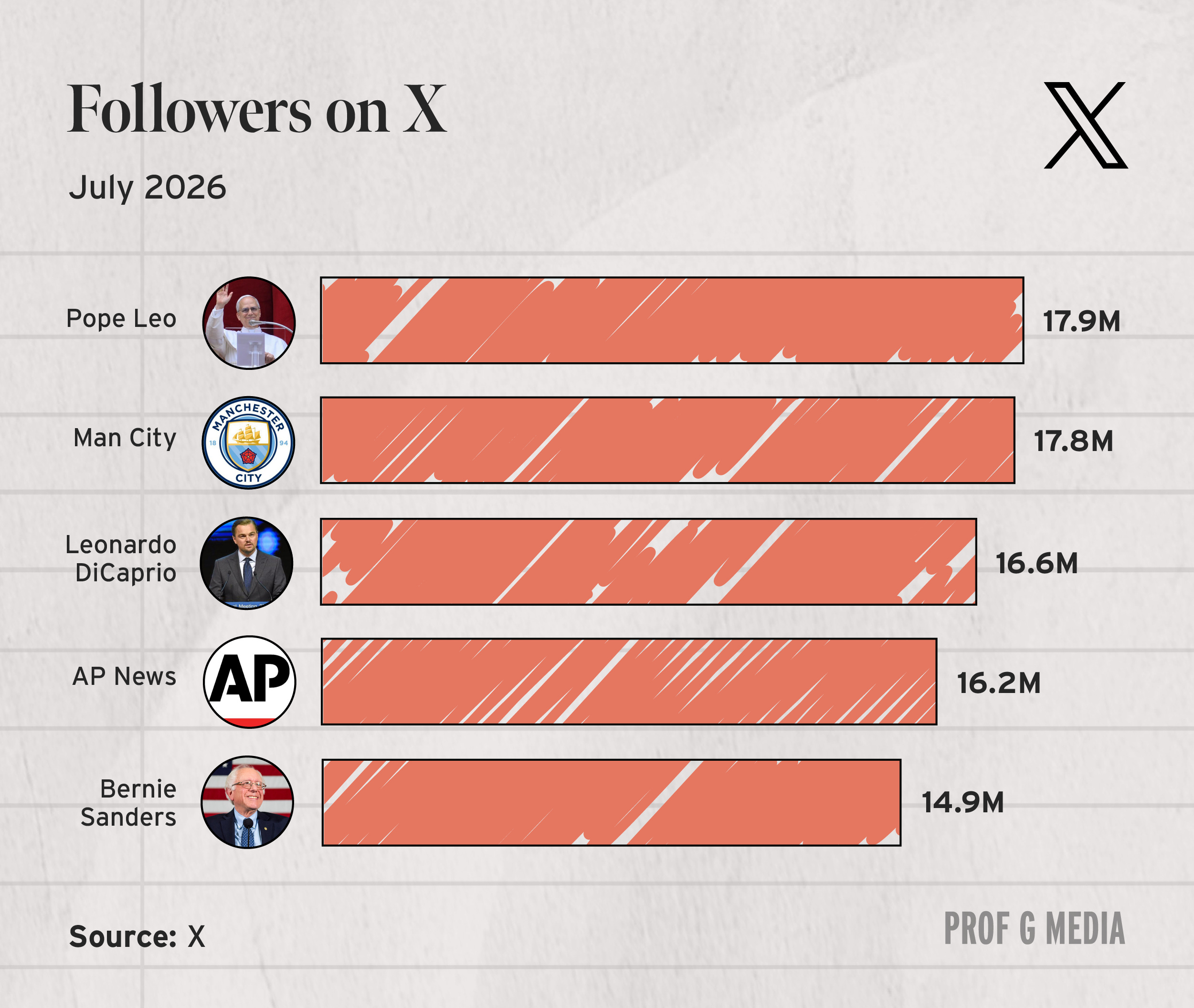
Pope Leo has not been shy about using the platform either. Amid a public clash with President Trump over war in the Middle East, he said recently, “I have no fear of either the Trump administration or speaking out loudly about the message of the Gospel.” The pope’s official account has nearly 18 million followers on X.
This may be a moment like 1891 in more ways than the typical AI commentator realizes. Rerum Novarum didn’t change minds overnight; instead, it set the terms of the conversation. Over the next half-century, reformers, including some Catholic institutions, fashioned those terms into laws. If Magnifica Humanitas matters, it will be because the moral vocabulary established by the pope’s encyclical will form the “invisible infrastructure” later. As Pope Leo writes, developers do not merely “build” systems, they create a framework within which the intelligence “grows.” Whoever defines that framework defines the future.
“The church thus stands alongside the world without overpowering it,” Pope Leo writes. His warning is clear: Without openly discussing the ethical frameworks that will shape use of AI, “those who control AI will impose their own moral vision.” The task before us is not only technical or ethical, Pope Leo tells us. It is ecological: this is about shaping our common home.

I’m a practicing Catholic, so I take the church’s encyclicals quite seriously. But despite years of Catholic school, the Vatican remains mysterious to me. I wanted to understand how Pope Leo XIV, in office for a little over a year, managed to publish a 42,000-word document on a topic as complex and urgent as artificial intelligence. Investigating the drafting of this encyclical taught me a great deal, including that the Catholic Church prizes scientific inquiry enough to house a council of the world’s leading scientists.
I’ve also been thinking about moral leadership, which is in short supply and high demand these days. As society scrambles to absorb disruption caused by AI, we need discerning, human-oriented leaders. The Catholic Church, alongside other religious groups, is uniquely well-positioned to guide thoughtful dialogue about how we want the AI revolution to unfold.

A philosopher’s one-word theory to explain why the world feels so weird
The dangers of investor fatalism
Mother Tongue: Emily Wilson makes Homer modern
I appreciated understanding how the church stays informed about scientific technologies and informs the industry. I have deep respect for Pope Leo and completely agree with his moral guide about using AI intentionally for promoting good in the world. I just wrote an article about the mindful use of AI with a similar perspective.
It was interesting to see Anthropic actively seeking moral guidance to shape its constitution. As users of AI we can do our part by supporting companies that are trying to be ethical despite political and financial pressures.
Your insight drawn from data that the church didn't shift followers behaviors but has most impact on policy is compelling. Thank you for this interesting and insightful article ☀️
This was one of the most fascinating, insightful and well written dives I've experienced in at least the past month, which is like 12 months in AI years. Bravo.