



All the moderates are raging. Thank God we landed on such a good podcast name.
For years, you wouldn’t use a word like that to describe the average Democrat, who campaigned on economic centrism and had a reverence for institutions and compromise.
That’s how our wing of the party ended up with a set of rules. Defend the private health care system. Preserve the court. Keep the filibuster. Never raise taxes.
The era that advice was built for no longer exists. Today, Republicans use power aggressively, institutions are crumbling, and voters are furious about the price of everything. It’s no wonder Democrats are changing too.
They’re starting to accept that you can’t just make a case for the status quo when voters are crying out for something to believe in. You can stay moderate on a wide range of economic and social issues while recognizing that the biggest challenges of our time require better solutions.
If you’re a Democrat who wants to stay relevant, it’s time for a new version of moderation. It’s time to rage.
From ACA to M4A
We remember when calling for “Medicare for All” was radical. At the time, Obamacare was still in its first decade, and Democrats were proud of what it did. The goal for most moderates was to defend and expand it. Putting health care in the hands of the government seemed like too big a move for the electorate.
That was more than a decade ago. Things change. And on health care, the data are clear.
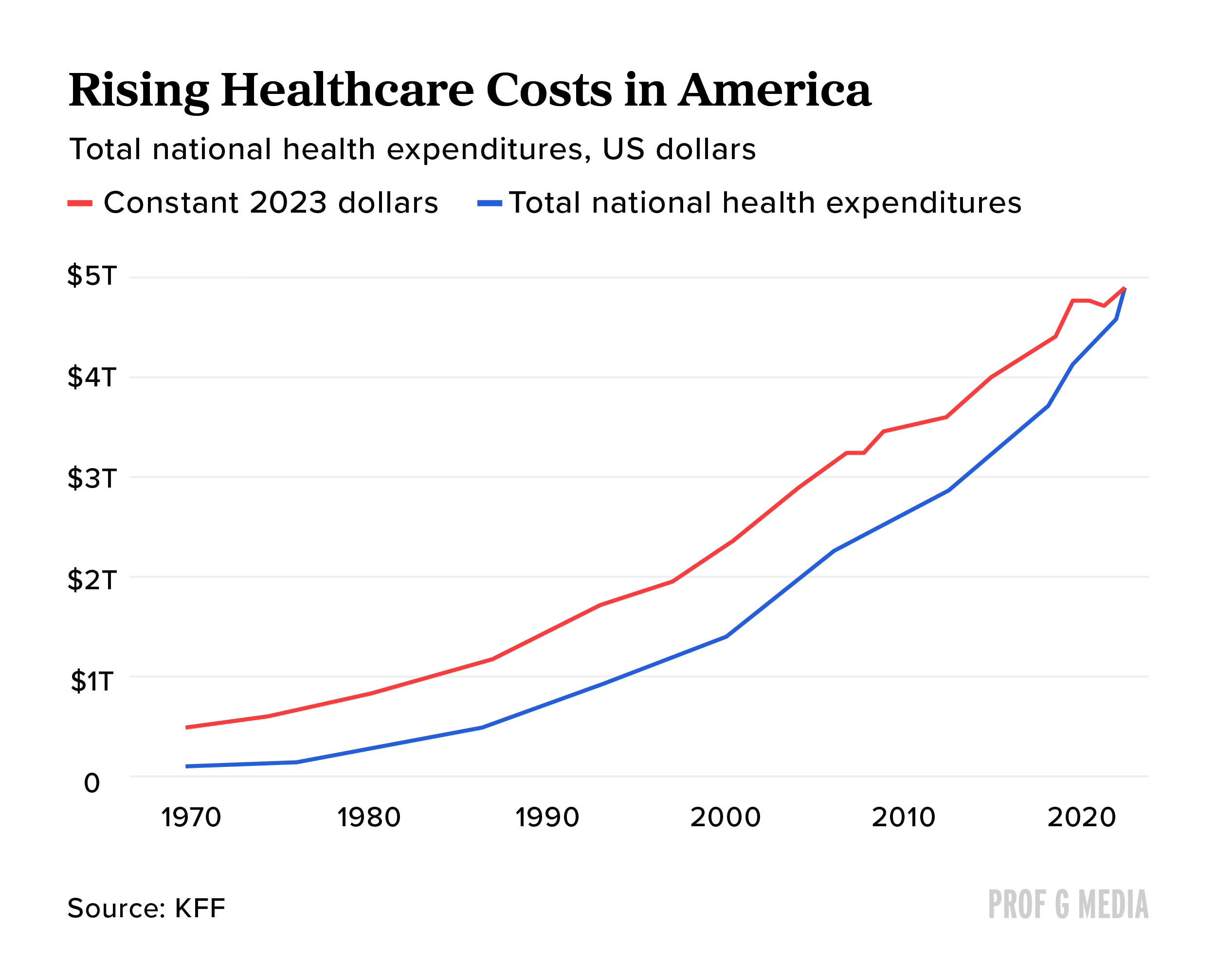
Health care costs are exploding: Spending on health care has grown astronomically under a corporatized system, from $452 billion in 1970 to $4.9 trillion in 2023. As the chart below shows, even major reforms have not changed this trajectory. Out-of-pocket costs have steadily risen too.
Americans say the government is responsible for health care: In 2015, Americans were split on what role the government should play in health care. 51% said yes, the federal government should make sure that all Americans have health care coverage, 47% said no. Today, two-thirds say it’s the government’s responsibility.
The idea isn’t that controversial anymore. The latest version of Sen. Bernie Sanders’ Medicare for All bill has 16 cosponsors in the Senate and 104 in the House, where it was introduced by bipartisan pragmatist Rep. Debbie Dingell alongside Rep. Pramila Jayapal. Among the cosponsors: Dan Goldman, Sara Jacobs and Ritchie Torres.
Medicare for All is the litmus test of Democratic politics, and more members of the party than ever before have decided it’s time to make health care a human right.
Expanding the Court
The Supreme Court still isn’t as partisan as the rest of our politics, but it’s been getting pretty damn close. We’ve already talked about the court’s decision to weaken the Voting Rights Act, which will ultimately eliminate Black representation in huge parts of the South. It’s just the latest in a long line of right-wing rulings impacting everything from regulatory oversight to racial diversity.
Democrats are still reeling from two decisions, in particular, that have already done untold damage: Dobbs v. Jackson, of course, which ended a woman’s constitutional right to an abortion, and Trump v. US, where the court decided to give presidents broad immunity from criminal prosecution.
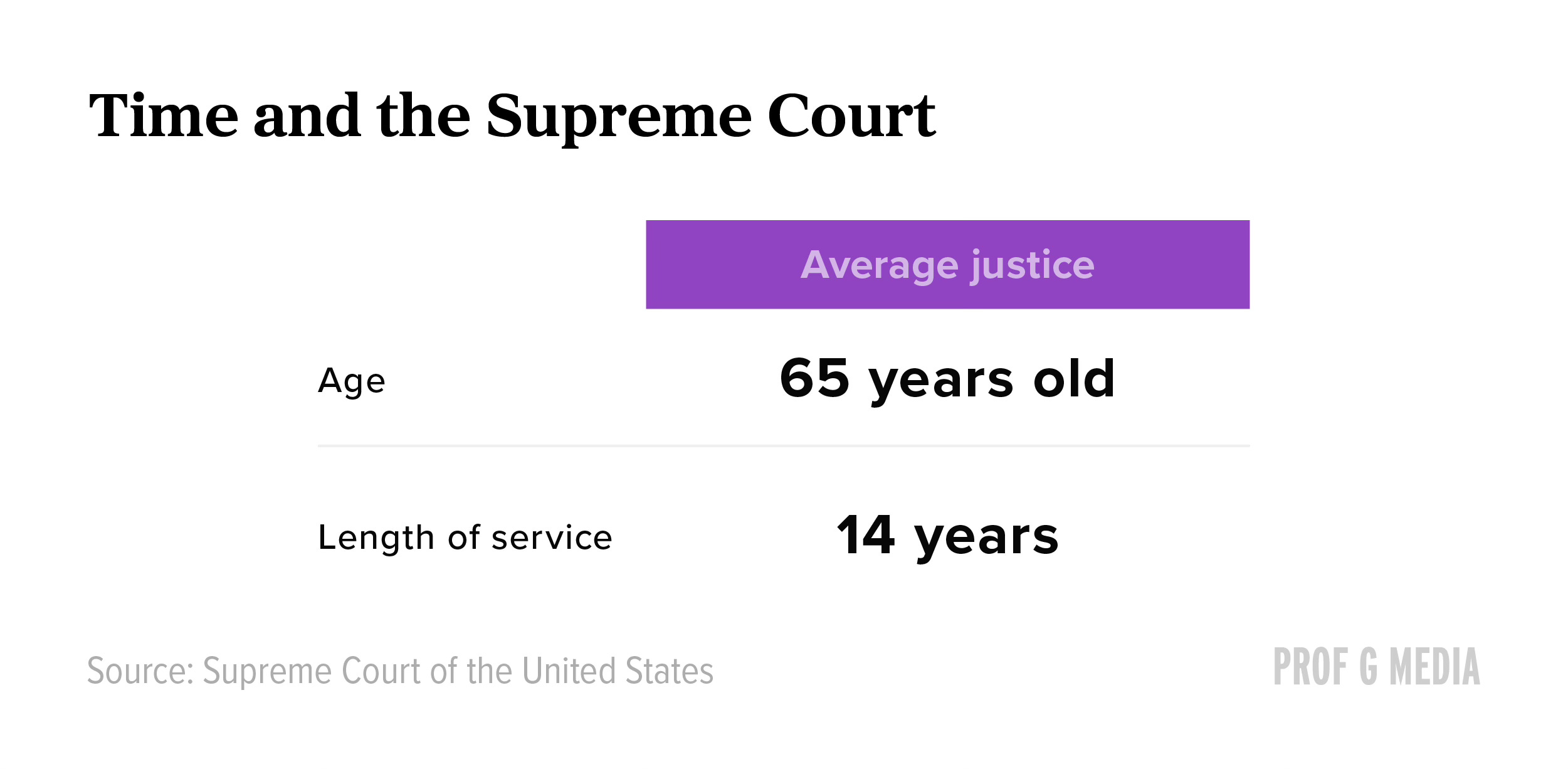
You can believe, as many elected Democrats do, that the Supreme Court is an important institution while also being clear that its decisions are out-of-touch and its members have little oversight. On average, the current justices are 65 years old and have each served for 14 years on average. It’s even worse at the extremes: Clarence Thomas is 77 and has sat on the court since 1991. The president who appointed him passed away nearly a decade ago.
Some moderates are going all the way. James Carville said earlier this year that Democrats should expand the court to 13: “Don’t run on it, don’t talk about it, just do it.” Others are getting a lot louder about strict retirement ages and term limits. Whatever it is, “win elections and restore balance” doesn’t cut it anymore.
A New Approach to the Filibuster
For institutionalist Democrats, the filibuster remains the ultimate check on power; a tool that forces compromise. Again, things have changed. Of course there is still compromise in the Senate, but it’s come at the expense of productivity: last year, both the House and Senate set a modern record for the lowest legislative output in the first year of a presidency.
It has let the minority party block voting rights bills, abortion access, climate legislation, and anything else that can’t be squeezed into a reconciliation bill. It’s getting more and more difficult for Democrats to explain that an archaic legislative procedure is more important than a woman’s right to choose.
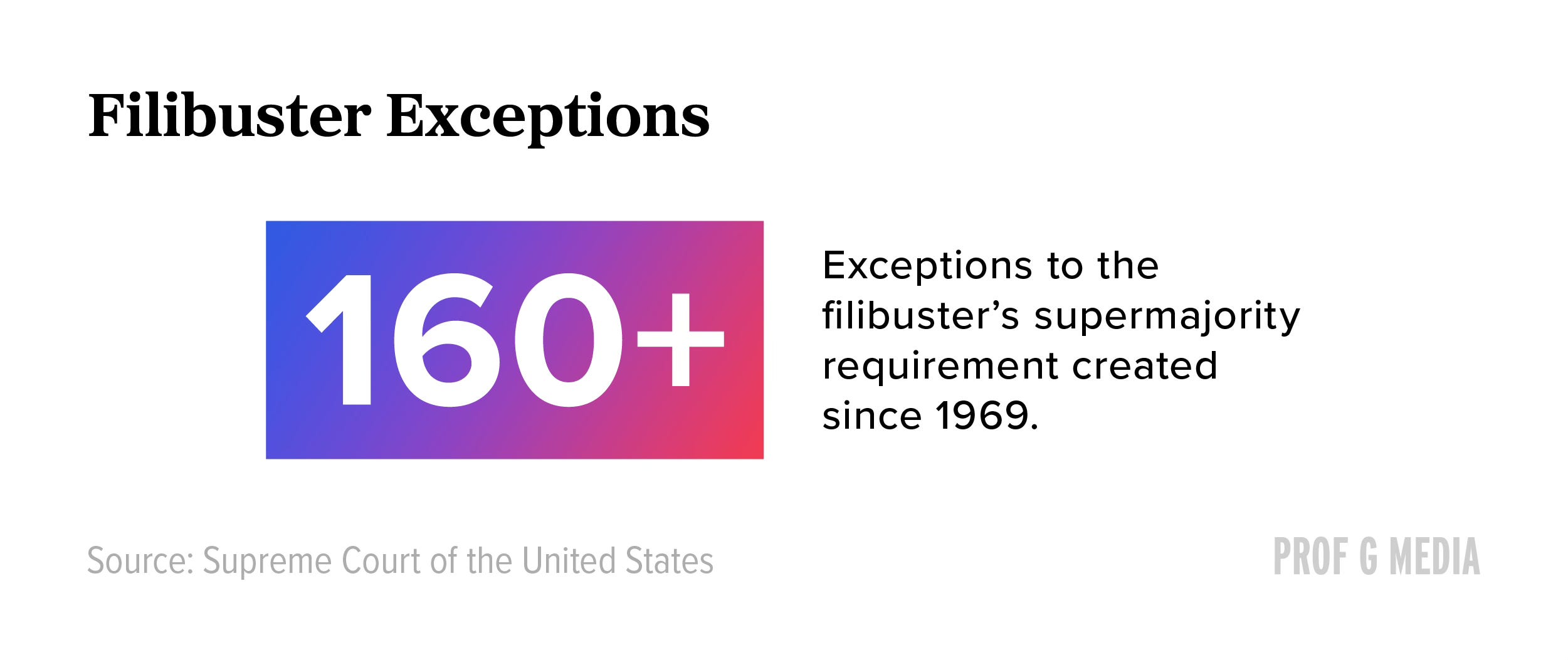
It’s especially hard to make the case when, as Brookings’ Molly Reynolds documented years ago, Congress has created more than 160 exceptions to the filibuster’s supermajority requirement since 1969.
Kamala Harris backed a filibuster carve-out to protect abortion rights in 2024, and moderates like the retiring Sen. Tina Smith are saying they feel stymied by the Senate rules, and would like to reform the filibuster at least to the point where you have to stand and talk to prevent the passage of a bill, instead of just saying “I don’t like this, so I’m gonna object and then go out for dinner.”
(Fairly) Taxing the Rich
Finally, while Democrats still believe in the spirit of entrepreneurship that drives this country, the rhetoric is shifting on taxing high earners.
It’s no longer enough just to say you’ll raise corporate taxes and close a few loopholes. For many members of the party, it’s a lot more direct: if you’re earning a lot of money, you should pay what you owe.
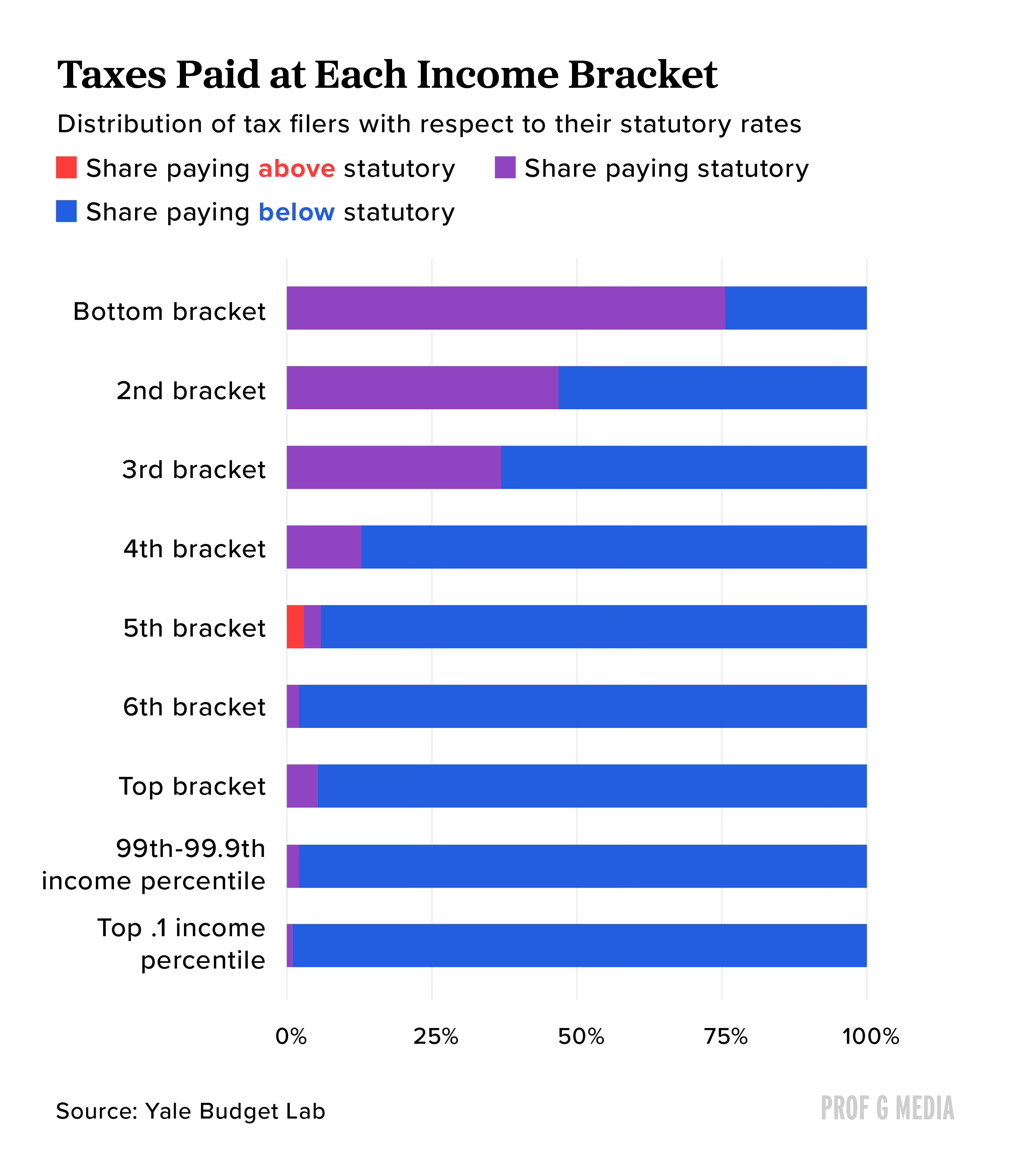
Analysis from the Yale Budget Lab shows why the argument has legs: it found that among the top 1% of earners, effective tax rates can vary as widely as 45% to a paltry 3%. The analysis argued that eliminating complex tax provisions that contribute to these gaps would raise another $560 billion in 2026, or exactly 400 times what Politico said were the total savings of DOGE last August.
Many Democrats are going a step further and calling for higher taxes on the wealthy. Biden and Harris called for a minimum tax on households worth more than $100 million; billionaire Tom Steyer is igniting real excitement in his campaign for California governor by supporting a billionaire tax and ending a major corporate tax break.
This is the new Democratic moderation: calling out systems that don’t work and focusing on getting them to work for the American people. It starts with making health care a human right, but it’s also about good governance, a Supreme Court you can rely on, and a tax system that doesn’t let the ultra-rich off the hook.
The Big Beautiful Bill Reduced Taxes on the top 1% By $117 Billion and the corporate tax amounts to $130 to $150 billion. CBO estimates that to extend the ACA subsidies was $30 billion this year and 350 Billion over the next 10 years. Beautiful for whom?
Our healthcare system is an absolute mess, and needs a total revamp but we are spending way to much money on the military and the weapons industry (who make huge profits - just ask Lockheed Martin, RTX, Boeing, Northrop Grumman and General Dynamics about their profits). And, while we sell these military capabilities to other countries, it is going to come back and bite us in the ass when all war breaks out. All hail the fake winner of the Nobel Peace Prize!