



Happy last day of summer! Did you see the generic ballot polls this week?
The New York Times and Siena had Democrats up eight points among likely voters. Fox News had the Dems up 11 among voters who say they’re “certain to vote.” There were others who put this race into double-digit territory as well.
We’re always cautious about predicting big Democratic victories. We’ve all been burned one time or another by misinterpreting polls or forgetting that things can change between now and November.
But as Nate Silver pointed out over the weekend, this latest set of polls shows that – at least with six weeks left until election day – we’re “deeply into wave territory.”
You’ve read a lot about the competitive states, some of which are generally Republican-leaning: Alaska, Iowa, Ohio, Texas.
Where else might Democrats have a chance?
According to Sen. Minority Leader Chuck Schumer, that list includes Kansas and Mississippi. You don’t need to look too far back to see Florida as competitive. Independent Dan Osborn is back at it again in Nebraska. And with newly-appointed Senator Darline Graham on the ballot, some Democrats want to take a look at South Carolina too.
We looked at all five this week to sort out the long-shots from the no-shots.
Programming note: Raging Perspective is on again this Wednesday. Join Jessica and Aaron Parnas live at 12PM for an unscripted, unfiltered, unedited conversation about the issues defining this era. We’re also taking your questions! Ask away in the comments section below.
Kansas: More competitive than it looks with a great candidate
Kansas hasn’t voted for a Democrat for Senate since 1932 and Trump last won here by 16 points. The state is 90% white and more than half its voters don’t have a college degree. In any given election, this state shouldn’t even be on the map.
But the story isn’t as simple as that: while it’s been nearly a century since Kansas voted for a GOP senator, the state elected a Democratic governor twice in the last eight years: the incumbent, Laura Kelly.
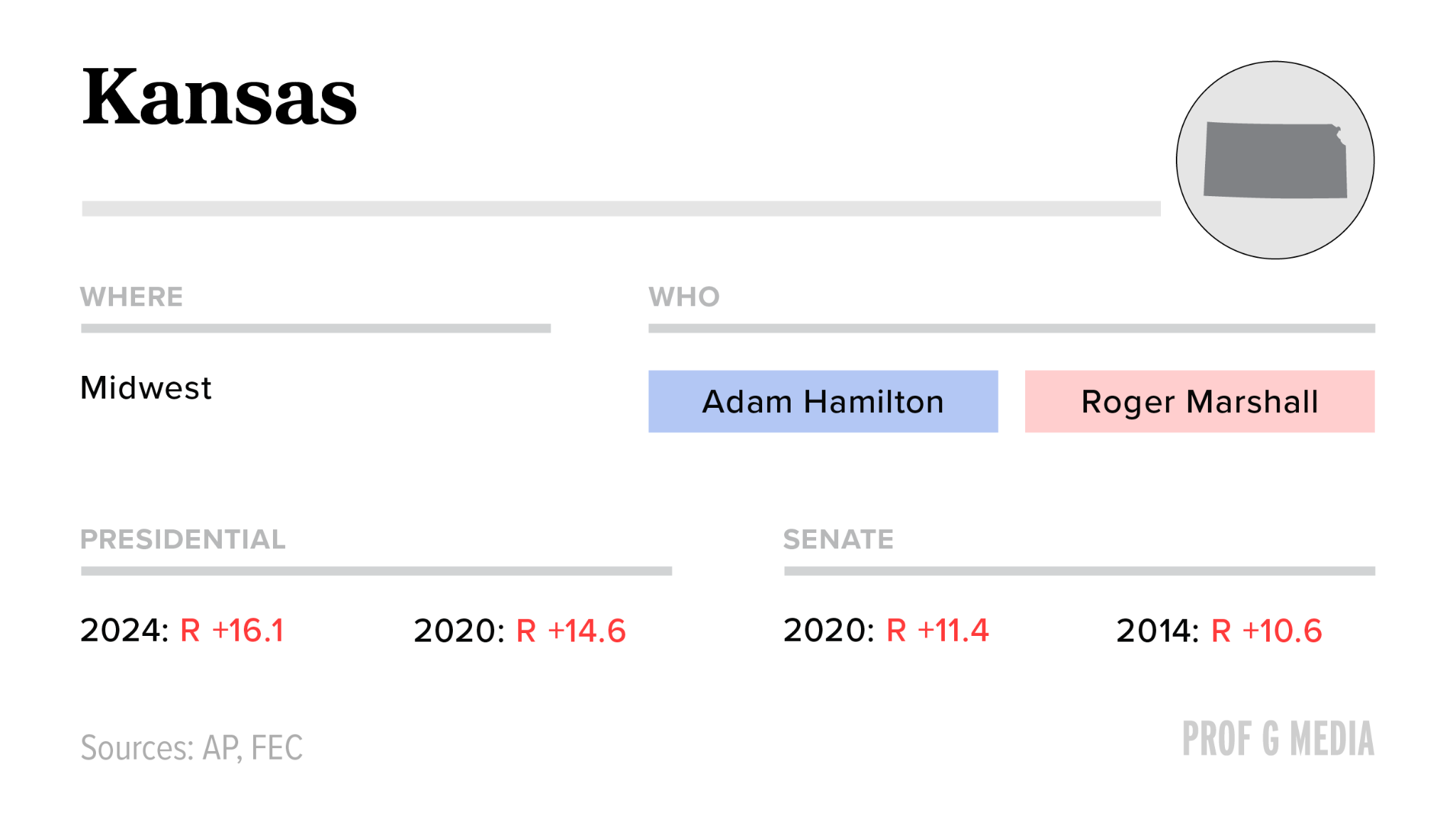
Then there’s the matchup. The incumbent is Sen. Roger Marshall. He’s joined at the hip with President Trump, so much so that a large crowd “booed, jeered, and heckled” him during a debate that focused on Iran and tariffs on his home turf earlier this month.
The challenger is Adam Hamilton, a man who is walking proof that not all Democrats are coastal elites. He’s a well-funded megachurch pastor with over 25,000 weekly churchgoers who’s running on the basics: reversing Trump’s tariffs and health cuts and ending the war in Iran.
It’s the most winnable of the Dems’ ‘stretch’ states.
Nebraska: After making it close in ’24, Dan Osborn is back under better conditions
He lost, but Dan Osborn still did something unthinkable in 2024: he got Nebraska’s Senate race down to 6.7 points while Trump improved his own result by more than a point to 20.5.
The independent is back for another turn in 2026, this time with the benefit of the weak political environment for Republicans, and much better name awareness.
That could be a negative for Osborn too: the GOP didn’t have much time to define him as a liberal candidate in 2024; this time it’s the main attack they’ve been using against him.
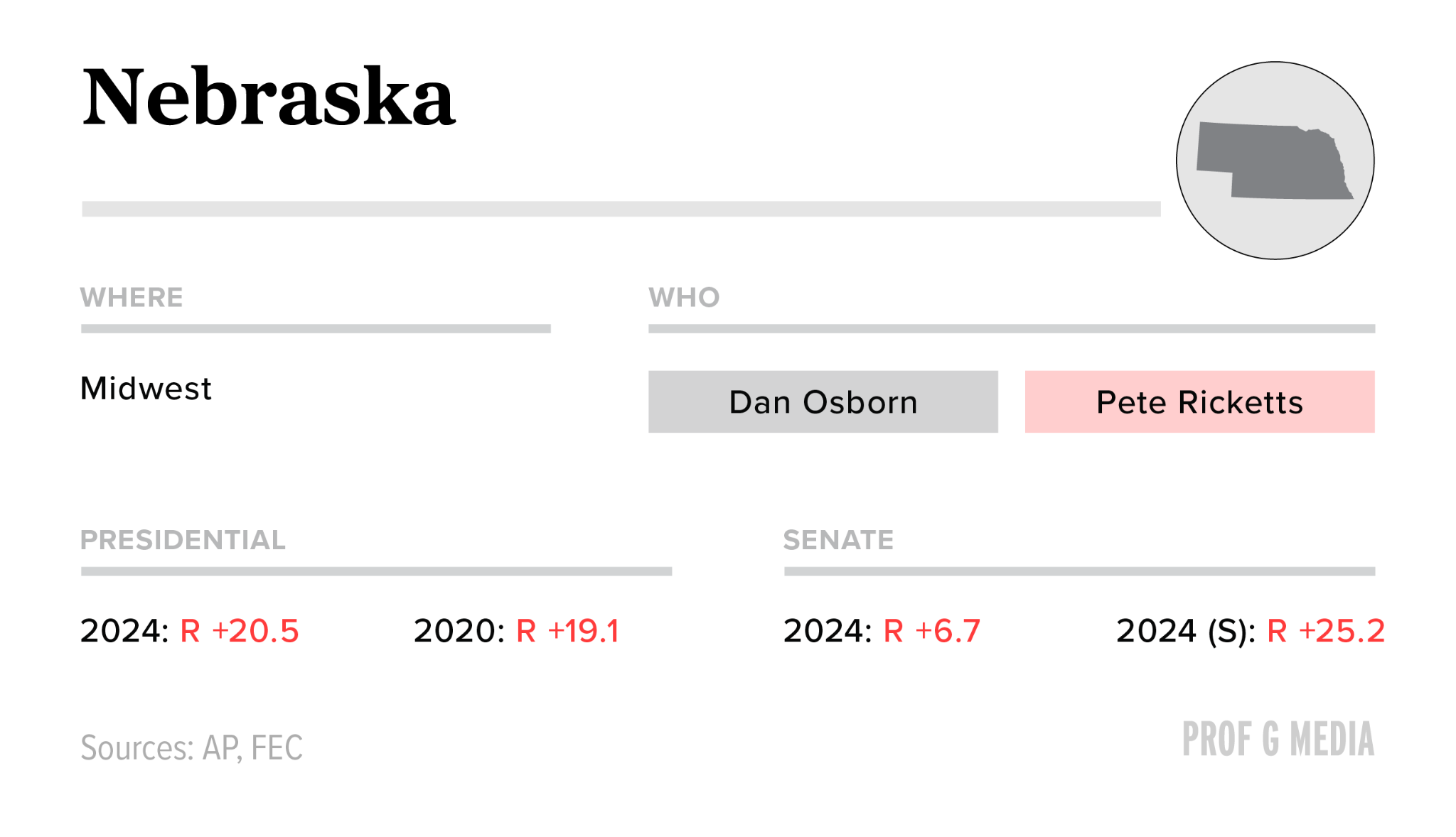
Osborn is the right kind of candidate for Nebraska, focusing on corruption, social security, and a better standard of living for rural communities.
Nebraska’s similar political profile puts it in the same league as Kansas, so it’s a close second on the list.
Florida: Last time there was a blue wave, the Dem lost by under a point
It’s easy to look at Florida’s recent political trend line and think it’s out of reach for the Democrats.
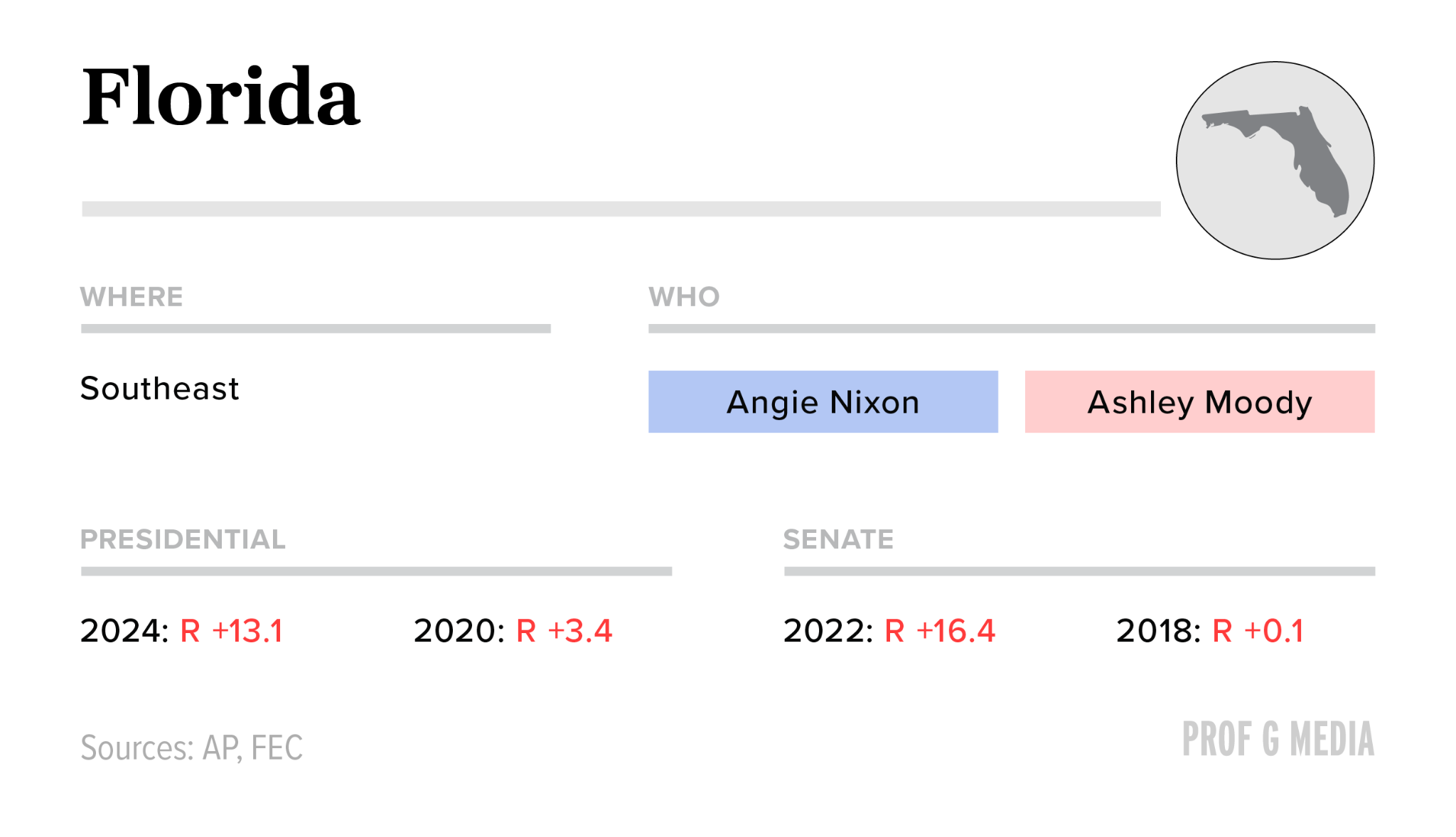
But remember, it was less than a decade ago that this state elected Republican Senator Rick Scott by a razor-thin 10,033 votes or 0.1 points.
Two years later, at the presidential level, the Democrats kept it close: 3.4 points separated Trump and former President Biden.
A lot of Florida’s rightward shift came thanks to Ron DeSantis, the popular governor who’s not on the ballot this year, and Hispanics, who have soured both on Trump’s signature economic policies and his unprecedented crackdown on immigration.
The Democratic establishment didn’t get the candidate they wanted in the primaries: it’s Angie Nixon, a member of the Democratic Socialists of America. There are big parts of the state where socialism is unpopular, even with Dem-leaning voters.
Still, it might be closer than people think in November.
Mississippi: Locals believe in Colom, but Democrats must climb a steep hill
Chuck Schumer seems weirdly excited about Mississippi.
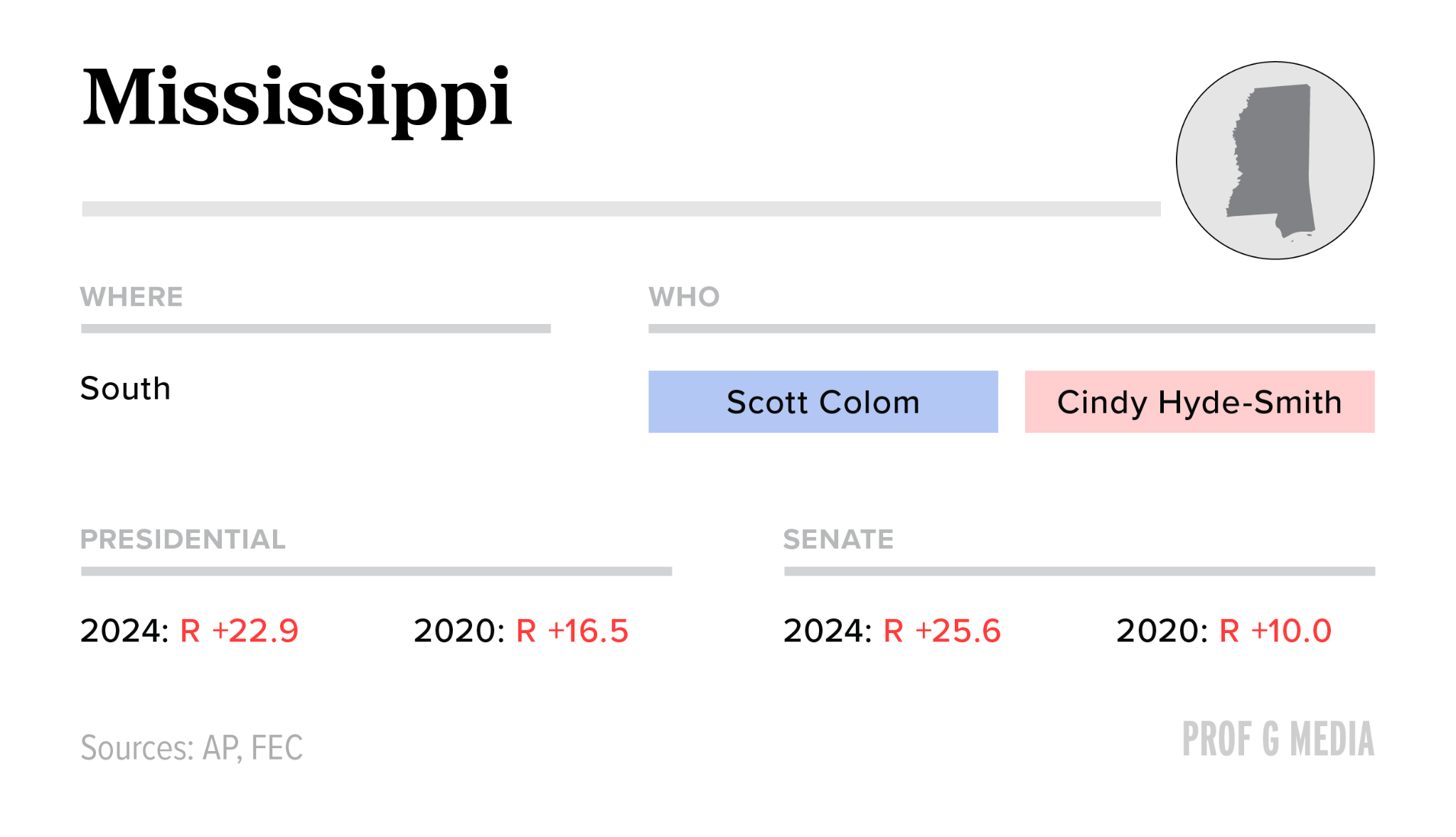
He told Semafor in August that incumbent Senator Cindy Hyde-Smith was an “extremely weak” candidate, and talked up the Democratic challenger, Scott Colom, describing him as a “tough prosecutor who’s won elections in a tough district.”
It’s true: Colom was the first Black District Attorney elected in a majority white district in Mississippi and won reelection twice.
The problem for Democrats? Demographics. The state is 55% white, most of that vote is rural, and Republicans have a stranglehold on it. Mississippi’s Black population comes in around 35%, leaving them short of the votes they needed.
It would take an extremely good night to flip the Magnolia State.
South Carolina: If it’s in play, it comes down to Darline Graham
On the surface, South Carolina offers a lot of the same storylines: too much white rural vote to be truly competitive, and it hasn’t voted for a statewide Democrat in more than a decade.
Much like Mississippi, this race also features a weak Republican: Darline Graham, who we last heard saying at a Republican primary debate that she’s “not that informed on national security,” prompting a state representative to call her “woefully unprepared” to serve in the U.S. Senate.
Whether you think this state is winnable comes down to how poorly Republicans in the state think about her candidacy.
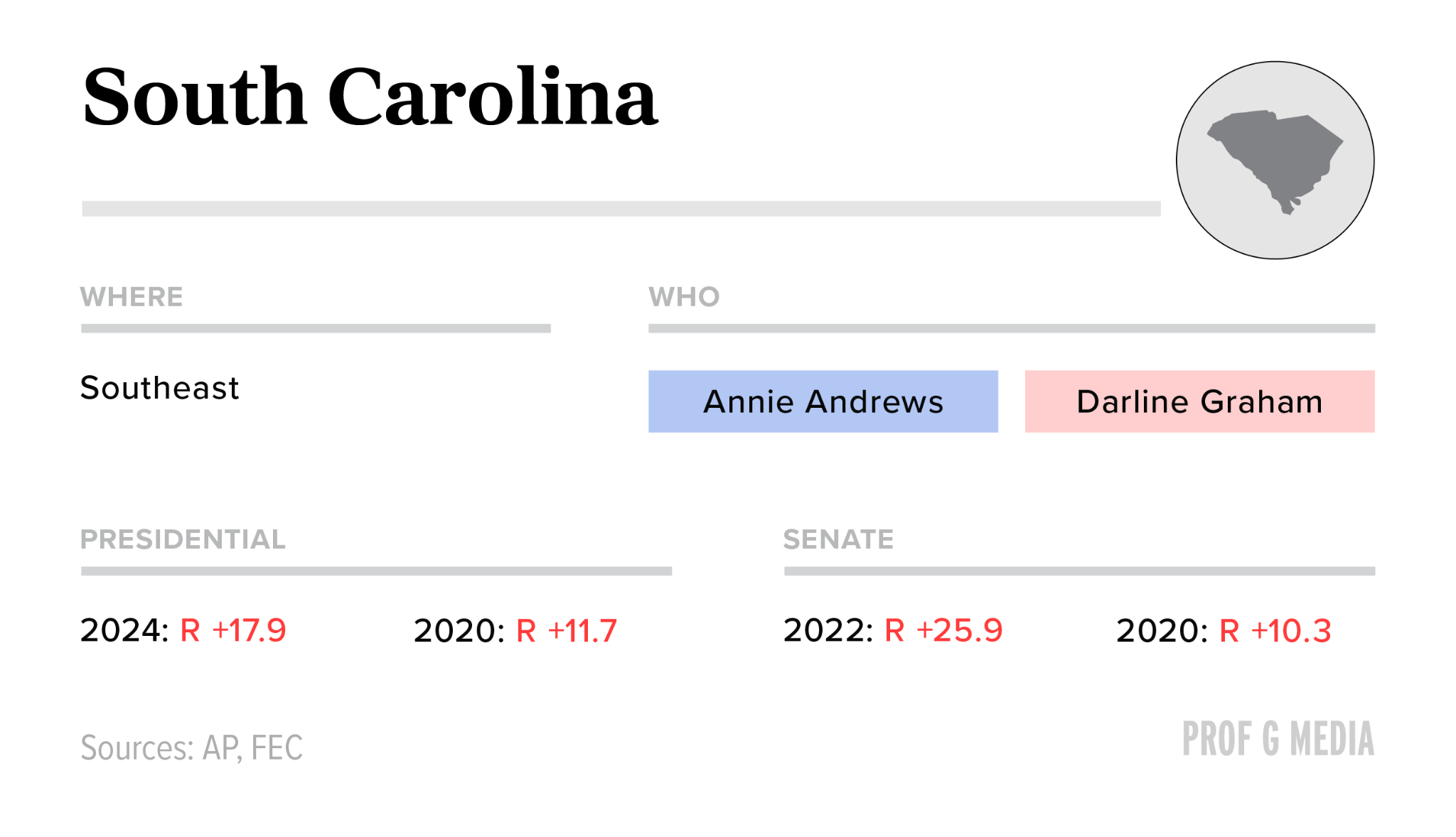
The Democrat in the race, Dr. Annie Andrews, is a pediatrician and mom with a great set of policies for the Palmetto State: she calls healthcare a right, not a privilege, and wants to keep the state’s underfunded hospitals open.
Like Colom, she’s in a tough battle. Still, it’s not impossible. South Carolina rounds out the states that Democrats might have a shot in if everything goes our way in six weeks.
Florida isn’t winnable. 4 times people voted for Rick Scott and do really think a socialist can win?
Right now things are trending hard toward the Dems and the worst of economic data and possible markets is right in front of us. The administration is in full panic mode with the US Treasury acting as though we are already in financial crisis in an effort to delay the impact until after the election. After the election, they will engineer the recession and attempt to blame it on the Dems in leading up to 2028. It’s the same playbook from 2008, which didn’t end well for the Republicans.
That said, interesting about Kansas and Nebraska. As for Florida, the Cuban Americans sent a loud flashing signal in the Miami mayor race with the flip to a Dem. The Repubs don’t win FL without the Cuban American vote, end of story. The FL Dems need to accomplish 2 things: push pro-Cuban Democracy (aka regime change) and push the message (the truth) that Democratic Socialism is a free market system with the design to benefit broader communities where as Republican Capitalism is designed to maximize poverty for most. As for SC and MS, was not thinking about them as possible for the Dems, but they might just have the mix needed, the Repub voter turn out is trending to be very low and the Dem candidates seen positioned well to grab a majority of the narrow band of swing voters. That is the receipt for an upset.