


Hemingway famously said bankruptcy happens slowly then suddenly. The collapse of his former home, Cuba, appears to be in the suddenly phase.
Tourism, which generated 8% of Cuba’s $30 billion GDP in better times and brought in hard currency, has fallen 48% year over year. Inflation is 15%. Two weeks ago, Cuba’s minister of energy and mines said the country had run out of fuel, because of the U.S. oil embargo, adding that Havana is frequently without power for up to 22 hours a day. The last oil shipment arrived in April, and a Russian tanker that had been headed for Cuba carrying 300,000 barrels — enough for three days — abruptly changed course. On social media, there are reports of sporadic protests breaking out in and around the capital. Safe drinking water is in short supply. Food has been scarce for months. The country’s healthcare system is breaking down. In sum, the U.S. is asphyxiating the Cuban people. As Cuban American historian Ada Ferrer told CNN’s Christiane Amanpour, “Survival is an open question.” But to paraphrase Cuban interventionist President John F. Kennedy, we shouldn’t be asking what additional pressure we can apply to Cuba, but what help we can provide its people?
Regime Change
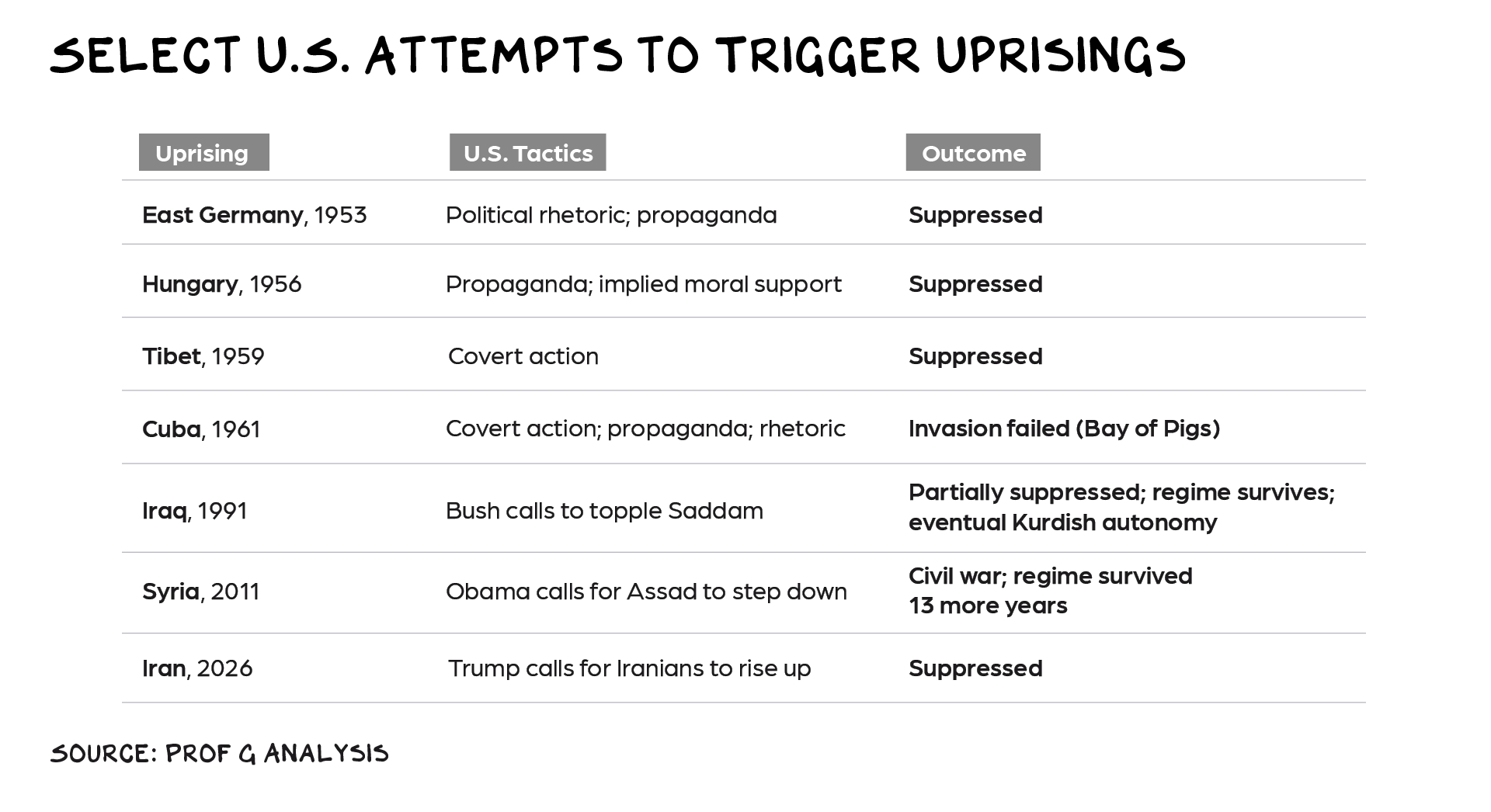
In a rare direct message to the Cuban people, U.S. Secretary of State Marco Rubio offered a lifeline … with strings attached. “The only thing standing in the way of a better future are those who control your country,” Rubio said, predicating $100 million in aid on regime change. His message was timed to coincide with the announcement that the aircraft carrier Nimitz is heading toward the island, as well as the Justice Department’s decision to indict Raúl Castro, the country’s 94-year-old former president and de facto leader. The endgame script is similar to one the U.S. deployed against Venezuelan strongman Nicolás Maduro. But just in case there’s any ambiguity about the goal, President Trump has been saying the quiet part out loud since March. “I built this great military. I said, ‘You’ll never have to use it.’ But sometimes you have to use it. And Cuba is next, by the way.’” We’ve seen this movie before, and it doesn’t end well.
Soft Power
In his famous 16th century treatise The Prince, Niccolò Machiavelli asked whether it’s better for a leader to be loved or feared. “One should wish to be both,” he wrote, “but because it is difficult to unite them in one person, it is much safer to be feared than loved.” Today, “Machiavellian” is used to describe a ruthless style of politics where fear is the most valuable currency. But as Jeffrey Sonnenfeld, the senior associate dean for leadership studies at Yale’s School of Management, observed, many of today’s leaders miss the operative part of the diplomat’s famous quote. “What Machiavelli actually advised was that it is best to be both loved and feared,” Sonnenfeld wrote. “Only when that ideal is not possible … did Machiavelli suggest fear is a more reliable way to inspire discipline than bonds of love.” One of the many failings of the Trump administration is the false belief that America is incapable of inspiring fear and love simultaneously. Trump’s preference for instilling fear in other nations and his disdain for inspiring their love misses what makes America so great.
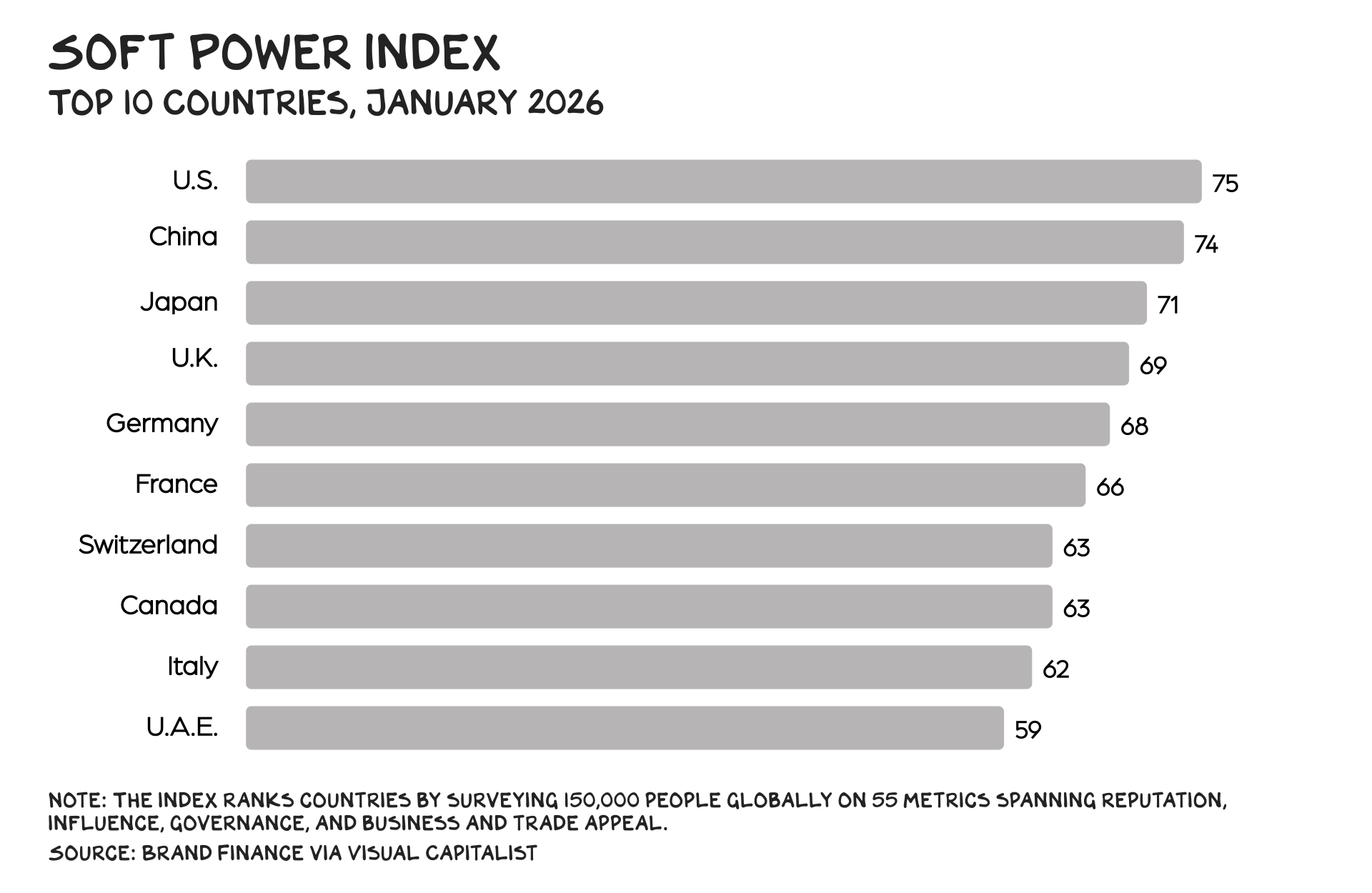
In 1990, just after the end of the Cold War, political scientist Joseph Nye popularized the term “soft power” to describe how state actors achieve their goals without using force, making threats, or paying bribes. According to Nye, a nation’s soft power resides in its culture and political values, plus its foreign policy to the extent that its peers see it as legitimate and having moral authority. “A country may obtain the outcomes it wants in world politics because other countries — admiring its values, emulating its example, aspiring to its level of prosperity and openness — want to follow it,” Nye wrote. “This soft power — getting others to want the outcomes that you want — co-opts people rather than coerces them.”
Nye’s concept explains the pincer move the U.S. successfully deployed against the Soviets during the Cold War. Our “hard power” included a nuclear arsenal with a rapid response capability measured in minutes, a military that peaked at 3.5 million people in uniform, and the willingness to engage in bloody proxy wars in Asia, Latin America, and the Middle East. Our soft power included foreign aid, Hollywood movies, rock & roll, Levi’s jeans, and middle-class prosperity. (See Nixon’s “Kitchen Debate” with Soviet Premier Nikita Khrushchev.) As Nye said in 2019, “The Berlin Wall collapsed not under an artillery barrage, but from hammers and bulldozers wielded by people whose minds had been affected by ideas that had penetrated the Iron Curtain over the preceding decades.”
The Alpha of Magnanimity
Our willingness and capacity to deliver violence against our enemies anywhere in the world is a significant asset, but American magnanimity is what makes the country unique among history’s greatest powers. During World War II, the U.S. sustained 400,000 dead and another 670,000 wounded. In the immediate aftermath of the war, the country provided emergency aid to its former enemies in Austria, Germany, and Japan. Then, in 1948, Congress passed legislation to fund the Marshall Plan — a $13.3 billion aid package ($180 billion adjusted for inflation) to rebuild 17 European nations, including West Germany. Separate from the Marshall Plan, the U.S. spent an estimated $2 billion ($25 billion adjusted for inflation) between 1946 and 1951 to rebuild Japan. We offered similar support to the Soviet Union and Eastern bloc, but were rebuffed. Regardless, America wrote checks when other victors would’ve demanded reparations.
In hindsight, it’s easy to discount U.S. magnanimity as Cold War pragmatism, but that misses the contribution of the American spirit and our capacity to forgive. Had American voters been consumed by hatred and xenophobia — understandable sentiments after years of war and sacrifice — the isolationism of the pre-war years might’ve returned. Instead, seven months after signing the Marshall Plan into law, Truman won reelection, suggesting that a significant number of American voters found space in their hearts and wallets for people who had been their enemies just three years prior. That selflessness helped install a global operating system financed by American capital, secured by the U.S. military, and held together by American generosity and kindness. Eight decades later, one of our most underrated assets remains our talent for turning enemies into allies. Similar to many relationships and brand equity, the current administration has taken a blow-torch of performative masculinity and stupidity to these assets.
Bridge to Cuba
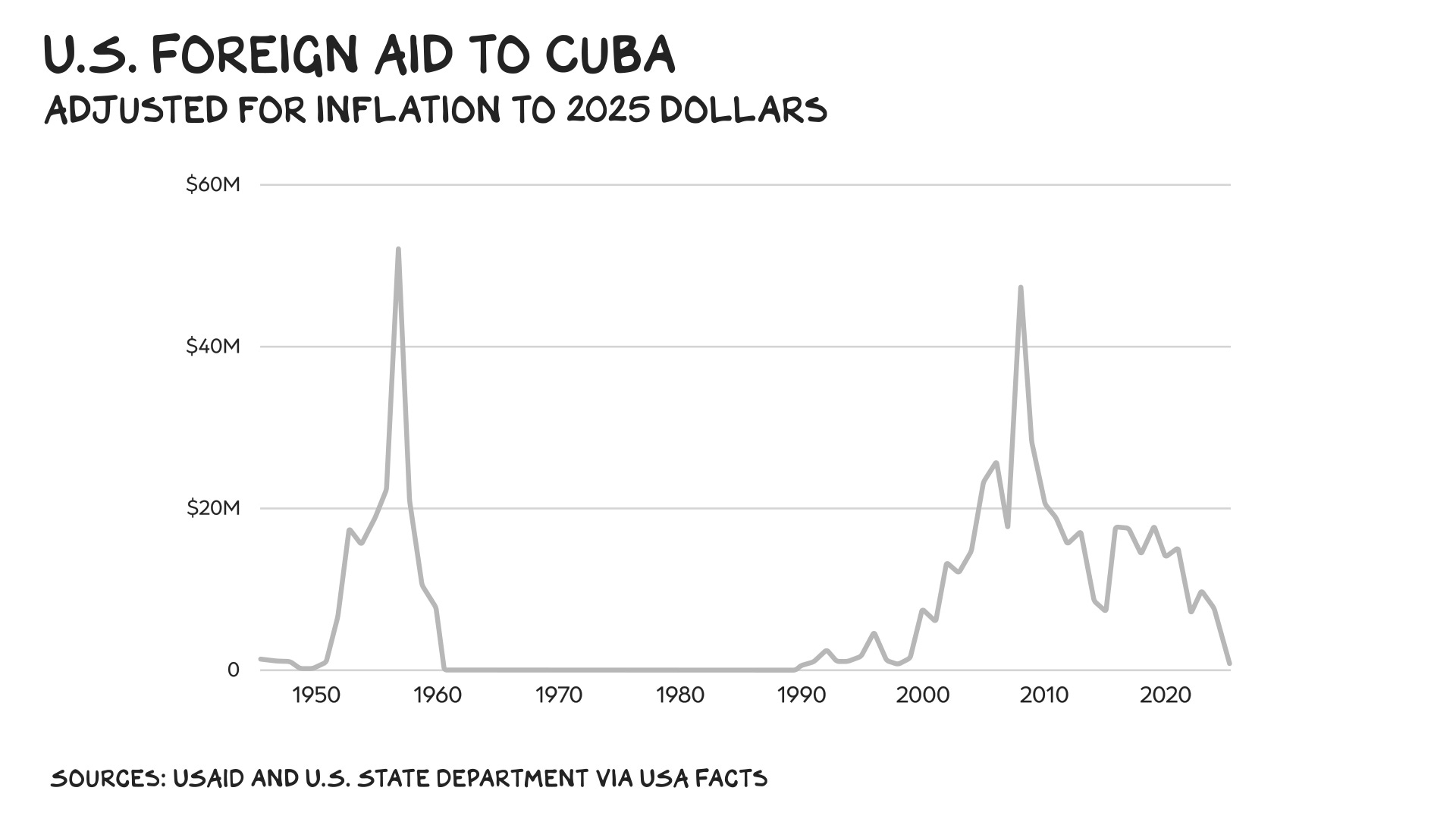
Despite six decades of hostility, the infrastructure of American empathy and generosity to Cuba already exists. After the Obama administration loosened travel restrictions in 2016, 1.2 million Americans visited Cuba over two years, outstripping tourists from every other country. Of the 3 million Cubans in the U.S., 57% are immigrants with firsthand ties to their homeland. Cuban Americans are believed to send between $2 billion and $4 billion per year to their relatives back home, though exact numbers are difficult to come by because of U.S. restrictions on commerce with the island. Writing in Mother Jones about how her mom regularly sends care packages and money to relatives in Cuba, Laura Morel observed that exiled Cubans are keeping the nation alive. Formal channels also exist. The U.S. resumed aid to Cuba in 1990 after a 30-year Cold War hiatus, though the Trump administration effectively turned off the flow of economic support last year. The stockpile of U.S. bombs and threats is running low, but they aren’t needed for the island nation 90 miles off the coast of Florida. We’ve already established the lifeline. What we need to do is summon our soft power — the empathy and generosity that makes America uniquely American.
Open Hand
I don’t believe the U.S. will invade Cuba. One quagmire at a time is enough. In addition, Trump doesn’t see himself as a liberator, but as a dealmaker. That’s fine, but the best deals are win-win, not zero sum. Trump and Rubio have made their intentions clear: The deal they seek has to include regime change. Less clear is what regime change looks like in practice. As Brian Finucane, a senior adviser with the International Crisis Group and a former State Department lawyer, told PBS, Venezuela isn’t a good template for Cuba, as there isn’t an obvious successor to make a deal with.
Strangling Cuba until it collapses into chaos, or launching a cinematic special-ops mission to rendition a 94-year-old autocrat, isn’t a strategy. It’s a weapon of mass distraction from Epstein, ICE, inflation, Iran, the J6 terrorist immunization fund … The real move is magnanimity. America’s greatest returns on investment haven’t come from the barrel of a gun, but from the extension of an open hand. Imagine what $100 million in unconditional aid to the Cuban people could buy. Not regime change. Something better: goodwill, gratitude, and eventually a generation of Cubans who love America and associate it with their own prosperity, rather than an embargo. Empathy isn’t a sign of weakness. It’s the most ruthlessly effective weapon in the American arsenal.
Life is so rich,

P.S.
We’re doing it live. Join my Raging Moderates co-host Jessica Tarlov and Gen Z political analyst Aaron Parnas every Wednesday at 12 p.m. ET for our new live show: Raging Perspective. Watch a replay of the debut episode in all its unscripted, unfiltered, unedited glory here.
“The only thing standing in the way of a better future are those who control your country,” Rubio said, predicating $100 million in aid on regime change. Maybe the Cuban people know how well U.S. promises did for Puerto Rico. This is an extremely corrupt U.S. administration, and they care little to nothing about the Cuban people, merely how to line their wallets and boost their egos.
This is the second message of yours on Cuba that completely misses the story. COMPLETELY. You are acting like Cuba is just failing due to its economic policies, or that this is just business as usual and the US should come and bail them out. THE US IS THE CAUSE OF THIS. A complete energy blockade on a country will destroy that country, any country. You say the US doesn't want another quagmire. This is a quagmire, where people will starve and die due to the direct cruelty of the US government. This is another case of Americans sitting there thinking they are a force of good in the world and brushing over the horrific actions they are taking. I expect better from you, you are normally well aware of what is going on in the world. This US regime is cruel, criminal and a stain on an already brutal latin American US history.