



28%
Of Americans think they would lose in an unarmed fight with a rat

Markets in review: Trump, Iran, and the worst consumer sentiment on record
Is the $2 trillion tech sell-off a buying opportunity?
Newsletter Exclusive: NASA is America’s most underrated brand

US-Iran Talks End With No Deal
President Trump said that the U.S. Navy would begin blockading the Strait of Hormuz after peace talks fell through over the weekend. Oil prices spiked more than 8% and major indices fell more than 1% on Sunday night.
In a post on X, Iran’s lead negotiator cited lack of trust in the U.S. as a primary reason for the failure of the peace talks.
News about the conflict has changed quickly. Just last week, President Trump threatened to destroy Iranian civilization unless its leaders reopened the Strait of Hormuz. Hours later, he announced a two-week ceasefire, contingent on Iran reopening the strait.
In response, U.S. crude plunged 16% and the Dow had its best day in a year. But within 24 hours, the strait remained effectively closed, and the deal unraveled over a dispute about scope — specifically whether the ceasefire applied to Lebanon, where Israel had continued to strike Hezbollah. By the following day, stocks were retreating, and oil was climbing again.
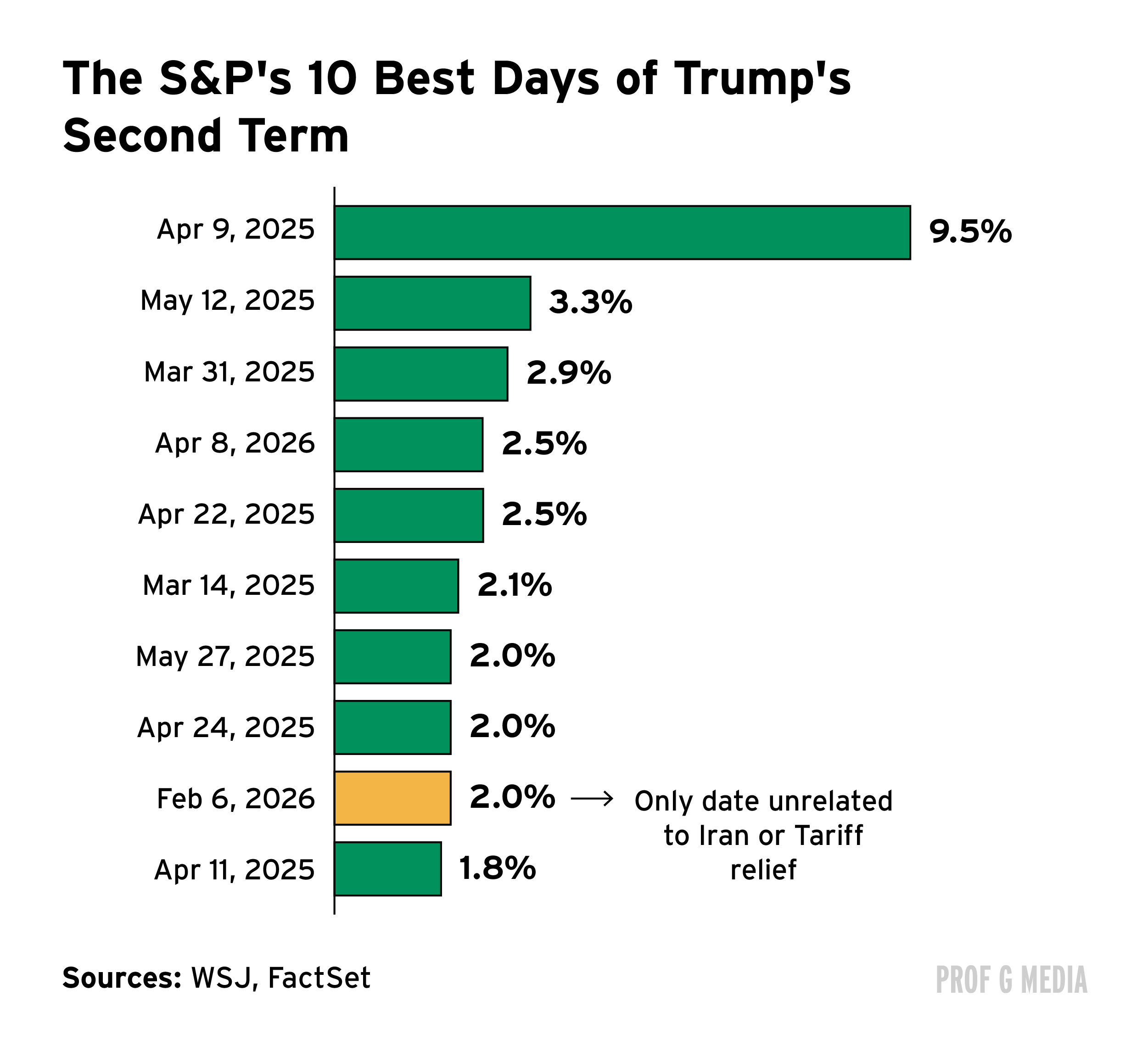
Throughout this entire conflict, there’s been one consistent dynamic: Trump promises to end the war and the market rallies, only to fall when his promises don’t materialize.
In fact, since Trump took office last year, nine of the S&P 500’s 10 biggest gains have had to do with Iran or tariff relief. If one were able to perfectly time these nine occasions, they would have earned a 52% return compared with 12% for buying and holding an index fund throughout.
Last week ended with news that the Consumer Price Index, a key measure of inflation, rose 3.3% year over year in March — the largest increase since 2022. The increase was driven by a 12.5% year-over-year rise in energy prices.
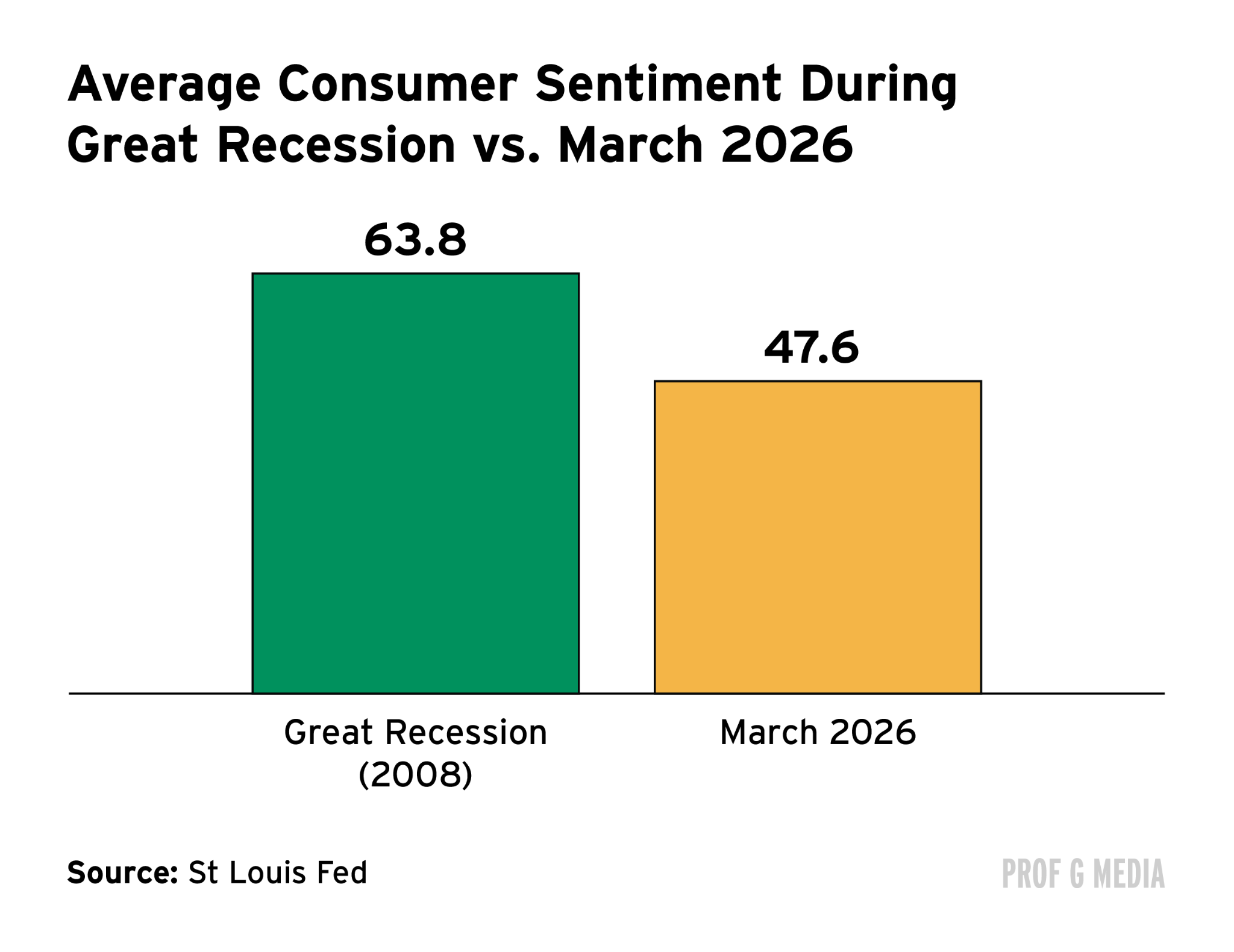
Meanwhile, consumer sentiment has dropped to its lowest level ever. In other words, consumers feel worse about the economy now than they did during the depths of the Great Recession.

Josh Brown is the CEO and co-founder of Ritholtz Wealth Management
Paradoxically, the investor who looks least equipped to trade a market like this, the normal guy with a brokerage account, is actually in the best position. A professional hedge fund manager charging two and twenty has made an explicit promise to outperform the market for a significant fee. In normal times, that’s a hard promise to keep. In an environment where markets swing violently on a presidential tweet and reverse just as violently two hours later, it’s close to impossible.
Arguably, the market is less risky now than it was three months ago. I know that sounds insane, but valuations have compressed and earnings are growing across most S&P 500 sectors.
The war — whether it lasts three weeks or three years — will resolve itself. You can’t speed it up, and you can’t fully understand its depth or duration. But if you have earnings growth, which we do, and interest rates that aren’t rising, history says stocks resume their upward trend once the conflict ends.
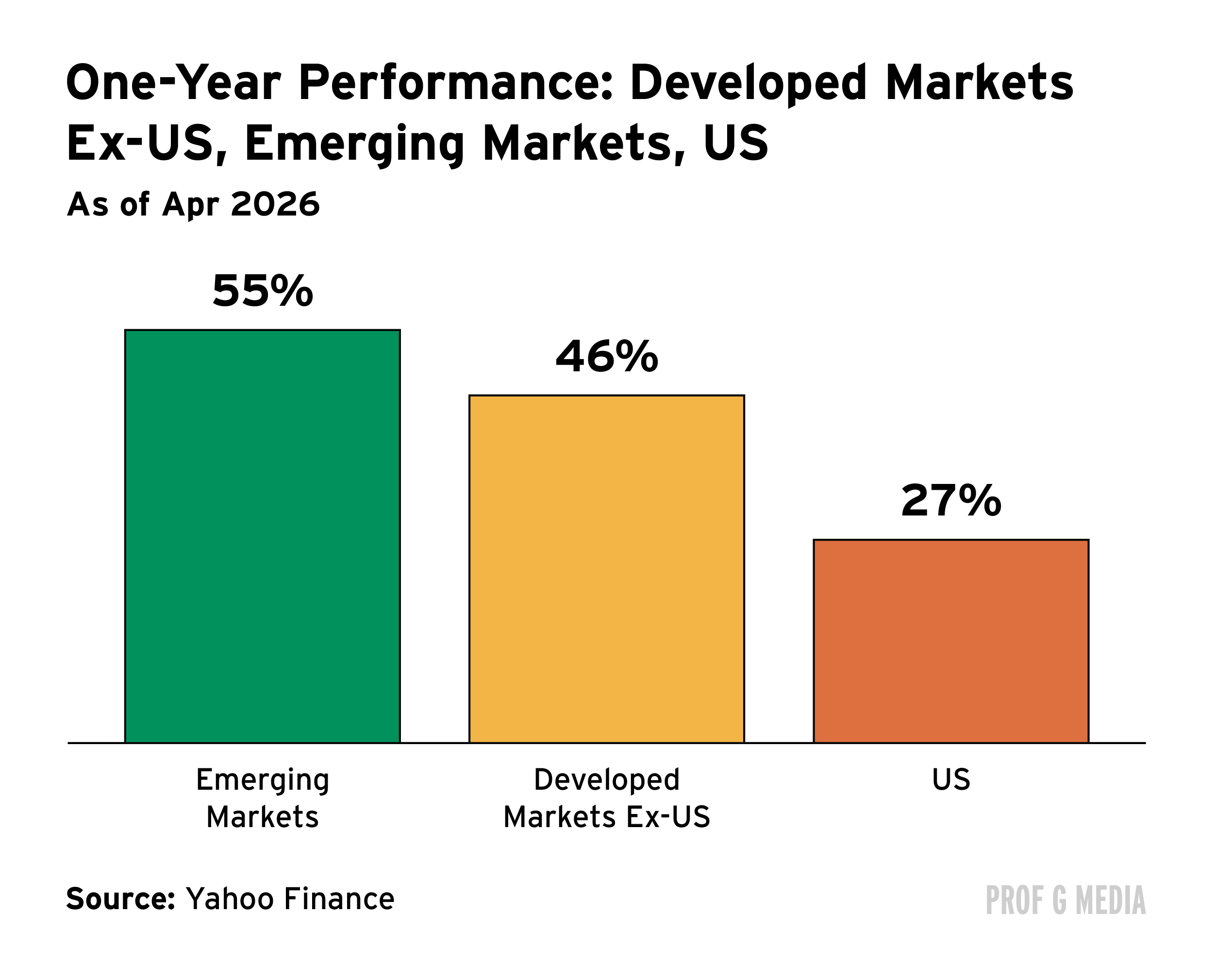
Now step back and look at a global portfolio. On a rolling one-year basis, developed markets ex-US are up 46%, emerging markets up 55%, and the U.S. is up 27%. The U.S. underperformance reflects political instability and uncertainty around Trump.
But for investors with global portfolios, the answer to how you navigate an environment like this is: You already did.

”Two and Twenty”?
Two and twenty is the standard fee structure that hedge funds charge their clients. Two refers to a 2% annual fee on everything you invest, regardless of performance. Twenty refers to the 20% cut that hedge funds take of any profits above a certain benchmark.

Even if you had perfect insight into the geopolitical situation, it might not help you. Trump’s decision-making is genuinely opaque and erratic.
What does help, though, is access. In the prediction markets, three accounts made over $600,000 betting correctly on the ceasefire timing. These were the very same accounts that had already nailed the date and timing of the initial U.S. strikes on Iran.
SEC Enforcement Division Director Margaret Ryan was investigating this but abruptly resigned last month. Apparently she clashed with agency leaders over how to handle cases tied to President Trump and his family.
Markets function because participants believe prices reflect publicly available information. When that faith erodes, and when a generation of investors concludes the game is rigged, they leave. It happened after 2008, and the damage was lasting.


Is the Tech Sell-Off Creating the Trade of the Year?
Since the start of the year, the Magnificent 7 have lost nearly $2 trillion in market cap. Goldman Sachs told investors in a note last week that this has been one of the weakest periods of relative returns for technology over the past 50 years.
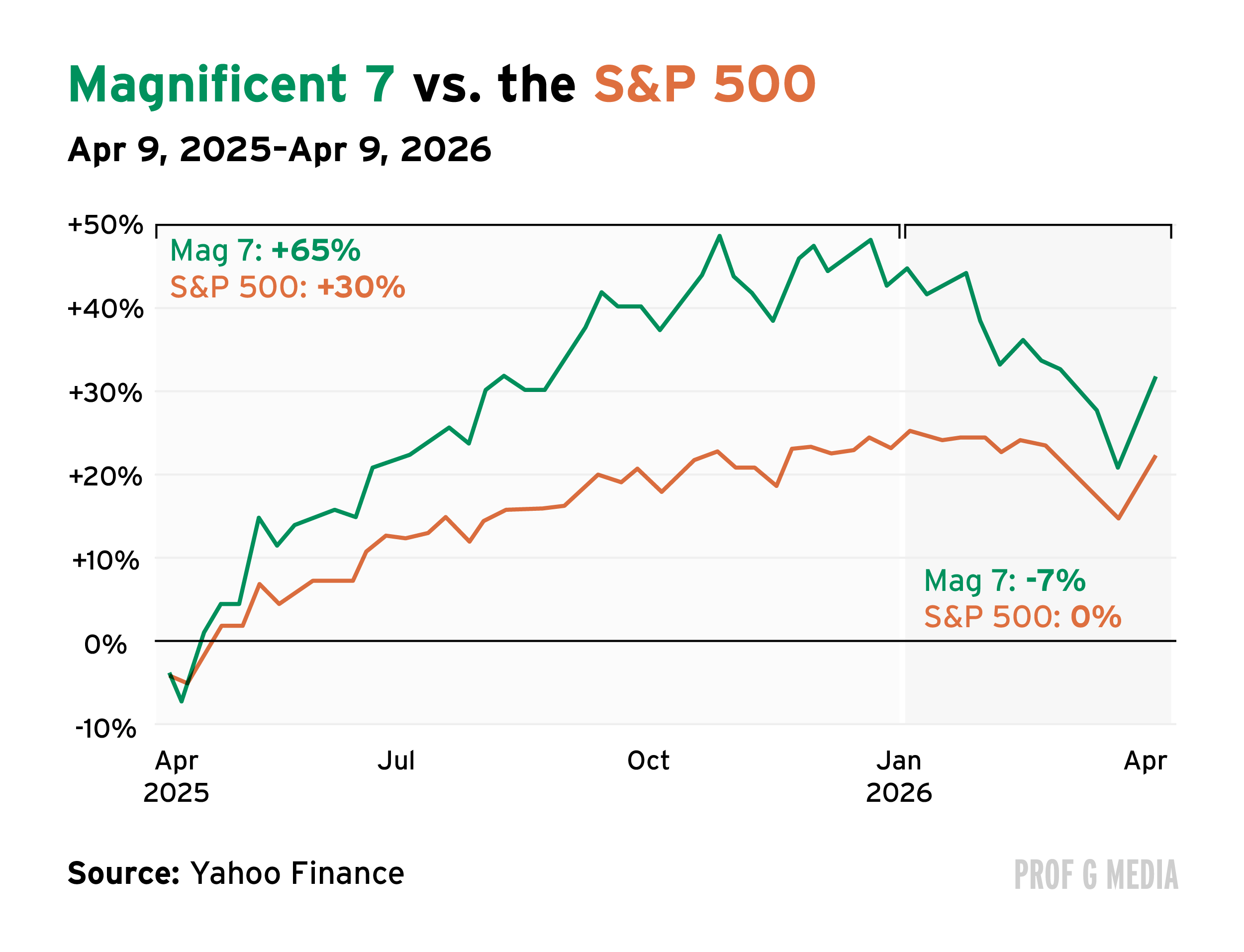
Globally, the technology sector now has a price-to-earnings ratio lower than that of the consumer staples and industrials sectors. Microsoft now trades at a lower forward price-to-earnings ratio than the broader S&P 500.
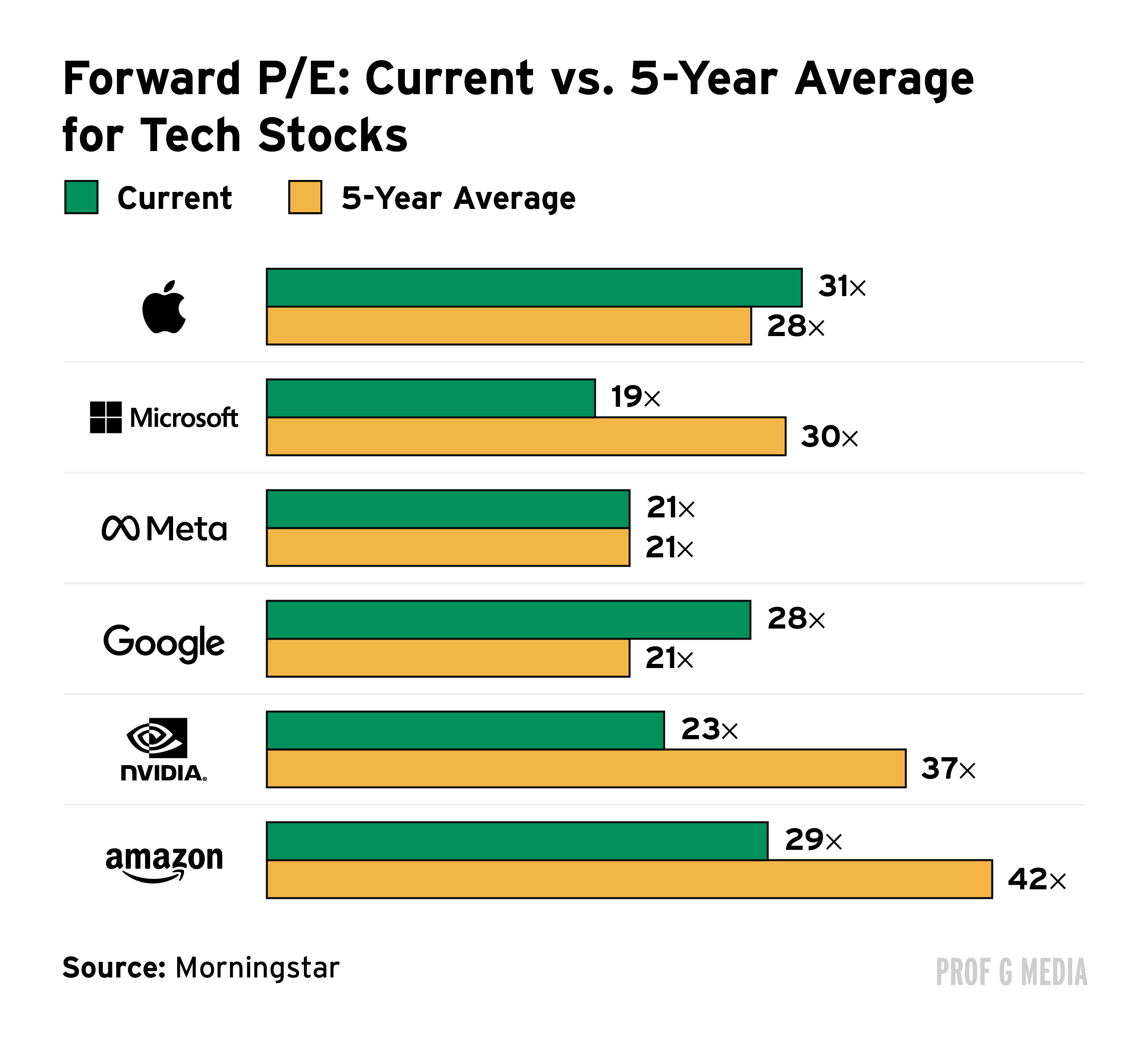
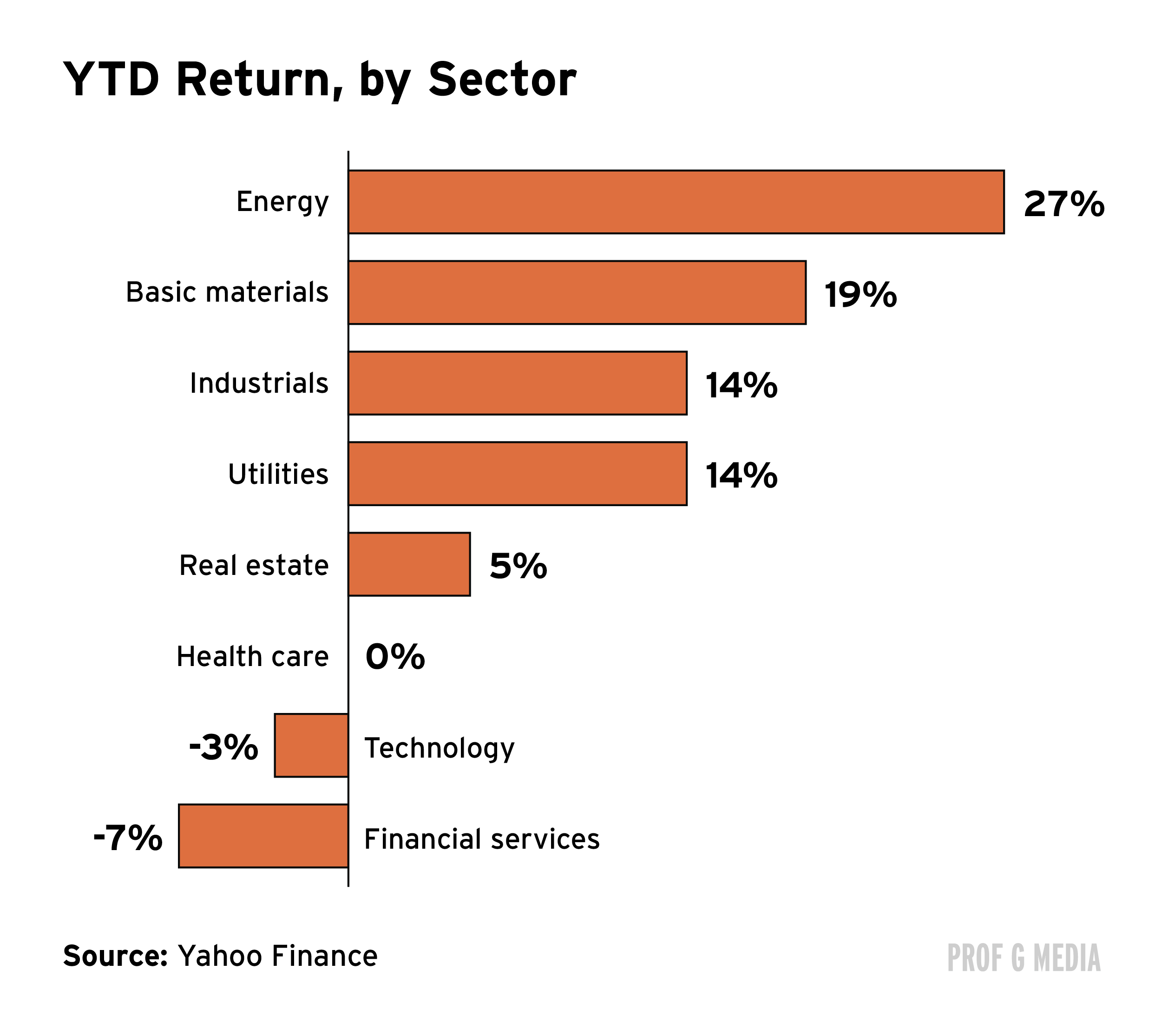
The tech sector has gotten hammered over fears that AI will disrupt traditional software workflows. Concerns over skyrocketing capex spending and broader macroeconomic uncertainty have pushed investors toward “safer” sectors like industrials, utilities, and materials.
However, earnings projections for the upcoming quarter paint the tech sector in a different light. According to Goldman Sachs, the market consensus is for IT earnings per share to grow by 44%, accounting for 87% of index earnings-per-share growth in the first quarter.
Investors are punishing Big Tech companies for overspending on capex, for plowing money into AI infrastructure with no clear path to profitability.
But here’s what doesn’t make sense: Anthropic and OpenAI are doing the exact same thing, just without the scrutiny. They’re spending enormous amounts with unit economics that don’t add up. If the market is punishing Microsoft for overspending, why aren’t OpenAI and Anthropic facing the same reckoning? Probably because they’re not public yet.

The market has been indiscriminately selling software for months — Salesforce, Microsoft, Palantir, CrowdStrike, Palo Alto. These are some of the best companies in the world, down anywhere from 25% to 50%. And yes, some face real AI disruption risk. But it’s gone too far.
The moment I decided to step in was when I saw a story claiming Anthropic was about to disrupt all of cybersecurity — that companies would rip out their Palo Alto infrastructure and just vibe-code something with Claude.
There’s no board of directors at any public company anywhere in the world that would sign off on that kind of cybersecurity plan. It’ll never happen.
I run a business. I’m a Salesforce customer. I’d love to cut that six-figure expense. But it’s a system of record. It’s the operating system of the firm. Any AI-driven alternative is going to cost money too — it’s not free just because it runs on AI.
The deeper story here is a revaluation that I flagged on February 9: The market has been overpaying for asset-light SaaS companies and underpaying for companies with real, heavy assets. Here’s what that correction looks like year to date — energy up 36%, materials up 10%, utilities up 9%, staples up 7%, industrials up 6%, real estate up 5%. Every one of those sectors owns things a chatbot cannot replace. Metal, steel, timber, bricks. That’s the adjustment we’re watching play out.

sponsored content
Truth is, with just a simple Google search, anyone can find out where you live. Whether it’s a stalker or scammer, or even selling your data, your personal info is out there, and that’s just scary. Every day, more of your information is collected, shared, and exposed without your knowledge.
But there’s a way to fight back: Incogni. It doesn’t just remove your name from Google results. Incogni works quietly in the background to wipe your personal data from people-search sites, data brokers, and hidden databases you may not even know exist.
Here’s what people have to say about Incogni:
“I was getting literally 10 spam calls per day on my new cell phone number. Incogni scrubbed my data and after 4-5 weeks the calls literally stopped like they hit a brick wall!” — Jamey
Your personal data is being collected and sold every time you go online. Take action now to protect your privacy.
Get 55% off Incogni using code PROFG
sponsored content


Is NASA the Last Bastion of American Pride?
On Friday, four astronauts returned to Earth after venturing deeper into space than anyone has gone before. The mission, Artemis II, sent a rocket weighing 5.7 million pounds around the moon and back, setting the stage for a future lunar landing. This incredible feat is a timely reminder that American excellence still exists — if only under the NASA logo.
NASA is a point of national pride, a driver of technological progress, and a reason for top minds around the world to choose America. It is one of the most underrated brands in the world.
What unites humanity more than space exploration? Passion for sport? Love for our families? The list is short. A fifth of the world’s population — 650 million people — watched Neil Armstrong and Buzz Aldrin walk on the moon in 1969. Five decades later, Americans are still excited about it.
In 2019, 45% of Americans said there hadn’t yet been any other national accomplishment that gave them as much pride in the U.S. as the moon landing.
The NASA website gets more site visits than The Economist, twice as many as SpaceX, and almost as many as Tesla. Of all traffic, less than half is from the U.S.
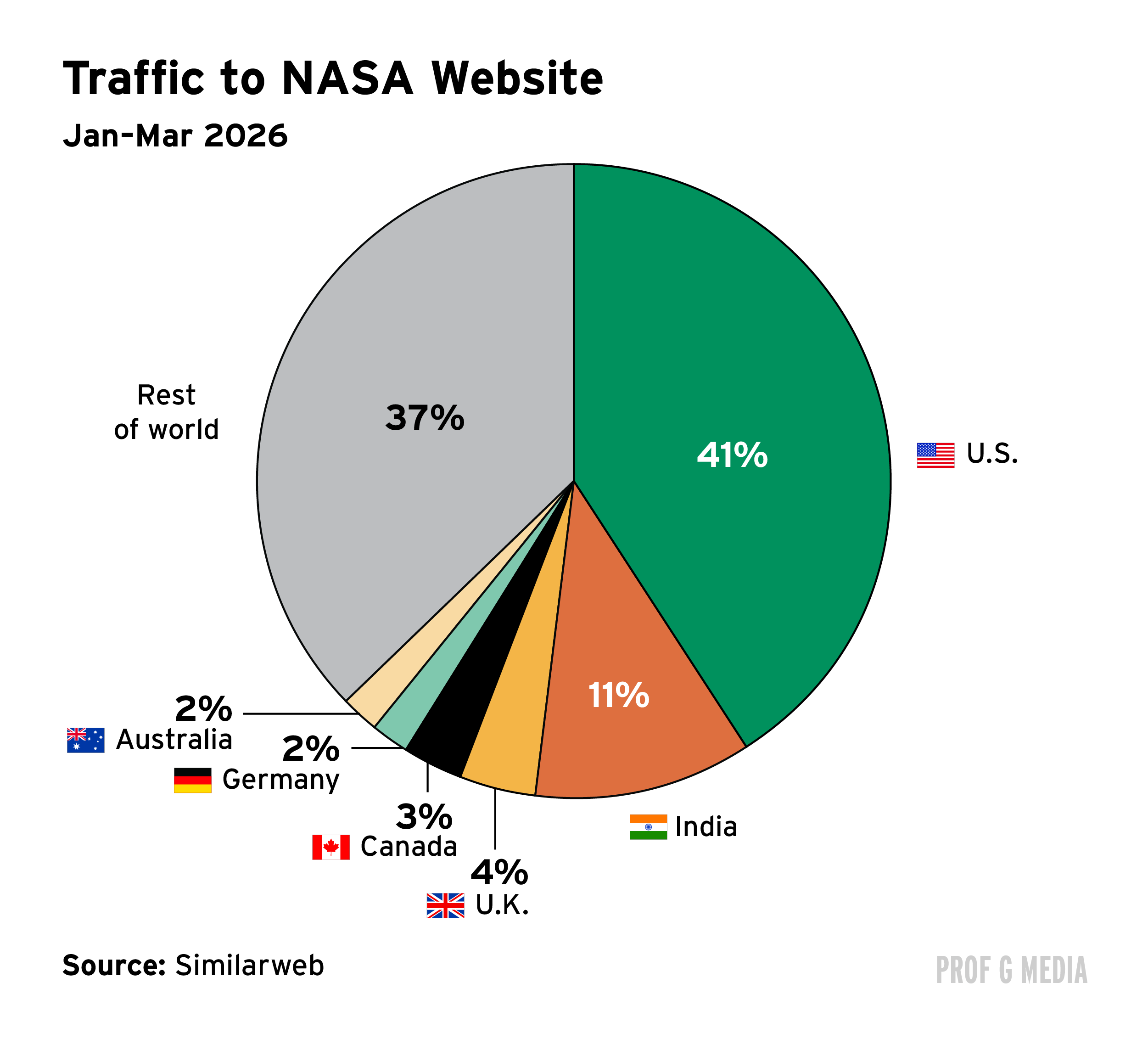
Today, NASA is the most popular federal institution, ahead of the U.S. Postal Service and the Department of Veteran Affairs. That is despite the fact that NASA is vastly less efficient than the privately run SpaceX. Over 118 space missions, NASA saw an average cost overrun of 90%. Over 16 missions, SpaceX saw an average cost overrun of 1.1%.
Yet, as recently as last week, 80% of Americans hold a favorable view of NASA. What other seemingly inefficient government agency do 80% of Americans like?
The NASA logo is so broadly admired that it has become a status symbol. Coach, Balenciaga, Kith, Estée Lauder, Nike, Adidas, and Vans have all collaborated with NASA or used its iconic red branding. Ariana Grande named a song after the agency, and NASA has been mentioned more than 230 times in rap lyrics since the 1990s. How many other icons can claim that kind of cachet?
ROI
NASA may look inefficient compared with SpaceX, but be clear: Its second-order effects on innovation and America’s reputation make it one of the most valuable U.S. assets. President George H.W. Bush reportedly called the Apollo program “the best return on investment since Leonardo da Vinci bought himself a sketchpad.”
For each dollar invested in the Apollo program, the U.S. got $7 back. Today, NASA creates more jobs per million dollars in budget than federal spending on defense, healthcare, or infrastructure.
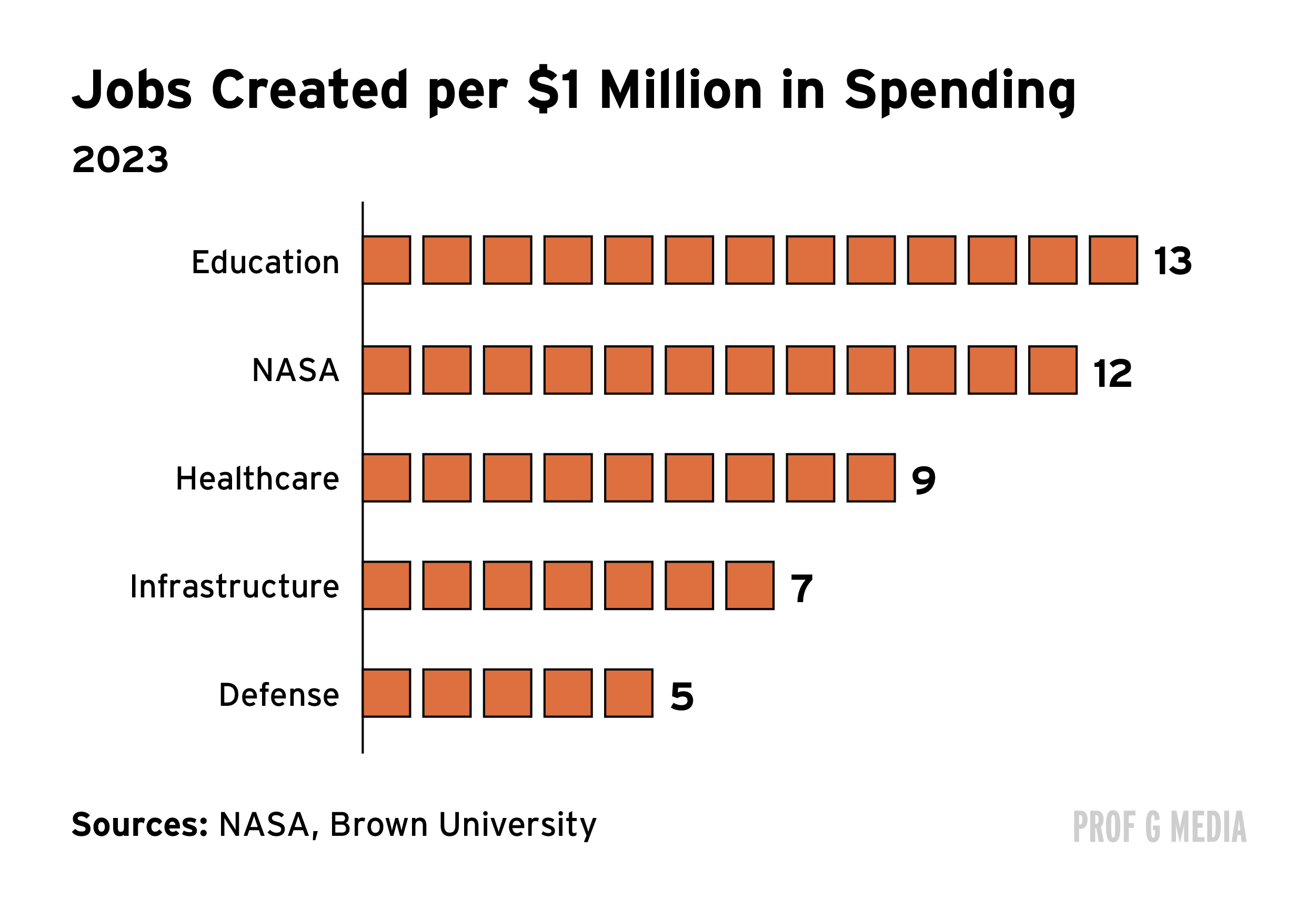
It is also the launchpad for crucial American innovations. NASA calls the commercial products and services that have emerged from its research “spinoffs.” Most notably, NASA funding kick-started microchip and computer innovation in the 1960s. It is estimated that the Apollo program accelerated computer technology by 10 to 15 years.
Other spinoffs include products as impressive as precision GPS, solar panels, satellite TV, implantable heart monitors, and LASIK surgery, and as mundane as memory foam, golf ball dimples, and invisible braces.
Even more importantly, NASA’s achievements have inspired students and innovators. In the decade following the 1961 launch of the Apollo program, the rate of doctoral degrees in physics conferred in the U.S. tripled. Even as late as 2009, 50% of high-profile scientists named the Apollo missions as a major reason they pursued science.
Elon Musk, one of the most gifted entrepreneurs of this century said, “Landing on the moon was probably the most inspiring thing in history. It certainly inspired me. I’m not sure SpaceX would exist if not for Apollo 11.”
Vivek Ranadivé, a tech entrepreneur and billionaire, decided he wanted to study in the U.S. after hearing the moon landing broadcast on a transistor radio in Bombay. He now owns the Sacramento Kings.
NASA’s future
In many ways, space is Trumpian. It’s full of superlative opportunities — the farthest flight, the most powerful engine, the biggest rocket, etc. Space also provides another frontier — a key ingredient in America’s manifest destiny ideology. Last December, Trump signed an executive order calling for the U.S. to return to the moon by 2028, and establish a permanent lunar base by 2030. (Prediction: Trump names a moon crater after himself.)
Future lunar missions depend on SpaceX’s Starship to transport astronauts to the moon. NASA’s reliance on SpaceX makes the American space program vulnerable to Elon Musk’s whims — but that’s a separate post.
Another motivating factor behind our return to the moon is that China is trying to beat us there. Since 2015, China has increased funding for its space program by over 1,000%, and its robotic space missions have already retrieved samples from the far side of the moon — a feat the U.S. has not achieved.
National treasure
When Americans were asked what our country’s greatest achievement of the 20th century was, the most common answer was our space program. That sentiment doesn’t seem to have faded. Today, nearly 70% of Americans say it is “essential” that the U.S. continue to be a leader in space exploration.
We may be more divided than ever, we may be at war, and the American brand may be tarnished — but the American spirit is alive and well in NASA. In fact, NASA might be the last bastion of American patriotism, and it is undoubtedly a timely reminder of human unity.

Children in Juárez, Mexico, watched the launch livestream of NASA’s Artemis II mission. Source: Jose Luis Gonzalez/Reuters

Birth rates are falling across the developed world, but the usual explanations miss the point. In this Prof G+ exclusive video, Scott explains why the real drivers are economic: housing costs, stagnant wages, and fewer stable partnerships.

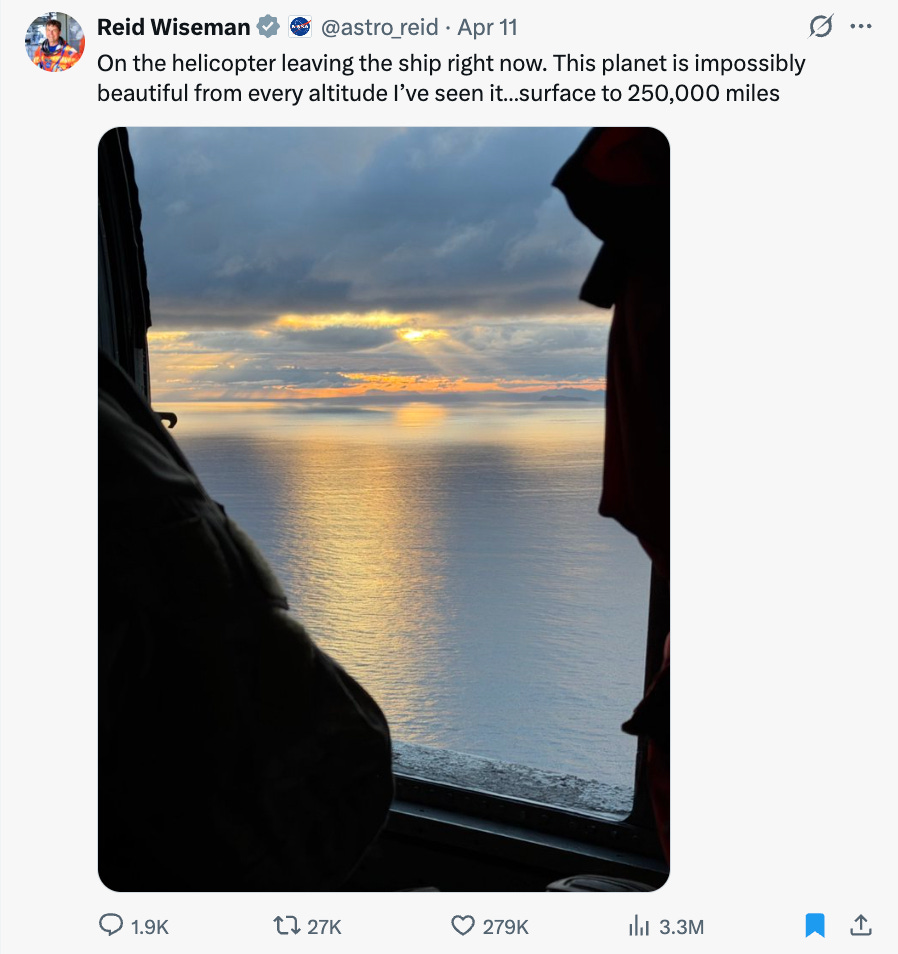
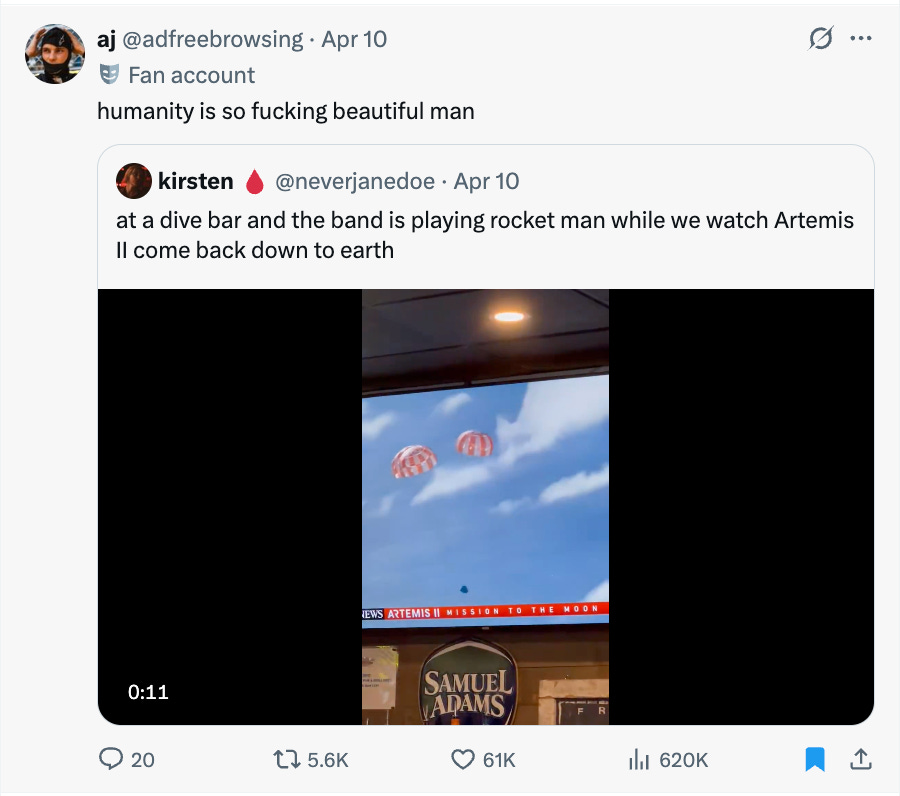
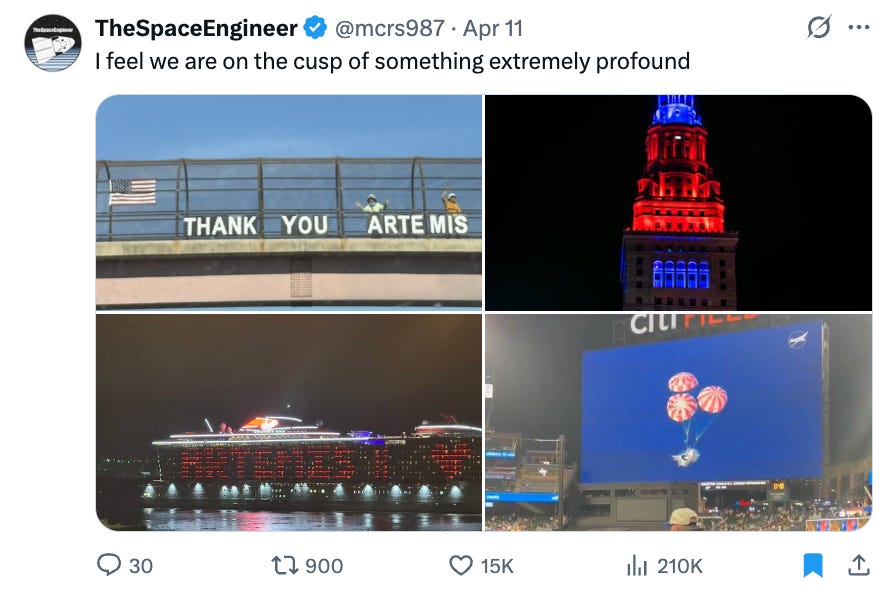
Instead of bonus reads this week, please enjoy a collection of the best X posts about Artemis II.




Truly appreciate Josh's grounded and optimistic assessment. Things may look challenging but when hasn't it been?
What does that tell me? As a working class paramedic getting very close to retirement what does mean for my financial outcomes? Or is a statement about trump and his cronies?