


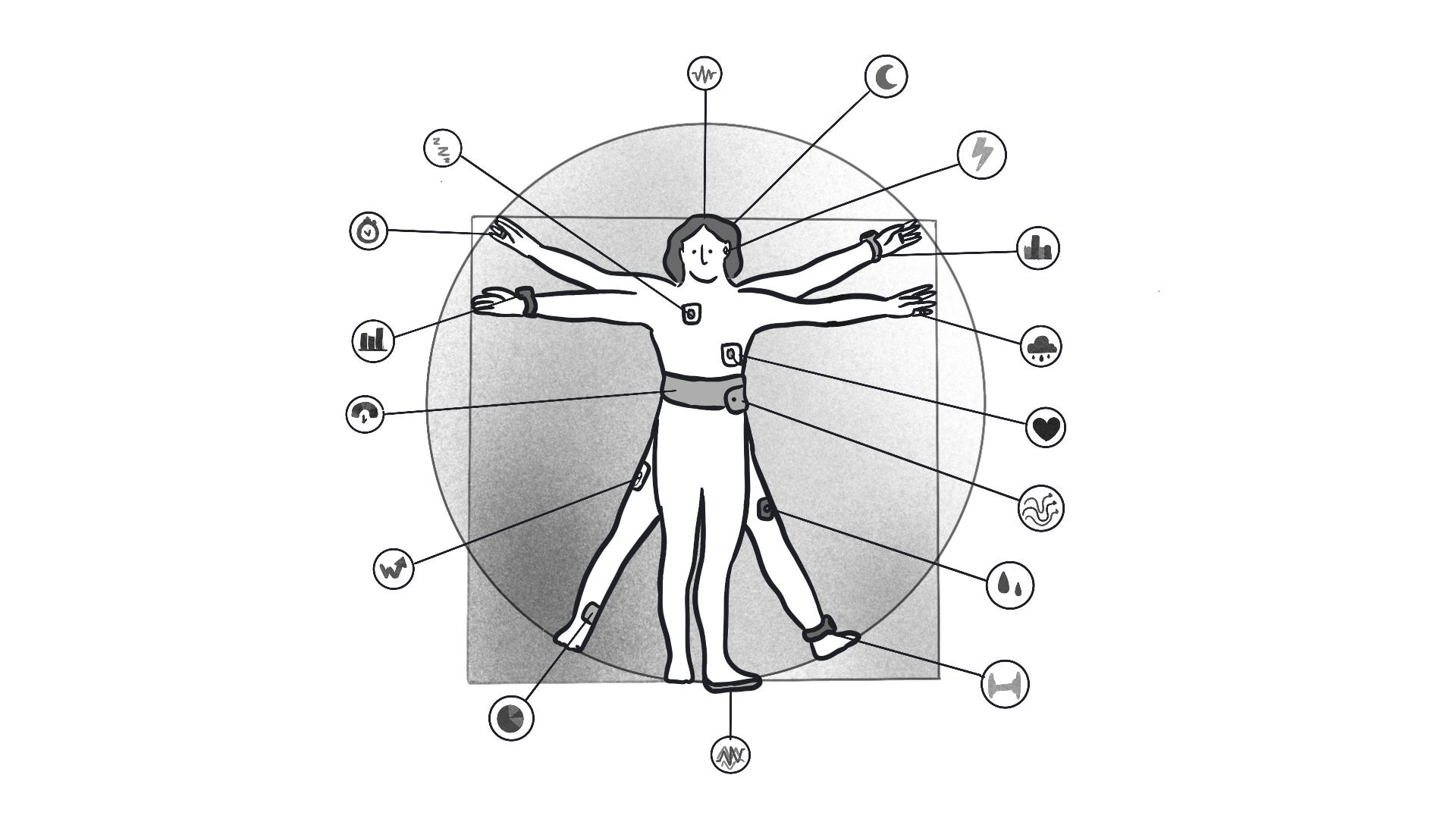
“What gets measured gets managed” is often misattributed to Peter Drucker, the father of modern management theory. The full quote, from business journalist Simon Caulkin, is a warning not a promise. “What gets measured gets managed — even when it’s pointless to measure and manage it, and even if it harms the purpose of the organization to do so.” In other words, our mania for measurement can obscure what matters most. Consider the popularity of health and fitness apps and the personal-optimization trend those technologies enable. To a point, the more data we collect on ourselves, the better able we may be to improve our lives. But metrics aren’t the arbiters of living well, nor is optimization life’s end-goal. I believe this trend isn’t about optimizing life; it reflects a growing obsession that’s consuming life’s purpose and meaning.
Perfection Maxxing
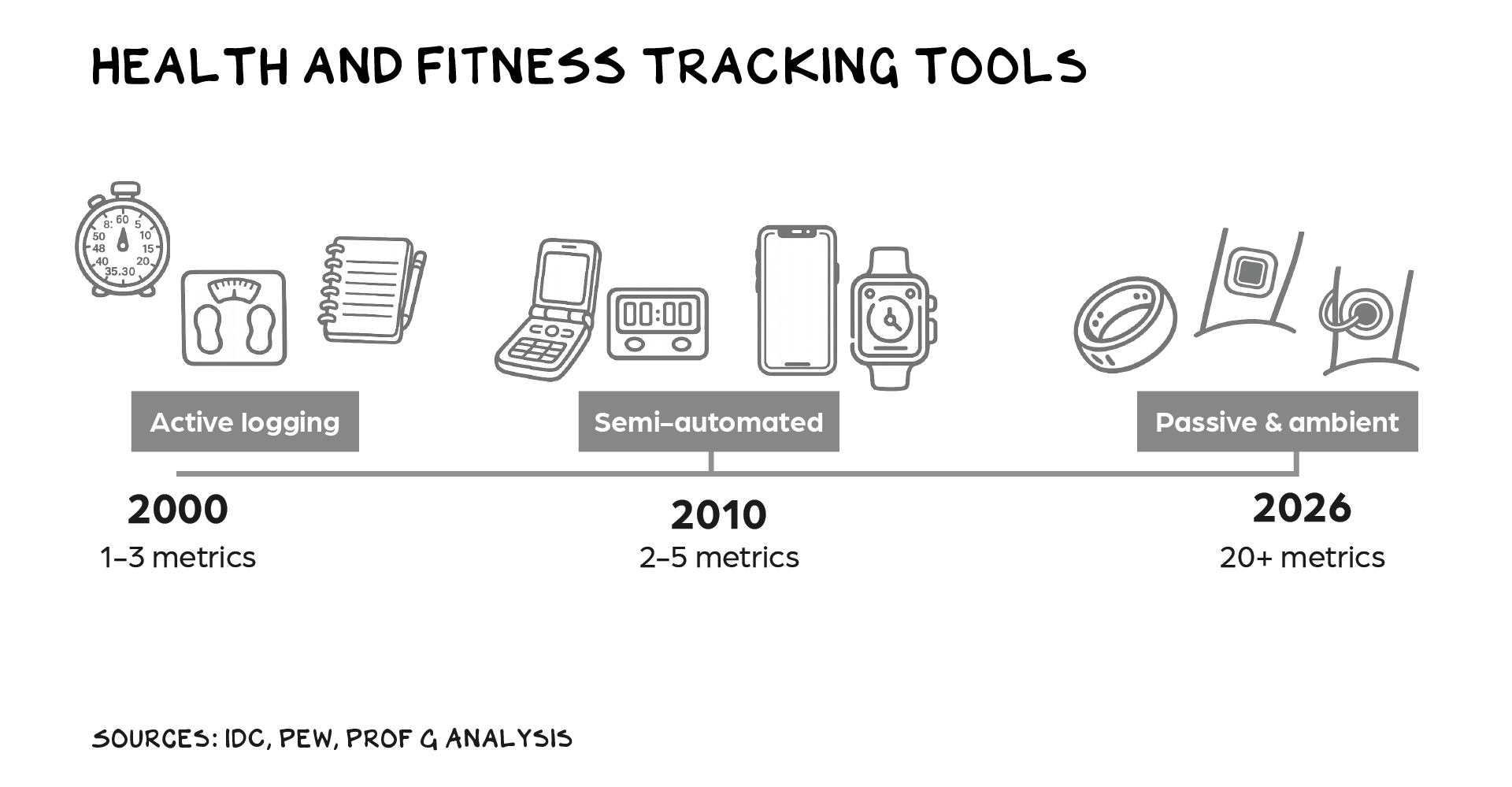
The digital economy has created a winner-take-most ecosystem. Life/America is exceptional for the top tier, and increasingly anxious for everyone else. This K-shaped life offering awesome or anxiety fuels a “maxxing” culture: How do we look? How much protein do we consume? How well do we sleep? How many books do we read, etc.? The optimization and gamification of life has created a Hunger Games we’re all playing, all the time. As journalist Nitsuh Abebe wrote in the New York Times in October, the concept of maxxing comes from 1940s academic game theory, but it’s been repurposed by online communities to describe a strategy for “relentless optimization” where balance goes to die. “The language that comes from this layer of the internet has a mechanistic, gamelike aura, as if life were mostly just a web of tactics and hacks and mutual manipulation.”
According to clinical psychologist Catherine Houlihan, the “optimization mindset has many of the hallmarks of perfectionism.” Some commonalities: constantly pursuing high standards such that falling short of a goal is seen as failure; being preoccupied with results to the point of worry or rumination; constantly measuring performance to an obsessive degree; avoiding tasks if we fear we won’t be perfect; slipping into binary thinking, e.g., your diet is either “healthy” (perfect/optimal), or “unhealthy” (imperfect/suboptimal). “We don’t yet have much research about how adopting an optimization mindset might affect mental health and well-being,” Houlihan wrote. “But the negative effects of perfectionism are well established.” A 2023 meta-analysis of 121 studies found that when perfectionism takes the form of obsessive fear of failure — replaying mistakes, tying self-worth to performance, etc. — it correlates meaningfully with anxiety, OCD, and depression in young people.
80:20
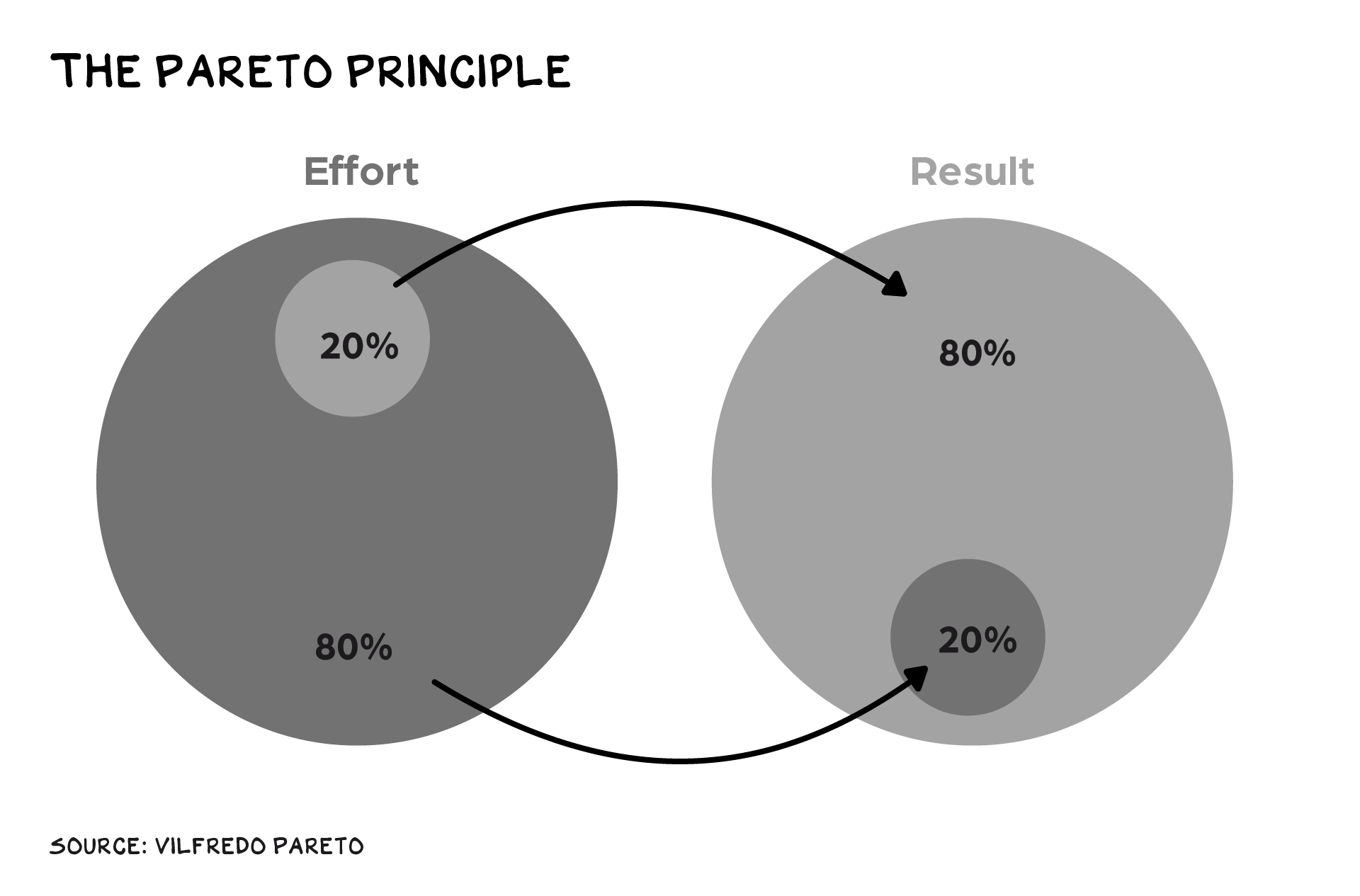
In economic terms, optimization means getting the greatest return on your investment. Investors, however, aren’t perfectionists. They’re pragmatists who operate with an understanding of the Pareto Principle, which states that, for many outcomes, roughly 80% of the results come from 20% of the effort. When applied to the personal investments we make in our own fitness, health, and longevity, the lesson is that we make the biggest gains going from zero to one, but there’s a point, likely around 80%, where the efficiency frontier begins to collapse. If you don’t exercise at all, getting moving 4x/week will confer significant benefits. If you’re a gym rat, however, working out every day vs. 4x/week yields diminishing returns.
Value Capture
Bryan Johnson, an entrepreneur whose philosophy is “don’t die,” spends $2 million a year optimizing for longevity. Each day, he tracks hundreds of biomarkers, adheres to a strict vegan diet where every calorie that enters his body “must fight for its life,” uses shockwave and red-light therapies, and hangs out in his home sauna and hyperbaric chamber. He ingests a stack of prescription drugs and dozens of supplements, and exercises up to 90 minutes a day — without rest days. Bedtime is 8:30 p.m., sleep temperature is strictly regulated at 65° to 68°F, and he wakes up between 4:30 a.m. and 5:00 a.m. without an alarm. My Pivot co-host Kara Swisher, who interviewed Johnson for her CNN series, Kara Swisher Wants to Live Forever, observed that Johnson has an “obsession with measurement.” I’d add he has an aversion to “l-i-v-i-n,” as Matthew McConaughey famously put it in Dazed and Confused.
Our obsession with metrics, says journalist Derek Thompson, is akin to a modern religion that’s making us miserable. “Modern life is awash in statistics,” Thompson wrote in March. “Often, the quantification of modern life makes us play the games we can easily measure rather than the games we deeply value.” When we do this, we’re succumbing to “value capture,” according to University of Utah philosophy professor C. Thi Nguyen. “Value capture occurs when an agent’s values are rich and subtle,” Nguyen wrote in 2024. “They enter a social environment that presents simplified — typically quantified — versions of those values; and those simplified articulations come to dominate their practical reasoning.”
Some examples: We adhere to dietary guidelines to improve our health, but fixate on BMI such that the metric replaces the original goal; we pursue education to learn, but chase GPA at the expense of knowledge; we use social media to connect, but we come to value likes and other parasocial metrics over meaningful relationships. “Metrics are useful because they compress information, [and] they are dangerous because they compress information,” Nguyen told Thompson. “[It’s] not that these metrics aren’t measuring something real and that they aren’t objectively tracking something that we want to know about; it’s that they speak so loudly that they threaten to drown out other nearby qualities that are also incredibly valuable but are harder to measure.”
Enjoy Every Sandwich
In October 2002, with only months to live, frequent guest Warren Zevon appeared on David Letterman’s show for the final time. The musician retained his dark wit, joking that not visiting a doctor for more than two decades was “one of those phobias that really didn’t pay off.” In a more serious moment, Letterman asked Zevon if he had any insights about life to share. “I really always enjoyed myself,” Zevon said. “But it’s more valuable now. You’re reminded to enjoy every sandwich and every minute of it, playing with the guys and being with the kids and everything.” Zevon’s answer is memorable — Enjoy Every Sandwich became the title of a posthumous tribute album — because he articulated his life’s purpose, rather than the metrics he’d registered along the way.
I frequently encounter people who ask about my diet and fitness routine. It’s simple: I eat a diet that, mostly, hits my targets for calories and macros, try to get a good night’s sleep, and exercise regularly. As someone who’s obsessed with data, I code as an optimizer. I am not. I work out harder so I can drink … more. The first thing I do when I arrive in Los Angeles — if you know you know — is go to In-N-Out Burger. I often order (gasp) dessert, especially if I’m with my boys. I regularly stay up too late talking to friends back in the states. Two nights ago, after interviewing Secretary Clinton for a live pod in NYC, I came home, ingested edibles, binge-watched Season 3 of Euphoria and washed down chocolate-covered almonds, lifted from the mini-bar at the Faena hotel earlier this week, with two Peronis.
A. Great. Night.
Pattern Recognition
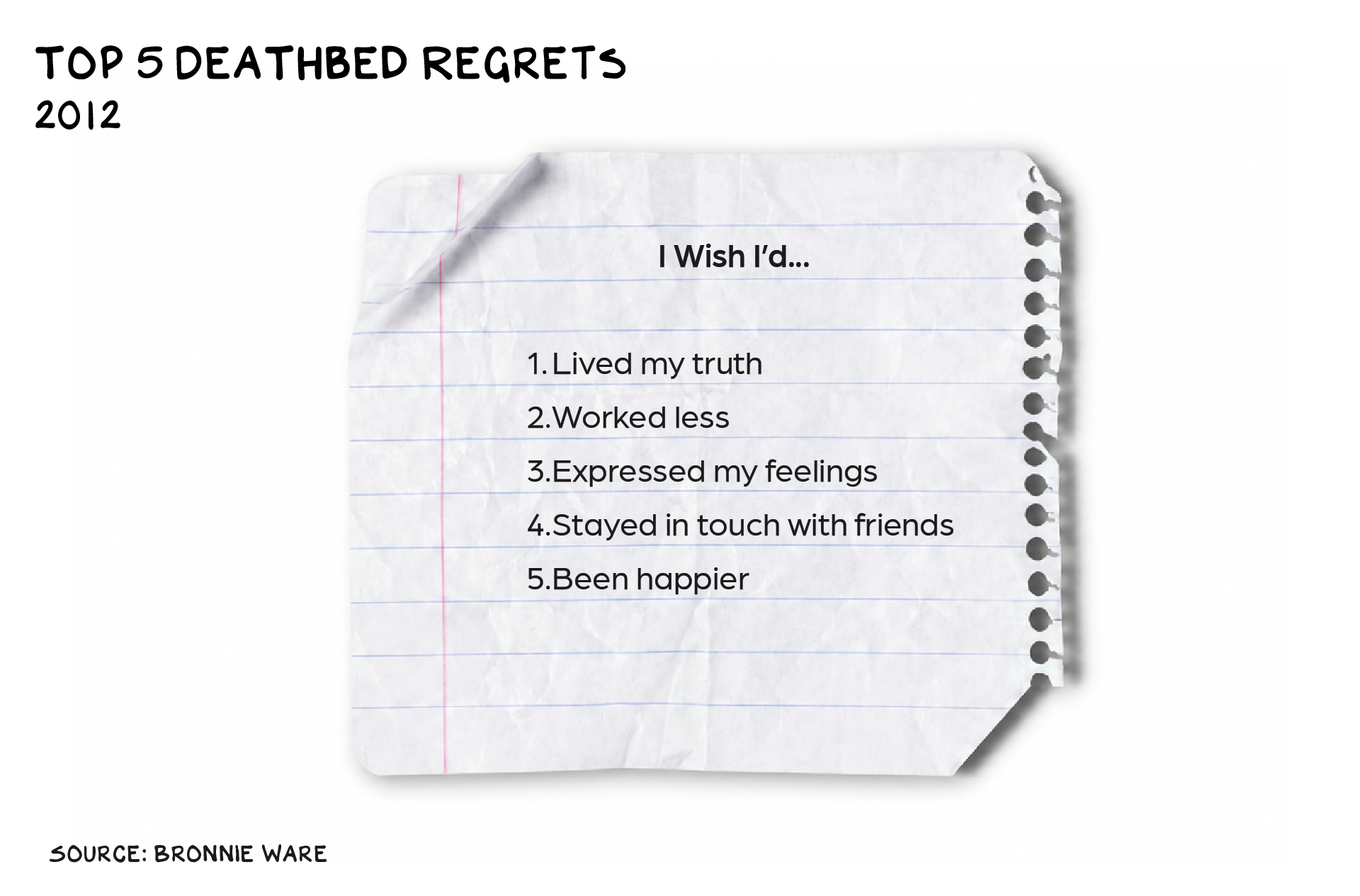
If there’s a pattern, it’s this: I’m health conscious 80% of the time, so I can devour the other 20%, and create a whole that is greater than the sum of its parts. The question isn’t will I live longer, but will I live better? A: Yes. Research supports this. Dieters who adhere to rigid meal plans are more likely to experience mood disturbances than those who don’t; flexible dieters are less moody and more likely to reduce their BMI. Harvard happiness researcher Shawn Achor tested multiple variables — background, income, activities, and sleep — and found that social connection was the strongest predictor of happiness, suggesting that a late night with friends is better for your health than a perfect sleep score. Consuming alcohol in moderation is associated with higher death rates, but a large-scale study of 1.5 million people found that moderate drinkers report higher life satisfaction than abstainers. Then there’s the work of Bronnie Ware, a palliative-care nurse who collected the regrets of her dying patients. They shared about not living their truth, wishing they’d worked less, expressed their feelings, kept in touch with friends, and been happier. Nobody said they wish they’d done a better job “optimizing.”
The Little Prince
I gave my oldest son a ring that he wears as a necklace. The inscription comes from Antoine de Saint-Exupéry’s The Little Prince, a 1943 novella about friendship, loneliness, loss, and love. “What is essential is invisible to the eye.”
My work and life are narrowing, distilling to a few goals: one of them is to prepare my sons for others. Many things I do don’t advance that goal, and some things undermine it. I’m a work in progress, i.e., suboptimal. When I’m gone, if I’ve accomplished this goal, my sons will have, among other things, receipts in the form of grief — proof that they loved deeply, as Nicole Avant, former U.S. ambassador and film producer, wrote in her memoir, Think You’ll Be Happy. The boys won’t remember my VO2 max. They won’t know my sleep score or my macro splits. What they’ll carry with them is … me, the man who showed up, imperfectly, at the dinner table, at their games, and in countless fleeting moments that didn’t register on any dashboard. The metrics were never the point. The sandwiches we shared were.
Life is so rich,

The Markets tour ended this week in New York, where I got to share the stage with one of my heroes, former Secretary of State Hillary Rodham Clinton. Total badass. The full, unedited show is available exclusively for Prof G+ paid subscribers by clicking here.
Fantastic piece. This should be your next book. Social Media (and other factors) has put an insane amount of pressure on people to 'max' everything, and even though things are going well on paper overall, everyone is miserable. This is upstream of why the social fabric is fraying and why our politics are so dumb. I would pay real money for a data sourced deep dive on how regular people can find happiness and satisfaction while still living in the world. I assume it's mushrooms, but there's probably more to it than that.
I put single-point probabilities on geopolitical outcomes for a living, so I should be the last person agreeing with this. But the longer I do it, the more I think the point of pricing something at 35% isn't the number. It's the 65% you're admitting you can't see.
Measuring uncertainty doesn't make it smaller. It makes you honest about how much you're guessing.