



Maine was never going to be easy for Democrats. Susan Collins, the incumbent senator and center-right Republican, just keeps winning: she’s on her fifth term, won her last race by eight points, and even survived the Obama wave in 2008.
This year might be different. Redistricting battles aside, the environment is really heating up for the Dems. Collins is no rubber stamp on Trump’s agenda, but she voted for most of his cabinet, including Pam Bondi, Kristi Noem, and RFK (she was a no on Hegseth). More importantly, she still has an R next to her name, and this GOP is deeply unpopular with voters.
Graham Platner, set to become the Democratic nominee after Governor Janet Mills dropped out last week, is a flawed person. The Nazi tattoo is bad enough; lying about it is both morally wrong and dumb. At the same time, he has things the party desperately needs: working-class values, the right age bracket, and a platform worth watching.
He is the highest-profile test case for a new kind of Democratic politics.
Maine is competitive, and Platner enters the race with real momentum
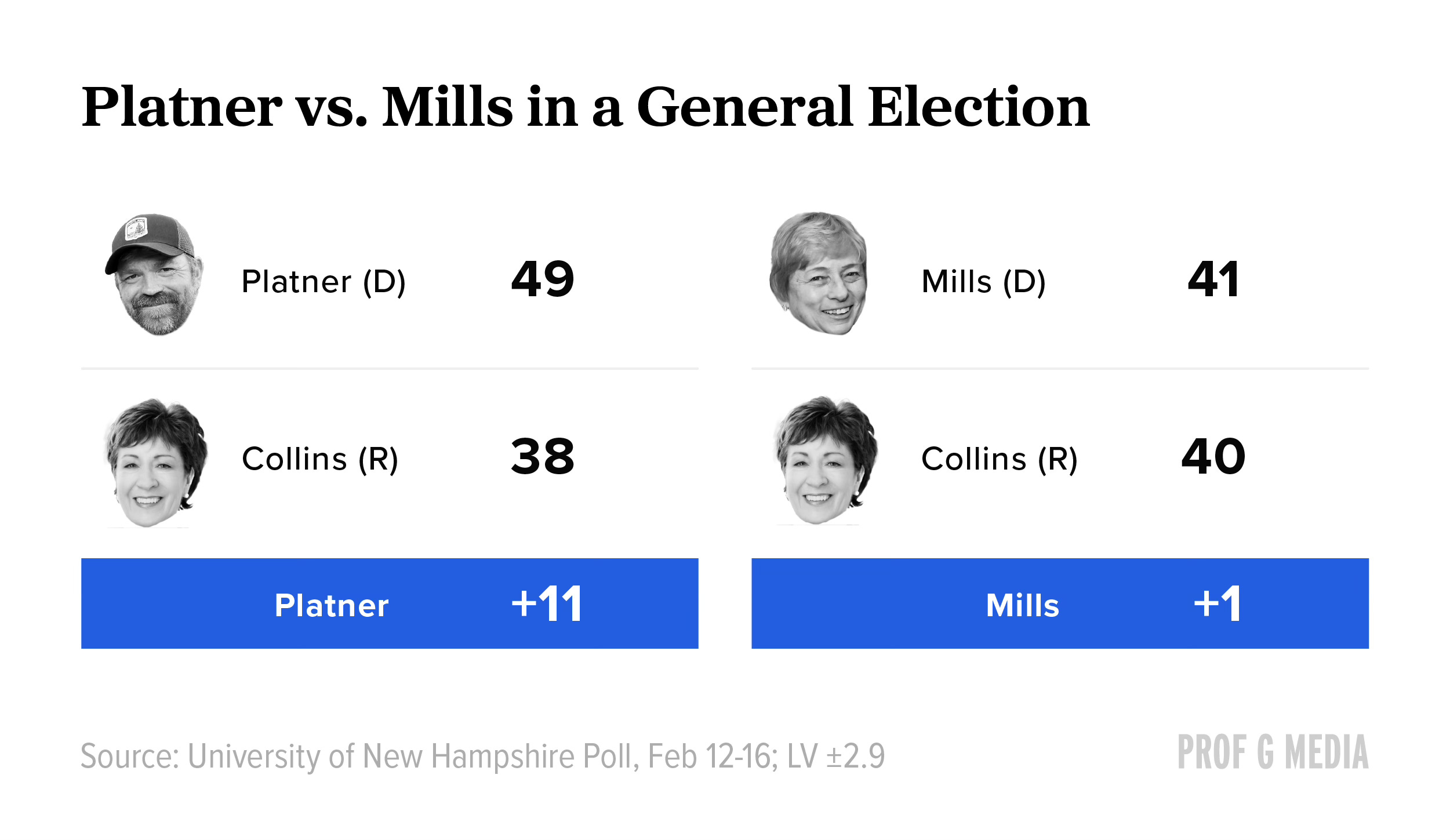
It’s early, but we know Platner is competitive in Maine. There isn’t much reliable polling in the state so far, but a University of New Hampshire survey in February makes the case: Platner led Collins in a general election matchup 49% to 38%, or an 11-point gap. With Mills on the ballot, the same survey had her just about even with Collins at 41% to 40%. He’d also opened up a nine-point lead with independents, while Mills was six points behind with the same group. It’s the best snapshot we have so far and makes a compelling case for Platner.
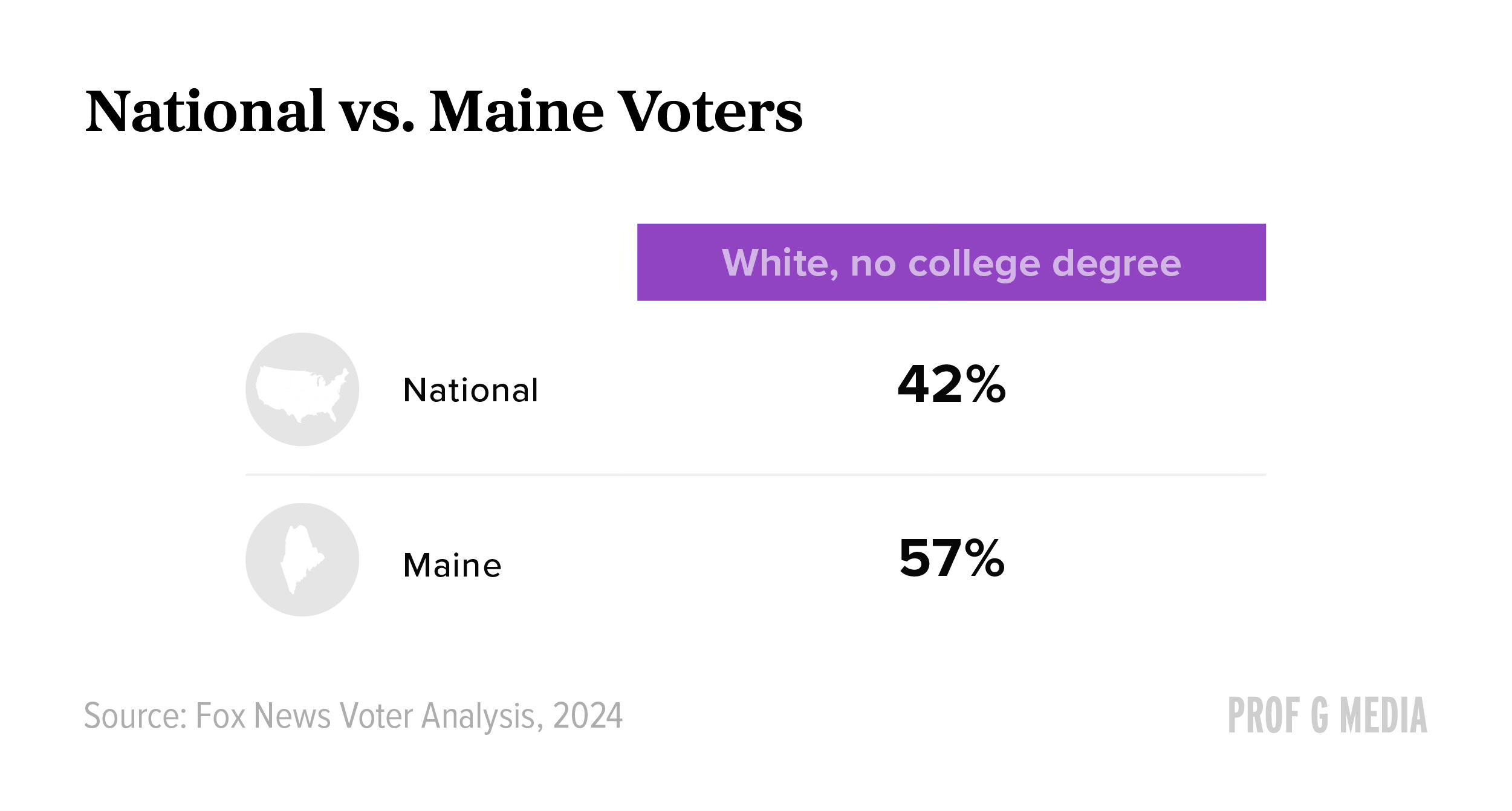
This is a bigger deal than you might think. While independent Sen. Angus King, who caucuses with the Democrats, has won three elections in Maine, the state hasn’t voted for a self-described Democrat for Senate since 1988. While it supports Democratic presidential candidates, it’s not an easy state to win: 57% of voters are white and working-class; that bloc drifted toward President Trump in 2016 and hasn’t looked back.
These folks look and sound like Platner, but more importantly, they can relate to key parts of his background, which includes almost a decade as an oyster farmer and three tours in Iraq. Conservatives point to other parts of Platner’s life and cry hypocrisy, including his private school upbringing and family members who worked in architecture and law. So yes, as others have pointed out, his story cuts both ways. But based on the data, Maine voters aren’t yet dismissing him as just another “elite.”
The tattoo problem
Those polls were conducted several months after stories about Platner’s tattoo had already come out. We still think it’s a problem.
Here’s the background: Platner says he got a tattoo in 2007, in his 20s, after a night of drinking while on leave from the Marine Corps. The image, which he asked for “off the wall” because it looked like a “terrifying-looking skull and crossbones,” resembles a specific symbol of Hitler’s SS. In October, he said he wouldn’t have gotten the tattoo if he knew what it meant, and weeks later he covered it up.
It would be one thing if that were the only cover-up. The problem is that Platner seemingly tried to cover up the truth about his awareness as well. In an interview on Pod Save America, Platner said he wasn’t aware what the symbol meant until recently, but according to a CNN investigation, he’d both been aware and defended use of the symbol on Reddit years before the scandal, and that acquaintances had heard him refer to it as a Nazi symbol many years ago.
Platner says he’s “not a secret Nazi,” and that is very believable. His story about the symbol? Not so much. And that could be a liability for a candidate who has branded himself as a no-bullshit guy.
“A 79-year old freshman”
As far as we know, Janet Mills has no incriminating tattoos, and as the winner of two statewide races for governor, seemed like the safe choice for the Senate. But she also would’ve been a 79-year-old freshman in the Senate, as The Atlantic pointed out earlier this year; a chamber that already has an average age just shy of retirement at 65 years old. Mills tried to address this by promising only to serve one term, but those promises don’t always pan out. Susan Collins said she’d only serve two terms; she’s running for a sixth. On this issue, the Mills campaign was a godsend to Collins.
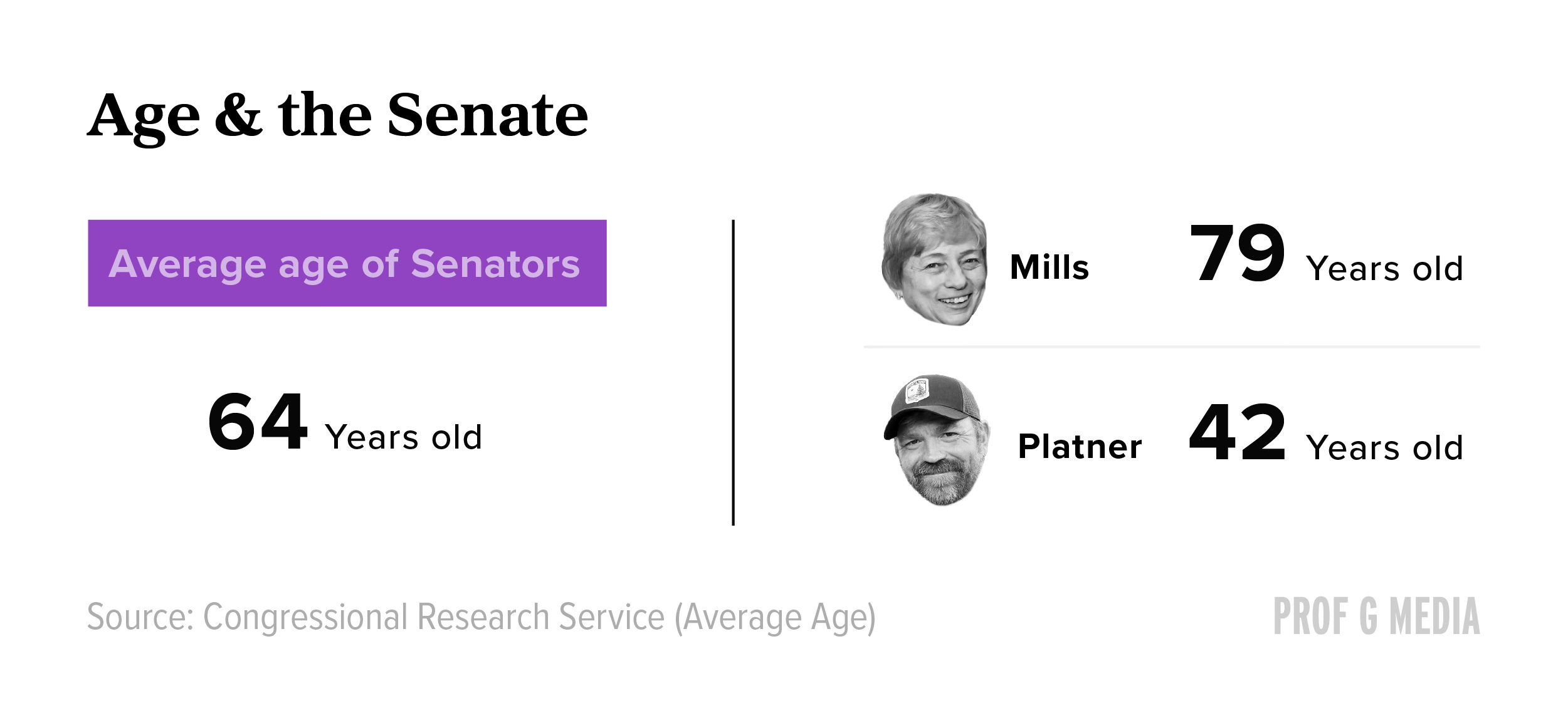
Asking voters to represent them until you’re 85 years old is an absurd idea on its own. It’s especially absurd for a Democrat to attempt it just two years after the party was forced to swap out its 81-year-old presidential candidate. Democrats are already the slightly older party in the Senate (with an average age of 66 vs 65). It’s time for the party to prioritize age when it recruits candidates. Platner will be 42 if inaugurated next January, and he says he will vote for a two-term limit. That is the path forward.
Platner’s platform
The midterm electorate is not the same as the presidential, but Democrats should use these elections to experiment with a new platform. Platner is a fascinating example: he’s running on economic populism in a state we think of as center-right. It starts with affordability, where Platner says he’ll fund federal housing programs, but it goes deeper: support for Medicare for All, a tax on billionaires, and a cost-of-living tax cut for everyone else.
On social issues, Platner runs to the middle, even when it’s controversial. Take immigration. He calls Trump’s mass deportation tactics “unconscionable,” but also says big corporations exploit the system so they can pay “slave wages” to illegal workers. It’s the same with guns, where Platner told a progressive news outlet that he supports background checks but not a ban on assault weapons. His case: if we cared about gun deaths, we’d get people out of poverty and improve healthcare.
There’s also a heavy focus on local politics. Platner emphasizes that he’d be a “friend to Maine’s working waterfront” by expanding storage facilities, fund workforce expansions, and prevent invasive species from threatening fisheries. Here, he’s borrowing from Mary Peltola’s playbook. She talked up local issues extensively on the trail in 2022 (including fishing, specifically) on the way to a statewide win in Alaska. Whatever debate there is about economic populism, listening to voters about local issues is always smart politics.
The future of Democratic politics, or a tattoo too far?
We have our issues with Platner. And it’s not just the tattoo: he’s made a number of abhorrent comments on social media about rape victims, women, the police, and rural Americans (he has apologized for them).
Still, he’s the candidate we’ve got, and he has key strengths: he connects with voters who have lost faith in the left and will bring generational change to the Senate.
Meanwhile, his platform, which blends economic progressivism with social centrism, is intriguing and will offer the Democrats important data about what resonates with voters.
Platner can win this race. It depends on whether his economic message and story are strong enough to overcome his baggage. Either way, it’s the most interesting of the four states that Democrats are looking to flip this November. You’d be wise to watch this race closely.
Thatsa silly thing to say. Fetterman is a stroke victim and is weird before that. I
Then we can find out if he is another Fetterman