



TL;DR
When will we see a ChatGPT moment for humanoid robots?
Xi’s visit to North Korea shows the limits of China’s leverage
Ghost kitchens in China face increasing government scrutiny
Chinese Startups Drive AI Shift From the Digital to the Physical Realm
In the competition to build the brains for next-generation robots, China is leaping ahead of the U.S. — at least by one key measure. Just days after Nvidia launched its Cosmos 3 model, aiming to help robots think before they act in the real world, Chinese startup Spirit AI knocked its American rival into second place on a global ranking.
Both countries are betting on robots that can perceive, understand and interact with the physical world. In China, companies including Unitree are racing toward IPOs. While the U.S. has its own promising startups, it’s leaning on China’s manufacturing expertise. Nvidia earlier this month teamed up with Unitree for its robotics system. The stakes are significant as AI crosses from the digital to the physical world. Nvidia’s Jensen Huang has predicted that the physical AI market could one day be worth tens of trillions of dollars.
Alice’s Take: I’ve long believed the AI race extends well beyond generative AI and large language models. That’s certainly the way China sees it. While the private sector in the U.S. spends 12 times as much on computing power, China spends 42% more on robotics, a gap that’s only going to widen. Where AI and robotics intersect, China has an edge.
China is fusing the virtual and physical realms in a powerful way, creating models to simulate what’s going to happen next and take actions based on those predictions. What is often underestimated in the West is the sheer amount of data Chinese companies are collecting in the physical world to make their models more intelligent. The country, which produces 90% of the world’s humanoid robots and 60% of robotic installations, has created an environment that makes it relatively easy for industrial companies to pivot. Take Lingyi iTech, the smartphone manufacturer that plans to expand annual robot production to 500,000 by 2030. Carmaker BYD, meanwhile, reportedly has been running its own humanoid robot program. Don’t be surprised to see more headlines like this in the fast-moving robotics sector.

James’s Take: I’m reminded of a demonstration I watched at a recent robot expo in Beijing. A humanoid robot stood at a pharmacy counter listening to customers’ requests, spinning around to choose the right boxes among hundreds of medicines on the shelves before handing them over. What’s striking is that every robot on the floor had a specific job to perform, from surgery to manufacturing. These aren’t show ponies. Deng Xiaoping once observed that it doesn’t matter if a cat is black or white as long as it catches mice. China wants to catch mice, using robots to carry out tasks efficiently and make money. So it’s no surprise that Chinese funds are flowing into physical AI. Spirit AI recently raised 1.5 billion yuan ($222 million), while another company, Unitree, is seeking to raise about $620 million through a listing in Shanghai.
That is physical AI in practice, and the implications are huge. This is a whole new frontier. One day we might reach a ChatGPT moment for humanoid robots. If we get to that phase, we’ll be living in a very different world. It’s far too early to make a call on who might win the AI race between China and the U.S. But at least in some areas — such as video generation, token consumption, and advanced AI agents — China is performing strongly.
Xi’s Trip to North Korea Highlights Complex Game of Leverage
After hosting Donald Trump and Vladimir Putin in back-to-back summits in Beijing, Xi Jinping traveled to North Korea on his first official visit to the neighboring nation since 2019. Xi, who was greeted by a mounted cavalry and stage-managed crowds waving flowers and flags, called for deepening “strategic coordination and cooperation” with North Korea in a range of areas including trade, agriculture, health, construction, science, and technology.
The talks “may be remembered as the most consequential” of the seven summit meetings the two leaders have held, Sung-Yoon Lee, a senior fellow at Sejong Institute, told The New York Times. “Beijing is increasingly defining North Korea as a long-term strategic partner in an emerging Eurasian geopolitical contest versus the U.S. and its allies.”
Alice’s take: This is an important relationship. Don’t forget that China has signed only one mutual defense treaty — with North Korea in 1961. But the relationship hasn’t exactly been smooth, and Russia has become a third wheel. Remember the photos of Putin and Kim Jong Un laughing in a car as they took turns driving each other around Pyongyang two years ago? North Korea has sent an estimated 14,000 troops to fight with Russian forces against Ukraine. In return, Russians have sent military and technological equipment to North Korea.
So what can China do? On the one hand it wants to improve relations with North Korea, worried about Pyongyang getting closer to Russia. But it’s also concerned about the expansion of North Korea’s nuclear arsenal across the border. Kim has learned it pays to be a nuclear power. Iran’s vulnerability — stemming partly from its non-nuclear status — reinforces that calculation.
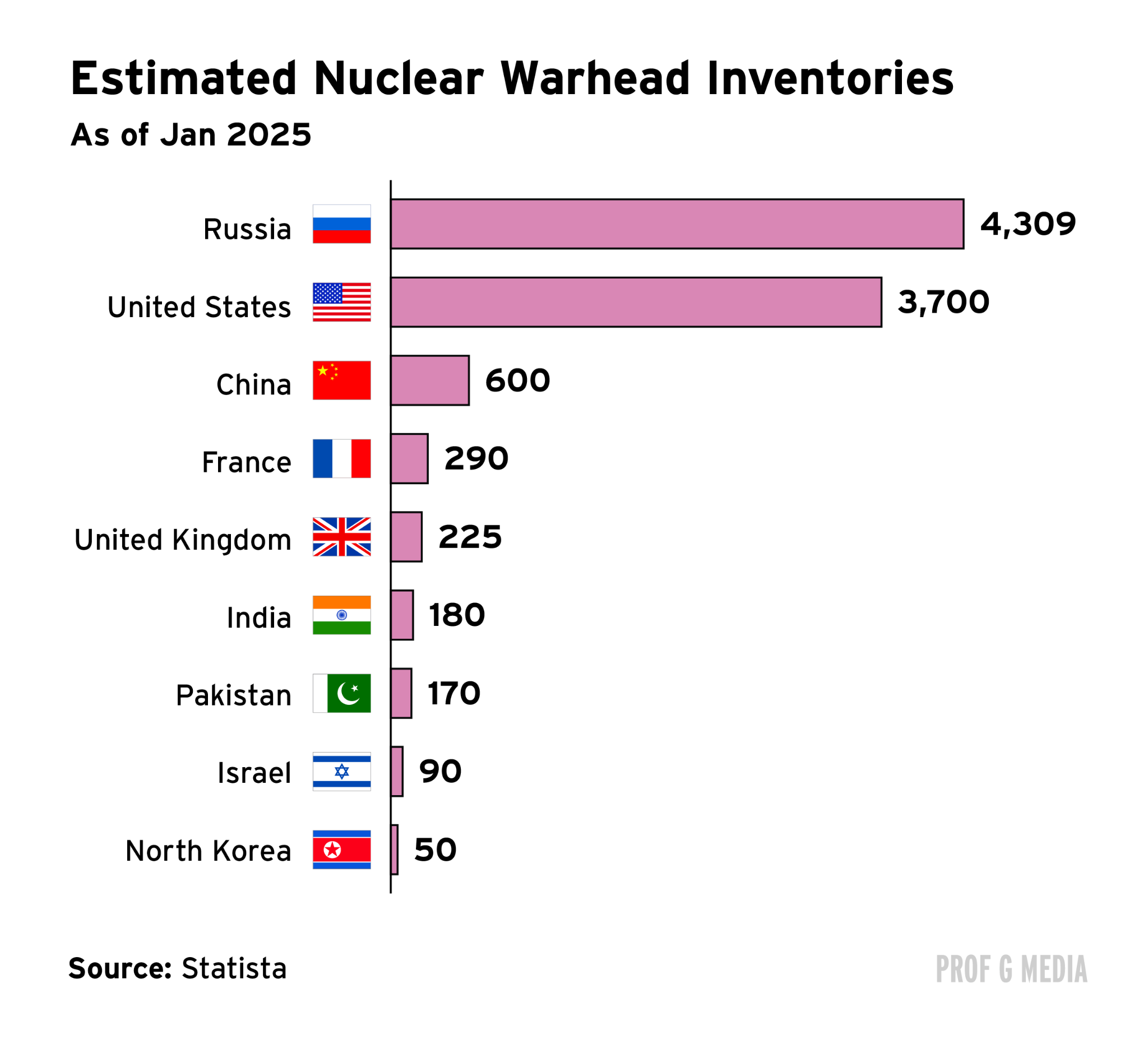
James’ take: Although North Korea and China are formal allies, the relationship is much more complicated. The crucial issue is North Korea’s nuclear arsenal, even if Chinese and North Korean state-run media this week made no mention of it. Kim has pledged to expand the country’s nuclear forces at an “exponential rate” to counter its “most ferocious enemies.” Last week, North Korea unveiled a new facility to produce fuel for nuclear weapons.
This is all about leverage. While North Korea has tried to use its nuclear arsenal to gain concessions from China, Beijing has sought to use North Korea’s nuclear capabilities to try to gain leverage with the U.S. But in my opinion, China has very little influence over North Korea.
China’s Cut-Throat Ghost Kitchens Face a Reckoning
Several years ago, Travis Kalanick, the co-founder and former CEO of Uber, made a big bet on ghost kitchens — restaurants without a storefront or seating that only do delivery. At one point, the market was expected to explode to $1 trillion by the end of the decade. But by 2024, these online businesses had begun to disappear as customers returned to real-world restaurants after the pandemic and complaints about their ghost kitchens mounted.
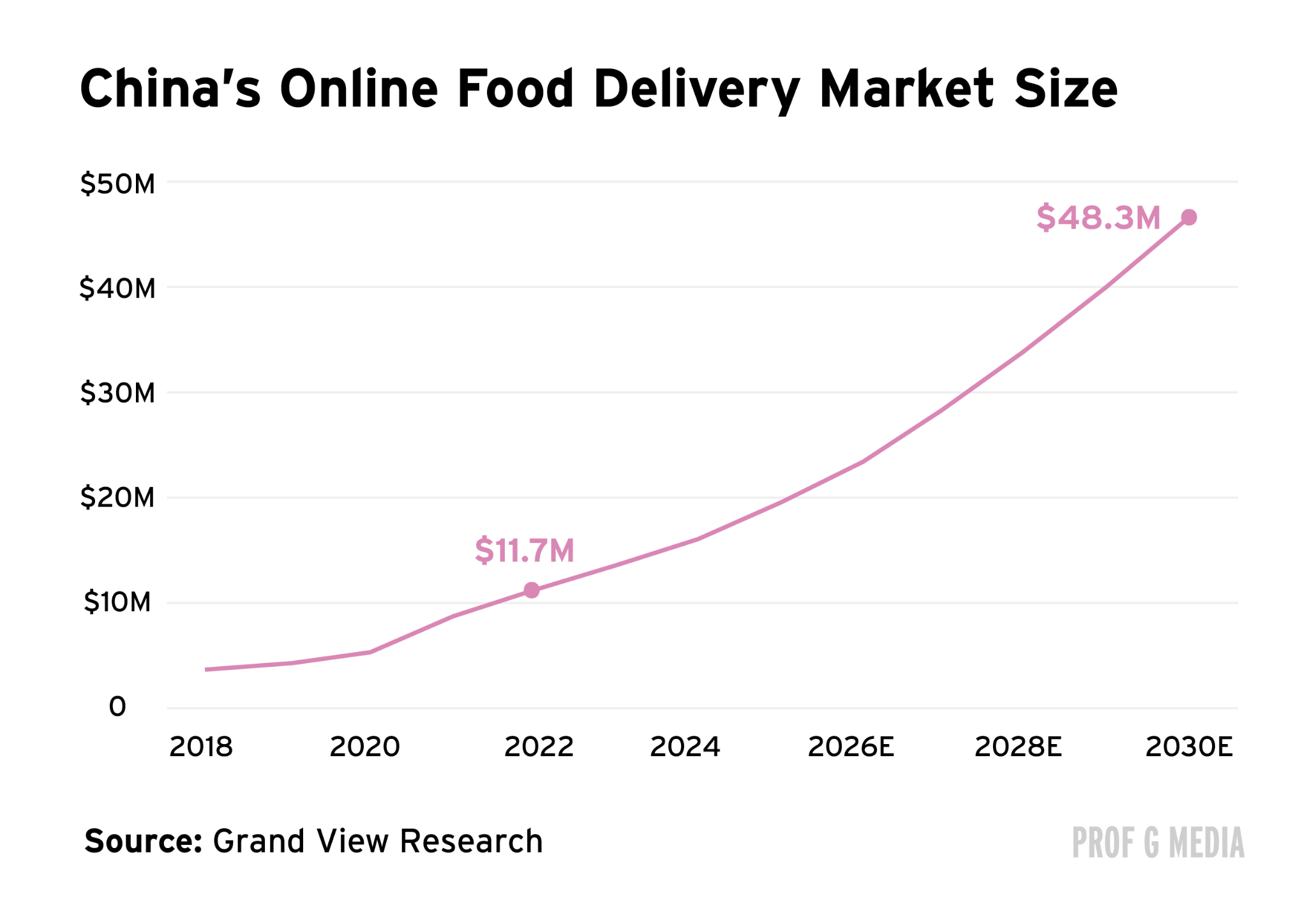
China’s fiercely competitive food delivery industry is now running into its own problems after a rapid expansion. The government is cracking down on ghost kitchens amid growing concerns that cheap prices are coming at the expense of food safety. Seven platforms, including Meituan, Taobao and JD.com, have been fined a combined $530 million after authorities uncovered more than 67,000 ghost businesses funneling orders to unlicensed workshops.
Alice’s take: Every time I visit China, I use these apps — they’re so efficient. And to be honest, I’ve found take-out in China to be superior to what you get in the U.K. So it was a little surprising to see this become such a serious issue. But the consumer concerns are real: food safety, hygiene and an utter lack of transparency about who is actually making your food.
Interestingly, in response to the heightened scrutiny, some merchants are putting the spotlight on their kitchens with live-stream feeds so consumers can watch food being prepared in real time. Provinces like Anhui are signing food safety agreements with major platforms, deploying AI monitoring and incentivizing delivery riders with cash rewards to report shady operations.
Regulations are moving fast, and businesses will have to move fast as well to keep pace. With Meituan alone carrying around seven million delivery drivers, and the industry growing rapidly — largely driven by urban white-collar workers who have shifted away from home cooking toward the convenience of app-based delivery — the scale of the regulatory challenge is immense.
James’ take: Some of the details that surfaced in state media reports made me somewhat nauseous. On the app, you see colorful photos of restaurants and their dishes, but who knows where the food is actually coming from. One investigation traced orders of pig trotter soup delivered by scooter drivers to a filthy kitchen in a junkyard. Other well-known eateries were apparently lending their brands to operations run out of cockroach-infested hovels.
The economics have fueled the problem. You pay as little as possible for the food and the drivers who deliver it — often within 10 to 15 minutes — to hold on to whatever tiny margin you have. It’s the same dynamic you see across the Chinese economy: more than 100 electric vehicle companies, only a handful of them profitable, or subsidized steelmakers running plants at a loss. This isn’t true of most of the food ordered in China to be fair, but because it’s such a huge market, potentially worth $200 billion a year, this will continue to be an important issue.
Alice’s Prediction: Magnesium alloys are going to be the next critical materials story in the robotics sector. As humanoid robots take on more dexterous tasks, the demand for lightweight, durable structural materials will intensify. Just as the spotlight has shifted to helium for semiconductors, watch for magnesium alloys to gain more attention in the robotics world.
James’ Prediction: China’s wine industry will soon produce a bottle that sells for more than $5,000. I estimate that the most expensive Chinese wine on the market today sells for $4,300 — the Changyu winery’s AFIP No. 1 comes with 28 gems and 18-carat gold plating. But wines from producers such as Domaine Franco-Chinois near Beijing and LVMH’s Ao Yun are winning major prizes. Twenty years ago, Chinese wine was seen as a joke. That era is over.
Physical AI and robotics is always viewed as a single theme who delivers humanoids but I feel the ecosystem behind is vvery strong and powerful!
https://substack.com/@arvindsrinivas/note/p-201051115?utm_source=notes-share-action&r=6l8fee