



American Gen Zers, (those between the ages of 13 and 29) will spend almost 18 years — or more than 20% of their entire lives — on their phones.
That’s the future if nothing changes. But the phone addiction economy is already generating its own resistance.
More than half of Gen Z (54%) now set aside dedicated offline periods each day, compared with 43% of millennials, 33% of Gen X, and 22% of baby boomers.
Sixty-nine percent of Gen Z believe their social life would improve with less phone time, and 72% of Gen Z think their mental health would improve if apps were less addictive.
They’re right. A recent study found that people who cut back on smartphone use felt noticeably better than those who didn’t, reporting fewer symptoms of depression, less stress, and better sleep.
The kids that were guinea pigs for smartphones have become the young adults most eager to put them down.
But smartphone addiction afflicts everyone:
Americans check their phones 186 times per day.
Eighty five percent check their phone within 10 minutes of waking.
Sixty eight percent use their phone on the toilet.
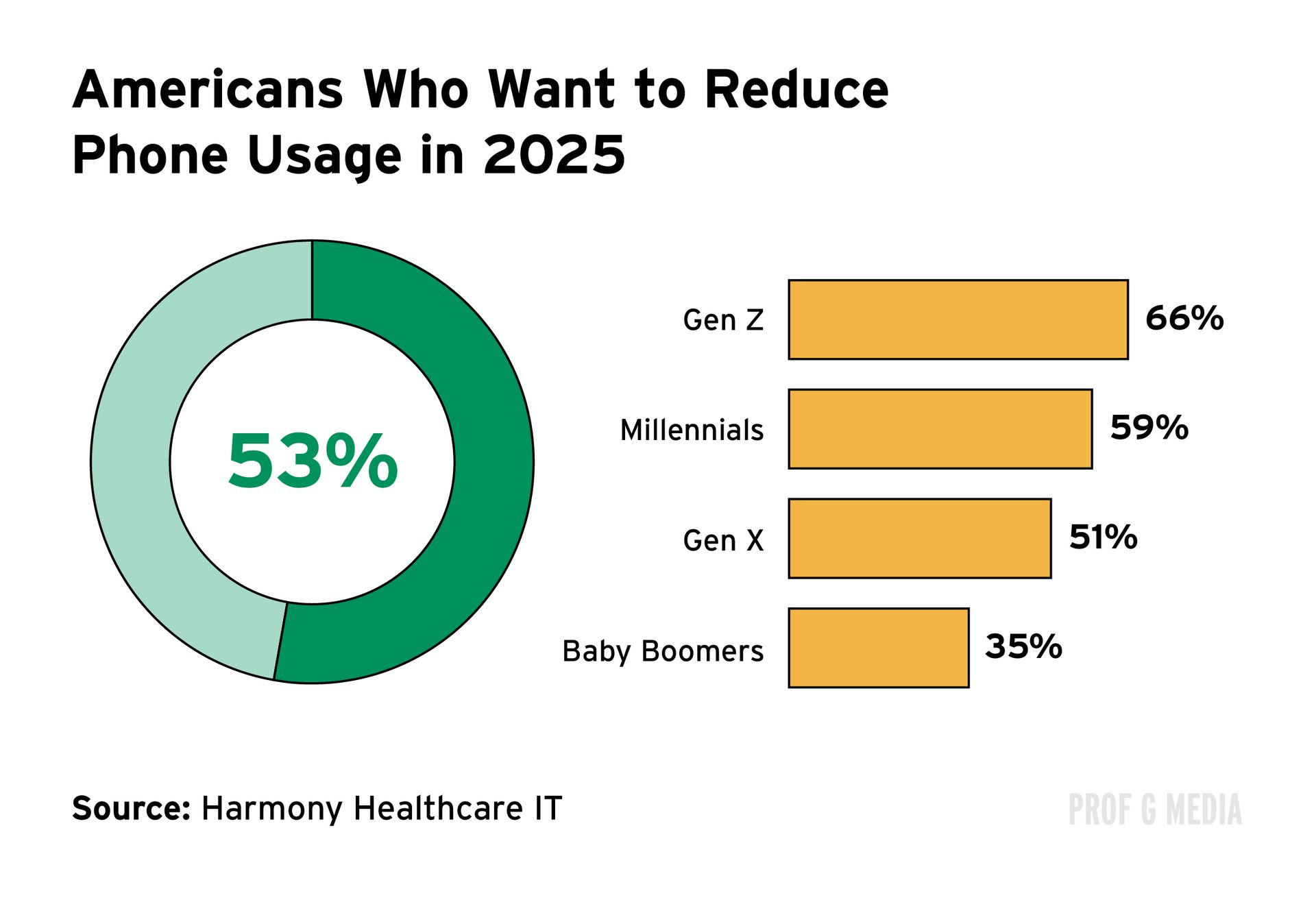
However, pixels are more powerful than self-control. Smartphone apps are literally built to be addictive, and humans aren’t great at following through on “should-dos” in the first place. After all, 80% of people fail to keep their New Year’s resolutions by February.
But capitalism and human ingenuity created this problem, and the same forces are coming to the rescue now with solutions.
RaaS: Restriction as a Service
A new category of startups have emerged with the goal of limiting smartphone usage. They loosely fall into two categories: physical blockers/devices and “dumb” phones.
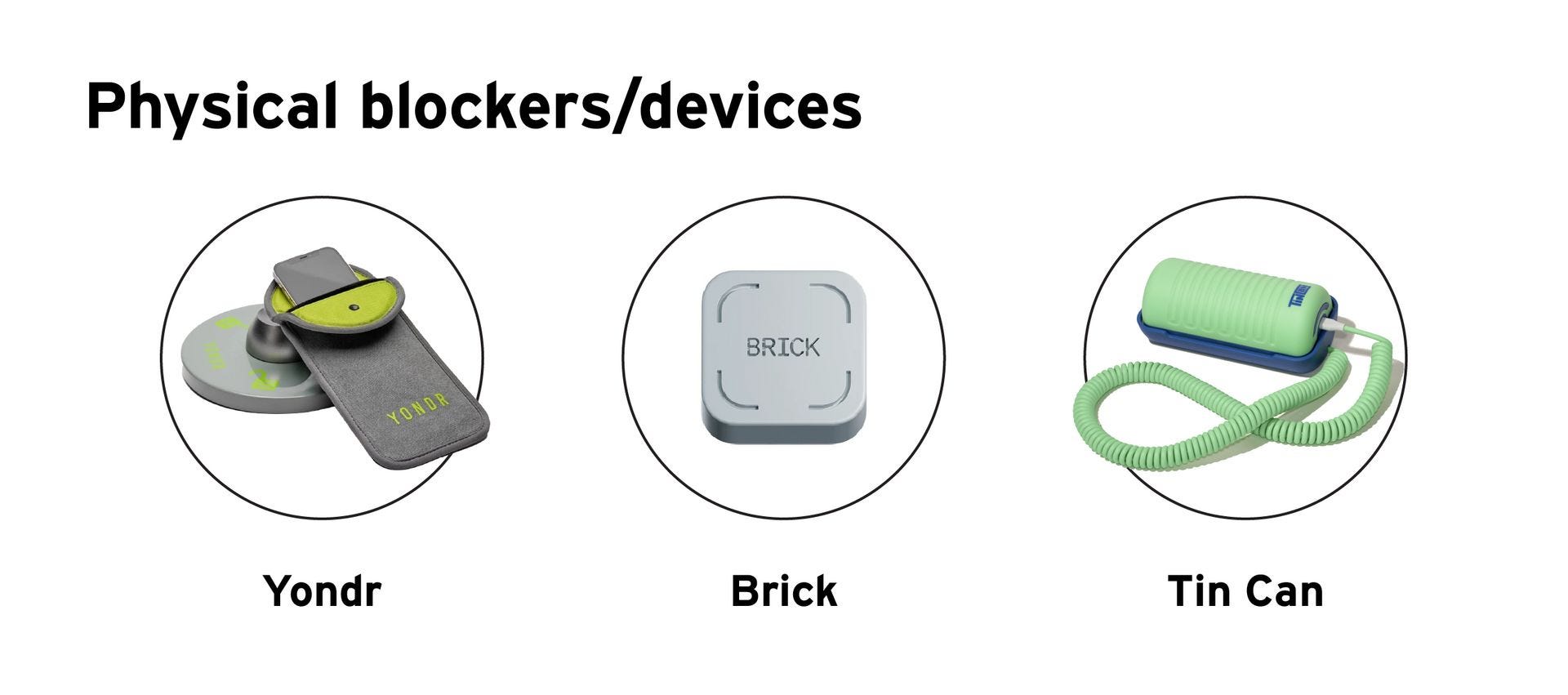
Yondr is a lockable fabric pouch system that allows people to keep their phones on them, but prevents use until they tap the pouch at an unlocking base. The company works with 2.5 million kids across all 50 U.S. states and in 48 countries worldwide.
Ed interviewed Yondr’s founder in July last year on his podcast First Time Founders.
Brick is a small, 3D printed magnet that pairs with an app to act as a physical “lock” on your phone. It costs $60 and is pitched as a behavioral nudge — when you activate it, Brick blocks selected apps until you physically tap your phone back onto the device to unlock.
There isn’t much of a moat here — anyone could replicate it by setting up time restrictions for certain apps on your phone.
Tin Can is basically a Wi-Fi “landline for kids” that lets users call friends and relatives without a smartphone. Launched in 2024, the $75 product (plus $9.99 monthly phone plan) saw call volume spike more than 100x on Christmas Day 2025.
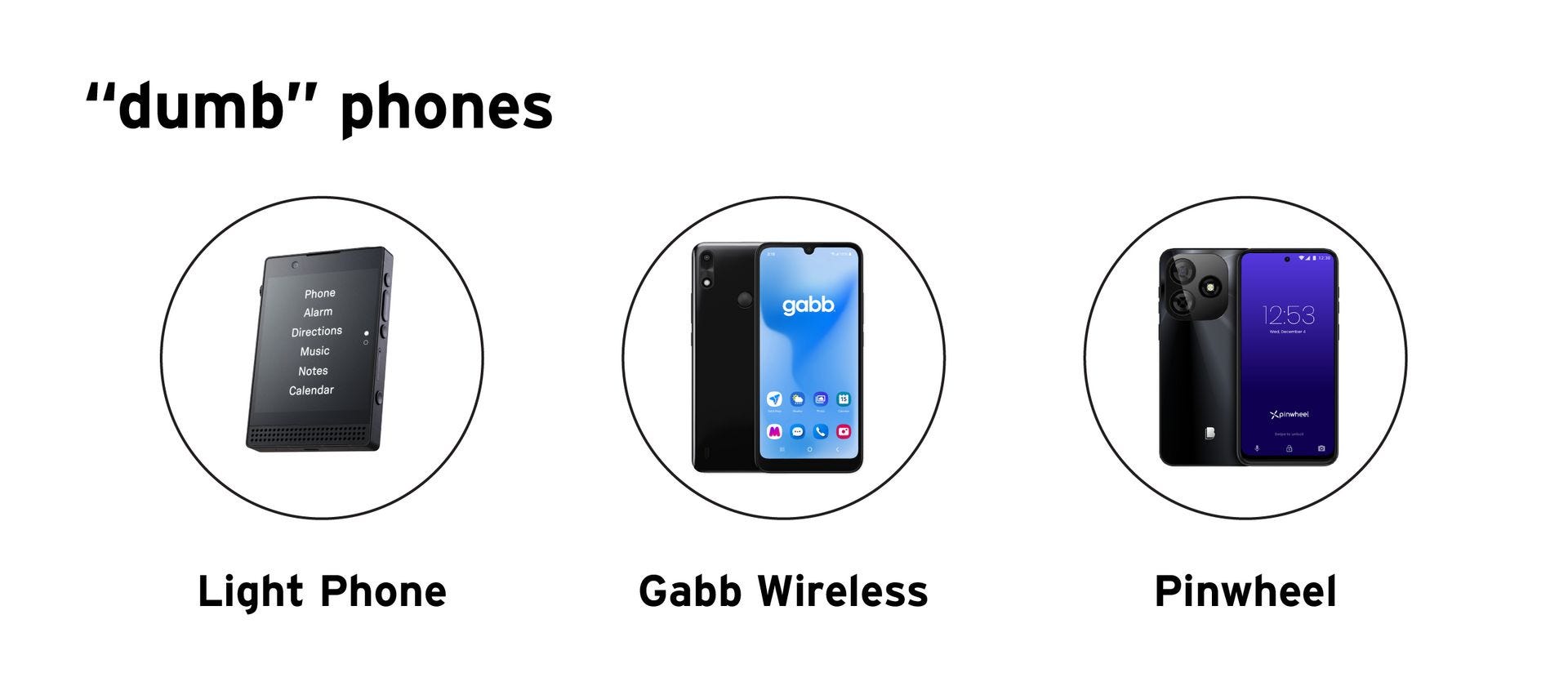
Light Phone, Gabb Wireless, and Pinwheel all offer minimalist phones focused on calls and texts, with no social media or web browser.
The Learning
Successful categories often create their own counter markets. This pattern underlies some of the most prominent industries:
Big banks’ lack of innovation and stodgy complexity led to the emergence of fintechs that simplified and digitized banking and investing.
Fast fashion trained consumers to treat clothing as disposable. The backlash created a resale and thrift-shopping boom based on sustainability and taste.
Addictive short-form video maximized dopamine with instant and forgettable content. The saturation created demand for longer-form stories (perhaps why Gen Alpha loves movie theaters).
In other words, when a product becomes ubiquitous, it creates second-order opportunities.
In this case, social media promised connection but delivered a loneliness epidemic. The more social life moved online, the more valuable real-world community became. Smartphones made life frictionless and attention impossible, and now we crave friction: dumb phones, app blockers, and lock pouches.
Skate to Where the Puck Is Going
The fight against smartphone addiction has trickled down into a growing disdain for AI and AI-created content. This too has commercial implications.
You could say that the organic label has a whole new raison d’être. What was once only a supermarket designation could become a designation of human origin. (Sidenote: That’s an interesting startup opportunity.)
Humans want human content, and companies are betting we’ll pay for it.
iHeartRadio and Bandcamp both banned AI-generated music.
DC Comics announced it would not support AI-generated storytelling or art.
Lingerie brand Aerie’s promise not to use AI in its ads was its most popular Instagram post last year.
Porsche received an outpouring of support for its human-generated holiday advertisement.
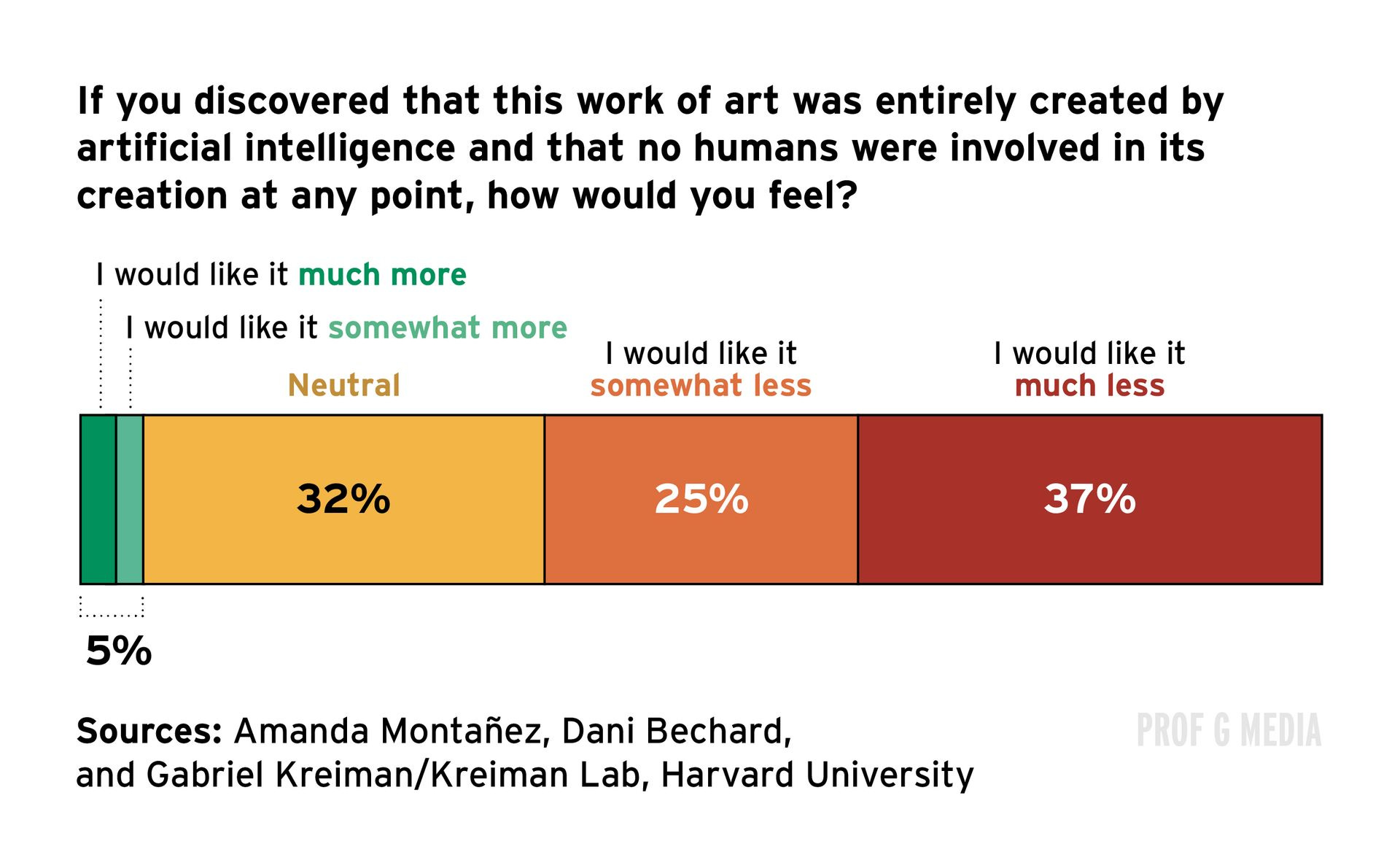
(Because there is not yet an industry standard organic/human classification, we’ll self-designate: No AI was used in the writing of this article.)
You can make phones dumb or lock them in a pouch, but it’s harder to do that with superintelligence.
Instead of creating new business opportunities, perhaps AI resistance will increase our appreciation for human-centered businesses and art that have been here all along. Hand-drawn animations, painstakingly-composed songs, sentences that took hours to write. It almost seems naive to be that hopeful, but right now it looks like that’s where the puck is going.