


I took my son to see The Odyssey last night. We enjoyed it, but this isn’t a review. The film is the shared creation of one of this era’s best directors (Christopher Nolan), his crew, and uber- talented cast. Their success, however, owes a debt to Homer, one of history’s greatest storytellers, who in turn owes a debt to an even older oral tradition practiced by storytellers whose names are lost. Sir Isaac Newton put it best when he wrote, “If I have seen further, it is by standing on the shoulders of giants.”
The same logic holds re my own success. Last week, Governor Gavin Newsom appointed me to the University of California Board of Regents. This is the only board I have ever wanted to serve on. Let me be clear, I am not a humble person. However, as you get older, unless you are an asshole cosplaying an innovator (i.e., big tech bro), you recognize success is not an individual sport. And mine reverse-engineers to things that aren’t my fault. Parents who, in their twenties, left family and everything they knew to cross the Atlantic to pursue a better life … A mother, who raised me on her own on a secretary’s salary, irrationally passionate about my well-being. The unearned advantage of being born straight, white, and male during the largest economic expansion in history. And taxpayers who invested in the unremarkable. … In other words, standing on the shoulders of giants.
Self-Made (story)
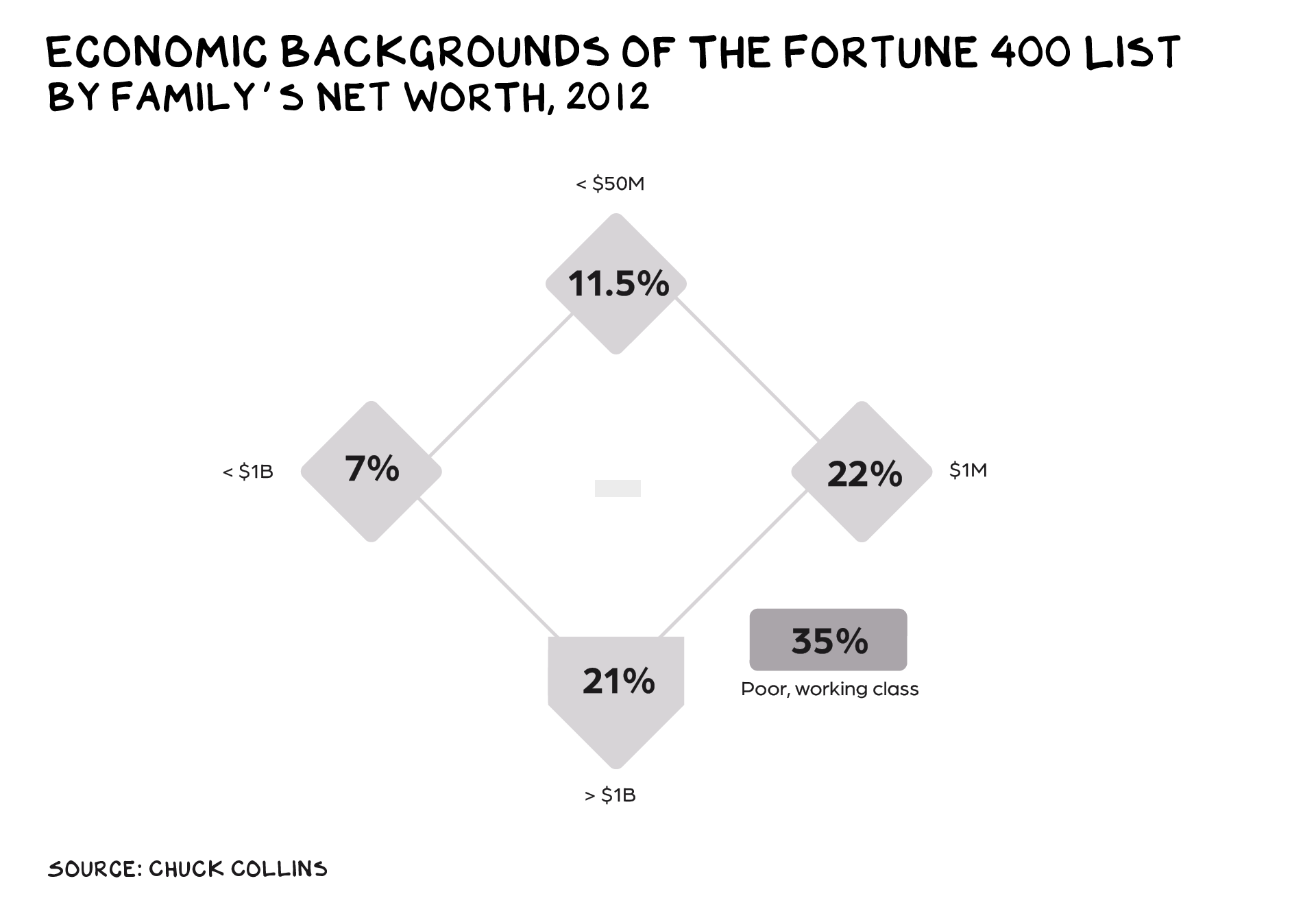
Americans love a self-made success story. The operative word, however, is … story. In his book Born on Third Base, Chuck Collins analyzed the economic backgrounds of the people on the Forbes 400 list. He concluded that, while media accounts labeled 70% of the wealthiest Americans “self-made,” in reality only about one-third came from a poor, working-class, or middle-class family with no significant family capital. Two-thirds of the people on the list stood on the shoulders of a giant named generational wealth.
Obnoxious
In an interview with the Economist last week, Elon Musk claimed that zero people had died as a result of his decision to eviscerate foreign aid while running DOGE. In fact, a conservative estimate puts the death toll after one year at more than 750,000 people, two-thirds of them children. The ugly cruelty of the world’s wealthiest man slashing aid to its most vulnerable people marks the worst attribute of this age: misplaced self-credit that immolates empathy. Musk, who came to the U.S. on a student visa, is the poster boy for tech bros who shit-post public spending … unless they’re the beneficiaries. Musk is the welfare queen Reagan complained about. Tesla was built with $2.5 billion of U.S. government support. NASA is SpaceX’s No. 1 customer, accounting for 20% of the company’s revenue.
Venture capitalist and SPAC-enthusiast Chamath Palihapitiya recently told CNBC he’d “gladly give away 95%” of his money to taxes, but he believes starting a company would be more helpful to society, as government policies are a “joke.” The punch line? Government investments in scientific research led directly to the internet technologies Palihapitiya leveraged to create a company and build his fortune and created a hysteria for SPACs– remember those? Marc Andreessen, who coded Mosaic, the first consumer-friendly graphical web browser, while attending the (publicly-funded) University of Illinois and working at the (federally-funded) National Center for Supercomputing Applications, has said he’s “pro-gridlock,” because “when the government does things, it usually doesn’t end well.” Evidently, government actions that benefit him are the exceptions. Peter Thiel reaps the benefits of America’s free markets, rule of law, and democracy, but in a 2009 essay argued that the expansion of the welfare state and extension of the franchise to women had “rendered the notion of ‘capitalist democracy’ into an oxymoron.” The dishonesty — re the giant shoulders these jerks stand on — is obnoxious and extends beyond Silicon Valley.
Born in Georgia during Jim Crow, Justice Clarence Thomas benefited from the Voting Rights Act, but in a decision that gutted the law and helped to disenfranchise millions of Black Americans, he called that line of jurisprudence a “disastrous misadventure.” By many accounts, Senator Lindsey Graham was gay, but during three decades in Congress he consistently voted against LGBTQ rights. Then there’s Ayn Rand, the fairy godmother for those selling the “pull yourself up by your bootstraps” myth. Despite railing against what she believed was the welfare state’s immoral redistribution of wealth, Rand received $11,000 in social security benefits over the last eight years of her life. These people aren’t success stories, they’re cautionary tales about how success distorts reality and erodes empathy.
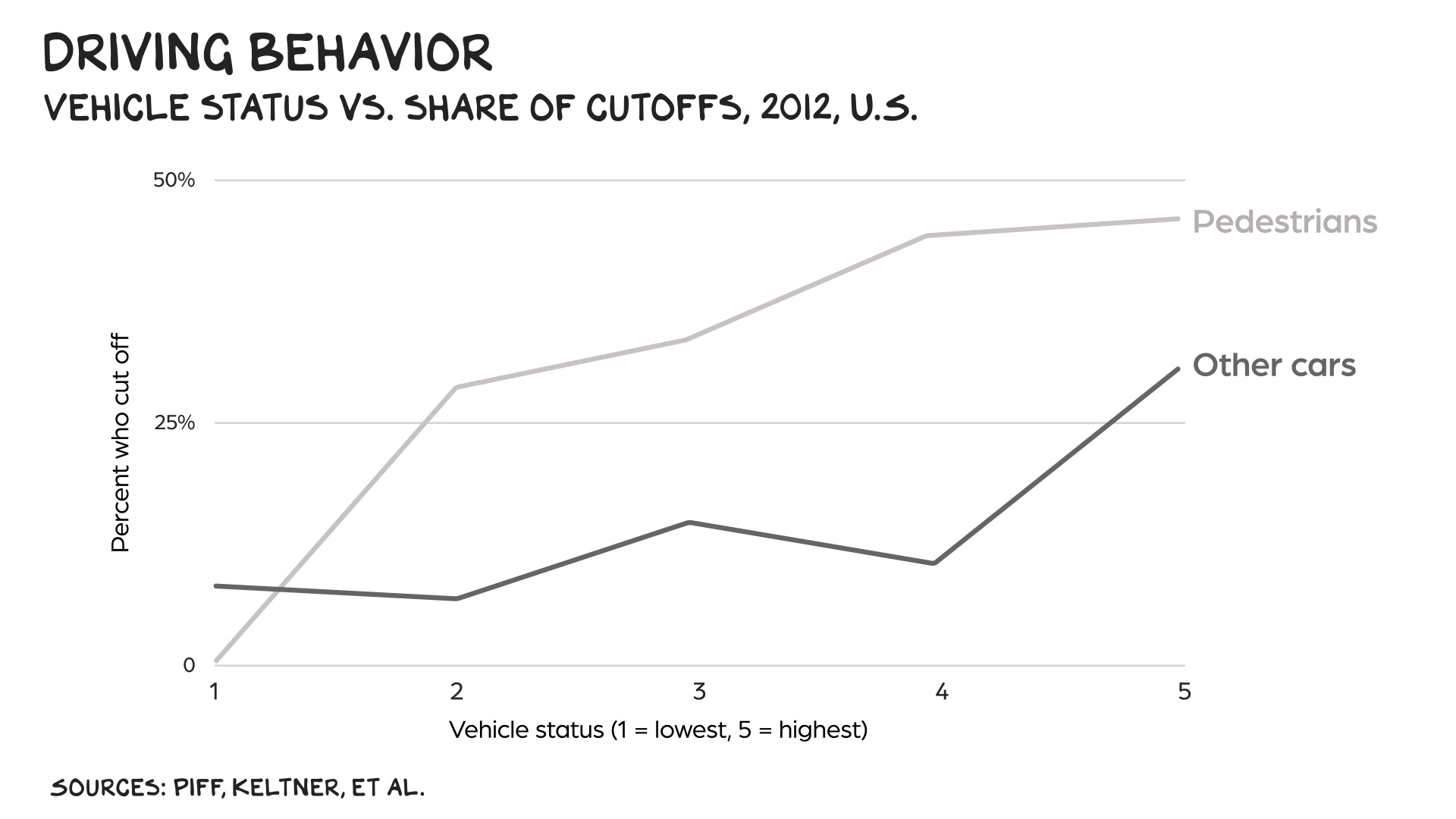
Psychologists have researched wealth’s distortion field. In one study, Berkeley professors Paul Piff and Dacher Keltner primed participants to feel either upper or lower class by having them compare themselves to people with more or less money, education, and status, then left them alone with a jar of candy ostensibly meant for children. Participants primed to feel upper class took 2x more candy than those primed to feel lower class. In two other studies, they observed that drivers of luxury cars were more likely to cut off other motorists and pedestrians. In 2012, Piff and Keltner wrote in the New York Times, “Wealth gives rise to a me-first mentality, and the ideology of unbridled self-interest serves as its lofty justification.” Inside wealth’s distortion field and operating with reduced empathy, incumbents weaponize the tax code to favor capital vs. labor, corporations vs. people, and old vs. young.
Falling Back in Love With the Unremarkable
I believe when you reach a certain point in life you have an obligation to reverse-engineer the parts of your success that weren’t your fault. For me, those roads run through public education, specifically Los Angeles public schools and the University of California system. In Garrison Keillor’s fictional town of Lake Wobegon, all the children are above average; in reality, most children are unremarkable. I was unremarkable — I lost four out of four student council elections at Uni High, got cut from the baseball and basketball teams, didn’t attend my prom because four girls declined my invitation, graduated with a 3.2 GPA and 1130 SAT, was rejected by UCLA, then admitted on appeal. California’s public schools gave me a good education, free lunch, and daily lessons in resilience.
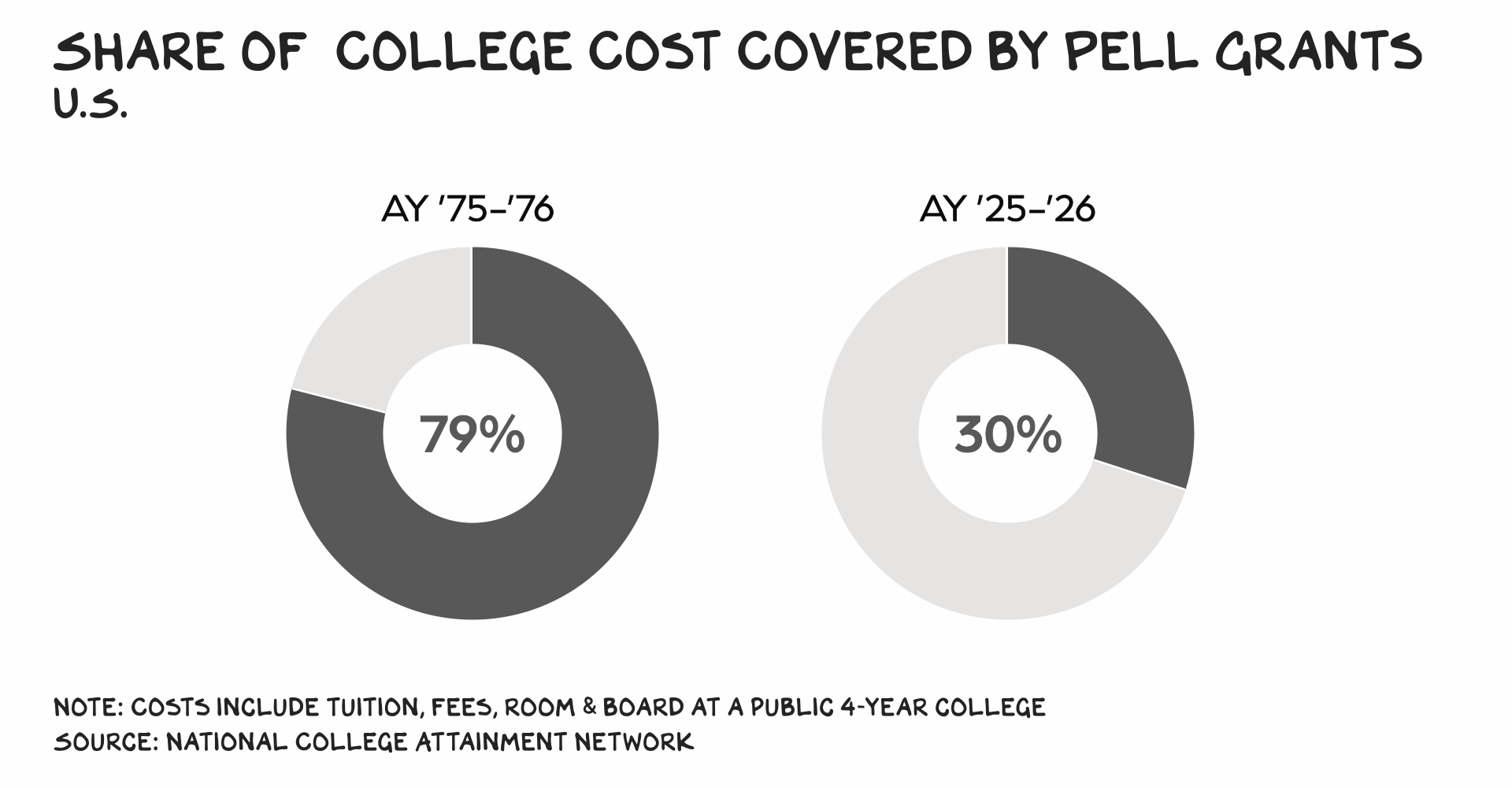
At UCLA, I benefited from an admission policy designed to give unremarkable kids remarkable opportunities. When I applied, the acceptance rate was 76%; today it’s 9%. It’s gotten nearly 8x more difficult to become a Bruin. In college, I was put on academic probation four times, made subject to dismissal twice, became president of the Interfraternity Council (weak flex, but an early leadership signal), and graduated with a 2.27 GPA. I also made lifelong friends and rowed crew, where I learned that human limits are far beyond what people think. None of that would’ve been possible if I hadn’t received Pell Grants, i.e., educational investments I didn’t have to repay. I was eligible not because of merit (see unremarkable), but because my mom couldn’t afford to send me to college. Family income isn’t a proxy for inequality, it is inequality. Americans support class-based preferences by 2 to 1. And they work: Without looking at race, UCLA and Berkeley consistently admit the highest percentage of students receiving federal Pell Grants. Unfortunately, the Pell Grant program faces a $104 billion to $132 billion shortfall over the next decade — significantly less than the $152 billion allocated to fund the American masked police mass deportation campaign. Meanwhile, Pell Grant awards haven’t kept pace with the average cost of attending a public four-year college.
One way to reinvest in the unremarkable: a Marshall Plan to increase enrollment at 4-year public colleges by 40% and junior colleges and trade schools by 80% over the next 10 years. This would be funded by taxing endowments above $1 billion of universities not expanding freshman seats at 1.5x population growth. Any institution with tens of billions on its balance sheet that isn’t increasing admissions is not a public good, but a hedge fund offering classes. We should also tax K-12 private schools and reinvest the proceeds in public schools. We are barreling toward a caste system, sequestering kids by income, which cuts at a key ingredient in capitalism: empathy. These investments aren’t charity, but infrastructure for upward mobility. And while students don’t repay Pell Grants directly, one study estimated that recipients earn more money and therefore repay the initial grant via additional taxes within 10 years. But perhaps the best reason to fall back in love with the unremarkable is that doing so reboots the American Dream, or what Alexis de Tocqueville called “the charm of anticipated success.”
Pay Back / Forward
UCLA and Berkeley were transformative for so many of us. I’ve given approximately $20 million to the University of California, and I still owe, as I didn’t climb, but was lifted. My success isn’t proof I deserved it; it’s proof Americans used to be willing to invest in young people before we’d done anything to earn it. I am not self-made, but American-made. My job now — as a citizen, alumnus, donor, and Regent — is to build ladders for future generations of unremarkable kids.
I’m walking the “back nine” now, and it’s wonderful. My mom, America, California taxpayers, and the Regents of UC have all been next to me the whole time. You can’t see them, but they’ve been there… always.
Life is so rich,

P.S.
Today is the last day to receive 10% off an annual Prof G+ paid subscription. Get access to ad-free pods and Prof G+ exclusives, including breaking livestreams, Deep Dives, and presentations from Prof G staff. Buy it for yourself, your team, or an unremarkable kid. Click here.
Scott, this lands, and I'd count myself in the category you're describing, though I've usually been filed under "self-made." I got a superb school education, then access to Open University computer science courses in the 1970s, right as the field was being invented—meaning I was taught programming by public infrastructure before most of the world knew the discipline existed. From there: eighty-hour weeks, fifty-one weeks a year, for a decade straight, and I retired at 44 after selling my third company to a larger competitor (the second had already gone public on the Toronto Stock Exchange). By every surface metric, that's a self-made story. But it only works because a public system handed a teenager access to a field years before the market caught up to its value. Fantastic education plus hard, smart work; but the education came first.
One of my clients, years later, had a slogan that captures your entire argument better than most economists manage: Dofasco Steel's was "Our product is steel. Our strength is our people." I've never forgotten it, because it quietly overturns the thing companies usually brag about. The product isn't the achievement: it's the visible output of a much less visible investment, and the real asset was never on the balance sheet where anyone could admire it. Swap "Dofasco" for "America" and "steel" for "Musk, Palihapitiya, Andreessen, Galloway" and you have the whole essay in nine words. The product was individual success. The strength, the actual load-bearing asset underneath it, was always the people and institutions nobody photographs at the ribbon-cutting. Every giant in your piece forgot which one was the product and which was the strength. You didn't.
Thank you for doing that.
Scott I am grateful and inspired and although I can’t give $20 million dollars, at 62 I realized I could contribute by advocating for the values I hold dear by creating an active letter writing campaign to whoever I believe could make a difference. I am now 75 and in the last 2 weeks have sent letters, not emails, to the Smithsonian Board of Regents, their Oversight Committee and the Jury Conference of the US. It’s all I can do and I am proud to do it.
As you say “Life is so rich”