Perspective
My week has been a cocktail of layoffs, margin calls, and Covid. How’s your week going?
Markets are down, the risk of nuclear war is up and, worst of all, it looks as if Cumrocket will not replace the dollar. Professor Adam Alter, my colleague at NYU, says dramas perform best in good times and comedies in bad. So I don’t want to read more bad news … much less write into its shadow. The nitrous oxide (love nitrous) for most bad weeks is a small dose of perspective administered while awake/aware.
One shortcut to this perspective for me is to think about my parents. They’ve both had good lives, but when it comes to opportunities presented as a function of where and when a person was born, I am from a different planet. I saw my dad this week. He is 91, and the paths of conversation are getting narrower and fewer. His favorite: He asks me about my life. The things people pay me for (to speak in front of an audience); how much they pay (a lot); the school field trips my boys take (the Grand Canyon); and that I have a TV show (didn’t tell him the plug was pulled). It used to bother/upset me that he’d ask the same questions over … and over. I then realized it’s just fine, good even, if he finds joy from the same thing.
But, inevitably, I think more often about my mom and the self-worth she instilled in me. The following was written five years ago, when we had fewer than 5,000 subscribers, which means there is a 2% chance you’ve already read it. It felt good writing it, and I hope it does the same for you reading it.
[The following was originally published on August 25, 2017.]
Tethered
In relationships, I’ve gotten so much wrong, with so many people, for so long. With romantic partners, I focused on managing the person, vs. being honest and open, creating an uneasy calm interrupted by shock and disappointment. Professionally, I’ve expected employees to be loyal, as … well, I’m just so fucking awesome — instead of investing in understanding their objectives and calibrating my efforts to address our mutual aspirations.
One place I’ve gotten it right with the people most important to me: affection. I rub my boys’ ears and backs, brush their hair, and roughhouse with them so as to demonstrate my strength, for about a second, and then collapse on them and begin kissing and tickling them. I’ve recorded several minutes of us wrestling, specifically the sound my boys make when they burst into joyous, uncontrollable laughter. This will be the last thing I hear on this planet — I’ve prepared for this.
In contrast, at work, I’m less affectionate than Darth Vader. I work with people on average 20 years younger than me, and the thought of creeping somebody out with an unwelcome hug or hand on their shoulder, in a professional situation, is horrific to me. As a result, I don’t even like to shake hands.
Affection exchange theory, introduced by Professor Kory Floyd, postulates that affection strengthens bonds, provides access to resources, and communicates your potential as a parent, increasing your pool of potential mates. I think it goes even deeper. I know a lot of people who, despite their good fortune, are wandering. Few meaningful relationships, an inability to find reward in their professional lives, too hard on themselves, etc. It’s as if they’re not grounded, never convinced of their worth … wandering.
When I look at my own success, it boils mostly down to two things: being born an American and having someone irrationally passionate about my success (my mom). Though she was raised in a household where there was little affection, my mom couldn’t control herself with her son. For me, affection was the difference between hoping someone thought I was wonderful and worthy, and knowing it.
Every Wednesday night after Boy Scouts, my mom and I would go to dinner at Junior’s Deli on Sepulveda Boulevard in Culver City. I would have the brisket dip, she the lox, eggs, and onions. We talked about our week — we didn’t see each other much in between weekends — only to be interrupted by different waitresses, who would comment on how much I had grown. On the way out, we’d stop at the bakery and buy a quarter pound of halvah. As we stood in the parking lot waiting for the valet to retrieve our lime-green Opel Manta, my mom would grab my hand and, in an exaggerated fashion, swing it back and forth. She’d look at me, and I’d return her gaze with an eye roll, at which point she would burst out in joyous, uncontrollable laughter. She loved me so much …
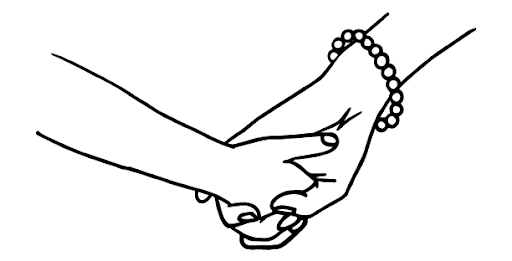
Having a good person express how wonderful you are hundreds of times changes everything. College, professional success, an impressive mate — these were aspirations, not givens, for a remarkably unremarkable kid in an upper-lower-middle-class household. My mom was 43, single, and making $22,000 a year as a secretary. She was also a good person who gave me the confidence, while waiting for our Opel, to feel connected, and to believe I had value — that I was capable and deserving of all these things. Holding hands and laughing, I was tethered.
Life is so rich,