


Last Wednesday, I attended the Tribeca Film Festival to see the premiere of Dreams of Violets, the first AI-generated live-action feature film accepted into the official lineup of a major film festival. I’ll be honest: I went to the theater expecting to hate it.
Like anyone on the internet, I’ve scrolled through my fair share of AI slop: The fake Bigfoot vlogs, the synthetic babies riding golden retrievers, the cooking videos where the hands pass through the cutting board. So as I waited in line for Dreams of Violets, I had already written this post in my head.
There would be melting faces. There would be hands with six fingers, then four, then six again. Physics would be tangibly off. Continuity would be nonexistent. The audience would be one-third press, one-third AI guys in Patagonia vests, and one-third people who wandered in looking for a different theater. People would walk out. They might even protest. I would get 1,500 words out of the wreckage and a good story to tell at parties.
That’s not what happened.
Dreams of Violets
Dreams of Violets was directed by Ash Koosha, an exiled Iranian filmmaker and musician living in London. The film is a 74-minute docudrama inspired by the January 2026 protests in Iran, in which an estimated 36,000 people were killed. Koosha and his brother Pooya — who co-produced the film — both grew up in Iran and eventually escaped to London over a decade ago after Koosha was imprisoned for his involvement in a film documenting Iran’s music scene.
When the internet went dark in Iran on January 8 and reports of the massacre began to surface, Koosha felt compelled to document what he was hearing from friends and family.
What followed was roughly three months of work producing a feature film using an entirely AI-driven pipeline. No actors, no sets, and no cameras. Using a stack of tools including Kling AI for video generation, Google’s image models for core frames, and his own proprietary technology for blocking and lens accuracy, Koosha built every frame in a London flat.
He used AI to generate the scenes from the the very limited amounts of smartphone footage from the protests before the blackout occurred. The characters were created via prompts describing the appearance of real Iranians that Koosha knew. He also voice-acted every character himself and used AI to modify the audio recordings to fit the gender and age of each role.

The budget was roughly $2,000, spent exclusively on software subscription fees and AI compute tokens.
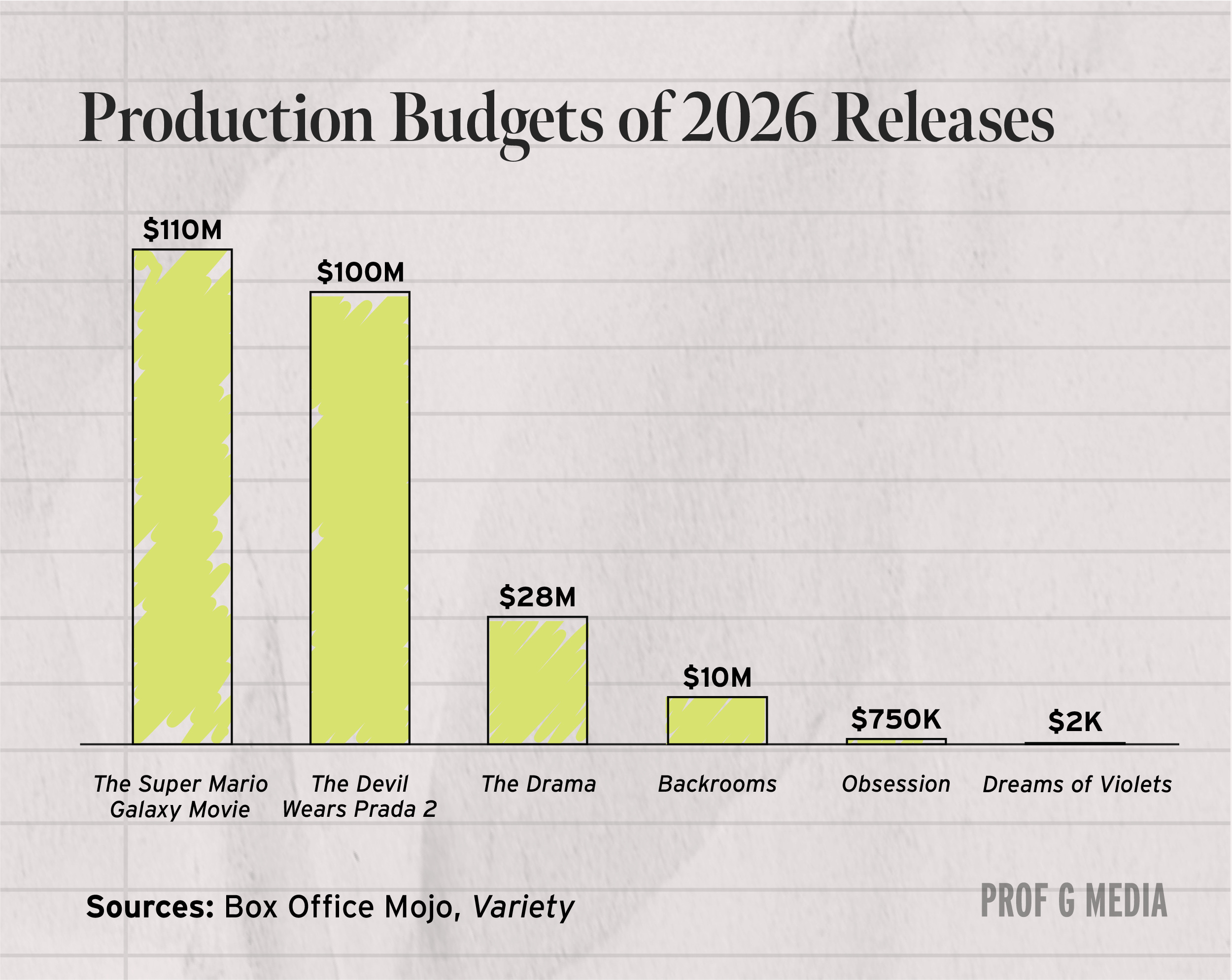
The film’s selection was controversial. Before the screening, Tribeca co-founder Jane Rosenthal acknowledged as much in remarks clearly designed to head off criticism. “This was not a technical exercise,” she told the audience. “This was an artist finding a way to bear witness.”
Koosha made the same case, telling the audience that his use of AI wasn’t a creative choice, it was the only tool available to someone in exile with no crew, no access, and a story the Iranian regime had made nearly impossible to tell any other way.
No matter the intention or message, reporting on the film has been hyperfocused on the technology used to make it. That’s for good reason: If Dreams of Violets is a proof of concept for AI filmmaking done well, Hollywood could be completely upended.
Slow Death
Hollywood is already in a precarious position. Ticket sales at the box office have yet to recover from the pandemic. Streaming, media consolidation, and an expanding attention economy have hurt the industry too. Labor strikes in 2023 disrupted development and production pipelines, making a bad situation worse.
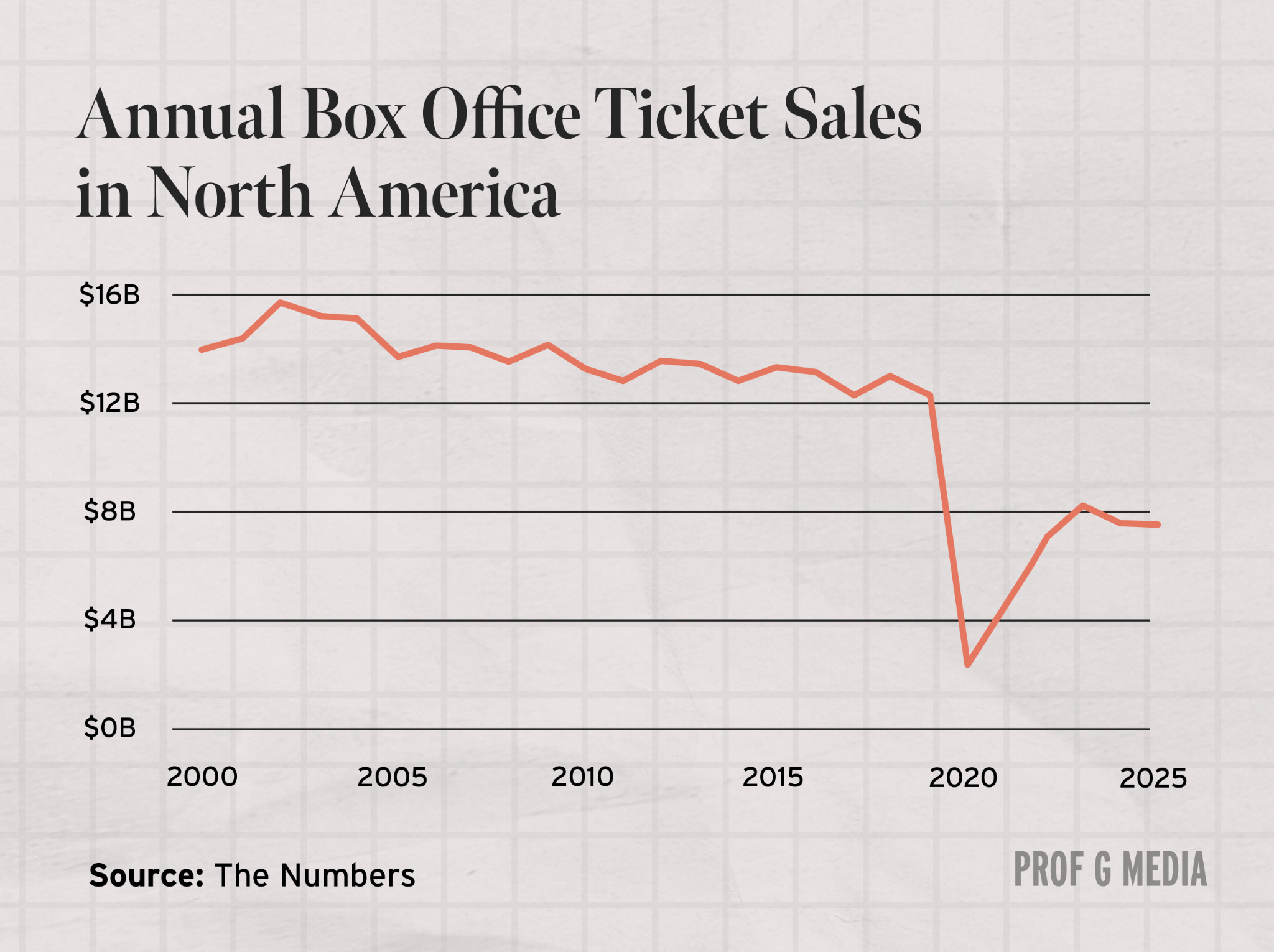
What followed has been a hollowing out of one of America’s most beloved industries. Motion picture and video production employment is lower than it was a decade ago. Los Angeles recorded just 19,694 shoot days in 2025 — the lowest-ever figure outside of 2020, and roughly half of total shoot days recorded in 2019. Television production, the region’s largest employment driver, peaked at 18,560 annual shoot days in 2021 — by 2024, it had fallen nearly 60%.
The pullback isn’t just opportunistic cost cutting — it reflects genuine financial distress across the industry. High churn rates and hundreds of billions in content spending left most streamers in the red. Until 2024, Netflix was the only consistently profitable streamer. Eventually, investors ran out of patience, and streaming media companies consolidated, introduced ad tiers, raised prices, and, of course, trimmed production budgets.
Disney has been cutting its content budget since 2023, Paramount cut its budget by 7% last year, and Apple’s and Amazon’s stayed roughly flat. Netflix’s original movie output has fallen to an eight-year low.
The glory days of unbridled production spending are over. What’s left is an industry trying to figure out how to make content cheaper.
Hollywood Goes Abroad
Step one for studios and streamers has been to shift production spend abroad. In 2024, Netflix was projected to have spent more money outside of North America than inside for the first time ever.
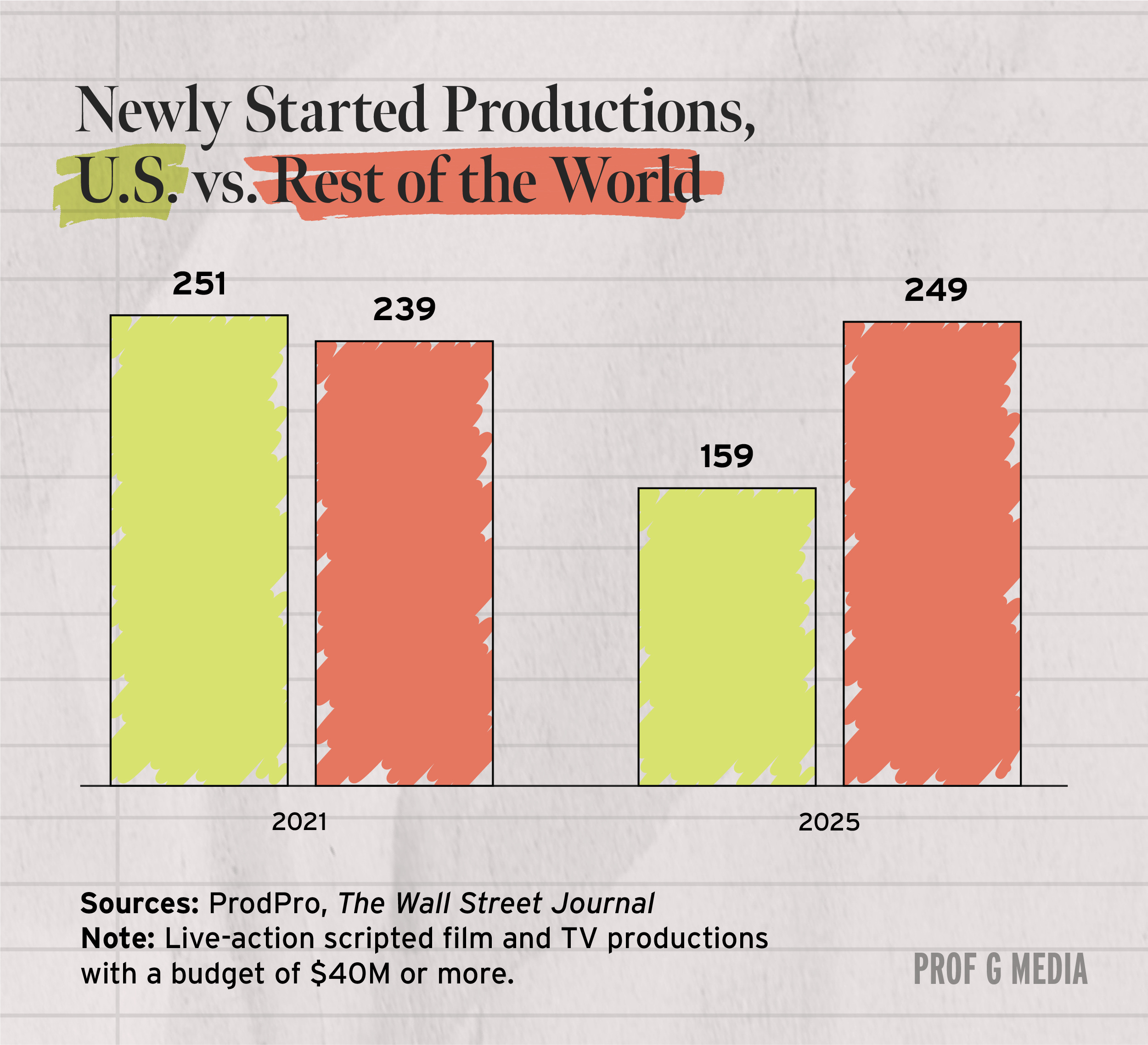
Why? It’s relatively expensive to film in the U.S. A cinematographer who might cost $30,000 a week in Hollywood can be hired for as little as $2,000 in Hungary. It’s also easier for big film studios to get production tax credits abroad — Australia, Canada, and the U.K. offer tax rebates of 25% to 30%, while the U.S. has no federal incentive program. Those benefits combined with cheaper labor costs make the choice simple: Produce outside the U.S., pay less. This is apparent all across the industry. New productions have decreased in the U.S. since 2021, while foreign productions have increased.
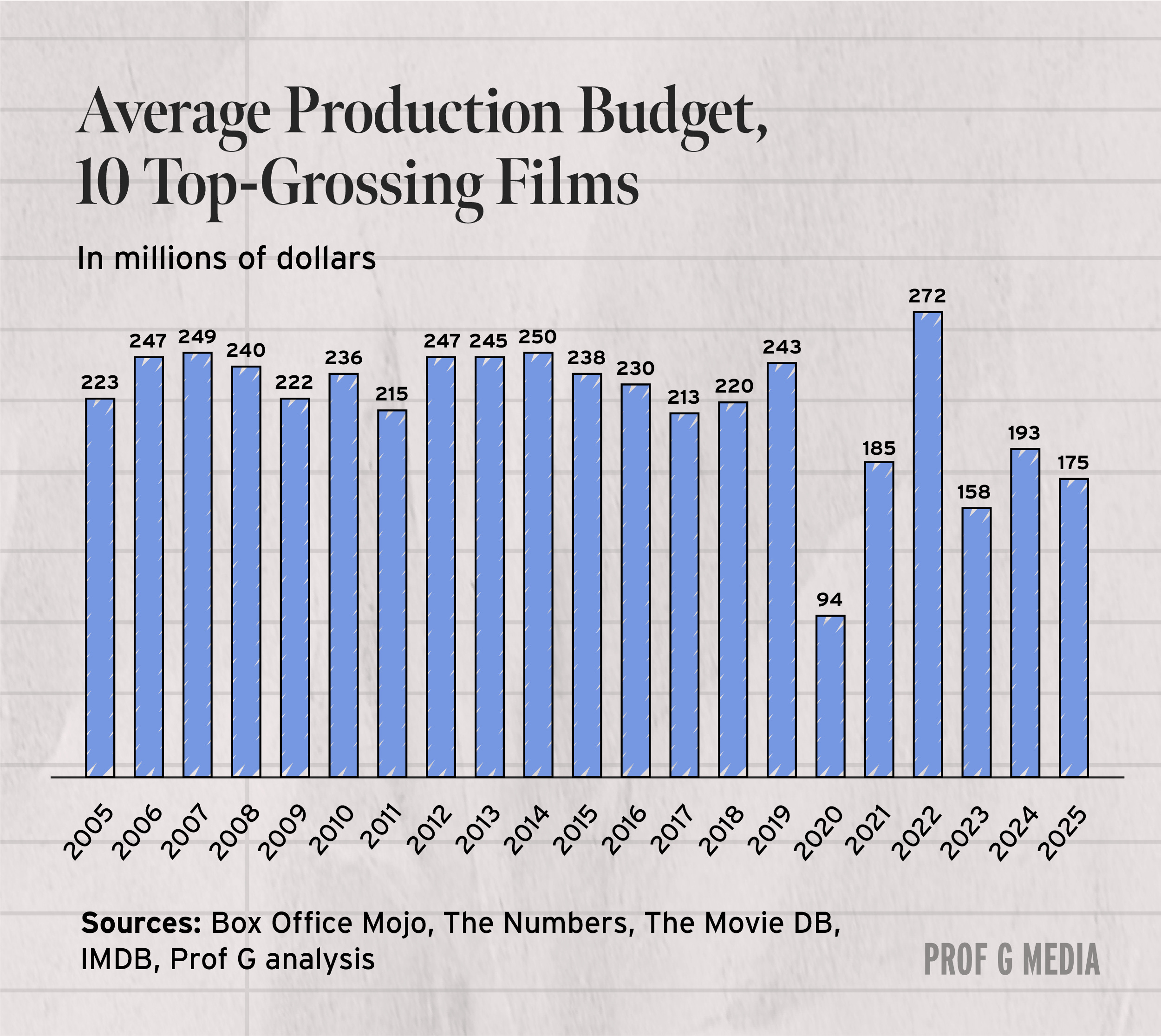
To some degree, it’s been working. The inflation-adjusted average production budget of each year’s 10 top-grossing films hit a peak of $272 million in 2022, and since then, it’s fallen sharply. Hollywood is already making movies for less. The question now is how much fat can still be trimmed.
Smoke and Mirrors
The next logical step is the one many in Hollywood are reluctant to publicly embrace: use AI to cut costs. Not in the way Koosha did — not for the entire production. But as a tool for the expensive, unglamorous work that eats away at budgets behind the scenes.
Background crowd scenes, set extensions, B-roll shots, and visual effects work currently demand armies of specialists — and AI is already automating much of it. A 2024 survey found that 75% of entertainment industry leaders had used AI to cut such jobs.
Those opposed to AI usually make the same case: AI imagery carries an uncanny quality that a trained eye catches instantly. They’re not wrong; some AI video still gives itself away. Other critics reject AI on ethical grounds.
But those trained eyes belong to a small and self-selecting minority. The much larger audience, the one that actually buys the tickets and fills the seats, has been consuming AI-generated video for years — mostly on social media, without even knowing.
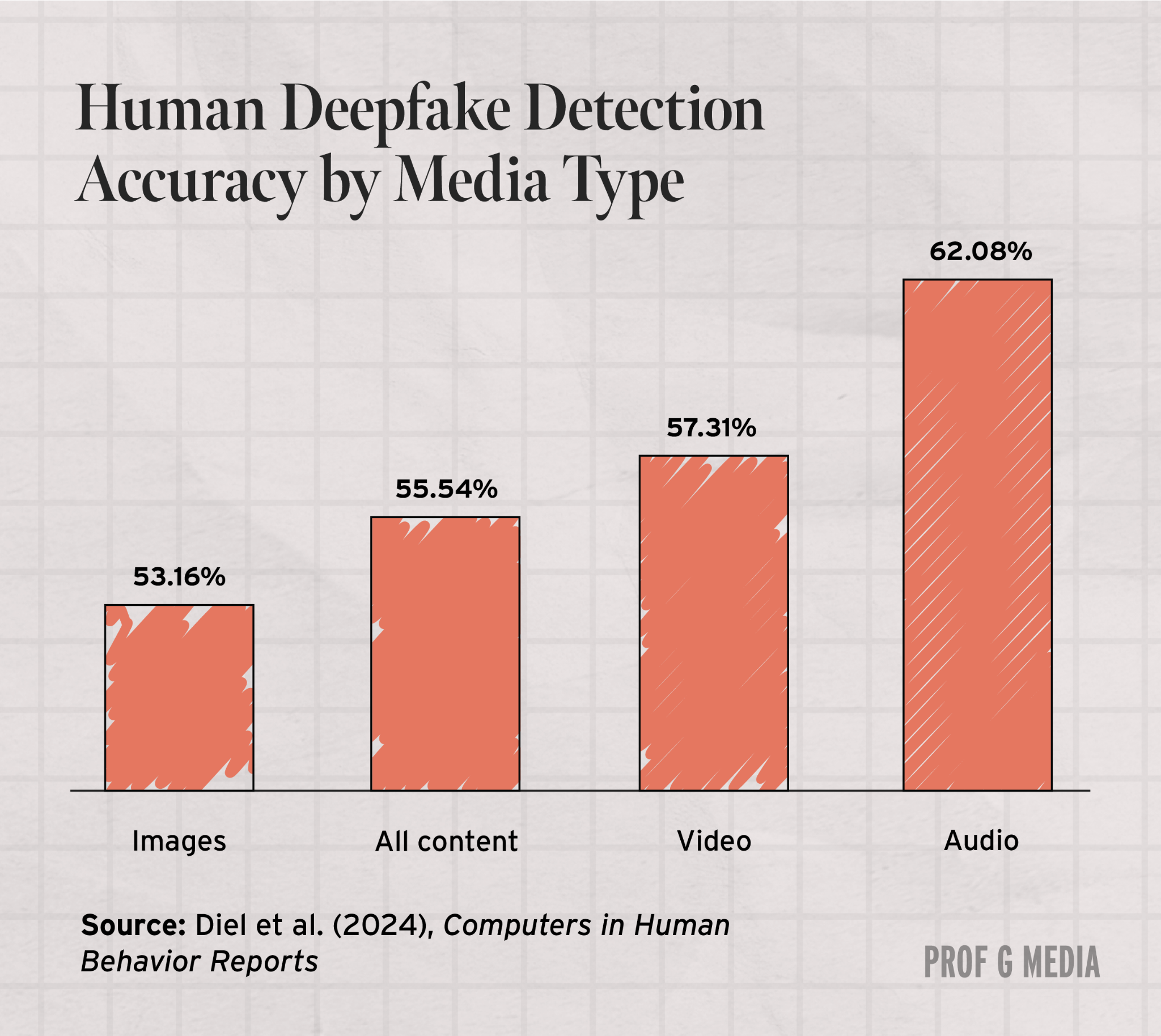
With each new model, audiences have a harder time identifying what’s AI and what isn’t. A peer-reviewed study published in 2024 (many generations of AI video technology ago) found that the human detection rate of AI-generated video was roughly 57% — close to a coin flip. The argument that audiences will reject AI on principle runs into a fairly obvious problem: What if they can’t even spot it?
Feature Presentation
In the movie’s opening sequence, a barrage of shots from the streets of Tehran began flashing across the screen. I was immediately floored by the quality of Koosha’s film. There were aspects of the film that I’d never seen from AI-generated video before: lens flare, realistic lighting, impressive detail on buildings, truly expressive faces.
The film follows five strangers caught in the January 2026 crackdown on Iranian protesters in Tehran, where regime forces are executing demonstrators in the streets. When a soldier corners the group in a dead-end alley, a young boy in a wheelchair named Amir watches from a window above and decides to act.
As the story progressed, the limitations of the technology became clearer. Dialogue was sparse, and it often didn’t line up with characters’ lips. The backgrounds in certain scenes were out of focus, and the film utilized close-up shots more often than usual, presumably as a way to keep the viewer from seeing distracting errors in the footage. The film was structured more like a dream sequence than a conventional narrative — a fair choice. But it came across as disjointed and a bit rushed.
The film’s shortcomings didn’t surprise me — that’s what I was there for, after all. What caught me off guard were the moments in which I became lost in the film’s world. At one point during a particularly tense scene in which the Islamic Revolutionary Guard Corps was executing a protester, a woman in the seat next to me gasped. At that moment, I also realized that I was clenching my jaw. It wasn’t an actor that made me feel anxious and unsettled — it was an artificially generated avatar.
This is not to say that I believe there will soon be an AI category at the Oscars, nor do I think Dreams of Violets would win that award. Instead, the movie proved that AI is becoming yet another tool in the filmmaker’s toolbox. For Koosha, it was the only tool. For filmmakers in Hollywood facing constrained budgets, AI is one tool among many. In that regard, Dreams of Violets represents an inflection point for filmmaking. While an entirely AI movie may never be the goal, AI’s capabilities and economics suggest that it will be baked into many movies going forward.

We’ve been covering AI on Prof G Markets for as long as I can remember. And one question has always haunted it: How can it actually be used? When I first began doing research for our shows just two years ago, I couldn’t answer that. The tools were largely useless.
Since then, they’ve gotten a lot better. I now use AI to pull insights from long research reports, surface interesting articles and studies, and gather background on the stories we’re covering. Occasionally, I’ll use it to help shape a pitch.
My own experience mirrors my takeaway from the film: If I had used AI to write this newsletter top to bottom, it would have been a terrible newsletter. But if I hadn’t used AI at all, this would have taken longer to write — and cost more to produce.

Yes, the self-owning of Hollywood—the absurdity of budgets and costs, the entitled/clueless behavior etc— is not in dispute.
But that “$2000” price tag? That needs its tires kicked.
Namely: if companies like Kling (and Midjourney and Stable Diffusion etc) had to pay even PART of the cost to originally create, or even legally license, their vast training datasets—rather than stealing (“scraping”) them wholesale from artists and creators—the estimated cost would surely range from $5-30 billion. (Sources: MarketIntelo; UX Collective)
So that cost of “$2000” sure covers a lot of hidden externalities. All of them incurred by the wider society and culture.
Key point: those “data sets” aren’t some natural resource, like a seam of coal or an oil field, that was “discovered” and then exploited.
It’s straight-up theft, strip-mined from the lifetime work of other humans. Without attribution, or remuneration. So let’s at least be honest about the real bottom line.
A fully AI film will never be more than a curio. It’s remarkable only because of how it was made. A film with sound sync issues, out of focus shots and technical errors would never be selected for a prestigious film festival unless there were extenuating circumstances. Once the novelty wears off, what is left?