


On April 24, all 22 members of the National Science Board (NSB) received an email “on behalf of President Donald J. Trump” terminating them, effective immediately.
The NSB advises and oversees the U.S. National Science Foundation (NSF), an independent federal agency that supports basic research. If you’ve ever searched for anything on Google, used GPS to find a restaurant, or gotten a vaccine, you’ve benefited from such research.
Firing the people who oversee that system has significant consequences for every American, as well as U.S. national interests.
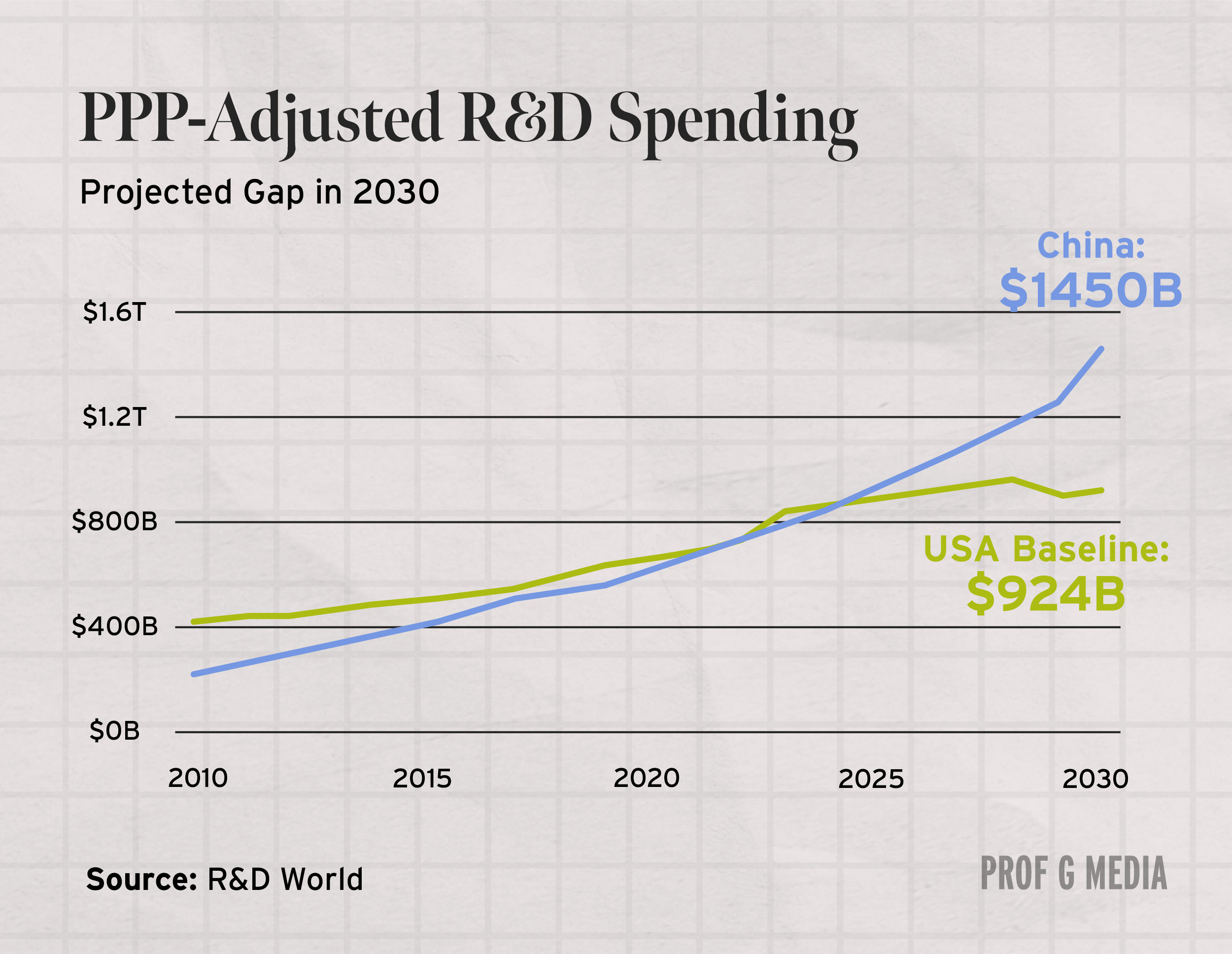
The NSB was planning to meet May 5 to deliver an important report. The topic? The United States ceding scientific ground to China, a country that just outspent the U.S. on R&D for the first time in modern history.
If firing the people responsible for maintaining America’s scientific edge at the precise moment we’re falling behind sounds shortsighted, trust your instincts.
The Quiet Engine of American Discovery
In 1945, Vannevar Bush — head of the government’s wartime Office of Scientific Research and Development — wrote a report entitled Science: the Endless Frontier. The report made the case for a federal agency dedicated to basic research: the curiosity-driven pursuit of fundamental knowledge, with no specific product or application in mind. The report landed on President Truman’s desk, and, in 1950, Congress founded the NSB and the NSF.

Federal investment in science didn’t start with Bush — it began nearly 175 years earlier. The Constitution empowers Congress to “promote the progress of science and useful arts” by protecting patents and copyrights. Thomas Jefferson sent Lewis and Clark west in 1804 not only to map the Louisiana Purchase but also to catalog the region’s natural history. Benjamin Franklin funded his own experiments but framed them as public goods. In sum, Bush’s proposal merely codified a system for funding a core principle already rooted in our country’s DNA.
Today, it’s hard to understate the importance of scientific research to the American economy. Since 1945, advances in science and technology have driven a staggering 85% of national economic growth.
The most successful venture capital firm in history, according to my boss, Scott Galloway, is Uncle Sam. One example: The U.S. government invested $3.8 billion in the Human Genome Project, which created more than 300,000 jobs and generated an economic output of $796 billion, giving America an ROI of 141 to 1. The NSF accounts for only 0.1% of federal spending but supports roughly a quarter of all federally funded basic research at U.S. colleges and universities.
The Federal Reserve estimates that government-supported research from the NSF and other agencies has had a return on investment of 150% to 300% since 1950, meaning for every dollar U.S. taxpayers invested, they got back between $1.50 and $3.00.
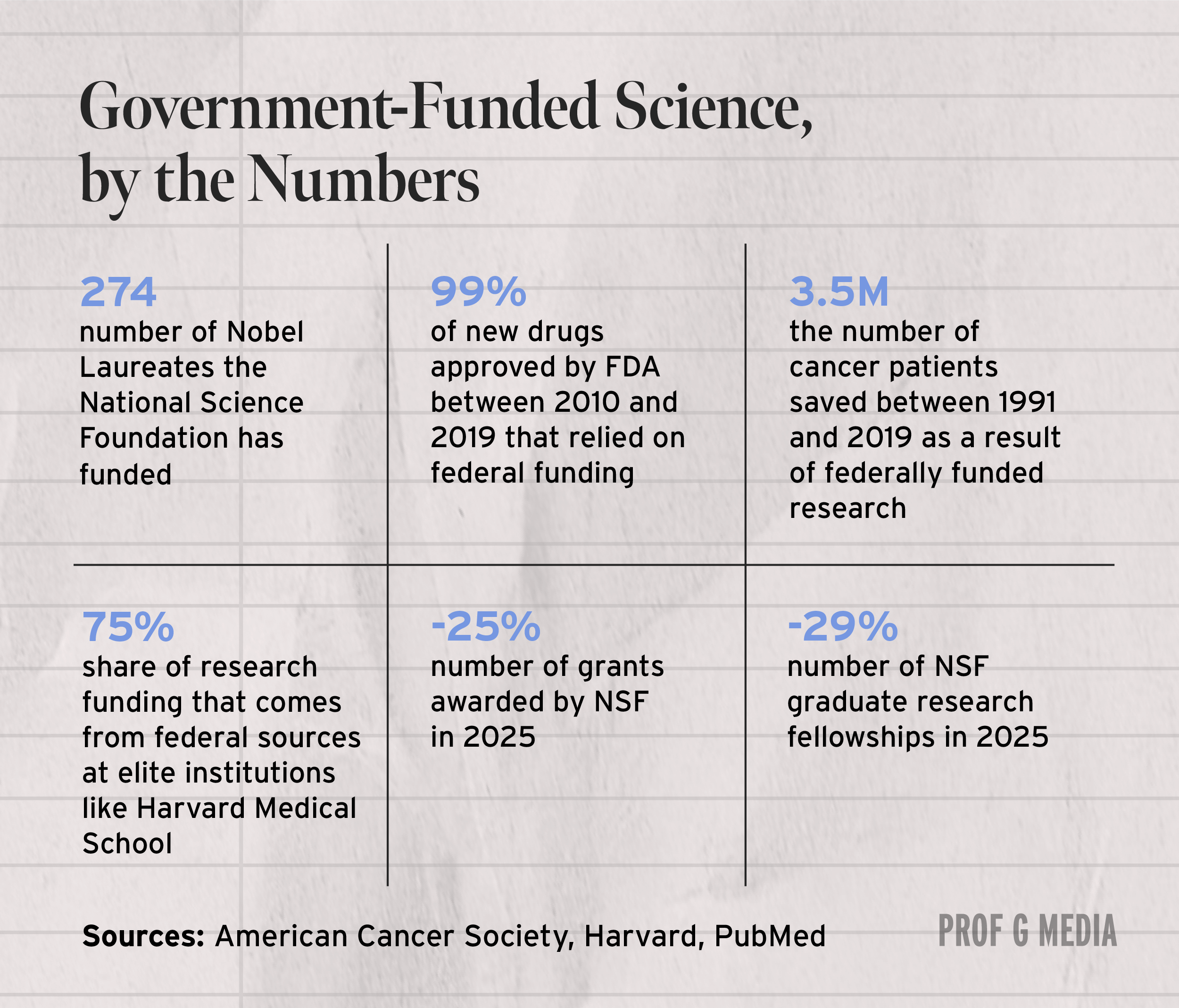
Eighty-one years ago, Bush wrote in his report that “basic research is the pacemaker of technological progress.” The data – and history – agree with him, but the truth has never gotten in the way of Trump’s decision-making.
Mocking Science Is a Fool’s Errand
Writing off scientific research is not new. From 1975 to 1988, Sen. William Proxmire issued monthly “Golden Fleece Awards,” which targeted spending he considered wasteful.
The first Golden Fleece Award went to Elaine Hatfield and Ellen Berscheid, because the NSF awarded them $84,000 to study why people fall in love.
“I believe that 200 million other Americans want to leave some things in life a mystery,” Proxmire wrote, “and right on top of the things we don’t want to know is why a man falls in love with a woman and vice versa.”
Nevertheless, Hatfield and Berscheid’s research helped establish relationship science as a legitimate field. Their work provided the scientific foundation for a $6 billion industry many single people see as essential: dating apps.
Critics like Sen. Proxmire often took projects out of context and painted them in the silliest light they could. The award became synonymous with perceived government waste and impacted how the NSF distributed grants.
Case in point: in 2011, a video of a shrimp on an underwater treadmill went viral as an example of frivolous federal spending. It may sound silly, but the study was serious: It was designed to measure how shrimp responded to changes in water quality — a legitimate concern for the $80 billion shrimp industry.
For what it’s worth, the shrimp treadmill only cost $1,000. For comparison, in one month last year, Defense Secretary Pete Hegseth spent more than $7 million on lobster, $15 million on steak, and $124,000 on ice cream machines.
Congressman Jim Cooper of Tennessee responded with his own award in 2012: The “Golden Goose Awards.” The idea was to highlight “seemingly obscure studies” that led to major breakthroughs that benefited society.
In 1966, Thomas Brock and Hudson Freeze went on an NSF-funded trip to Yellowstone to study thermophiles — bacteria that thrive in extreme temperatures. They collected a microorganism, Thermus aquaticus (nicknamed Taq), which contained an enzyme that could survive the high-heat cycles required to copy DNA strands without breaking down. Taq was the unlock for “polymerase chain reaction” (PCR), which amplifies small samples of DNA for study.
You might recall the PCR from COVID days: It was the primary diagnostic tool used globally during the pandemic. Discoveries made with the PCR method have led to drugs and vaccines for diseases ranging from cancer to kidney disease.
“I was doing basic research on organisms at high temperatures and focusing on evolution and ecology,” Brock said. “I wasn’t even thinking about industrial uses.” Brock and Freeze won the Golden Goose award for T. aquaticus in 2013.
Or take the 2012 Golden Goose winner. That research asked: Why do certain jellyfish glow green? In 1962, Osamu Shimomura and a colleague at Princeton gathered thousands of jellyfish off the coast of Washington and isolated a protein that fluoresced green under UV light.
Three decades later, biologist Martin Chalfie figured out how to use the gene for the green fluorescent protein (GFP) as a kind of molecular highlighter that lets scientists see when and where genes switch on inside a living cell.
Today, these findings help scientists study how cancer tumors form new blood vessels, how Alzheimer’s kills neurons, and how HIV infects cells. GFP has become a standard tool in molecular biology labs and pharmaceutical drug screening worldwide. All of these breakthroughs trace back to federally-funded curiosity about a glowing jellyfish.
Pennies In, Trillions Out
The internet is a canonical example of how public dollars paid off at a scale no one could have predicted. In 1969, the Defense Department’s research arm ARPA (now DARPA) funded an experimental computer network called ARPANET. Over the next two decades, DARPA-funded researchers built the protocols that became the technical foundation of the modern internet. In the 1990s, the NSF funded the world’s first freely available web browser, Mosaic. That development spurred a revolution in communication that has had a trillion-dollar impact on the global economy.
In 1994, an NSF Digital Library Initiative grant funded a graduate student named Larry Page. Page was interested in the “missing links” in webpage ranking, and he partnered with NSF Graduate Student Fellow Sergey Brin to develop the “PageRank” method, which survives as one of the main components of Google search. Alphabet is now worth nearly $5 trillion. The NSF grant behind it was $4.5 million – and Page and Brin’s work was only a slice of that.
Venture capitalists may never have funded a random graduate student if the government hadn’t stepped in. The government derisked the technology, making PageRank more attractive to private investors.
In 2012, Dr. Jennifer Doudna’s lab at UC Berkeley teamed up with Emmanuelle Charpentier to investigate the bacterial system CRISPR-Cas9. The work was an act of basic science — not aimed at any particular result. However, they ended up developing the first CRISPR therapy to treat sickle cell disease, an illness that afflicts 8 million people globally. Doudna and Charpentier won a Nobel Prize for the research in 2020. Not only did the NSF fund Doudna’s foundational work on RNA, but it also now funds researchers using CRISPR to treat diseases and enhance crop production.
“There’s incredible value to working on problems that are not necessarily designed to create a technology or cure a disease, but are about understanding the world,” Dr. Doudna said. “Through that process you uncover things that could never be anticipated or expected but turn out to be fundamentally important to human society.”
The Myth of Silicon Valley
Before it was the tech capital of the universe, Silicon Valley was known as the “Prune Capital of the World.” Government spending changed its fortune. During the Cold War, R&D funding flowed west of the Mississippi to California and Stanford University, specifically. Stanford Dean of Engineering Fred Terman, who had been mentored by none other than Vannevar Bush, was determined to make Stanford the next Harvard.
Historian Margaret O’Mara traced the history of the Valley in her book, The Code: Silicon Valley and the Remaking of America. “The government was involved as a customer, as a catalyst, as a de facto venture capitalist at an early stage, when there was no commercial market for this stuff,” O’Mara said in an interview. “But, the story of the Valley is also one of entrepreneurship … the brilliance of the Valley is that they believed they did it by themselves.”
We subscribe to a myth of Silicon Valley: There’s something magical in the water they’re drinking out there that breeds a special, independent innovator. It’s true that Silicon Valley has birthed and attracted brilliant minds that have developed transformative technologies. But to neglect the role of government support in enabling their genius is to neglect its history.
Elon Musk is perhaps the embodiment of this myth. Musk is undeniably a force of nature, but he had help along the way. Government-funded researchers solved the hard problem of lithium-ion batteries, which power Tesla and the rest of the EV industry. SpaceX, too, would be nowhere without the government. In fact, Musk himself said, “I feel very strongly that SpaceX would not have been able to get started, nor would we have made the progress that we have, without the help of NASA.” And AI research was seeded by decades of DARPA and NSF grants.
This isn’t a matter of who gets the credit, but rather a recognition that American technological progress has long been the product of a symbiotic relationship between the public and private sectors.
Own Goal
The White House requested budget reductions of 40% to the National Institute for Health (NIH) and 57% to the NSF for this fiscal year. The Trump administration did so despite the fact that over 80% of Americans want to increase R&D funding. Ultimately, Congress rejected Trump’s request and cut only 3.4% of the NSF’s budget.
Still, the administration is finding innovative ways to asphyxiate science in this country.
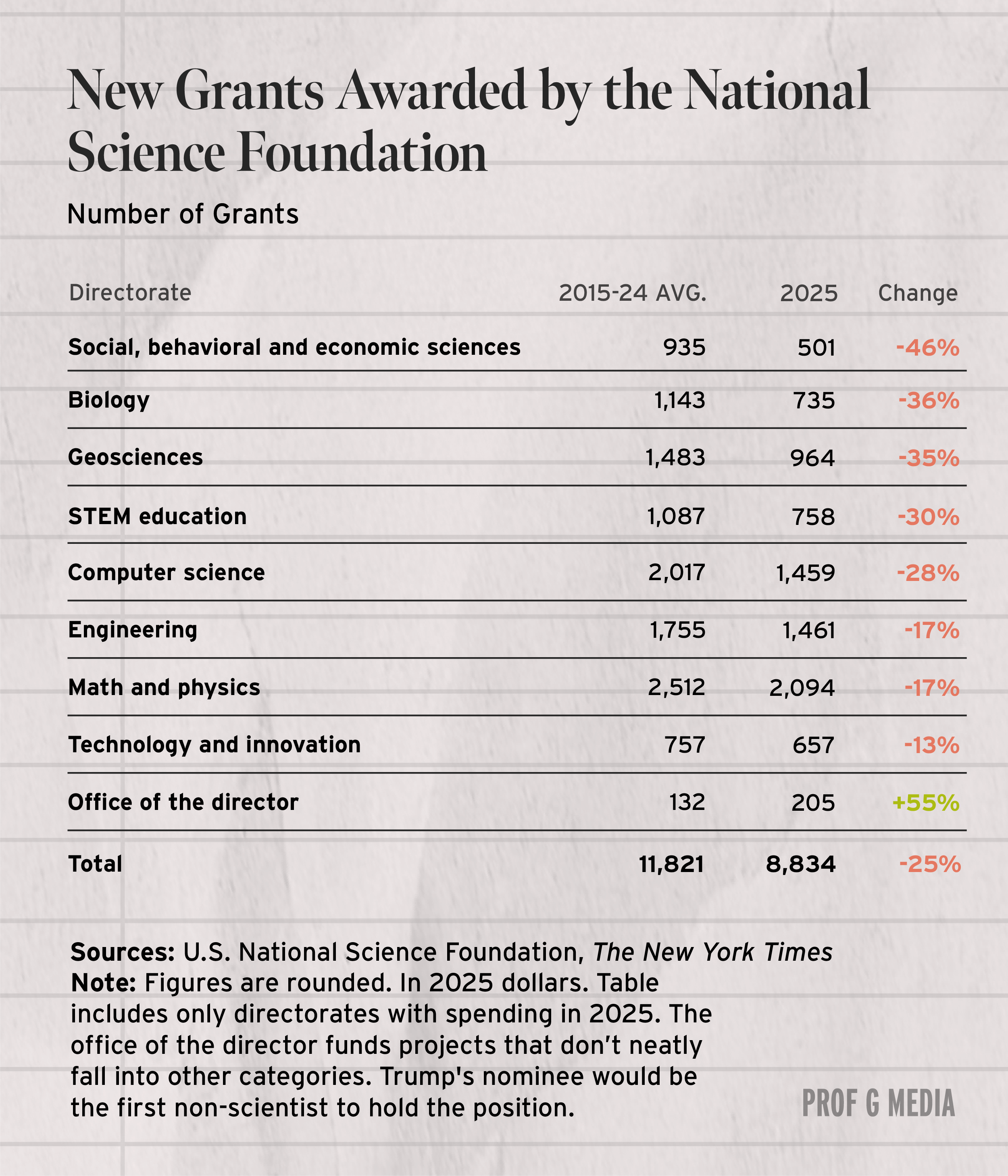
As of May 1, the NSF had committed only 10% of its appropriated funds, half of what it had awarded by this point in previous years. The NSF has put a hold on grants for universities that have been targeted by Trump, such as Harvard and Yale.
The NSF is now funding fewer grants in every area of science and medicine.
Grant Witness tracks the termination of grants of scientific research agencies under the Trump administration. They found that the current losses from disrupted grants at the NSF, NIH, EPA (Environmental Protection Agency), SAMHSA (Substance Abuse and Mental Health Services Administration), and CDC (Centers for Disease Control and Prevention) total $36.9 billion.
Losing Ground
For 80 years, the U.S. led the world in scientific and technological achievements, achievements that were enabled by investment in basic research.
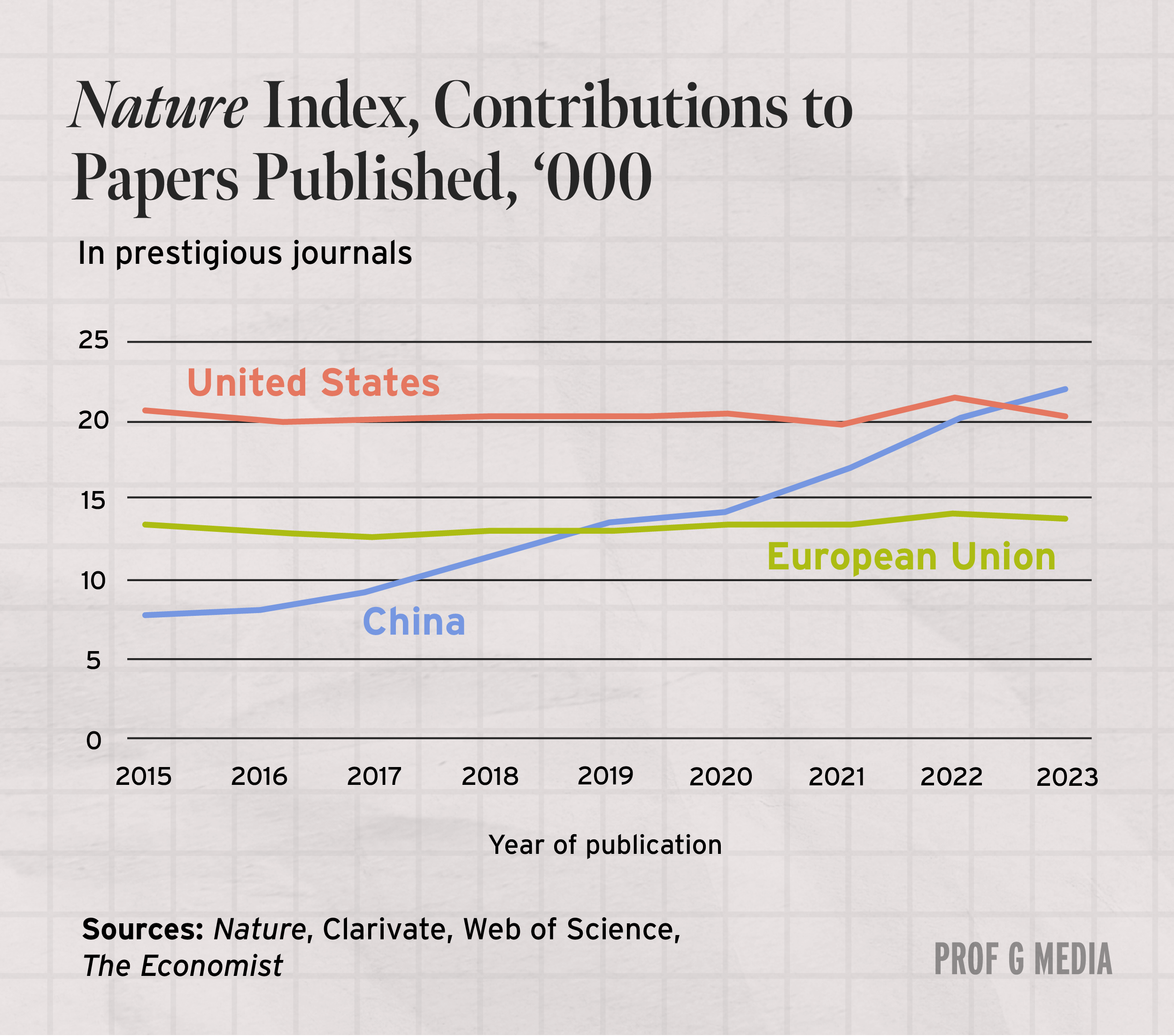
That’s not true anymore. China has now surpassed the U.S. in research spending (when adjusted for purchasing power). And this isn’t even a breakthrough moment. China also overtook the U.S. in total scientific publications in 2024.
New funding awards from the NIH to American universities have declined 46% this year. That money supports 400,000 jobs annually, generates more than $94.5 billion in new economic activity each year, and, crucially, supports lifesaving medical research.
The White House’s justification is that these cuts eliminate wasteful spending. Their real issue? Trump can’t see how funding science would enrich or glorify him. Ironically, it definitely could. Just imagine: “We cured cancer. I cured cancer. Nobody thought it was possible, the doctors said it couldn’t be done.”
There are better reasons to fund basic science research than presidential vanity, but there aren’t any good reasons to defund it. The Information Technology and Innovation Foundation estimates that a 20% cut in federal research and development starting in fiscal year 2026 would shrink the U.S. economy by nearly $1 trillion over 10 years and reduce tax revenue by around $250 billion. That’s the definition of penny-wise and pound-foolish.

My dad used to take my sisters and me to the American Museum of Natural History every weekend when we were growing up. The museum had a “Discovery Room” where we could hold real fossils in our hands, look at specimens under a microscope, and identify animals in a two-story replica of an African baobab tree. Exploring there instilled in me a deep love for and appreciation of science. I also developed a pride in the American pursuit of scientific discovery.
Scott often invokes Carlo M. Cipolla’s Golden Law of Stupidity: A stupid person is someone who causes problems for others without any clear benefit for himself, possibly incurring losses. Firing the NSB struck me as a textbook case of that kind of stupidity in action. But while it’s easy (and fair) to blame Trump, I wanted to better understand how people like Sen. Proxmire helped create a narrative context that enables that kind of stupidity. It strikes me as a grave threat to our nation, and our planet.
Uncovering the link between the public and private sectors and understanding how their combined efforts fuel innovation is, in my view, how we mitigate the cost of killing “silly” science.
Kristin O’Donoghue is a research analyst on the Prof G Markets team. She joined in September 2025, after a year working at the Carnegie Endowment for International Peace as a junior fellow. Kristin graduated from the University of Virginia in 2024.

Why Your Best Ideas Aren’t Original
This Prada-designed onesie will help keep NASA’s Artemis astronauts cool on the moon
Saving a Lost Generation of Young Men—with Chop Saws
Excellent piece. I'm a producer of a new documentary, THE ENDLESS FRONTIER, an intimate, urgent portrait of three scientists working to solve some of the most pressing challenges of our time, from disease to climate change, while revealing the growing threat to the American research engine and what is at stake for all of us if it falters.
Here’s a link to the trailer: https://www.youtube.com/watch?v=rZ6sMhPDVZI
The film is premiering this Friday, June 12 at the DC/DOX film festival in Washington DC ( https://dcdoxfest.com/films/the-endless-frontier/ ). We’re also screening in NYC on Monday, June 15 at the New York Academy of Medicine ( https://support.nyam.org/event/the-endless-frontier-new-york-film-premiere/e797007 )
Scientists need our support!
- Elizabeth Westrate
This pisses me off. Absolutely a prime example of the Golden Law of Stupidity. Fantastic article, Kristin. It reminds me of the kind of profoundly researched deep dive John Oliver and his team do in each episode of Last Week Tonight. They spotlight something vital that has gone overlooked because we’re all distracted in a million different directions yet force us to pay attention anyway. If I might make an uninvited suggestion - and borrow something John and his team do that helps to focus the rage they provoke - it would help me self-soothe (if nothing else) to know ways you can think of that we can all do something to change the trajectory of this issue. Obviously, it makes no sense for America to continue down the path of defunding science, but I don’t work for the government. What can a private citizen do to get us back on the right track?