


Two weeks ago, The Wall Street Journal published an investigation into Polymarket’s influencer marketing campaigns. What they found was astonishing: Polymarket was running undisclosed partnerships with creators making fictional bets on a fake website designed to appear real. Audiences watched their favorite influencers win big betting on things like whether Trump would say the word “McDonald’s” at a press conference.
The deception was widespread. The Journal reviewed more than 1,100 promotional videos — roughly 70% of them containing simulated trades — that racked up 140 million views. Many depicted wildly profitable trades that, in reality, would have lost money. The creators were paid $2,000 to $3,000 a month and instructed not to disclose the sponsorship.
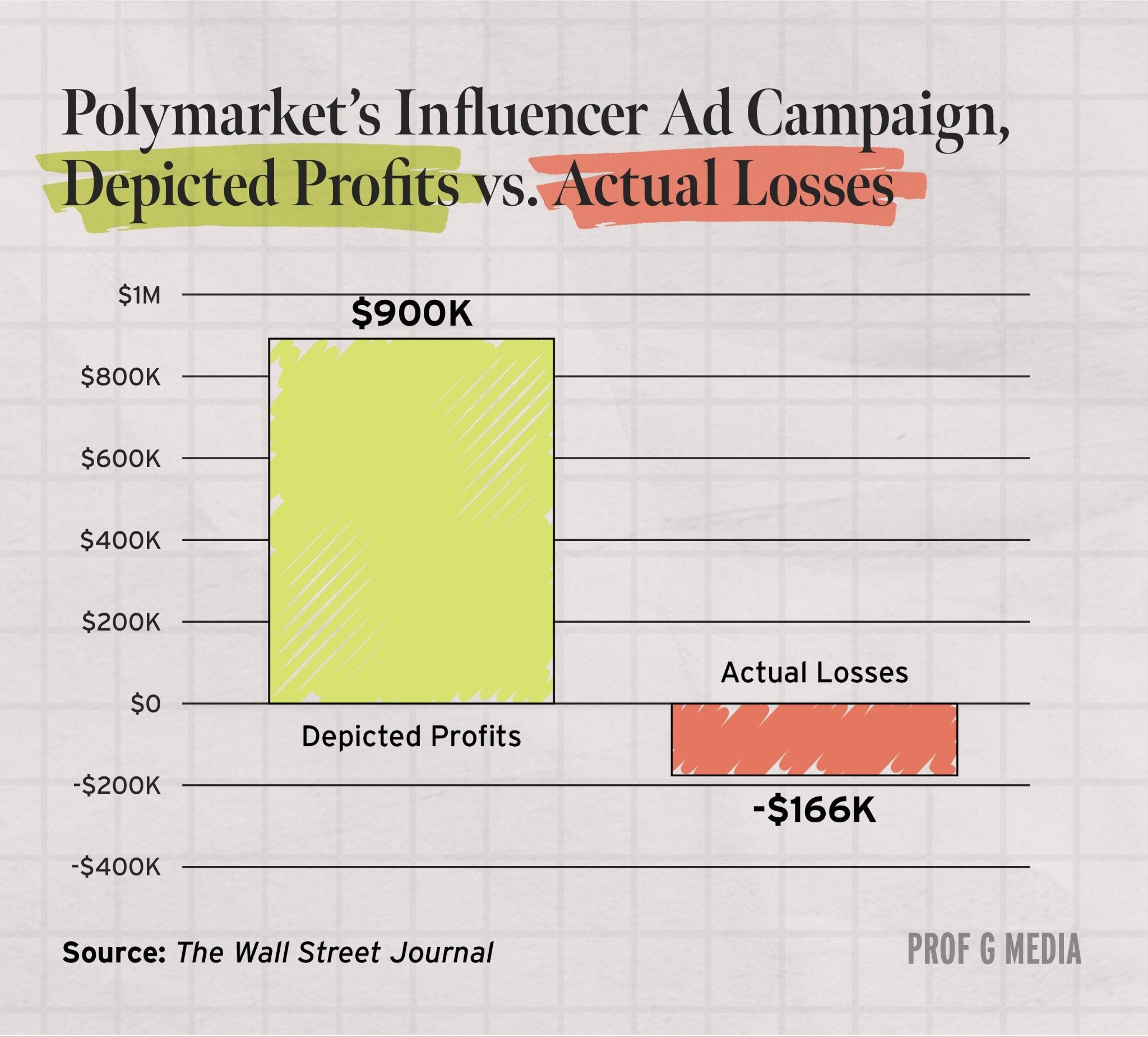
Outrage followed. Polymarket announced a “comprehensive audit” of its promotional content. Two senators demanded a federal investigation. A consumer watchdog group filed a lawsuit. The consensus: Paying college kids to fake gambling winnings for an audience of other college kids must be illegal.
Is it, though? This ordeal begs a question that seems to have gone unanswered: What is actually illegal for an influencer to do online?
The Rules
As it turns out, there are plenty of laws governing creator advertisements.
Under Section 5 of the Federal Trade Commission Act, deceptive advertising is illegal. If an influencer is paid to promote something, the FTC’s Endorsement Guides require them to disclose that relationship clearly and conspicuously.
It’s also illegal to mislead your audience for financial gain. Faking your results is illegal. Making product claims without evidence is illegal. As of 2024, the FTC’s fake reviews rule makes phony testimonials punishable by roughly $52,000 per violation. And if you’re promoting a security, the SEC requires you to disclose exactly what you were paid — a rule Kim Kardashian learned about via a $1.26 million settlement over a single Instagram post promoting a cryptocurrency.
It doesn’t stop there. Promote a nicotine product? The U.S. Food and Drug Administration (FDA) requires an addiction warning covering 20% of your post. Promote a prescription drug without risk information? You’ve misbranded it. Make content for kids? The Children’s Online Privacy Protection Rule applies — meaning targeted advertising to children under 13 is effectively off the table. Get paid to promote a sportsbook? You’ll likely need a license. All 50 states have additional deceptive-marketing laws. On paper, the influencer is one of the most-regulated workers in America.
So yes, the Polymarket campaign was definitely illegal. However, there’s a reason that Polymarket and most content creators don’t abide by these laws: They’re barely being enforced.
Nothing Wrong
A study published last year in Marketing Science analyzed more than 100 million brand-related posts on Twitter across 268 brands. It found that as much as 96% of sponsored posts were not disclosed. Another study assessed millions of posts on YouTube and Pinterest and found that disclosures were made only 10% and 7% of the time, respectively.
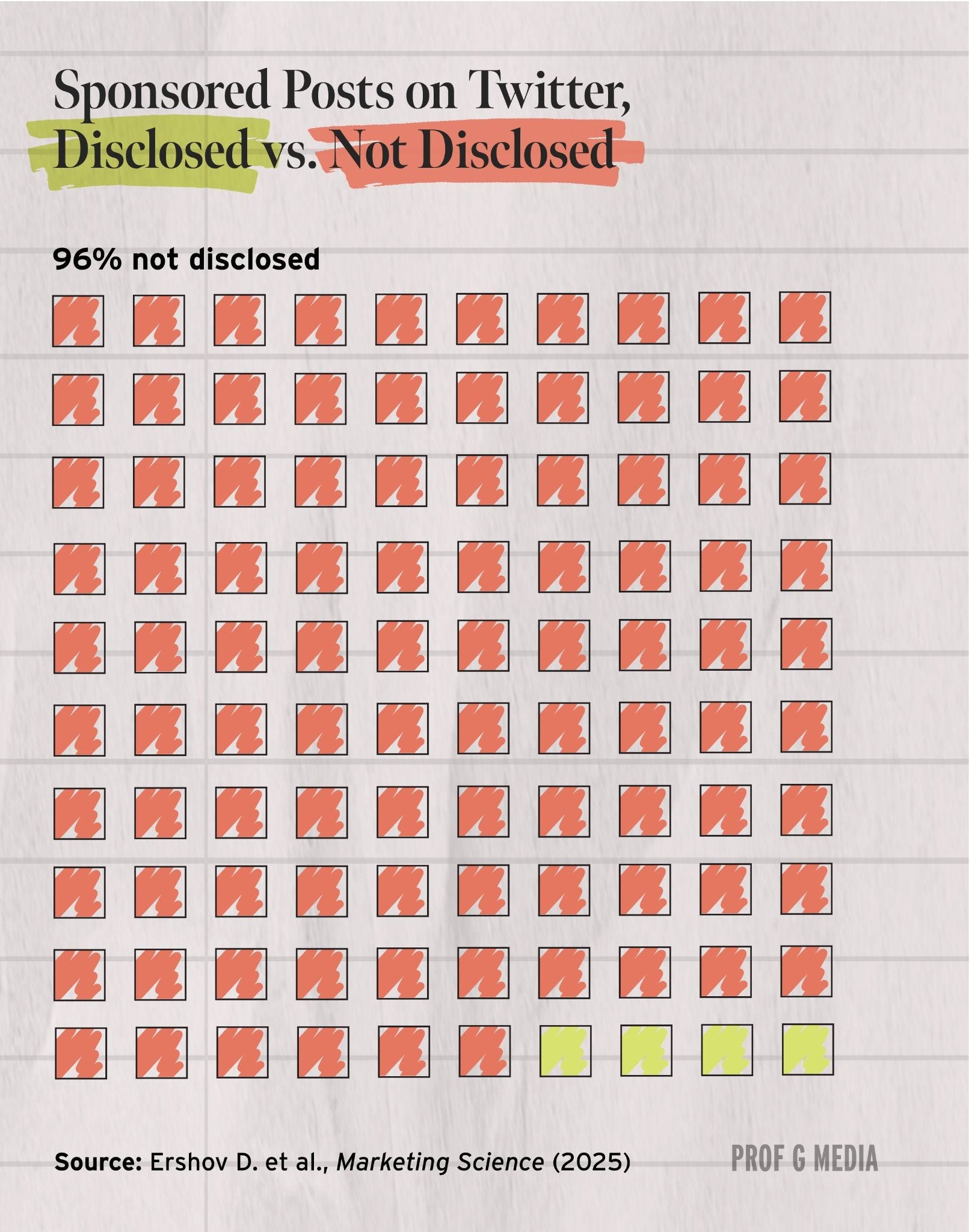
Against a violation rate like that, the FTC’s enforcement record is pitiful: It has never obtained a monetary penalty from an individual influencer over a disclosure violation. The agency’s most aggressive action against individual creators in 2017 ended in a settlement with no fine, no refunds, and no admission of wrongdoing.
The one regulator that does actively enforce is the SEC — that’s where Kardashian’s $1.26 million went, along with a dozen or so other celebrity settlements. But the SEC has jurisdiction only when the product being advertised is a security, which accounts for a negligible portion of total ad spend online. Add up every fine the SEC has ever collected from an influencer and you get just $4 million — a majority stemming from the undisclosed promotion of cryptocurrencies (which is no longer regulated by the SEC). That’s as much as Kardashian makes from two Instagram posts.
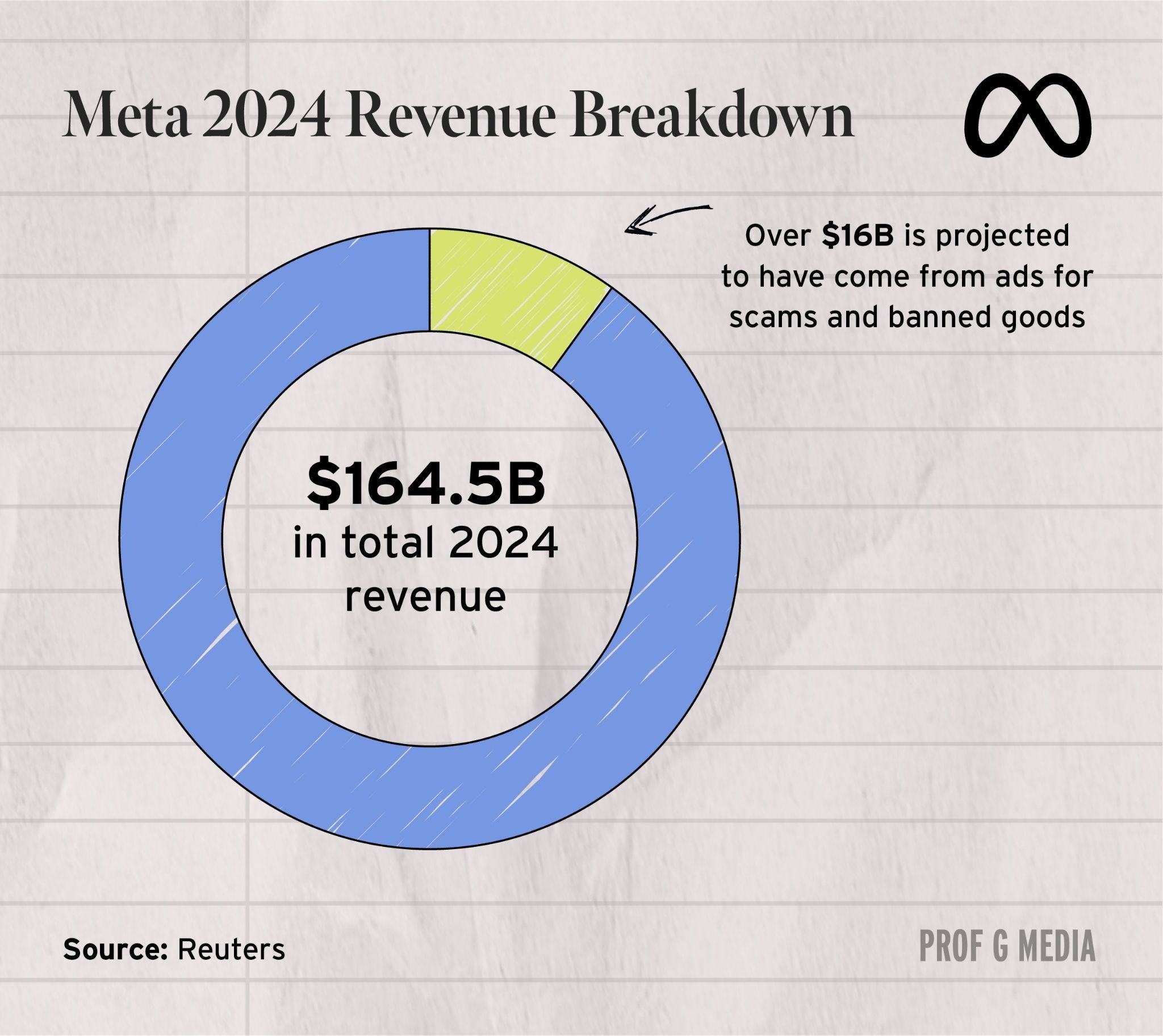
Outside of these disclosure and securities law violations, it’s well documented that fraudulent activity represents a significant portion of online advertising. Reuters uncovered that Meta’s own internal documents projected that roughly 10% of its 2024 revenue — some $16 billion — came from scam and banned-goods advertising. (Although Meta disputes the figure.) That equates to Meta users seeing 15 billion “scam ads” per day.
New Normal
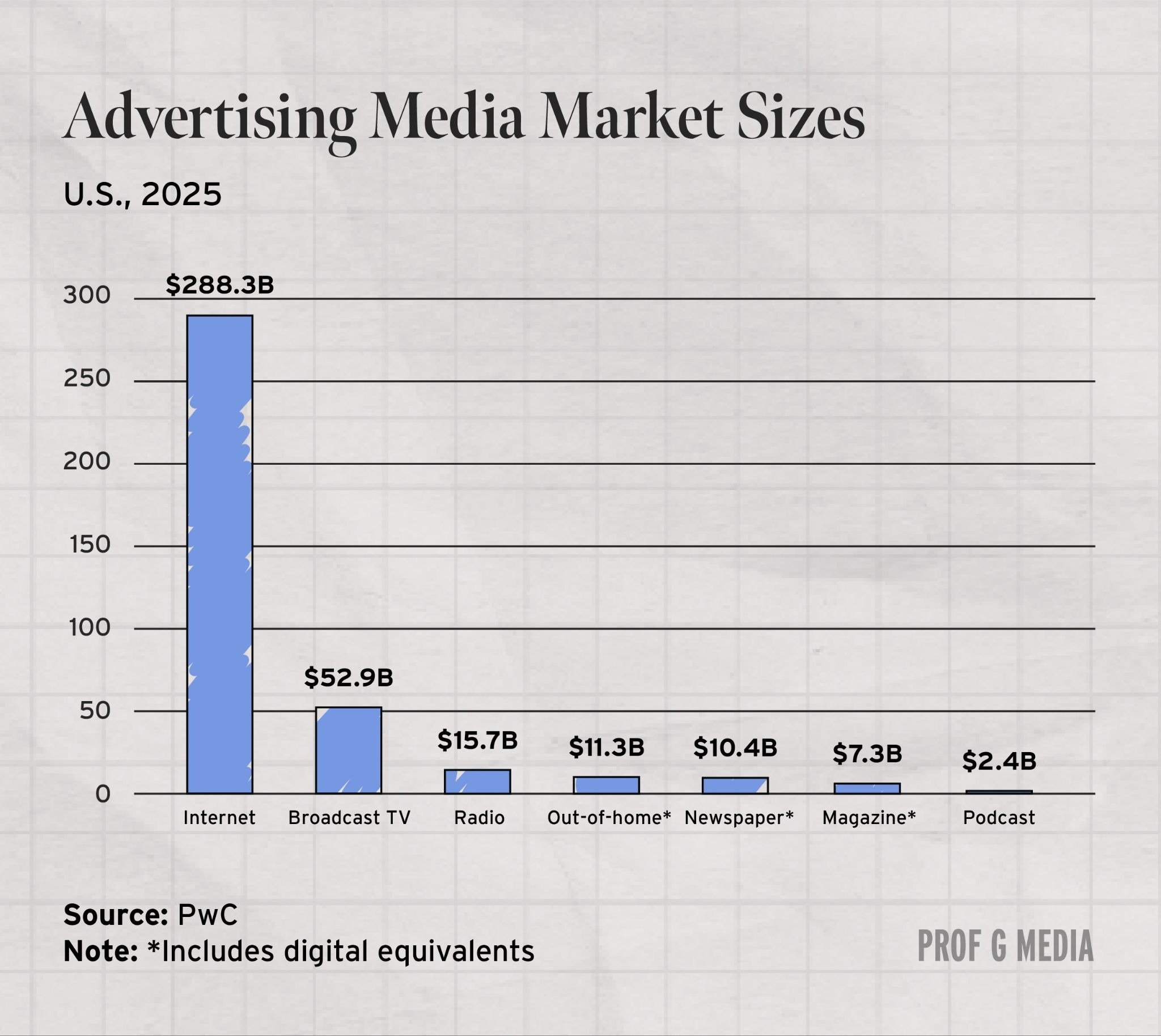
The problem with this lack of enforcement is that it comes at a time when the internet advertising industry is ascendant. U.S. influencer marketing spend hit $10.5 billion in 2025, growing 15% year over year, faster than digital ad spend as a whole. It has more than doubled since 2021. And internet advertising as a whole now accounts for more ad dollars than all other mediums, combined.
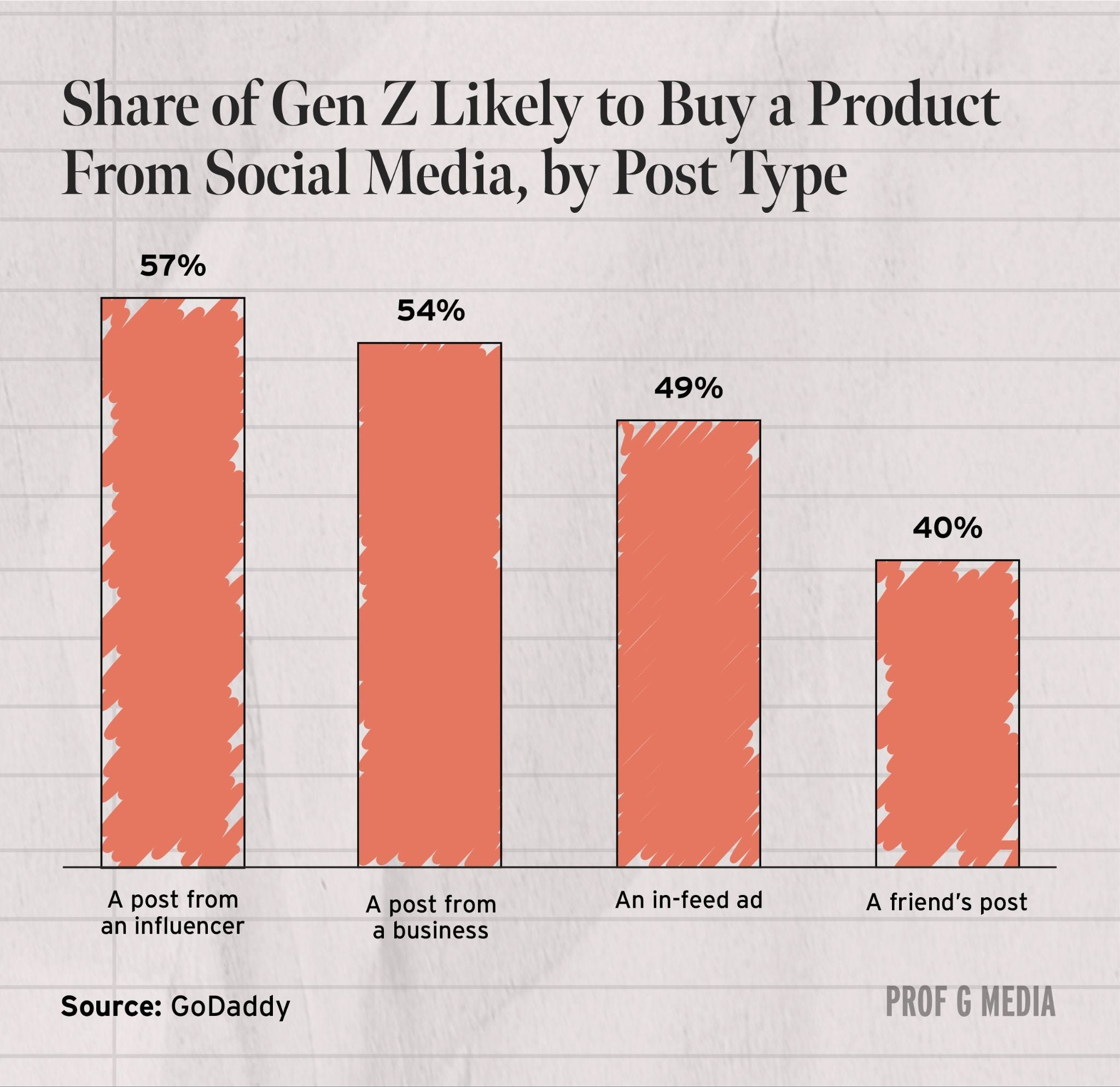
For Gen Z, influencer advertisements have become a driving force in consumer behavior. Three-quarters of Gen Z say they’re more likely to buy from a brand simply because it partners with an influencer they like. A GoDaddy survey found Gen Z trusts an influencer’s product post over an ad from the business itself — despite the fact that there’s seemingly no verifiable way to tell if an influencer has been paid to make an endorsement.
Payola
The frustrating part is that we’ve solved this problem before. In the 1950s, record labels were paying radio DJs to play their songs. Congress noticed, held hearings, and in 1960 made the practice, called payola, a federal crime punishable by up to a year in prison or a fine of up to $10,000 for every undisclosed play. As recently as 2007, the FCC fined Clear Channel, CBS Radio, Entercom, and Citadel $12.5 million in a single payola sweep.
Those laws are still on the books. Take money to hype a song on the radio without saying so, and you’ve committed a federal crime. Do the same thing on TikTok — for a song, a supplement, a betting app — and you’ve got an influencer campaign.
What Comes Next?
In many ways, this Polymarket story isn’t a scandal but rather a reflection of modern advertising rules — and our decision not to enforce them. Polymarket correctly observed that, in practice, there are no influencer marketing rules. They only got caught because of their large (and already controversial) public profile.
That has to change, because the stakes are compounding. Influencer marketing is no longer a corner of the ad industry. It’s becoming the default way products, stocks, and prediction market platforms reach young Americans.
What comes next will be even more deceitful. Generative AI will collapse the cost of running this kind of campaign to zero. Nearly one-third of all video ads are now created using AI. The internet will soon be populated with fake influencers endorsing real products, and real influencers endorsing fake products. Without a real change at the FTC, there will be no consequences — except those borne by exploited consumers.

I know it isn’t the focus of the article but I don’t understand why more people aren’t discussing the core incompetency of the polymarket influencer campaign. If you are going to fake the bets at least do it with a small delay using real recreated results not just made up bullshit. I guess it’s good that it was so obviously inconsistent with reality but is disappointing that the grifts are so amateurish and effective.
You are 100% right. Another interesting angle is AI labelling. It's happening more and more with creators, but advertisers on social media isn't subject to the same rules. It should be!