


I’m currently on a flight from Chicago to New York for our final stop of the Prof G Markets Live Tour. I’m running on little sleep, some caffeine, and a lot of adrenaline. Is this what it feels like to be a rockstar? Answer: Absolutely not, but let me dream.
The past few days have been incredible. We started out in San Francisco, then flew to LA, where Scott and I were welcomed to the stage by Justin Theroux. Don’t ask. Then we went to Miami — directly after the show my team and I stayed out till 5am at Club Space. (Questionable decision but good for morale.) Then to Chicago where Scott and I interviewed JB Pritzker. The Governor had also been up till 5am — not partying, but passing state legislation. And now I’m here in the sky … somewhere between Pittsburgh and Newark.
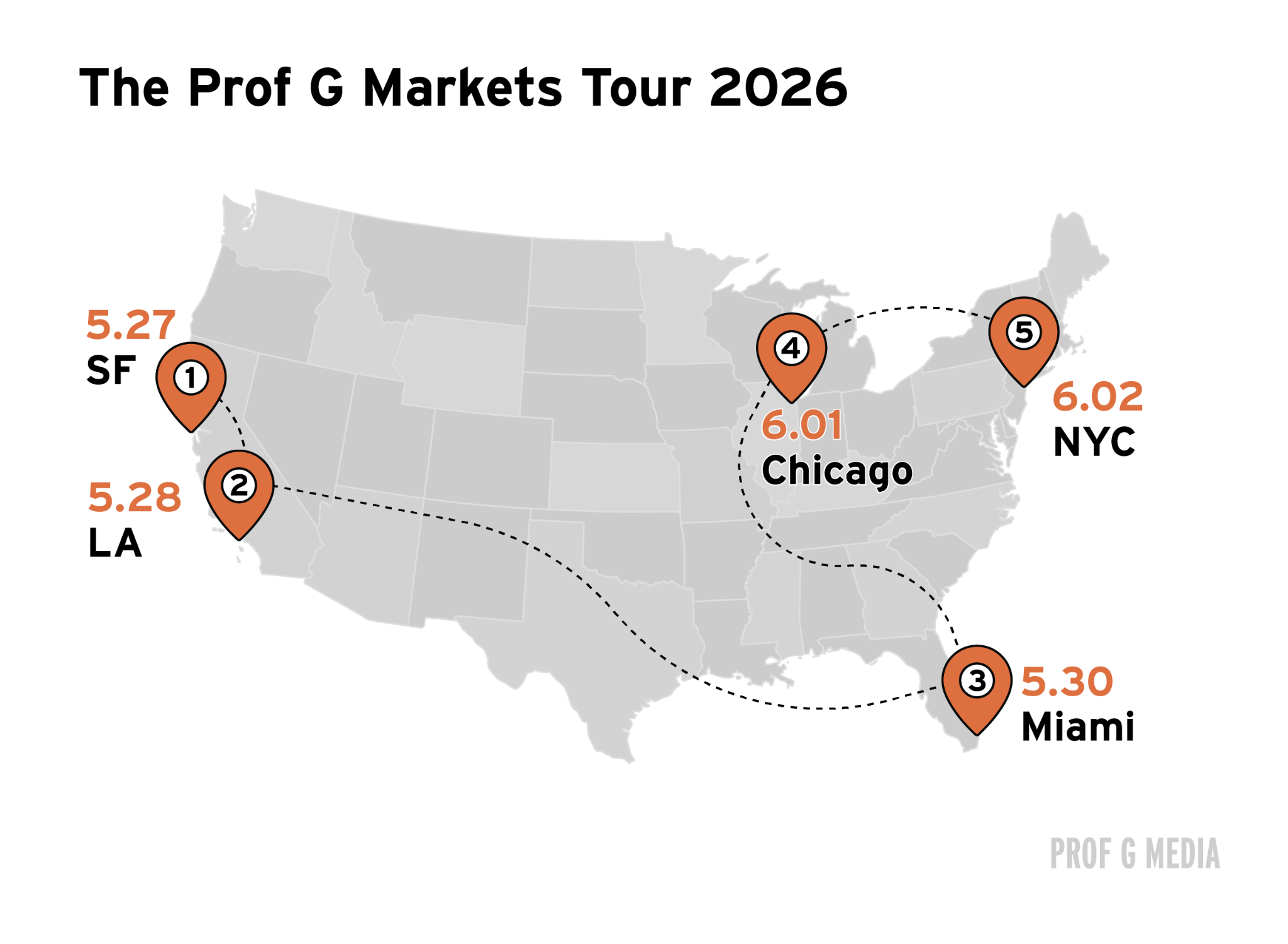
I don’t have time to write a regular post, so this week I’m writing a quick tour diary. Here’s everything I’ve learned from our very first live podcast tour.
San Francisco
For some reason I didn’t expect the SF crowd to “bring it” — I was dead wrong. San Franciscans are nerds, but rowdy nerds. It was an evening of shouting, clapping, heckling, and a lot of laughs. In keeping with the tech-bro theme Scott and I entered the stage in Patagonia vests (and immediately removed them). I also began the show with a reading of some of Scott’s greatest quotes about VCs. For example, how there are “few cohorts less pleasant and more convinced they’re changing the world than venture capitalists,” or how VCs are — and I quote — “the worst fucking people in the world.” Lovely.
We got into the only subject that matters in that city: AI. Or, more specifically, how expensive AI is turning out to be. From Uber to ServiceNow, companies across America are burning hundreds of millions of dollars on AI tokens, and in many cases, blowing through their budgets. One employee racked up a $150,000 Claude bill in a single month. While tech companies have the money to do this, they’re not yet seeing the ROI — and that’s a problem. When asked about the benefits of AI adoption, Match Group’s CEO said it best: “it’s hard to feel it.”
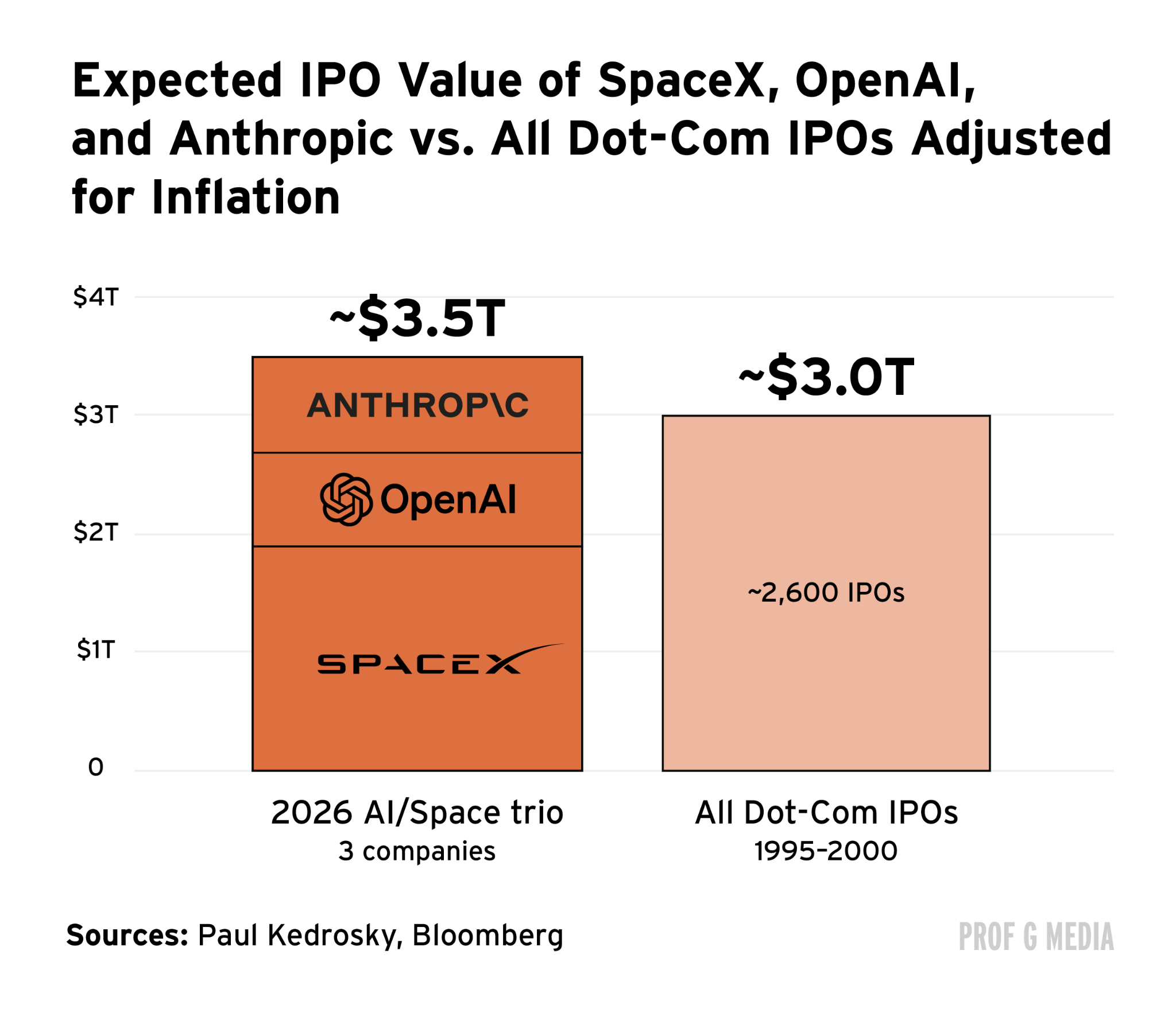
It wouldn’t be an AI podcast if we didn’t discuss the IPO race. SpaceX and Anthropic have filed, and OpenAI plans to. The most staggering thing about these IPOs is the size. At their projected valuations, these three companies will be more valuable than every dot-com IPO put together.
Los Angeles
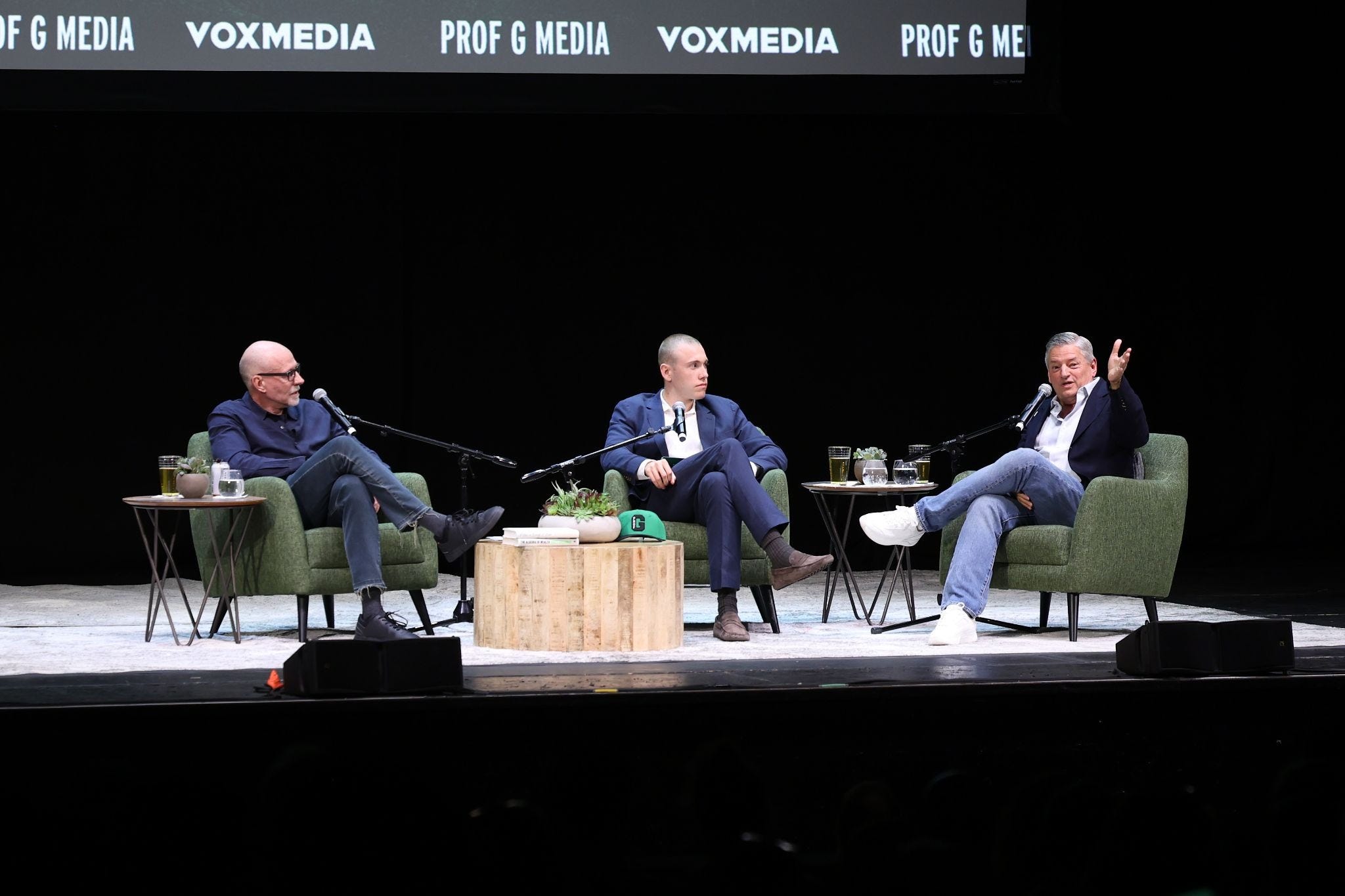
On our LA docket was a discussion of the future Hollywood — and who better to tell us about that than the co-CEO of Netflix, Ted Sarandos. In addition to being extremely likeable (part of the job), Ted made some interesting points. I asked him about the clip economy, for example, and social media’s impact on entertainment. His view is that Netflix’s domain is and always will be the big(ger) screen — specifically, TV. As addicting as scrolling might be, there are few things more addicting than a really good show. You can check out that interview here.
Miami
Following a “champagne parade” in which the audience was indiscriminately showered with Veuve and Don Julio 1942, Scott and I had a thoughtful discussion of taxation — or, more specifically, taxation of billionaires. Florida felt like the right place to have that conversation, as practically every billionaire is moving there.
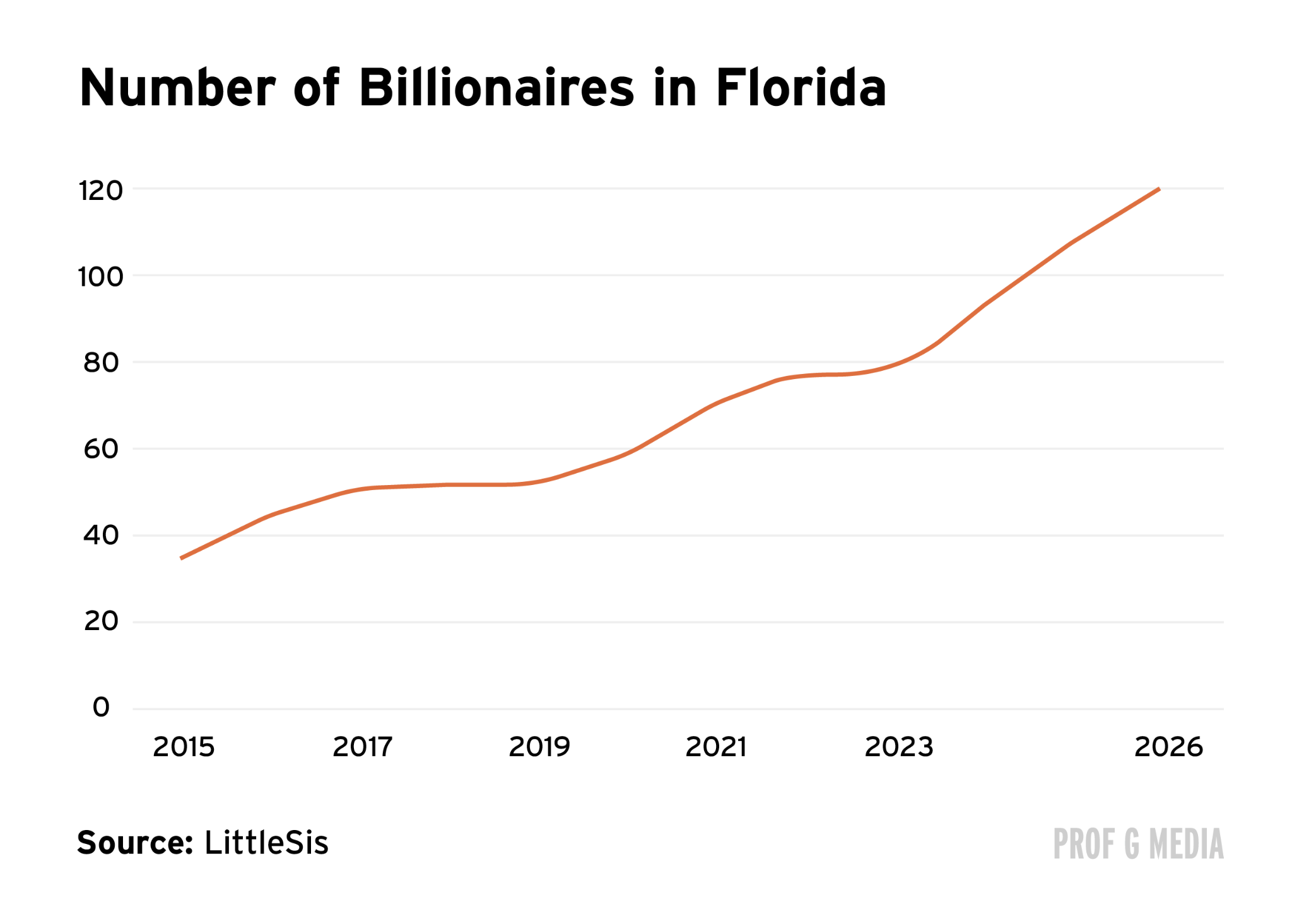
Why? For Ken Griffin it was because of Florida’s “traditional values.” For Bezos it was to be “closer to my parents.” Supposedly the zero income tax, zero estate tax, and zero capital gains tax had nothing to do with it. (And we’re supposed to believe these people.)
Miami is also the crypto capital of the world, so we discussed that industry too. I expressed my distaste for it — specifically the fact that one-fifth of Gen Z investors only own crypto, and at the same time it’s (generally) a terrible asset-class: 84% of crypto traders lose money. This is part of a larger trend among young people, who are increasingly struggling to build wealth via traditional means, and turning to what I call “casino assets” instead, not just crypto.
Chicago
Next up, Chi-Town. I spent the morning researching what Chicago’s “thing” is. Turns out it’s hot dogs. Believe it or not, Chicago Hot Dogs are a $10 billion industry, meaning they generate more revenue than JetBlue, Ralph Lauren, and Ferrari. This is the kind of hard-hitting data we like to begin our shows with.
Then we had on Governor Pritzker, who shared with us his thoughts on AI regulation, data centers, housing policy, fiscal responsibility, and much more. He was characteristically charming and polished (big “dad energy”), but what blew me away was how much the crowd loved him. As soon as he walked on stage … raucous standing ovation. Clearly he’s doing something right.
Scott and I soon had a data-center discussion of our own. This was venue-appropriate as Illinois already has 139 data centers — the fourth-highest number in the country. That’s in addition to the 120 data centers that are planned … but likely to be delayed or restricted. Why? Because, as I predicted several months ago, local residents hate them. Yorkville, for example, just filed two lawsuits to block data center construction, Lockport just postponed all data centers indefinitely. This is a national trend: Seven in ten Americans are opposed to local data center construction. Their reasoning is … reasonable. Data centers are noisy, ugly, and drive electric bills through the roof. Until AI leaders can present voters with a tangible set of benefits that outweigh the costs, their zoning problems are only going to get worse.
NYC
Tomorrow we’ll be joined by one of my favorite regulars on our show: Anthony Scaramucci. I’ve gotten to know Anthony quite well over the past year. He’s one of those guys that can talk about anything: politics, policy, markets, economics — and somehow finds a way to make you laugh throughout. We’ll be covering as much as we can with him.
But before that, we’ll be joined by a very special surprise guest. Believe me when I tell you I want to reveal who it is. But that would … ruin the surprise. My only hint is the following: I have absolutely zero business interviewing this individual. (You’ll see what I mean.) Either way, I’m going to make it the best interview you’ve seen.
OK, we’re about to land, and I can see the lights of Manhattan. That’s my cue to go.
See you next week,
Ed
Enjoyed the diary of your tour, sounds like a lot of fun! One topic around data centers I would like to learn more about; will performance of the HW/SW infrastructure for AI improve enough and fast enough to eliminate the need to build all these proposed data centers? That has been the history of tech for the last 40 years, and it seems to be replaying again. Certainly would have an impact on those space-based ideas.
Miami was super fun. Thanks for coming through ! And it’s not right to be at space while it’s still dark, the party is just getting started. Afters logistics means you’ve got until t-minus 2 hours to boarding .💀🫶😂