


It’s been eight months since I called OpenAI “a f**king trainwreck.” My concern was straightforward: The company planned to spend more than a trillion dollars on less than $15 billion in revenue. Generally speaking, that’s how companies die. Fast-forward to today: The company’s still alive, but its underlying health has gotten worse.
The problem isn’t revenue, but spending. For every dollar spent on ChatGPT, it costs OpenAI nearly three. How is this possible? Because the business is subsidized by investors in Silicon Valley. Why are they willing to pay for OpenAI’s life support? Because they believe the company will eventually get healthy and repay them in spades. This is the standard venture model: Yes, the company could collapse, and the equity would get wiped — but it could also hit a homerun. High risk, high reward.
One caveat: While most startups need only a few million dollars in life support, OpenAI needs hundreds of billions. (AI is abnormally expensive.) I’ve long said that when Silicon Valley runs out of money to pay for that life support, OpenAI will go dark. Many said I was crazy for suggesting that. Well, last week my suggestion was proven not so crazy. No, OpenAI isn’t shutting down. However, they are now turning to someone else for life support: you.
Operation Bailout
OpenAI has reportedly offered the US government a 5% stake in the company. The idea is to “provide every citizen” a share in the profits of AI. If that sounds too kind to be true, it is: AI has no profits. Which means the real plan is to provide every citizen a share in the losses — i.e., subsidize OpenAI with taxpayer dollars. If that sounds too evil to be true, it isn’t: OpenAI has been discussing a government “backstop” (bailout) for almost a year now, and it’s not as if the US hasn’t bailed out plenty of other companies before.
The good news for OpenAI? Trump loves this sh*t. The President has already taken government stakes in Intel, MP Materials, Lithium Americas … and he’s likely to take more.
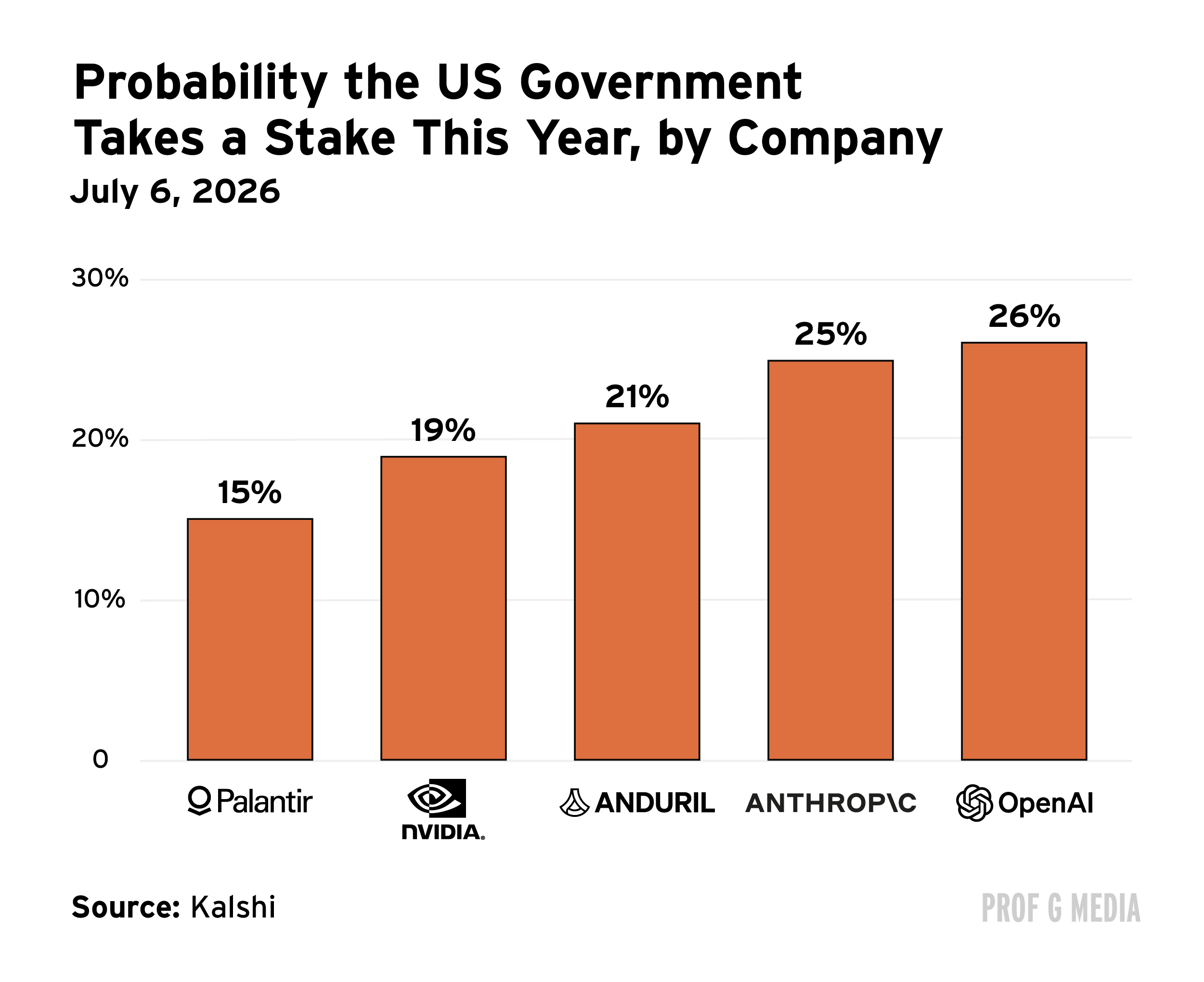
It’s quite simple: No healthy company would ask the government to take up a stake in it. It’s especially scary when you realize how many trillions of dollars are riding on this thing. So that’s red flag number one.
Red Flag #2
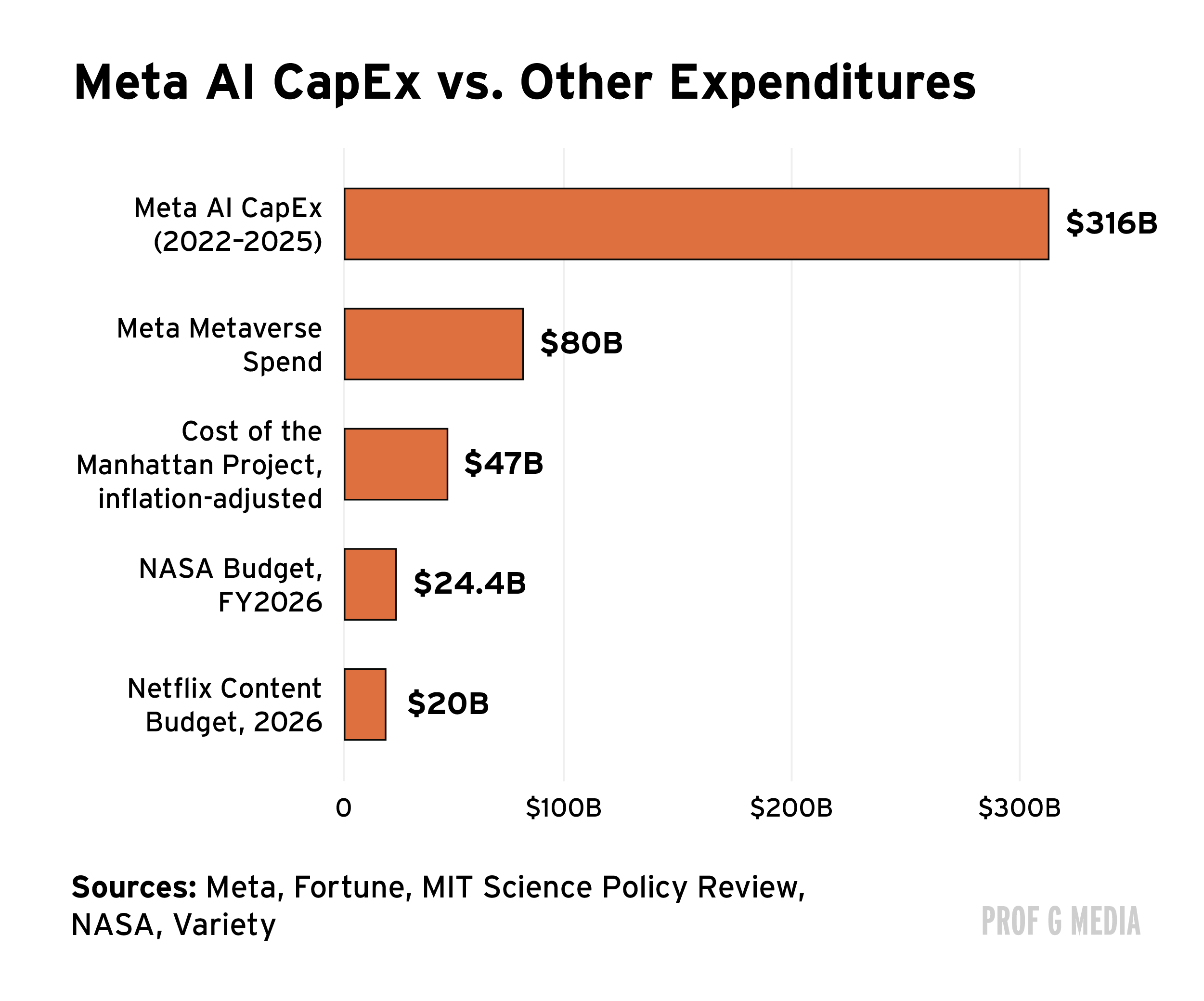
Meta raised another red flag last week when it said the one thing it wasn’t supposed to say: “We have excess compute.”
OK, those weren’t the company’s exact words … but they might as well have been. The hyperscaler is reportedly planning to launch a cloud business in order to sell excess compute. This is a very big deal, as CFO Susan Li had previously said the company was “having a hard time” meeting compute demands internally, and just a few months ago, Mark Zuckerberg said Meta would only build a cloud business if they felt they’d “overbuilt.” Which means Meta has either 1) too much supply, or 2) not enough demand. Or, worse, both.
Front-End vs. Back-End
Both red flags are an admission of the same thing: Building front-end AI is, at best, a difficult business, and, at worst, an unviable one. What do I mean by front-end AI? AI that consumers and enterprises actually use (ChatGPT, Claude, etc.) — i.e., not chips.
In OpenAI’s case, they’ve admitted their front-end AI business doesn’t work without government subsidies. In Meta’s case, they’ve admitted they tried to launch a front-end AI business (it was once Zuckerberg’s goal to build “the world’s leading AI service”), and failed. So, they’re doing what any sensible hyperscaler would do: They’re pivoting to back-end AI. Why? Because it’s already been proven to be a great business. Amazon’s cloud unit did $37.6 billion last quarter. Google’s did $20 billion, and Microsoft’s did $34.7 billion.
Irrational Customers
But hold on … if front-end AI is such a bad business, how could back-end AI be such a good business? In mining terms: How could you sell so many picks and shovels to a goldminer who can barely mine any gold?
This is where the AI trade gets ugly. The economics only make sense if there exists an extraordinarily wealthy (and irrational) customer who’s down to burn billions of dollars a year with no return. In AI’s case, there are two: OpenAI and Anthropic. We estimate that those two companies alone have accounted for 60-80% of the AI revenues generated by Amazon, Google, and Microsoft, and according to The Information, they’re responsible for roughly half of the hyperscalers’ entire revenue backlog.
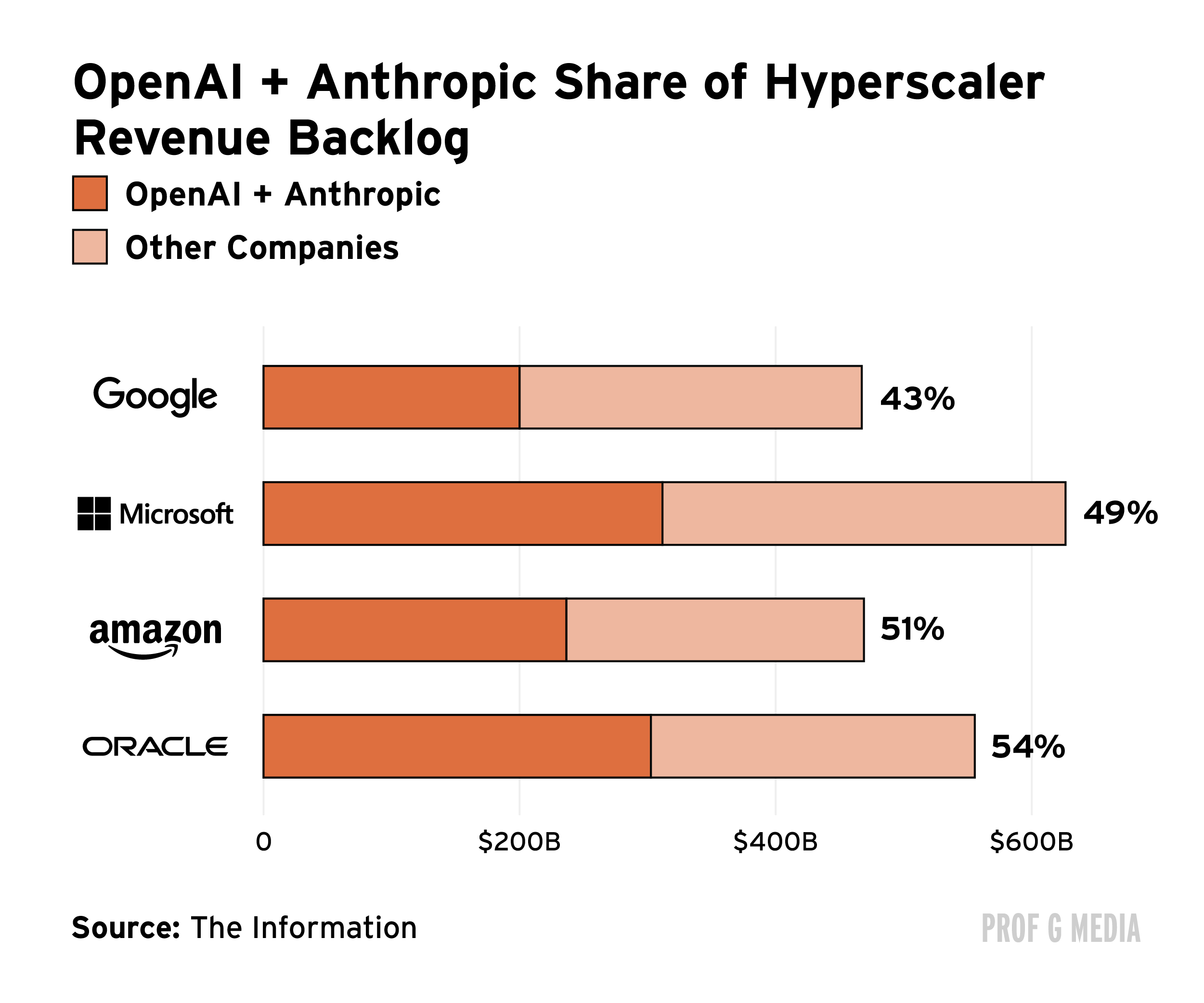
In other words, without OpenAI and Anthropic this whole thing collapses, and OpenAI just told us they need government support. Uhhh … that’s not good?
The Blast Zone
This is a bubble, and it will either pop or deflate. That’s the bad news. The good news is the pain will be relatively contained.
How much damage a company incurs will largely depend on their proximity to the blast zone. OpenAI is closest, as it is the blast zone. Next is probably Oracle: The company not only depends on OpenAI to purchase more than half of its future compute, it’s also borrowed more than $150 billion to build said compute. Further out (but still close) are the Big Tech names: Microsoft, Amazon, Google, and now Meta. However, two crucial details are also true of those names (to varying degrees): 1) They’ve invested in blast zone protection (strong balance sheets), and 2) the blast zone risk is mostly priced in.
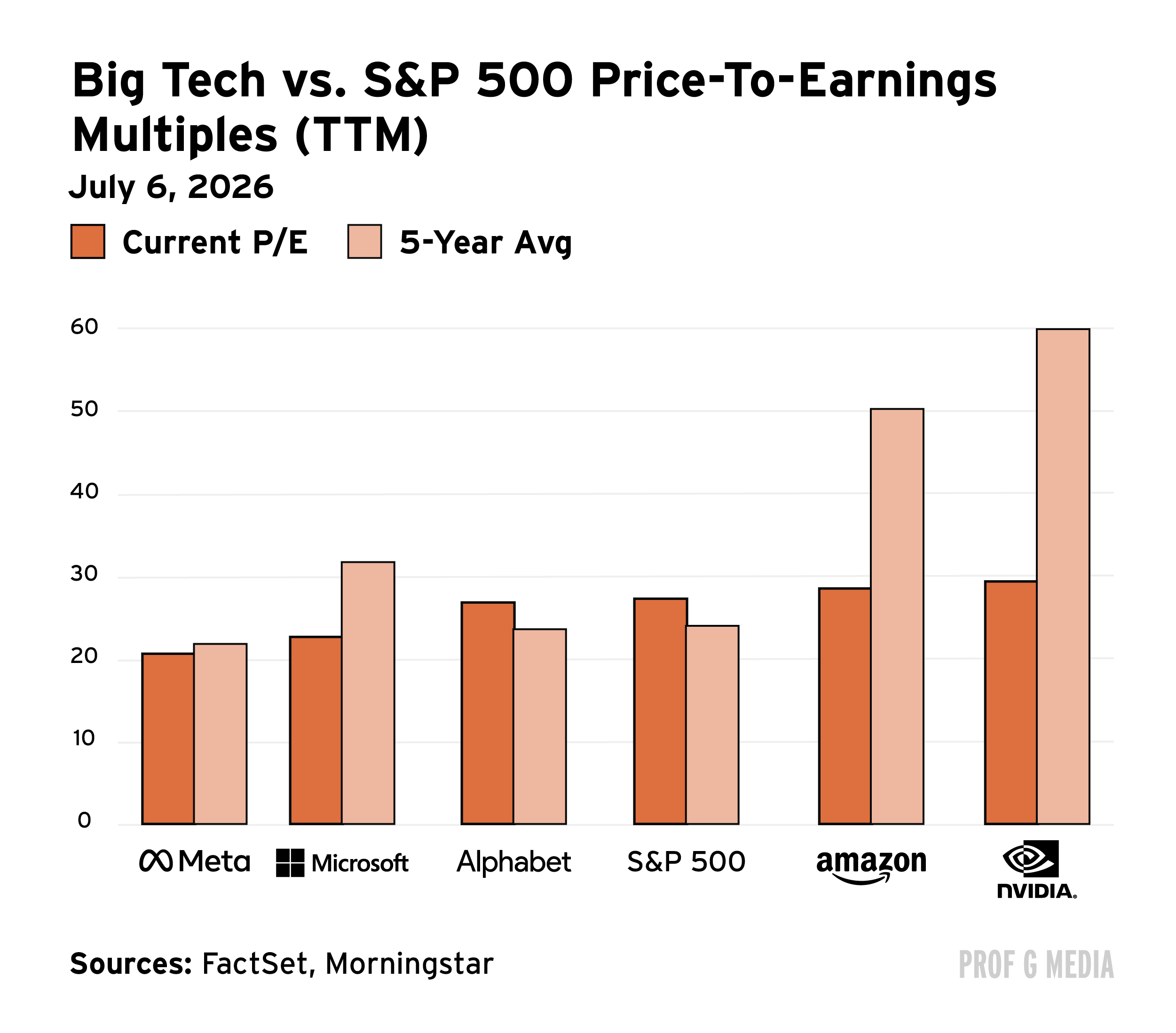
Take Microsoft, for example. Yes, OpenAI is their largest customer by far. However, unlike Oracle, they haven’t built out their compute capacity with borrowed money. Instead, they’re tapping into the cash mountain they’ve accumulated over the years to make a bet that — crucially — they earned. In addition, the stock is currently trading at a price that implies investors believe the bet won’t even work: Microsoft is valued at 23 times trailing earnings — 25% lower than its five-year average, and 16% lower than the current average of the S&P 500. Meta’s in a similar position, trading at 21 times earnings. In fact, it had gotten so cheap last week that I decided to buy at $564 per share. Meta stock has since risen more than 6% (hooray for me), but I believe it’s still in safe territory. (Note: This isn’t investment advice.)
Bubbles reveal winners and losers. To spot them, keep tabs on two things going forward: price and leverage. If either gets too high, you’ve got a problem. Examples of companies for whom one (or both) of those numbers is beyond the pale: SpaceX, CoreWeave, SanDisk, and Cerebras. I’d add OpenAI at a trillion dollars to that list, but Altman is supposedly already struggling to convince investors of that number. (In which case, the deflation might have already begun!)
This doesn’t mean Big Tech is entirely in the clear. Leverage can always rise, and in fact, it’s already beginning to do so. But that doesn’t mean you should be freaking out (yet), as, unlike 2008, many investors are aware of what could go wrong.
250 Years Later
What if Trump actually does bail out OpenAI? What if taxpayers are forced to take on the burdens hitherto borne by the likes of Andreessen Horowitz and Softbank? What if this incredulous burn is sustained only through the financial coercion of middle-class households? I haven’t modeled that one out, as I find it so outrageous. But perhaps I should.
If that’s how this ends, we’ve got bigger problems than bubbles. The 2008 bailout was, at the very least, necessary to prevent a systemic meltdown in the real economy. (Yes, we shouldn’t have let the banks take on so much risk, but the point stands.) But to bail out OpenAI … a company of no systemic significance or real-world necessity — well, there’d be no dressing that one up. It would be theft, a direct transfer of wealth from the middle-class to the nation’s richest, a bald-faced act of corruption to maintain the wealth of the already wealthy. Capitalism on the way up, socialism on the way down.
Is that really the America we live in, 250 years on? Is that who we are as a nation? I hope not. But everyday my hope fades a little more.
See you next week,
Ed
Advocating that the state should own and control major industries. Isn’t there a word for that? The Republicans used to warn of it all the time, I’m sure they did. What was it? Sociable? Sociability? Ah, I’m sure they’ll remember it soon enough - and just how much it used to frighten them.
Again an excellent piece, Ed. It surprises me it is taking this long. But logic dictates things will blow up (or deflate) at some point.
You're asking if this is the America you live in (and, mind you, it impacts the rest of the world as well). And the answer is yes, absolutely. The banking disaster of 2008 might have called for a bailout as we could not do without the banking system. But the deeper dynamics were as they have always been, and are now: unfettered greed and a total disregard by the filthy rich for the rest of us.
Very little has been done to address that drive or reign in the excesses as a result. As long as unimaginable wealth remains the mother/father of all ambitions, AND is combined with a near total lack of any moral, social, financial and legal accountability (as was the case in the banking crisis, where only one middle manager was arrested, if I remember correctly), this will keep happening over and over, and on an ever larger scale. In the end, it does not matter if the government takes an ownership cut or not: The taxpayer will always be the one to pick up the tabs.
Indeed capitalism going up and socialism going down.