


Last week, voters around the country decided 41 local ballot measures on data centers, and they sided against the industry in all but one. The lone exception was Harwood, North Dakota, where only 430 people voted. Tech companies and their allies outspent the local opposition groups by roughly 100 to 1 and lost anyway.
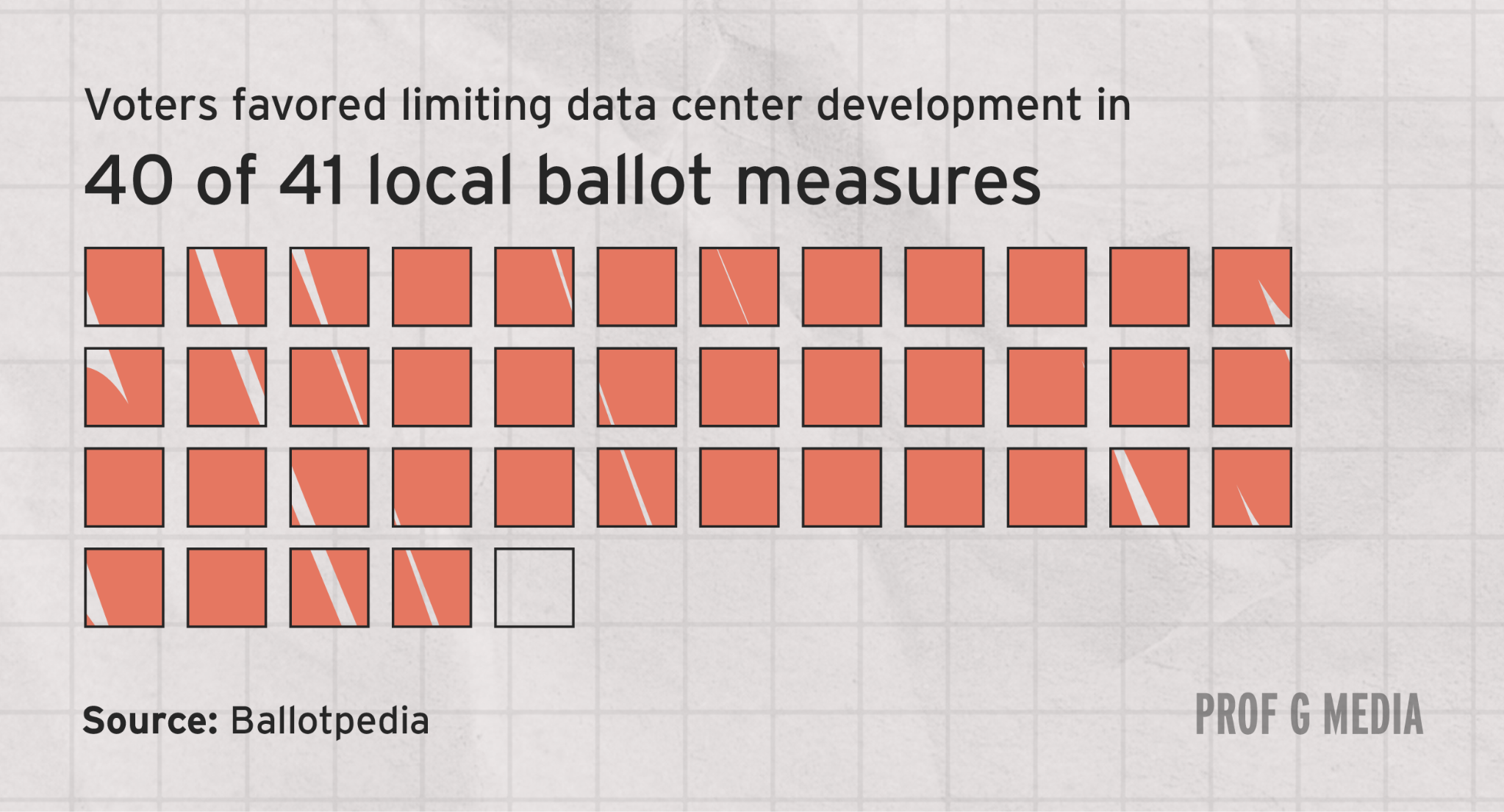
As the midterm autopsies roll in, these ballot measures have received plenty of national coverage because they perfectly illustrate how much Americans have come to dislike data centers. In NBC’s exit poll, 76% of voters said they would oppose building a new data center in their community. But the measures themselves won’t stop much construction. The local votes directly affect roughly 2 gigawatts of the projects whose size has been reported, or about half a percent of the capacity developers have planned nationwide.
The governors’ races will stop a lot more. At least nine states now have a governor or governor-elect who has promised or already imposed a pause on new data centers, and together those states hold 41% of the national pipeline. That was the result investors reacted to on Thursday, when the Nasdaq 100 shed $2.3 trillion in market value, the largest one-day loss on record for the index.
On Prof G Markets, we’ve spent the past week trying to work out what a pause means in practice. The state is the level of government with the most control over a data center, and it just changed parties in most of the places the industry planned to build. For AI companies whose futures hinge on the data center buildout, this is very bad news — unless public sentiment drastically changes.