



We’re not getting ahead of ourselves.
We know polling errors are unpredictable, October surprises happen, and even without those, the Senate is far from a sure thing.
But the odds are that Hakeem Jeffries will be the new Speaker of the House in January, and with a functional majority behind him.
If voters reject the Republicans in November, it will be in part because they are crying out for Congress to take some action: this is a group of people with a 16% approval rating (it fell to a jaw-dropping 10% in April), and just had its least productive session since at least 1973.
And while current House leadership should be held accountable for that, less than a third of Americans have approved of Congress for decades. There were around as many Democrats presiding over the House as Republicans over those years.
Whatever happens in November, the Democrats have a big opportunity to get something done for a public that is desperate for that to happen.
The next question is what? And the good news for Democrats is that the Wall Street Journal just laid out a complete agenda for the left on three major economic items: healthcare, taxes, and affordability.
They come from a survey that the Journal conducted last week, and it’s the single most important policy document for Democrats to hold on to through 2028.
Today, we’re exploring that agenda, and the Democrats who want to do it justice.
Programming note: Raging Perspective is back on Wednesday. Join Jessica and Aaron Parnas live at 12PM for an unscripted, unfiltered, unedited conversation about the issues defining this era. And as always, we’re also taking your questions! Ask away in the comments section below.
Healthcare: Voters want better coverage, lower prices, and Medicare for All
Republicans kicked 13 million people off Medicaid in their “Big, Beautiful Bill” last year, and that was just the tip of the iceberg.
Tightened eligibility and enrollment requirements, messing with states’ taxes and payments, and lower Obamacare subsidies were also major parts of the package.
Undoing those policies is key to most Democratic candidates’ pledges this cycle. Just about all the major candidates are all campaigning on undoing Medicaid cuts, and some want to repeal the bill altogether.
Some candidates are targeting specific parts of our broken healthcare system. Sherrod Brown, for example, is focused on drug prices. In a campaign stop in July, Brown compared drug prices in Ohio to nearby Canada: “You pay more than that same drug, the same dose, the same maker of the drug does overseas in another country.” He wants comprehensive reform of that system.
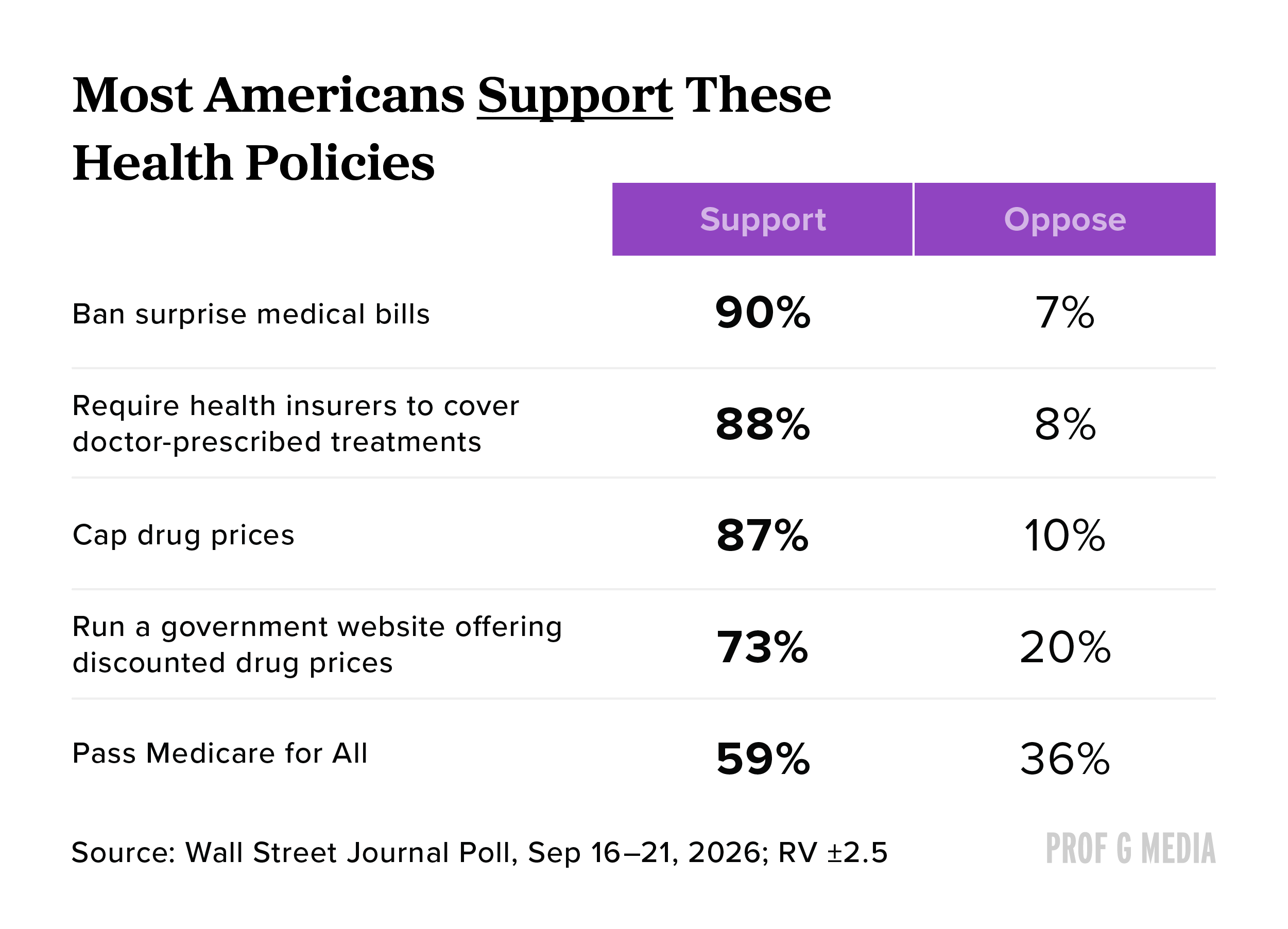
As the Journal’s poll reveals, that’s something Americans want too: around nine-in-ten voters want to ban surprise medical bills, require health insurers to cover doctor-prescribed medicines and services, and impose caps on drug prices.
Trump’s “TrumpRX” drug discounting website gets positive marks from voters – three quarters say they want a service like that – but Americans want to go further.
Nearly six-in-ten say they want Medicare for All, a sweeping health policy reform that Democrats are increasingly embracing. Maine’s Troy Jackson, Michigan’s Abdul El-Sayed, and Minnesota’s Peggy Flanagan are at the top of the heap this cycle, and it’s bound to be a hot issue in the 2028 primaries.
Taxes: Higher taxes for the wealthy were surprisingly popular
It’s been more of the same on taxes during Trump’s second term: an extension of the 2017 tax cuts that disproportionately benefited the wealthy (not just us saying it: Trump’s tax law was “skewed to the rich, expensive, and failed to deliver on its promises, according to the Center on Budget and Policy Priorities).
Democrats have been clear-eyed on this topic. James Talarico told attendees at a rally in August that it was “time to repeal the Big Ugly Bill’s tax breaks for the top 1%;” he is running on a fairer tax system that would impose higher taxes on large corporations, including when they announce stock buybacks, and on billionaire tax loopholes.
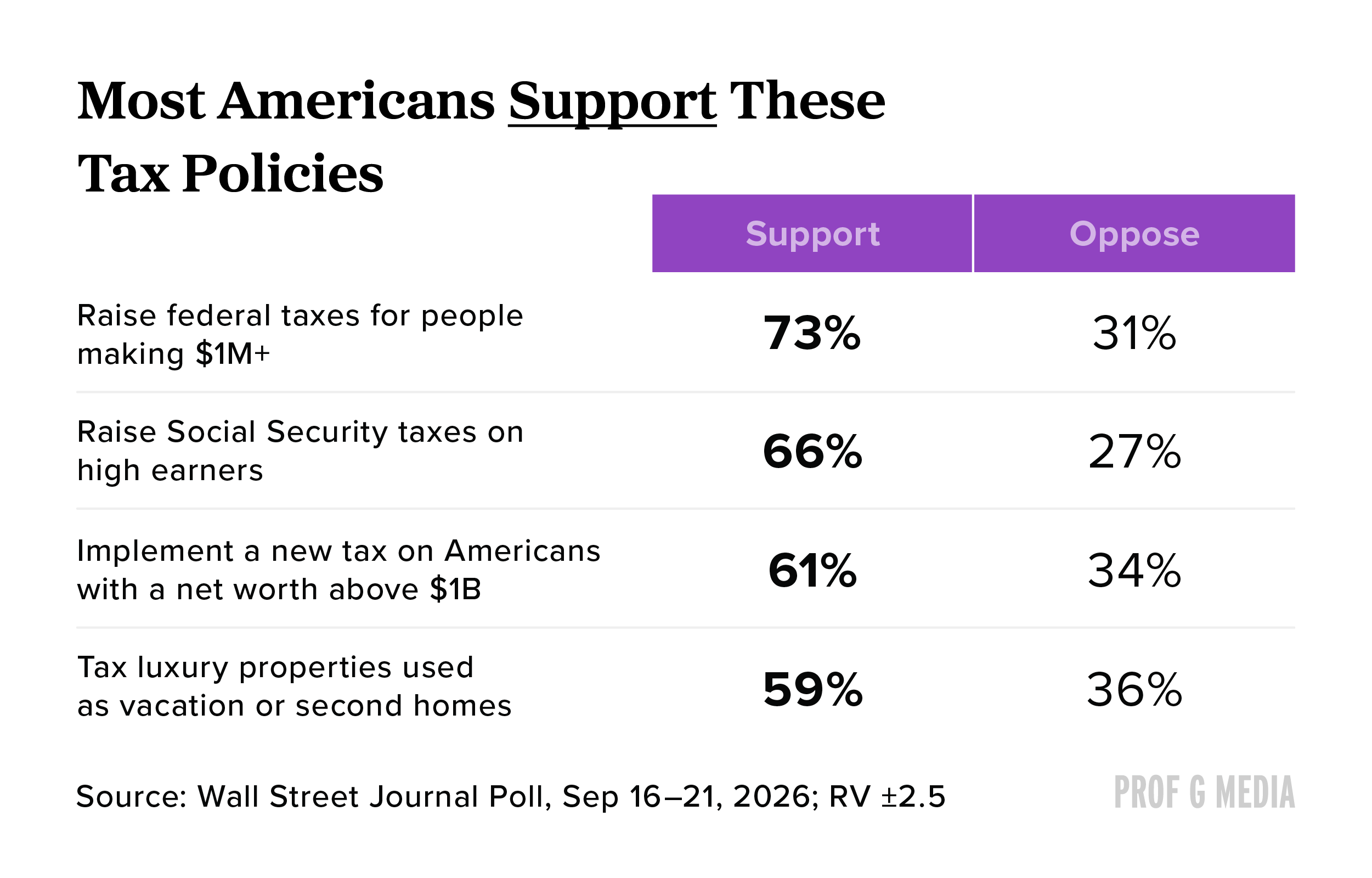
There is surprisingly broad support for going after billionaires in the Journal’s poll: 73% of voters said they wanted higher taxes on people making over $1 million, and 61% wanted a new tax on Americans with a net worth above $1 billion (that idea will be tested in a California ballot measure this November).
And yes, even taxing people’s second homes is broadly popular: 59% said they’d like to see a tax on “luxury properties” when they’re used as a vacation or second home.
Affordability: Voters want help on housing, interest rates and child care
Then there’s housing, which remains the biggest hidden issue in this election.
Republicans made some progress towards increasing housing supply with their 21st Century Road to Housing Act (you’ll recall that this was the bill enacted with bipartisan support in the Senate, only for Trump to call off a signing ceremony because they wouldn’t pass his “SAVE America” Act with it).
That bill aims to increase housing supply by reducing regulatory barriers, modernizing housing programs, and expanding access to housing. All good things, and something the Democrats can point to as Republicans try to paint their opponents as the “party of no.”
Democratic candidates are making the case on day-to-day affordability issues, led by gas and groceries. Josh Turek in Iowa is a great example. He’s telling voters he’s “laser-focused on costs, corruption, kitchen table issues;” Mary Peltola wants to focus on these costs plus Alaska’s already-expensive utility bills.
That certainly makes sense for their campaigns.
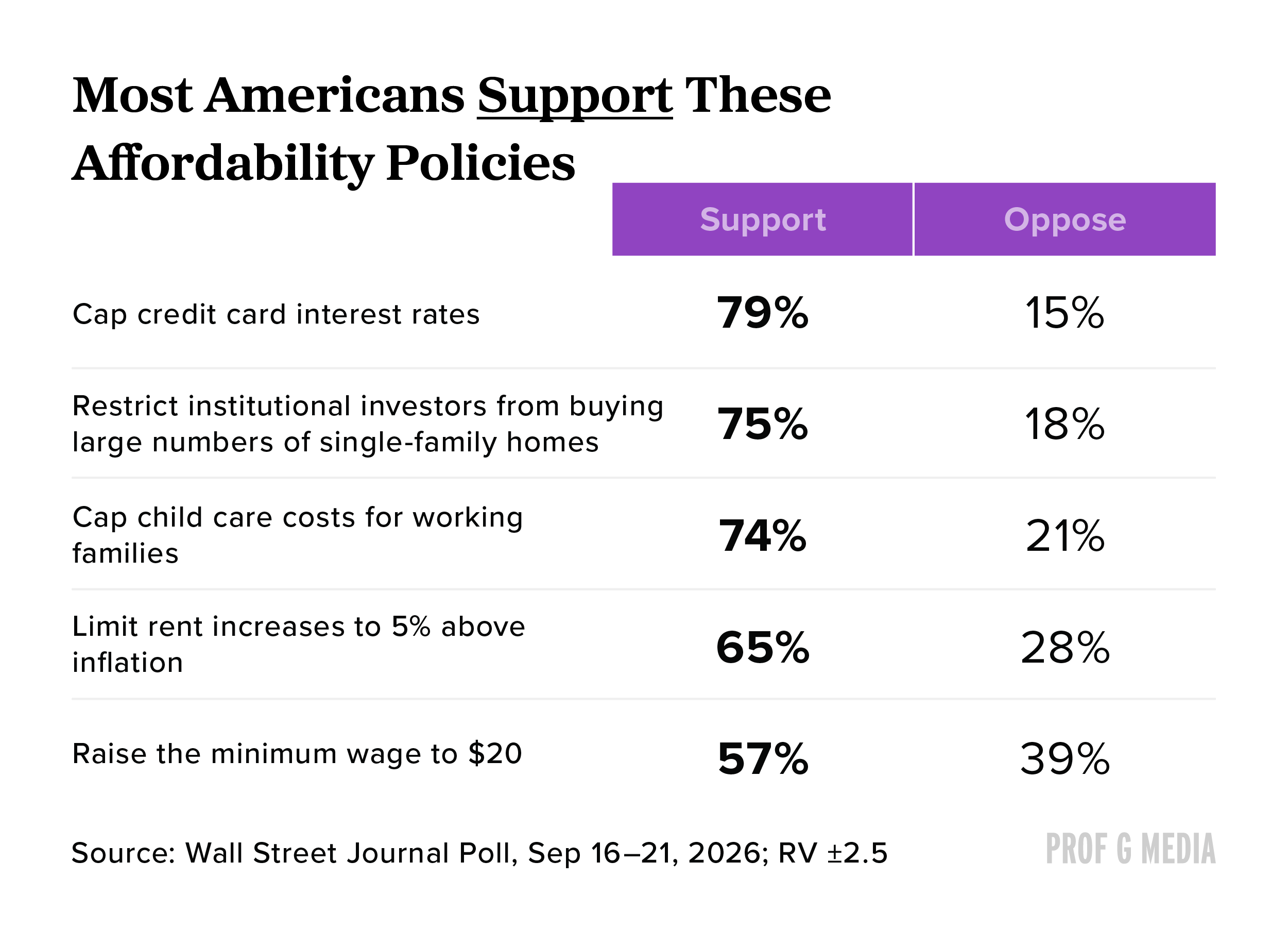
Voters, again, are receptive to an even bigger range of reforms: restricting institutional investors from buying up homes, capping child care costs, limiting rent increases, and raising the minimum wage to $20.
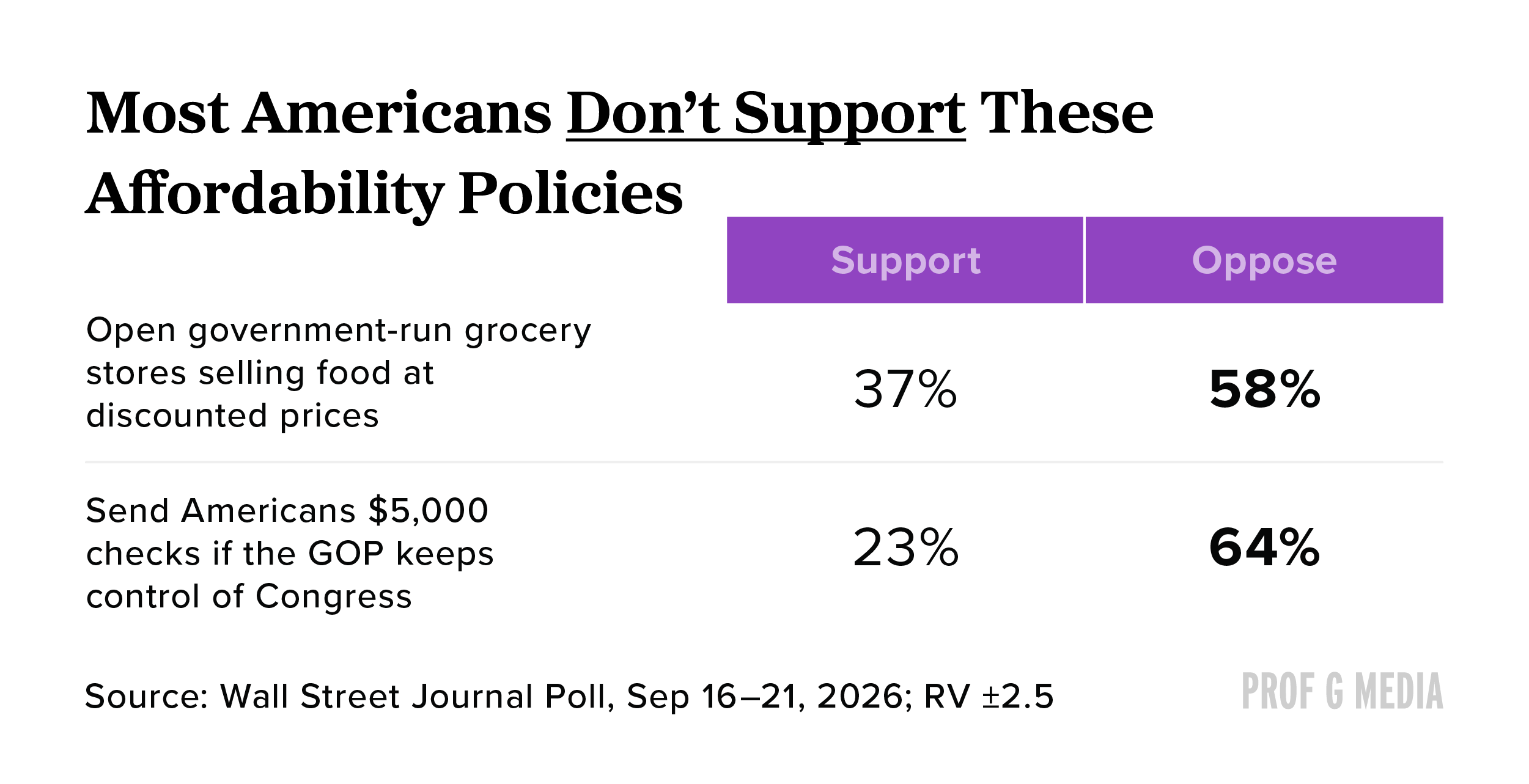
And a quick note on what’s not working: $5,000 checks. Yes, the “populist” idea that Trump floated at his national convention this summer is not even vaguely popular with voters. Only 23% agreed with the idea at all.
That’s voters’ agenda for Democrats. This January, they’ve got a chance to enact it.
Yes, the voters want lots of free stuff all paid for by only Notyou and Notme. That’s the problem, not the solution.
Most of these issues are deliberately vague and of limited actionable use. Scott has mentioned good options with income tax or capital gains tax on loans used by the wealthy to avoid income taxes. Additionally, most of the Healthcare related issues boil down to greater transparency for individuals to have greater control of their lives. Government laws or regulations can mandate medical pricing and drug price transparency which would solve artificial pricing discrimination.