


The full scope of how the Covid pandemic changed our world may not be clear for another generation. The deluge of official inquiries, political brawls, think pieces, and books (I wrote one) that have come out in the past few years are first drafts. They’re also reminders of how complex the pandemic was to live through, and how intense experiences can generate powerful insights. I periodically revisit this post I wrote in May 2020, because it puts me back in that strange time and reminds me what we could potentially learn from it. I hope we never go through another world crisis like the Covid pandemic, but even more, I hope we don’t forget its lessons. Some of which I discuss here. Best wishes for a safe and happy close to 2023 and a joyful 2024.
[The following was originally published on May 22, 2020.]
An Etch A Sketch is a mechanical drawing toy invented by André Cassagnes of France. Two knobs move a stylus that displaces aluminum powder on the back of the screen, leaving a solid line. The genius of the toy is aluminum powder. A child only needs to flip the toy and shake, redistributing the powder over the screen.
Covid-19 has presented an opportunity to envision our lives when turned upside down, powder redistributed. We can start over. We hoard relationships and the accoutrements of a life others have fashioned for us. We often don’t know any better, or don’t have the confidence to draw outside the lines until we’re older. My colleague professor Adam Alter has done research on the regrets of the dying. One of the biggest: not living the life they wanted to lead, but the life others chose for them.
In 2000 I left my marriage, my career in e-commerce, and San Francisco. I hit the restart button and left a lot behind. The period was lonely, rife with collateral damage, and the right decisions. Covid-19 presents society, and each of us, with the opportunity to design a better life with … less.
What do we leave behind? Some thoughts:
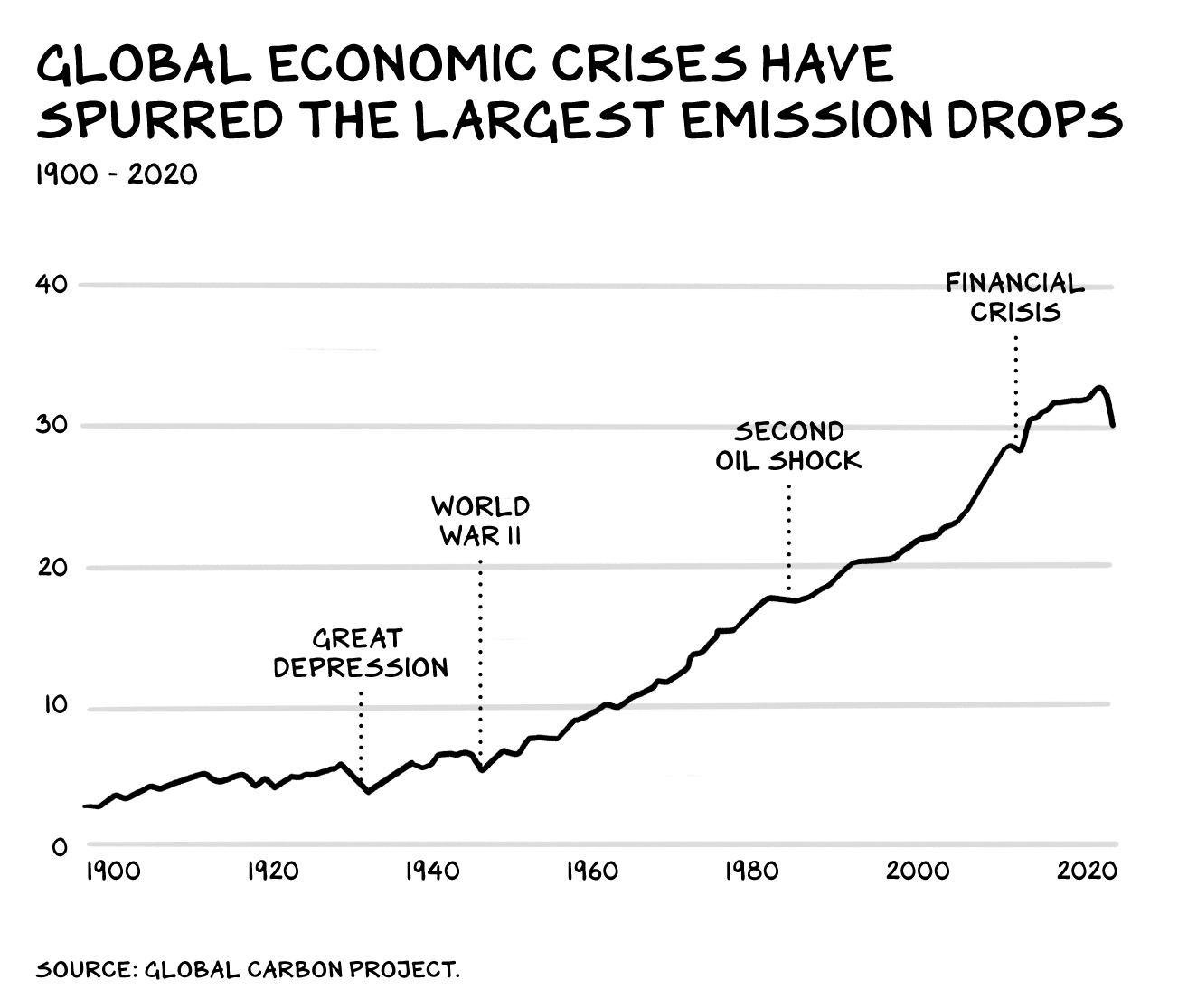
Emissions. Or at least, a lot of them. I’m not an environmentalist, and mostly believe after the last human draws her final breath, the Earth will register a 20-year belch and feel fine again. To be clear, I do believe climate change is man-made, as I don’t have my head up my ass, but I also believe the move to renewables will be expensive. Just as trickle-down economics is a lie, so is the notion that the Green New Deal will pay for itself.
In Florida, like many places, the water has been so clear, the sky so blue that I wonder if this is a time to move away from coal, cars, commutes … even if it’s really expensive. The last several weeks have convinced me it’s worth it. A spectacular home is worth a ton of money. Why wouldn’t we decide that a spectacular backyard (sea, sky, land), for all of us and our children, is also worth a huge investment?
Essential workers. The term essential means we’re going to treat you like chumps but run commercials calling you heroes. Just stop it. We lean out our windows and applaud health-care workers, as we should. We don’t, however, lean out our windows to salute other front-line workers — the guy or gal delivering your groceries or dropping Indian food through the window into your back seat.
Why? Because, deep down, we’ve been taught to believe that we live in a meritocracy and that billionaires and minimum wage workers all deserve what they got. We’ve conflated luck and talent, and it’s had a disastrous outcome — a lack of empathy.
There is so much that’s jarring about American exceptionalism. Thus far, a very American image from the pandemic is a makeshift morgue in a refrigerated tractor-trailer in Queens. Even worse? We idolize the founder of Amazon, who has added the GDP of Estonia to his wealth (all tax-free/deferred) during this pandemic, even as we discover that 25% of New Yorkers are at risk for becoming food insecure. This isn’t a United States, it’s The Hunger Games.
This country was built by titans of industry even wealthier than billionaires today — Vanderbilt, Rockefeller, Carnegie, and J.P. Morgan. But 1 in 11 steel workers didn’t need to die for bridges and skyscrapers to happen. We are a country that rewards genius. Yet no one person needs to hold enough cash to end homelessness ($20 billion), eradicate malaria worldwide ($90 billion), and have enough left over for 700,000 teachers’ salaries. Bezos makes the average Amazon employee’s salary in 10 seconds. This paints us as a feudal state and not a democracy.
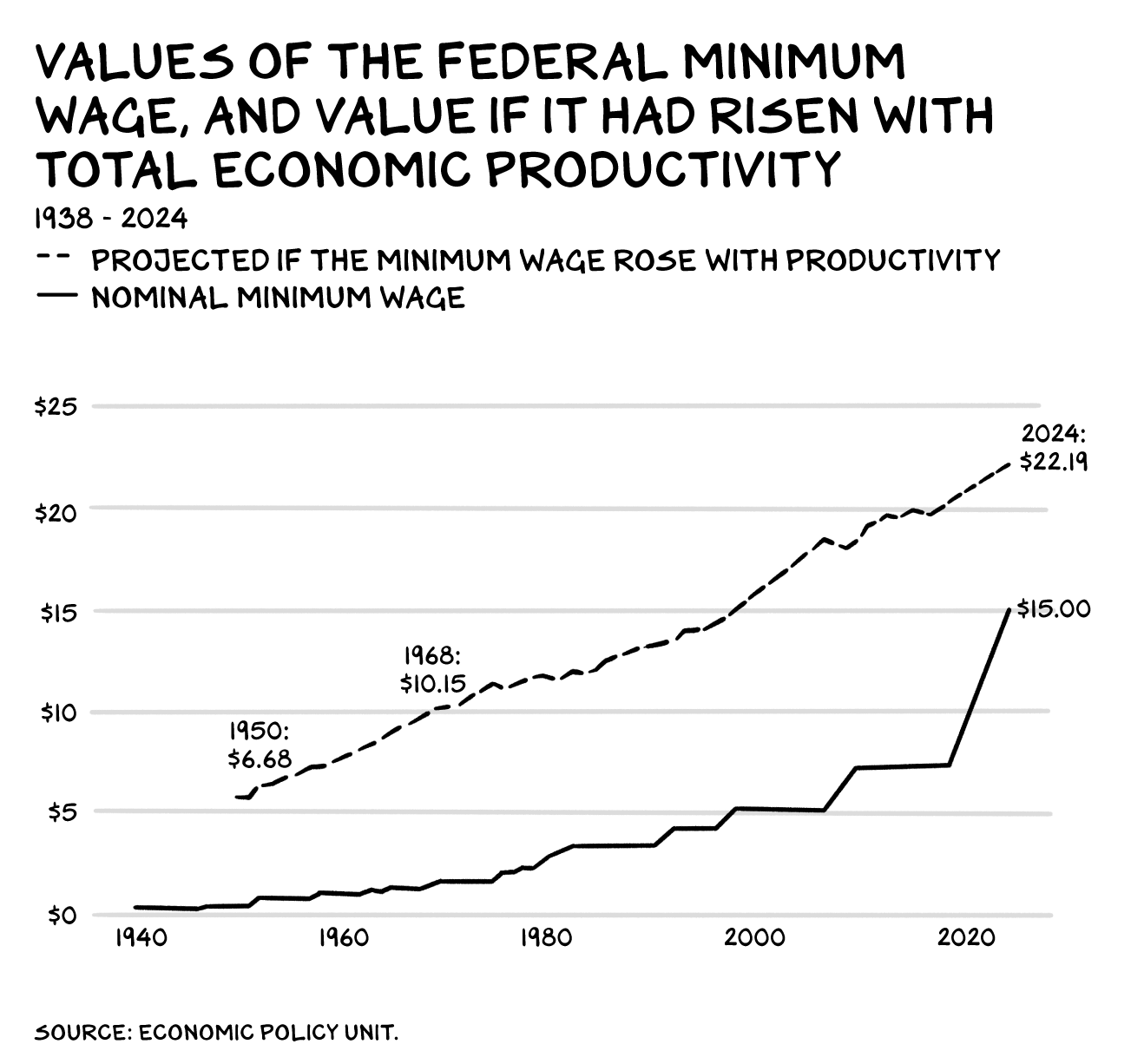
Our lack of empathy for our fellow Americans is vulgar and un-American. We can and should replace the hollow tributes with a federally mandated $20/hour minimum wage. This “outrageous” lift in the minimum wage would vault us from the 1960s to the present. As of 2018, the federal minimum wage was worth 29% less than in 1968.
Howling in the Money Storm
Money is a vehicle for the transfer of time and work from one entity to another. So, if we spend less money on one thing, we can invest more time on another. Could we invest less in stuff, less in commuting, and more in relationships? I’ve been howling in the money storm for so long. Believing my worth to others was a function of the stuff I had, or didn’t have.
We proffer admiration, affection, and a sense of awe to people who aggregate wealth. But that affection is often misplaced, as wealth can lead to greed and lack of empathy. This is an opportunity to spend less on stuff, spend less time commuting, and reallocate that capital and time to our partners and children.
On my podcast, the Prof G Pod, I interviewed philosopher and neuroscientist Sam Harris. I asked him for one piece of advice on how to be a better man. He offered that rather than trying to parent, cajole, discipline, or guide your children, your real purpose is just … to love them. My 9-year-old has been having a hard time with corona. I’m spending less time correcting, explaining, arguing, and more just loving … sitting in his room when he’s doing homework, engaging in conversation, and watching The Simpsons together. We’re on season 5. There are 31.
And … we’ll get there.
Steve Jobs, Donald Trump, and Jeff Bezos have 13 kids by 6 women. One denied his blood under oath to avoid child-support payments, another mocks the disabled, and the third steals from school districts (demand tax/budget cuts) to cling to power and wealth. We need a generation of men who emerge from this crisis with a commitment to being better fathers, husbands, and citizens.
The fastest path to a better life is regularly assessing what we’re leaving behind. The fastest blue-line path to a better world is more engaged fathers, not a better fu*king phone.
Life is so rich,

P.S. Join me and Mustafa Suleyman for a free talk on “Can AI Be Contained?” on January 9. Sign up here.