


4-min read
I can’t wrap my head around what happened at WeWork. It simply makes no sense. There has to be more to the story. Below is one (conspiracy) theory about the story of We. I have no evidence this happened, but also no evidence it didn’t. Regardless, it would make for an awesome Season 8 of Homeland.
Homeland, Season 8
A Japanese industrialist (Masa Moon) develops a friendship with an economist (Heather) helping his firm (HardBank) identify geographies and sectors ripe for investment. They develop a friendship over their shared interest in Ming Dynasty paintings inspired by the Southern Song painting academy.
Two years into their partnership, she informs him she works within a division of the CIA tasked with corporate espionage centered on nations that pose a threat to Western democracies. She asks Mr. Moon if he’d provide cover for agents under the auspices of working for his portfolio firms. He refuses, and is visibly shaken that their friendship may have been a sham, and that he was being “groomed.”
Seven months later, his texts and emails to Heather go unanswered. He emails that he hopes they can maintain their friendship and sends several high-res images of paintings from the Zhejiang School, commenting on the technical virtuosity of the ink-wash style. No response.
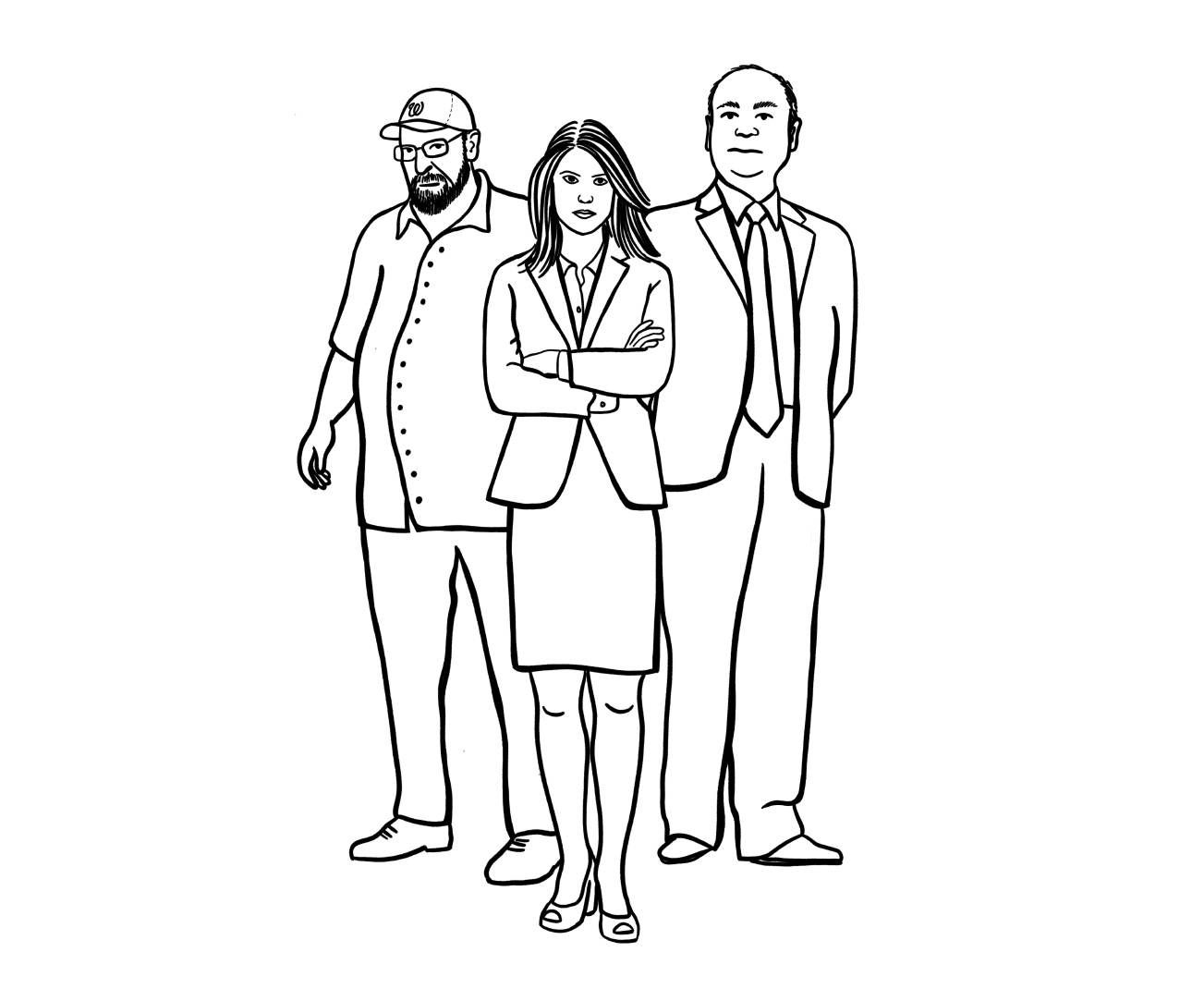
Five weeks later he is in DC for a conference on sustainable investing. After his speech, a man approaches him backstage. He sports a Tommy Bahama shirt, Washington Nationals hat, and a large beer belly.
“Mr. Moon, my name is Alex Rassey. I work at the CIA.” Gazing down at his shirt, he smiles. “Spies never look like spies. I worked with Heather. She was on assignment in Riyadh, where we believe she was abducted and killed. We have little information about the circumstances of her disappearance. A period of time has lapsed since last contact and, per agency guidelines, we are having a ceremony for her. I can take you to the ceremony if you’d like.”
Numb, Mr. Moon travels with the agent in a nondescript Chevy Cruze to the event. There is a table with pictures and mementos of Heather’s life. Among them is a framed textile of a Qing Dynasty painting. Mr. Moon is overcome with emotion at the prospect that his and Heather’s relationship was, at least partially, real. On the way to the airport, Mr. Moon tells the agent he’d like to honor his friend and support her operation. Over the following months, CIA analysts develop a plan. They brief Mr. Moon.
The Plan: Project Unicorn
The unicorn economy involves a collision of hubris, capital, and market dynamics that presents an opportunity to wreak havoc among the royal family in Saudi Arabia. This would allow a transfer of massive wealth from the kingdom to Western democracies.
Mr. Moon takes an active role in the refinement of the strategy. HardBank will raise a large fund with investments from the kingdom to funnel into cash-hungry firms in democratic nations, exploiting an unprecedented dynamic — a firm can now become one of the most valuable companies in the world without ever achieving meaningful profitability. The fund will identify dozens of unicorns that could incinerate tens, maybe hundreds, of billions of capital, as top-line growth and charismatic CEOs have replaced profits as the proxy for value creation.
Over the next 24 months, the fund raises and deploys $50+ billion into firms that, among other things, purchase real estate sight unseen, acquire thousands of budget hotels globally (under the discerning eye of a 25-year-old CEO), transport people from point A to point B for $10 at a cost of $15, and find people to walk their dog.
The CIA’s cyber-ops group supports the hype around the value-incinerating unicorns with thousands of online bots. They pour fuel on media content supportive of the unicorns’ valuations, while discrediting journalists and academics who question their irrational value. Millennial employees across the nation start to believe that their creativity, plus several months of effort, is commensurate with the value traditional firms took generations to build.
Two years into the operation, Mr. Moon meets with the agents running the effort. The agents worry that a recent implosion in value of one of the investments is so dramatic, it threatens the operation. The firm’s S-1 has revealed an upcoming incineration of capital no rational investment firm would tolerate. Agents suggest it’s best to let the firm go under, and that this is likely the end of the operation, as the incinerator strategy has become obvious.
Mr. Moon responds that the agents are not thinking big enough — and have underestimated the consensual hallucination between capital and founders. Mr. Moon suggests doubling down and incinerating more capital under cloud cover of rescuing the firm.
The bailout includes a multibillion-dollar buyback of worthless shares, a $1.7 billion ransom paid to the founder (who is holding controlling shares hostage, a trap Mr. Moon had set so the fund would vaporize billions), and several billion more to fund a quixotic turnaround plan. The CIA agrees and supports the double-down by nudging contacts at US financial institutions to submit nonbinding debt packages buttressing the notion that there’s value to be harvested.
24 Months Later
Mr. Moon attends another confidential ceremony in DC, where he receives the highest honor that can be bestowed on a non–US citizen. Over $90 billion has been transferred from the Kingdom of Saudi Arabia to Western democracies, and the royal family is rife with dissent, agita, and finger-pointing. The $90 billion transfer is equivalent to four years of oil import revenue from Saudi Arabia to the US.
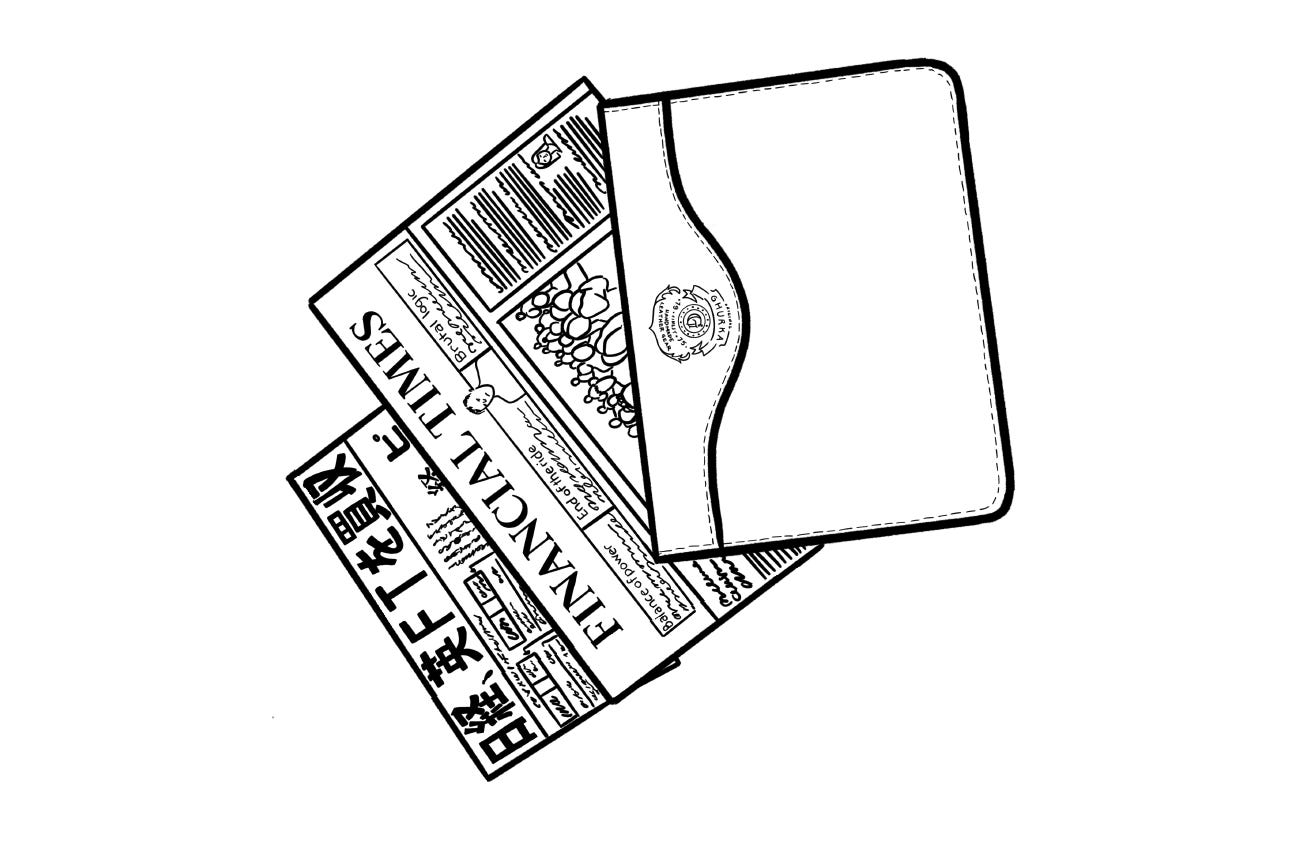
On the plane back to Tokyo, Mr. Moon has a copy of The Nikkei and a Financial Times. He pushes both aside for a Ghurka Moleskine notebook. In the notebook are color prints of Ming Dynasty paintings. The notebook was a gift from Heather. The inscription reads: “Mr. Moon, I appreciate your support. Heather.”
On landing back in Tokyo, Mr. Moon is greeted by more operatives, who tell him he is needed for another project. He refuses. The agents urge him to participate, as Project Unicorn appears to have created a contagion. The hope was that the destruction in value would be ring-fenced to private-market unicorns. But the tumult in the private markets appears to be leaking to the public markets and non-tech sectors. The agents worry a crash in values could further erode confidence in the system, weaken the economy, and possibly threaten democracy. Mr. Moon, somber, sits down at a nearby desk, pulls out the Moleskine notebook, and begins flipping through the paintings.
Credits
Life is so rich,

P.S. I’m starting a new project, not quite as crazy as this. Sign up at section4.com, and we’ll see — maybe it will be as crazy as this.