


Scott here. I just wrapped up a weekend at SXSW. Thanks to the many of you who joined me, Ed Elson, Jessica Tarlov, and Kara Swisher at our live tapings in Austin.
My medium (podcasting) tends to be a one-way channel. I find live events energizing, as they give me the opportunity to meet my audience and start a dialog. I’m looking for more of that in my life. My sense is that many of you are, too.
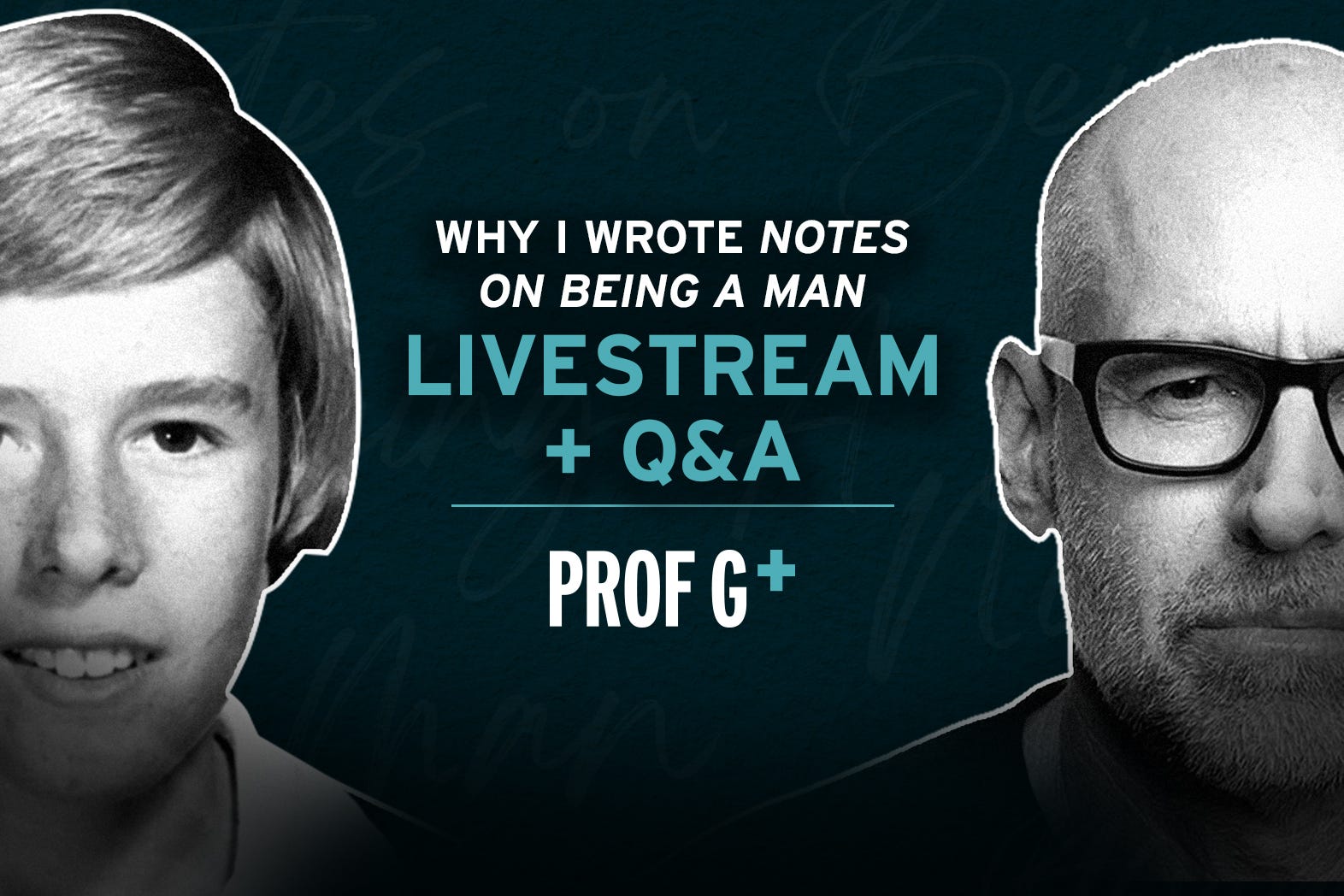
I’m hosting my next Substack livestream this Wednesday, March 25 at 1 p.m. ET. We’re doing things a little differently this time and opening up the session for live Q&A with me, exclusively for Prof G+ members.
Notes on Being a Man
Last fall, I released Notes on Being a Man. The book explores what it means to be a man in modern America, informed by personal experience.
Five years ago, my advocacy for young men sparked a hostile response. Today, society is ready to have a productive dialogue. This isn’t a zero-sum game. We can build on the gains women have registered over the past three decades and ensure there’s room for boys and young men in the conversation.
On Wednesday, I’ll share the journey that led me to write this book. And, I’ll take questions related to the themes of Notes. Whether you parent, teach, mentor, know, or are a young man – I want to hear from you.
Prof G+
On March 8, my Pivot co-host Kara Swisher and I hosted our first Resist & Unsubscribe event in Minneapolis. The event was also livestreamed to Substack. I’m grateful for the overwhelming support we received.
In recognition of the thousands of you who joined us, we’re offering a discount on Prof G+ (our Substack all-access pass) for the remainder of the month.
Our Substack livestreams, including this upcoming session, are limited to Prof G+ members. I hope you’ll consider subscribing.
Through March 31, new Prof G+ subscribers receive 15% off an annual plan, only at the link below:
See you Wednesday.
Life is so rich,
Scott
Professor
I love that the self-described introvert who was 'living his best life' locked in his house during COVID now finds live events 'energizing.' Now that's personal growth. Or the edible kicked in. Or did it wear off? Who can tell anymore?
Whatevers, I welcome you and your media empire to Substack. If you want to see what midlife crisis content looks like without the graphs, I'm over at Aging Against My Will, chronicling the indignities from the cheap seats.
Scott, I’d gently push back on the framing that society “wasn’t ready” five years ago. What changed isn’t readiness — I believe it’s that the political consequences of ignoring male displacement became impossible to dismiss after 2024.
The harder question: when boys grew up watching equity frameworks expand without anyone explaining where they fit in the new map, was the hostile response to your advocacy cultural immaturity — or a system with no language for “you’re included too”?
Significance isn’t zero-sum in theory. But it feels zero-sum when nobody does the cultural work of explaining why it isn’t. I think that gap between policy intention and lived psychological experience is where the damage lives.