



You’ve heard a lot about whether the summer polls get elections “right” over the last week. Want to know a big problem with that argument? Things change! Issues, candidates, and voters change as we get closer to election day.
Back in 2022, inflation looked like not just the dominant issue, but the only issue going into the midterms. Then, in June, the Supreme Court overturned Roe, tearing up the rights of millions of women. It was the biggest reason those midterms didn’t turn out as poorly for President Biden as people assumed earlier that cycle.
Four years later, and here comes another pivotal election issue at the last minute: data centers. They’re being built at an unprecedented rate, chewing up land and energy, and leaving voters very unhappy.
That part is clear. What we should do about them is a lot muddier. It’s become another fault line in the Michigan Senate race. It was enough to make the NRSC send an emergency memo in Ohio.
Meantime, three governors have announced actual major reforms on data centers… and two of them look like they’re panicking.
The other is Pennsylvania Governor Josh Shapiro, who – true to form – has come out the other side with a nuanced approach: recognize the economic potential without leaving communities in the dark. No wonder he’s on track for a victory in November.
Programming note: Raging Perspective is back! Join Jessica and Aaron Parnas live every Wednesday at 12PM for an unscripted, unfiltered, unedited conversation about the issues defining this era. As always, we’re also taking your questions! Ask away in the comments section below.
It’s early, but voters really don’t like data centers
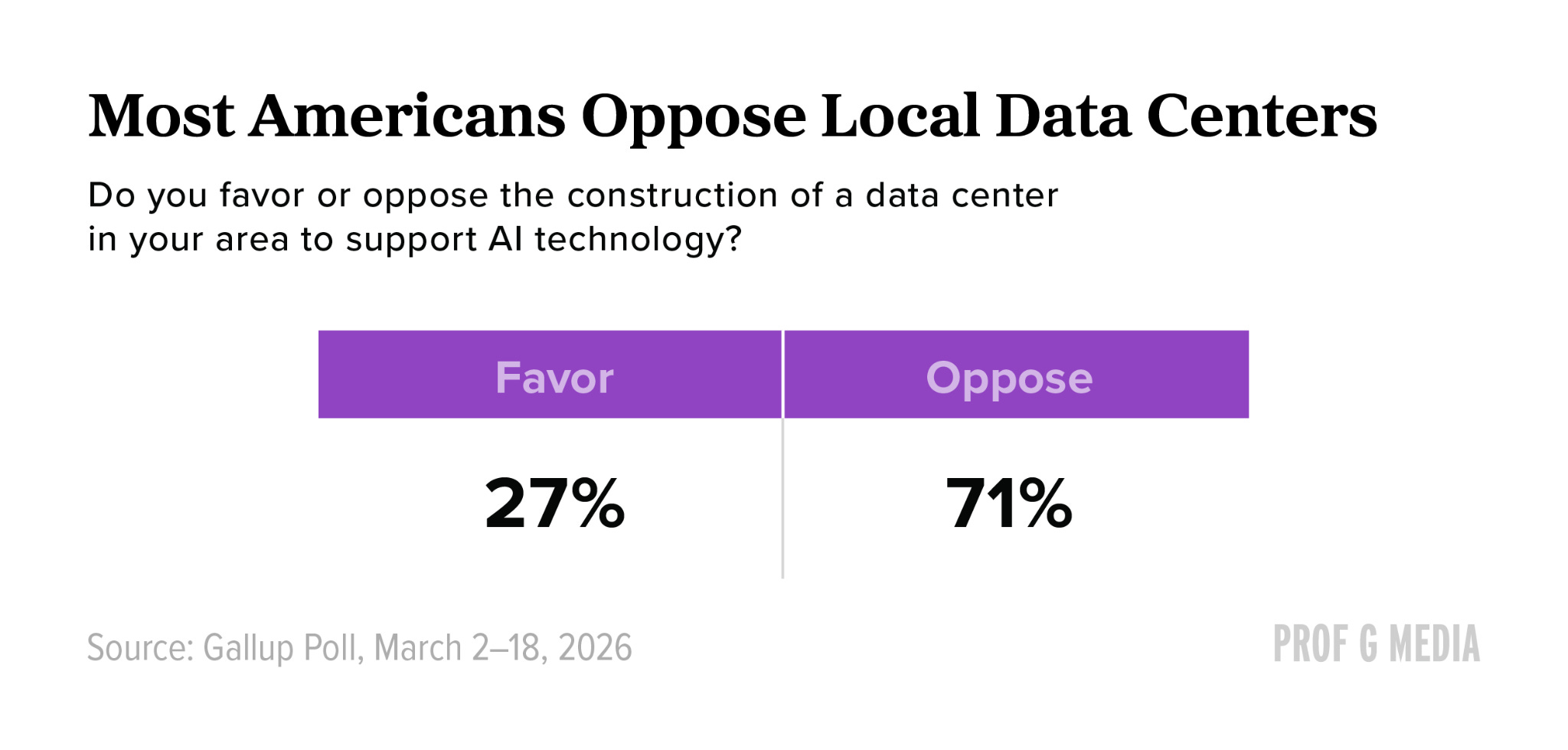
Let’s start with the cold, hard truth: voters don’t want data centers near their homes. Gallup asked about the topic earlier this year, and found:
Seven in ten Americans oppose constructing data centers for AI in their local area
Nearly half of all Americans said they were “greatly” worried about their environmental impact
Americans were most worried, in order, about their effect on resources, quality-of-life concerns (land, construction, and health impacts), effect on costs, and pollution.
Data center advocates have some messaging work to do here. Yes, data centers consume a lot of water and energy. Berkeley estimates show that they’ll consume 10-15% of U.S. electricity by 2030, and they already use about 17 billion gallons of water per year. But that’s less than other industries, including cattle, power plants and even residential water use.
They’ve also delivered significant economic benefits to communities. Check out Loudoun County, Virginia, which has fast become the “data center hub of the world.” The county has opened two new schools, a park, and a $102 million recreation center over the last few years, all thanks to data center tax revenue. Or Richland Parish in Louisiana, where teachers are getting $51,000 bonuses this year thanks to tax revenue from a new Meta data center.
One issue they can’t address is the land use. These things are BIG. The same county, which has more than 250 warehouses, is losing a lot of space. Those centers use 53 million square feet, or about 920 football fields of land.
The scale of construction is also probably making voters uneasy. There are already 537 data centers in Texas, the most of any state. There are hundreds more on the way, and construction is accelerating: the number of centers there has more than doubled since July last year.
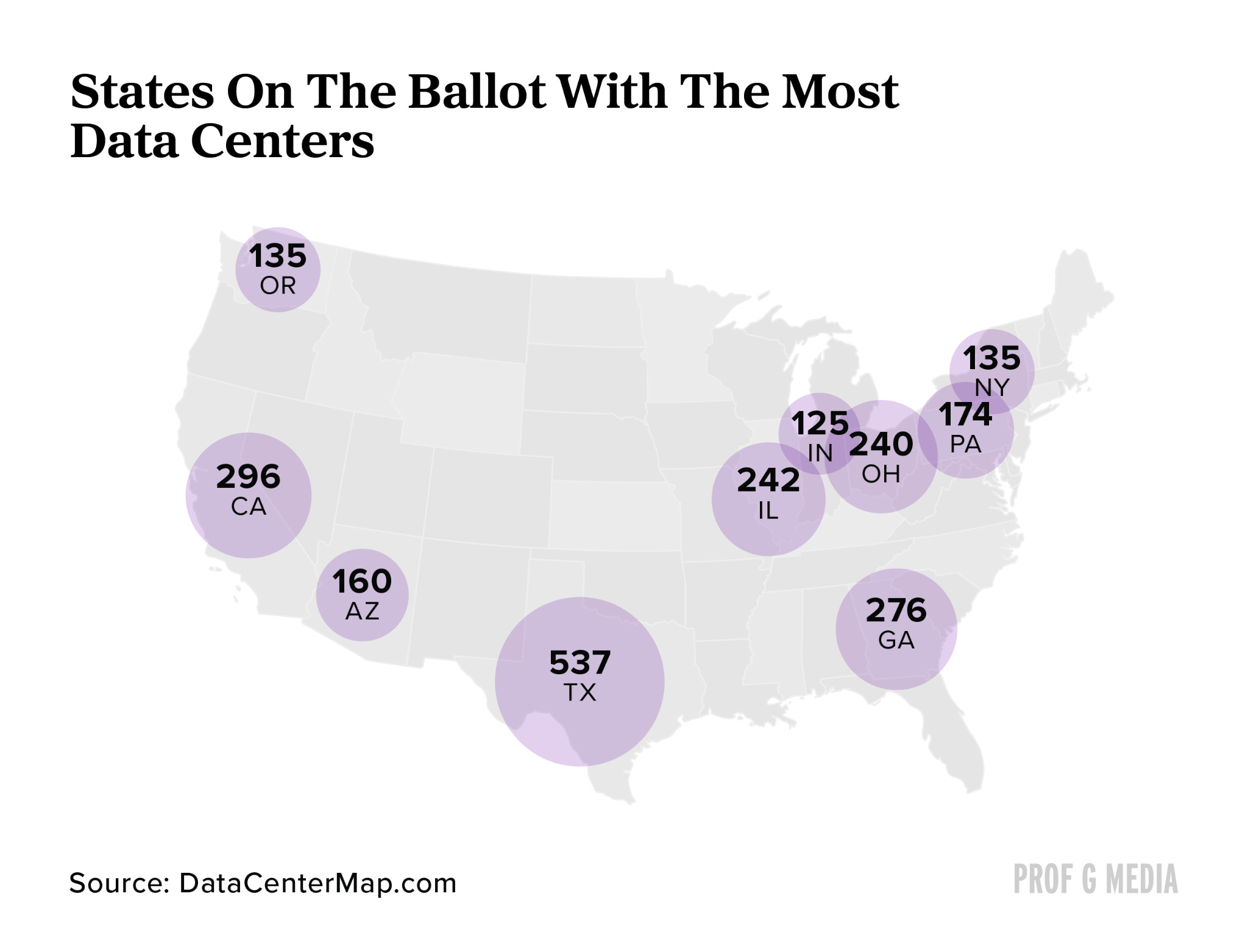
Pennsylvania and New York have a combined 309, and have also doubled their total number over the same period.
Moratorium mania has left two big-state governors panicking
Given those statistics, it’s easy to see why some people on the left say a moratorium is the only path forward.
What’s interesting is how much impact the “moratorium” advocates have had in two states that are otherwise diametrically opposed: New York and Texas.
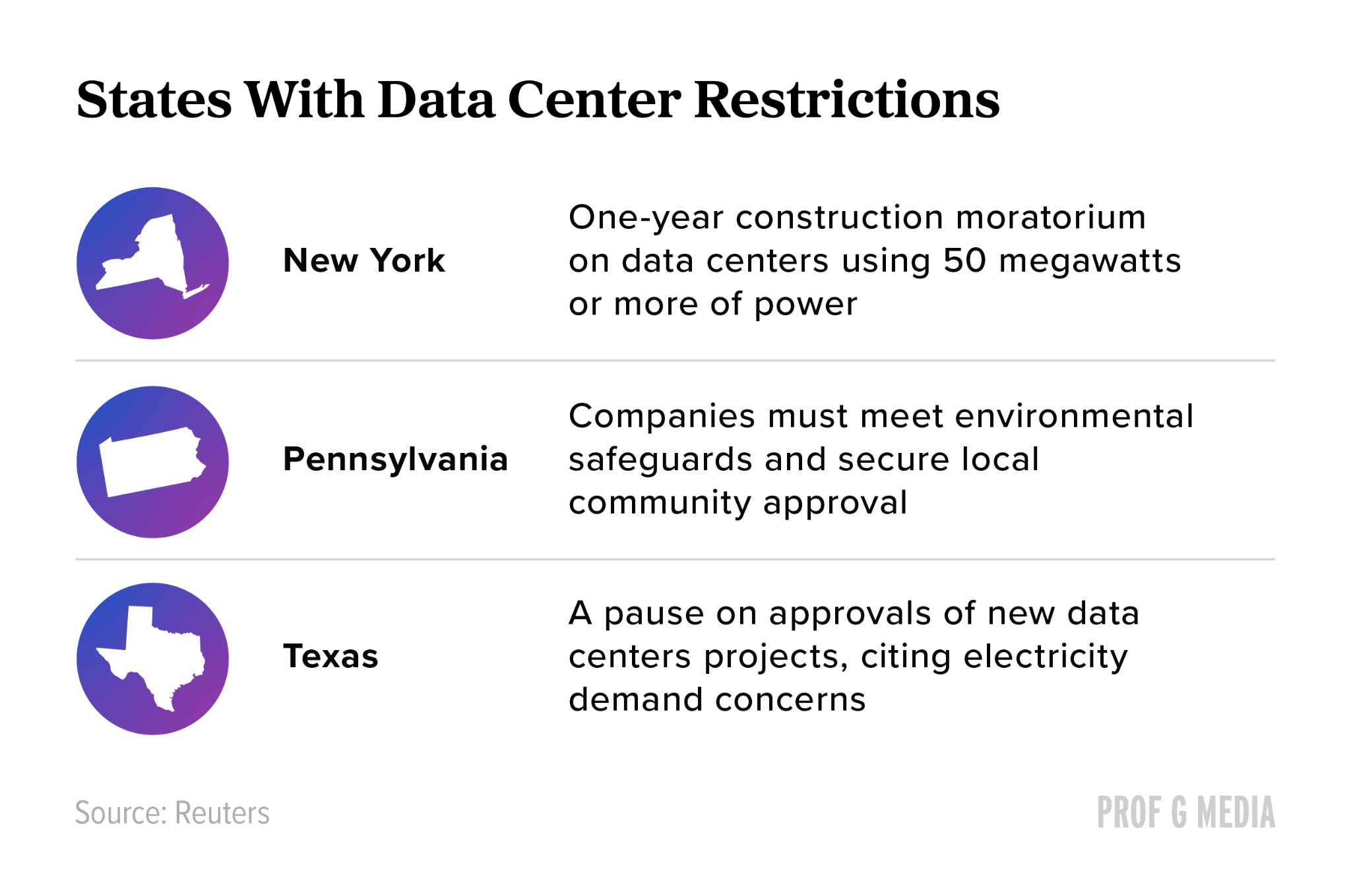
In New York, Gov. Kathy Hochul became the first governor to impose a one-year moratorium on the largest data centers (“hyperscale”), on the grounds that they are asking for more power than the state can handle. According to one state legislator, Mayor Mamdani’s request for New York City residents to turn up their thermostats in July has also weighed on lawmakers.
(Mamdani hasn’t commented on whether he supports a data center moratorium.)
Then there’s Texas, where – we can’t believe we’re saying this – Republican Governor Greg Abbott has taken a similar approach. In early August, he announced the state would stop approving data centers until his agencies could audit the amount of power that they’re seeking. It’s effectively an open-ended moratorium.
Abbott got himself into this mess by letting data centers spread without much oversight up until this point. That’s something he’s been willing to admit, telling This Week on Sunday that data center builders “dug their own grave” and are getting “backlash they deserve.”
Another big reason for that was Gina Hinojosa, his Democratic rival in this year’s gubernatorial race. She has been calling out Abbott for his previous lack of oversight on this topic all year; in particular for the tax incentives the state has been giving out, which she calls the most generous of any state in America.
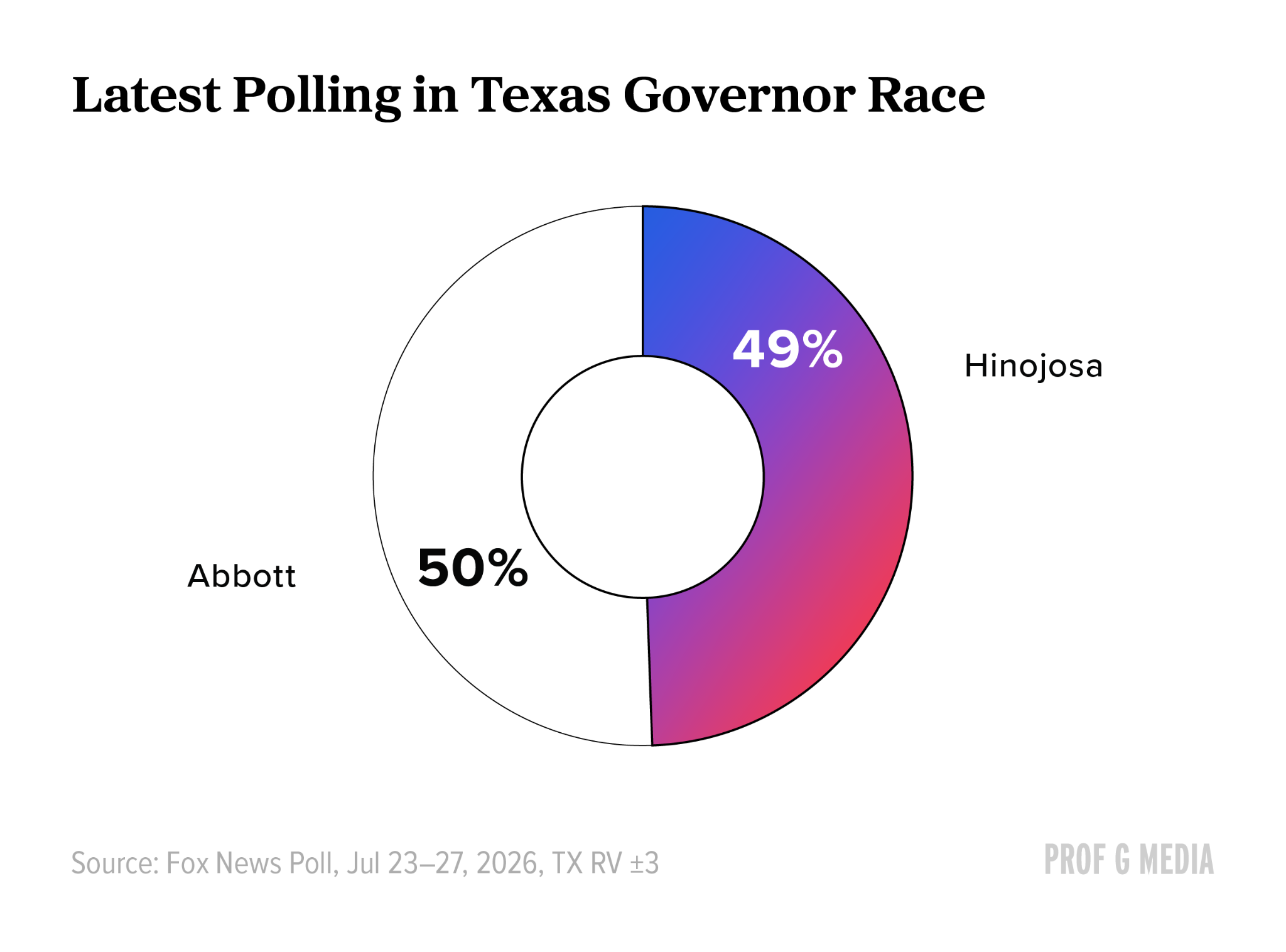
It’s a strong argument from a VERY strong candidate, and it looks like it’s working: she has the support of 49% of Texas voters compared to Abbott’s 50% in a recent Fox News Poll.
Shapiro’s solution
So, Hochul’s announced a moratorium. Abbott, after months of letting data centers spread without the oversight they need, has now done the same.
Where does that leave the rest of us? Those of us who get the real economic advantages that these centers bring, but also want to live in communities that house more than just giant power-hungry grey boxes?
Enter Josh Shapiro, our friend in Pennsylvania.
On the surface, he should be just as vulnerable as Abbott or Hochul. Pennsylvania has about a third as many data centers as Texas, but with only 17% of the land area, and as we mentioned above, its number of centers has also more than doubled.
Some locals in the Keystone State are even taking to the streets to make their voices heard, including in Limerick and Plymouth.
Shapiro has come up with a solution. Instead of a blanket ban on data centers, he signed an executive order last week cracking down on “irresponsible” and “predatory” proposals. Under the order, data center developers must get support from local officials first, and they have to adhere to a set of good citizenship guidelines: they must pay for power, conserve water, hire local workers, and be transparent about their impact.
Under Shapiro’s plan, locals get a voice. He’s even set up a website asking Pennsylvania residents to tell him about their local proposals.
At a press conference last week, Shapiro told voters he wouldn’t be bullied by big corporations or bulldozed by lawyers. Years of polling on working-class communities shows that is an important message to send. And with his order, voters get something to back it up.
So no, don’t panic about data centers. There is a way forward that keeps the economic wins without the local losses.
It would be nice to oblige datacenters to be powered exclusively by renewable energy sources that they have to build first as a prerequisite to their construction permit. Each community could add some clauses of energy overproduction to be injected in the public grid, allowing to lower the cost of energy for local communities themselves.
The US has 5,400 DCs and an average 50MW DC consumes 1-5 million galloons of clean water DAILY, polluting it in the process and draining aquifers, while emitting 4,000,000,000 BTUs + into the surrounding environment DAILY, creating "heat islands" up to 16 degF hotter out to 3mi from the DC. Perhaps most importantly in Trumpistan, AI is taking over for the human mind's capacity for critical thinking and analysis, so dumbing down an already infotainment saturated media environment. Here in Marietta, Ohio, we get 14' of national/world news nightly on the two Parkersburg TV channels. I recommend reading Jeff Goodell's 2025 "The Heat Will Kill you First". The very last thing we humans need on this massively overheated planet is MORE HEAT! NO MORE DATA CENTERS!