



Five weeks to go until America decides who will control Congress, and the latest set of polls are STACKED with good news for Democrats. Over the last week:
The Wall Street Journal puts Trump’s approval rating at 37%, the “lowest of any president heading into midterm elections in Journal polls dating to 1990.”
CNN has the Democratic advantage on the generic ballot at 8 points, and Marist at 12.
The New York Times had Abdul El-Sayed with a five-point edge in Michigan (49%-44%) and Chris Pappas ahead in New Hampshire (50%-45%).
Despite all the headlines you saw about the Times’ poll in Maine (Jackson 46%, Collins 49%), it wasn’t the only survey out of that state last week: UNH found Jackson up four points at 51% to Collins’ 47%.
It fits with what you’ve been hearing: Democrats have a strong lead in the House, and the Senate looks close (in a year that should’ve been a “fat guy layup” for the GOP… whatever that means).
Exciting stuff, and we know that’s where most of the country’s attention will be in November.
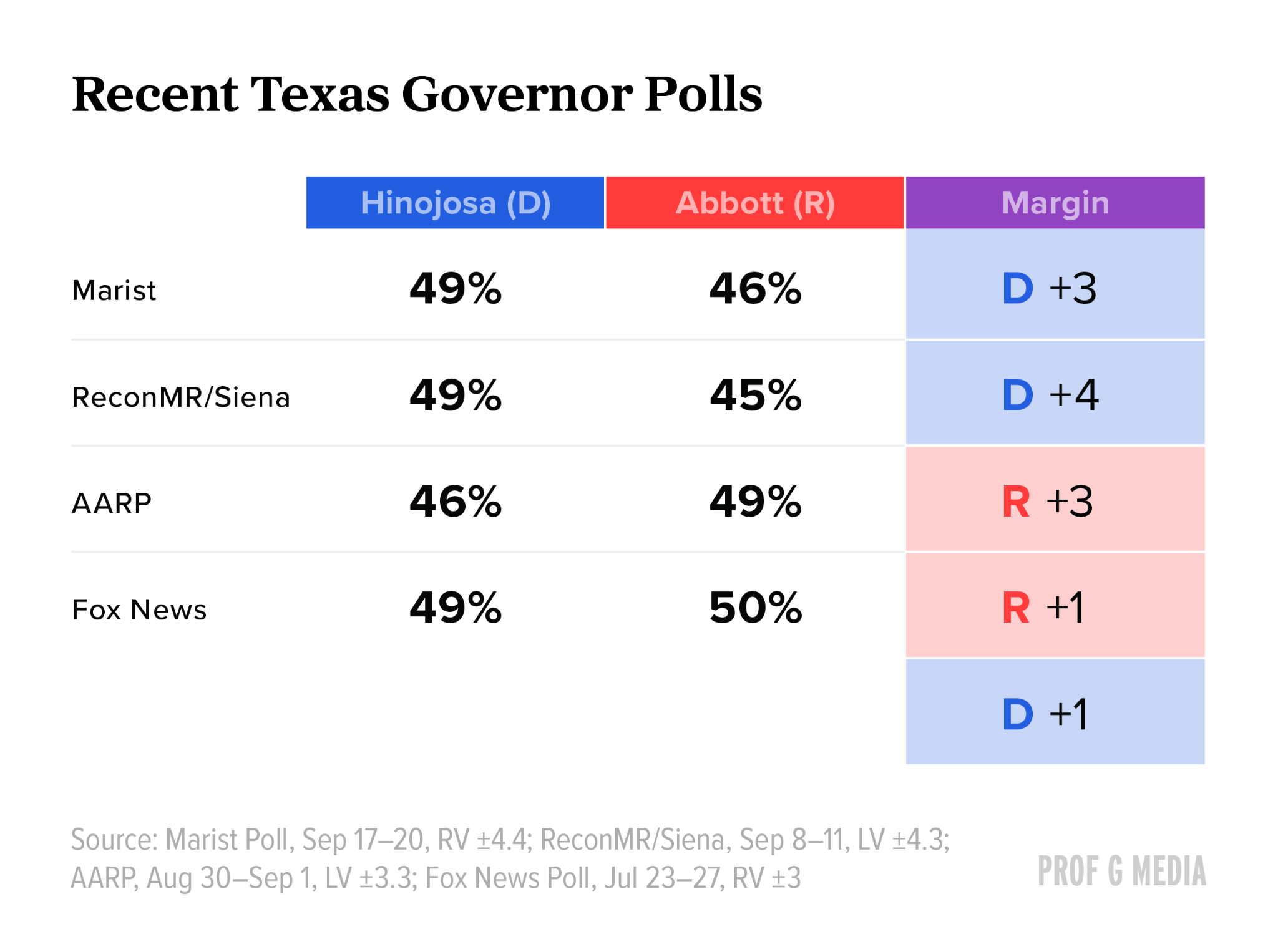
But this is also a huge year on the gubernatorial side. Democrats have a chance to govern the majority of states for the first time since 2010. If they do, it’ll likely come from Texas, where Gina Hinojosa is running an outstanding campaign against Greg Abbott.
This week, we looked at what makes this race special. It starts with Hinojosa herself, but she’s getting a helping hand from an unpopular Abbott, and data centers, an issue that refuses to go away for Texas voters.
Programming note: Raging Perspective is back this Wednesday. Join Jessica and Aaron Parnas live at 12PM for an unscripted, unfiltered, unedited conversation about the issues defining this era. And as always, we’re also taking your questions! Ask away in the comments section below.
Meet Gina Hinojosa: Civil rights lawyer and mom who couldn’t care less about the culture wars
We keep hearing the same story that Democrats are out-of-touch coastal elitists. Gina Hinojosa isn’t one of them.
Born in the working-class Rio Grande Valley, she got her start as a local civil rights lawyer, then ran for a school board in Austin.
In 2019, she ran for a state seat to secure better education funding for Texas kids, and won the seat another three times before she jumped into the gubernatorial primary.
That start in the “RGV” has clearly informed her priorities, which she says are about getting her party “back to basics.” She wants to give Texans a “corruption tax refund,” ban companies from swapping their prices when they know you’ll pay more, stop private equity from buying more houses, and crack down on health insurers.
And as she told Politico last week, she’s not taking the GOP’s bait on the culture wars. In one of her latest ads, she says her pronouns are “mom, Texan, and soon to be governor,” in another, she tells a heart-wrenching story about the loss of her first daughter, emphasizing that she “chose” to take her pregnancy to term.
She’s pro-choice and pro-equality, but she says her campaign is about delivering for Texans.
Greg Abbott is unpopular and won’t get any help on the ticket
Over on the other side sits Greg Abbott, who has seen better electoral days. In a new Marist poll, 51% of voters say they view him unfavorably, including nearly six-in-ten non-white voters.
That’s not so surprising. Let’s start with an issue that has defined both candidates’ careers: education. For years, Abbott has pushed voucher programs in Texas, but locals are divided. Higher income families aren’t first-in-line on eligibility, but they are, and as one Texas Democrat put it, that means “billionaires can use it, and there’s just no explanation of why.”
Then there’s the national environment. According to the same Marist poll, Trump’s approval rating is underwater in Texas by 11 points (54% disapprove, 43% approve). That deficit grows to 34 points among non-white voters.
Abbott and Trump are inseparable, with the governor embracing Trump over everything from ICE coordination, to redistricting, to deploying the National Guard (despite, as the Texas Tribune notes, his longstanding views on state sovereignty).
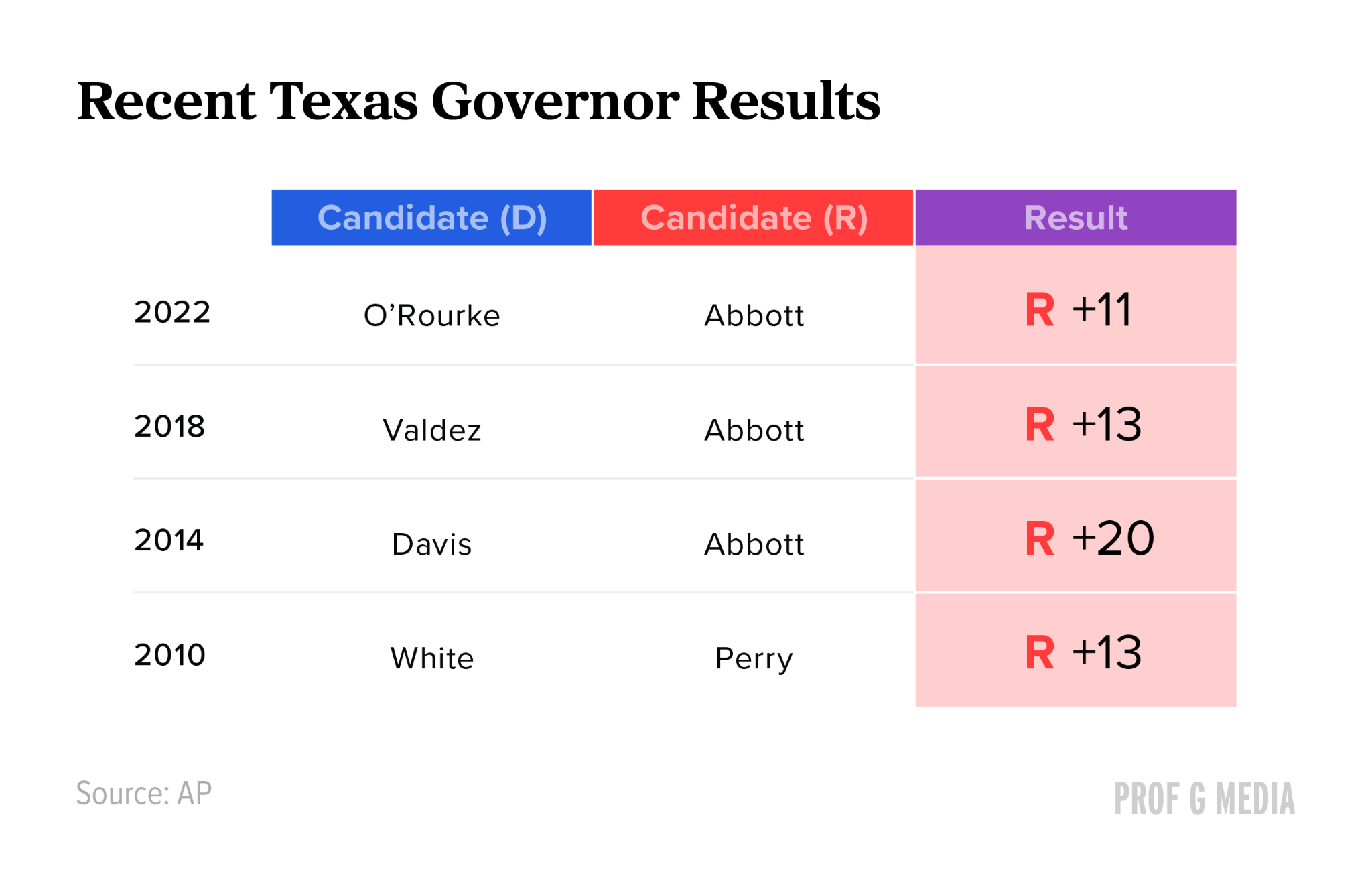
He’ll also share the top of the ticket with Ken Paxton. Mark our words: he will be a drag on Abbott’s vote this November.
And it’s not just because of the corruption, the scandals in his personal life, the debate-dodging, or his trips to London.
It’s also because both Abbott and Paxton have had a long time to make life better in Texas. This will be the fourth election cycle where both men appear on statewide ballots (Abbott first ran for governor in 2014; Paxton first ran for attorney general the same year). At some point, voters just get tired of seeing the same names.
Data centers define the race
There’s one more elephant in the room here. We’ve talked about data centers before. Well, as the saying goes, everything’s bigger in Texas.
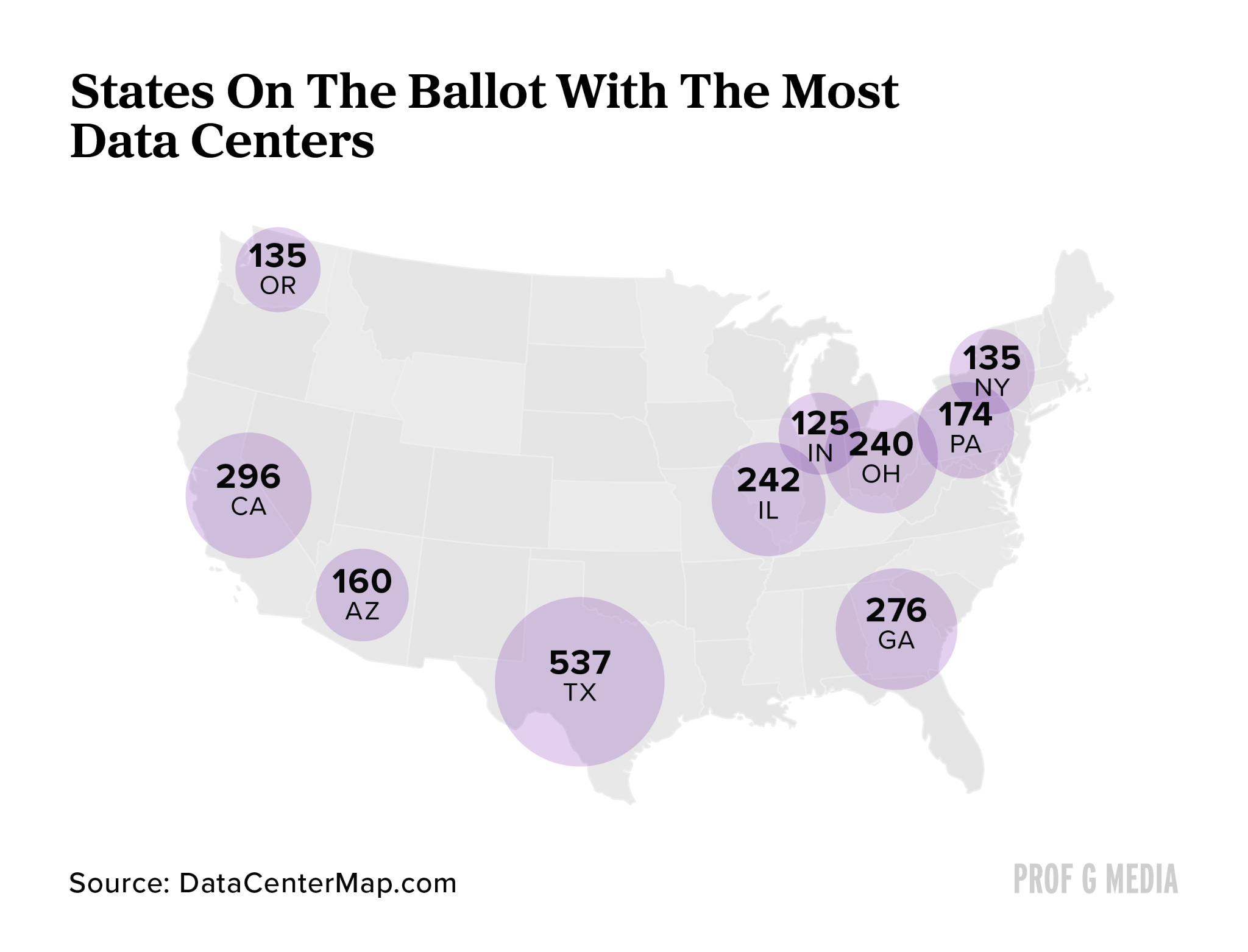
With 537 active data centers, Texas has more of them than any other state in the country, and they’ve given Abbott a real fright.
After years of encouraging data center investment, he flipped his position in August, saying the state would stop approving data centers until his agencies could audit their power use. Last week, he stepped up his moratorium, expanding it to environmental approvals through the Texas Commission on Environmental Quality.
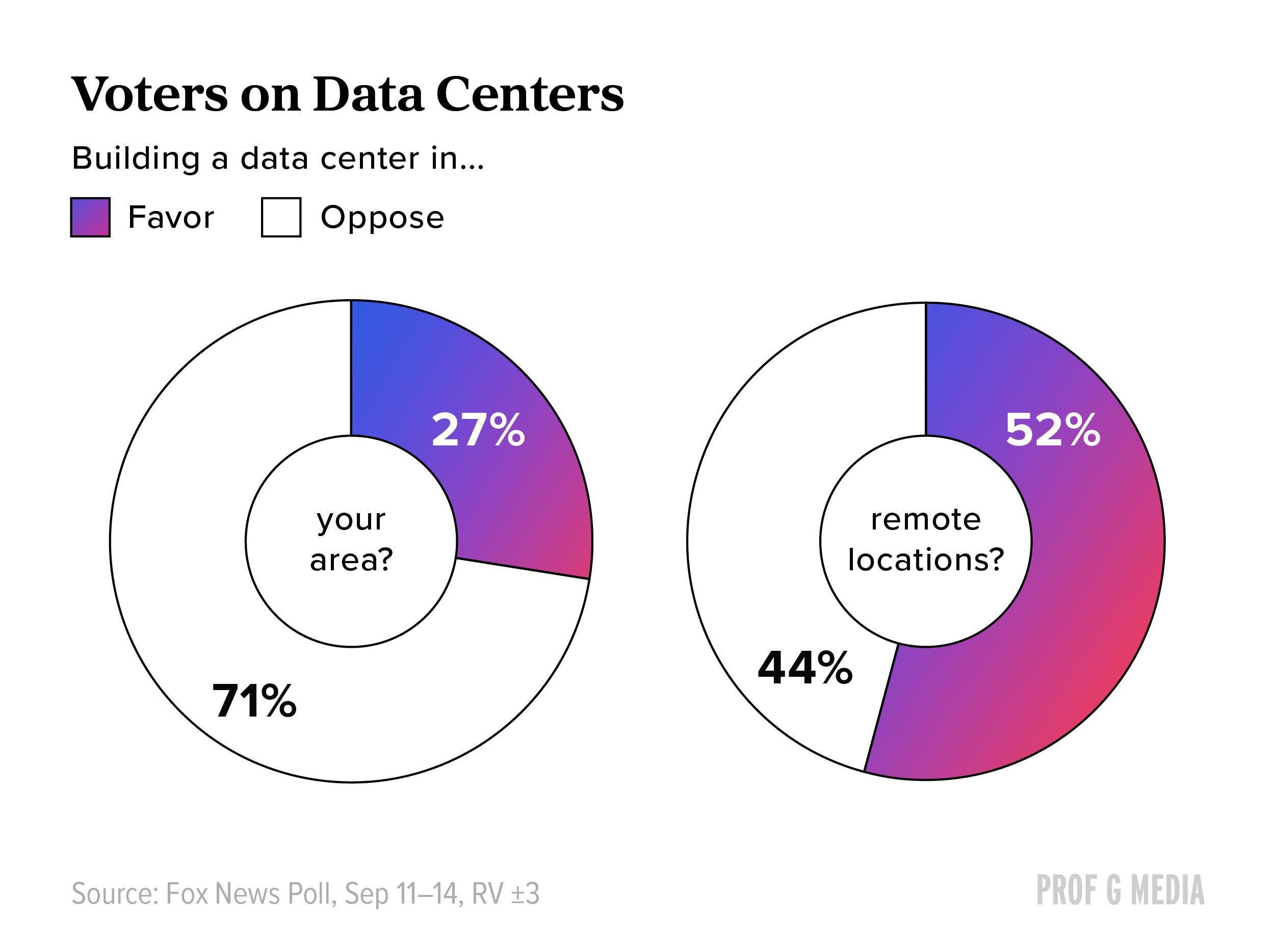
We know where the national polling stands on this issue: earlier this month, a Fox News survey revealed that 71% of voters were opposed to building a data center in their area. Support increases when voters are asked if they’d support a data center in “remote locations,” but as Texas voters will tell you, that has too-often meant their own backyard.
Hinojosa has made her case against data centers the centerpiece of her campaign, mentioning that in 2015, Abbott signed a bill that gave “hyperscale” data centers 20-year tax breaks.
Yes, James Talarico is getting a ton of national attention, and for good reason. But watch this governor’s race in November. A great night for the Democrats could put the Lone Star State in the party’s hands for the first time in over thirty years.