

Is AI More Expensive Than the Employees It's Replacing?
Plus: Ted Sarandos on Netflix’s Plan to Compete with the Clip Economy



$109,700
That’s the threshold the San Francisco Housing Authority considers “low income” for a single person annually.

The hidden costs of AI efficiency
Can Netflix survive the clip economy? Ft. Netflix Co-CEO Ted Sarandos
The Markets team is on tour! We’ve hit San Francisco, Los Angeles, and Miami so far, and we’re in Chicago tonight and New York tomorrow. Follow along on X (Twitter), Instagram, and Substack.

Is AI More Expensive Than the Humans It’s Replacing?
Nearly 50,000 workers have been laid off this year — (supposedly) because of AI. That’s almost as many as in all of 2025. For companies adopting AI, the thesis is simple: AI will do much of the work that humans do.
In recent weeks, however, that thesis has hit a roadblock. More and more companies are reporting that, despite the enormous power of AI, the technology is actually more expensive than the humans it’s supposed to replace.
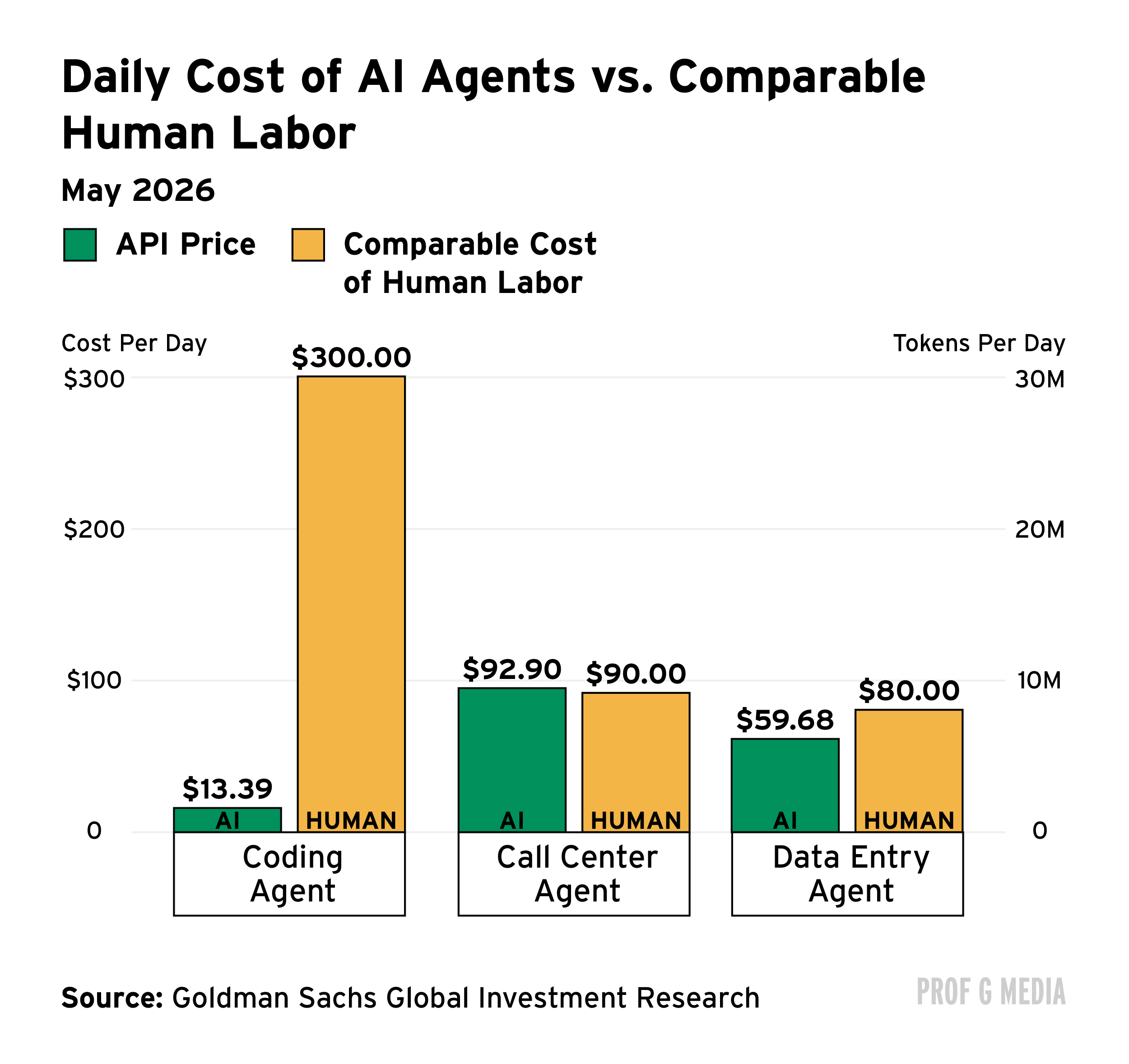
Uber, for example, just blew through its entire 2026 AI budget in four months. According to the COO, it’s now getting harder to justify AI costs within the company. Microsoft is canceling its Claude Code licenses across multiple divisions because it’s simply gotten too expensive.
At Nvidia, one executive said that the cost of compute is now “far beyond the costs of employees.” Meta, Pinterest, and Spotify all cited rising inference costs as a drag on their margins in the first quarter.
How much are enterprise AI budgets? Some 45% of firms surveyed by cloud cost company CloudZero said they spent more than $100,000 per month on AI in 2025, up from 20% the year before.
At Anthropic, a single employee used $150,000 worth of Claude Code in one month. To justify this bill, that engineer would have had to do the work of more than 11 average engineers.
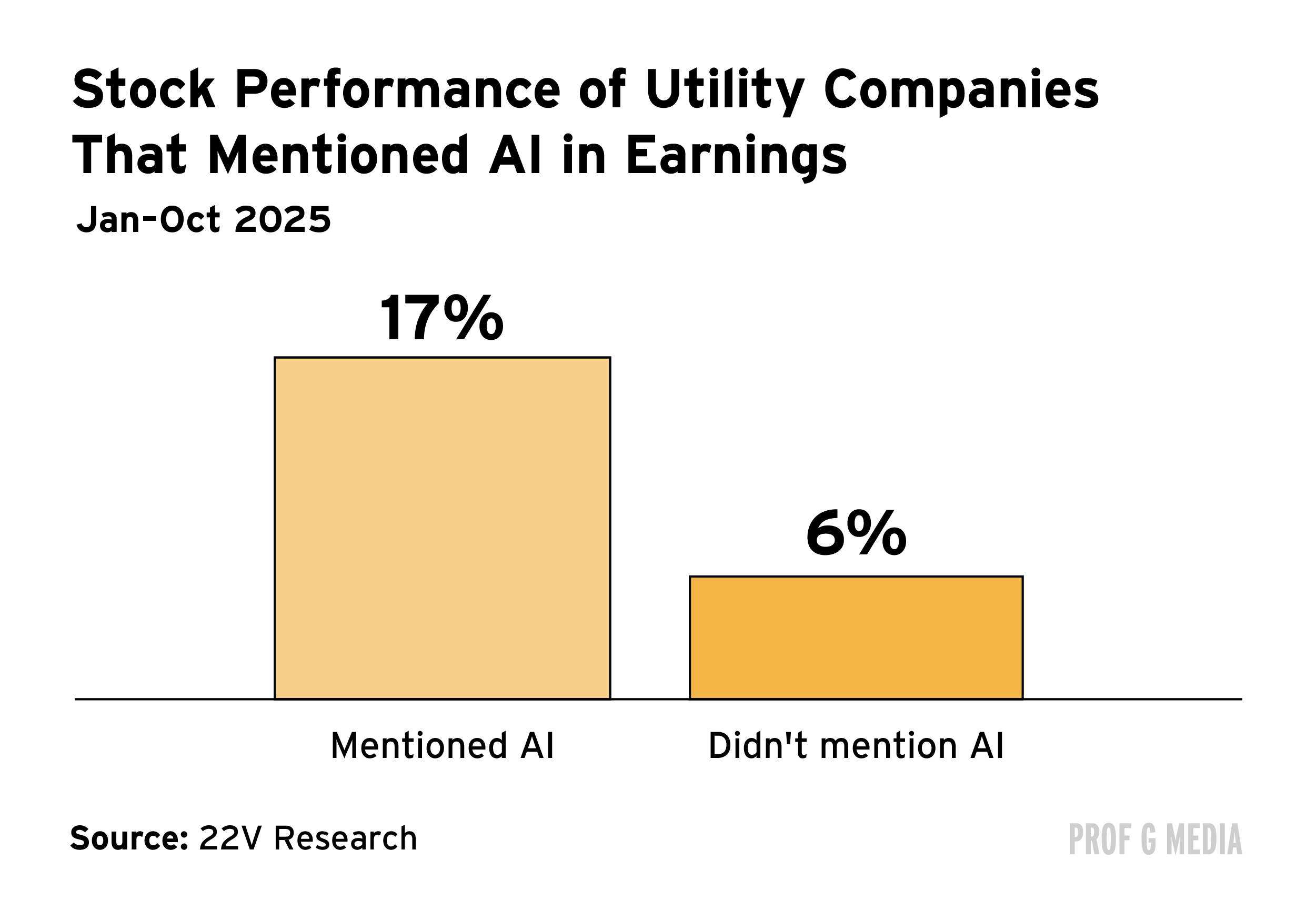
In this market, the appearance of efficiency has been so consistently rewarded that actually calculating it hasn’t been necessary. Seventy-nine percent of S&P 500 companies talked about AI on their most recent earnings call, but only 8% disclosed any AI revenue.
The same CloudZero report found that only half of organizations surveyed said they could confidently evaluate the return on their AI investments. Spencer Rascoff, Match Group CEO, said AI is costing the company between $5 million and $10 million per year. When asked about ROI, he said, “I think we’re benefiting from it, but it’s hard to feel it.”

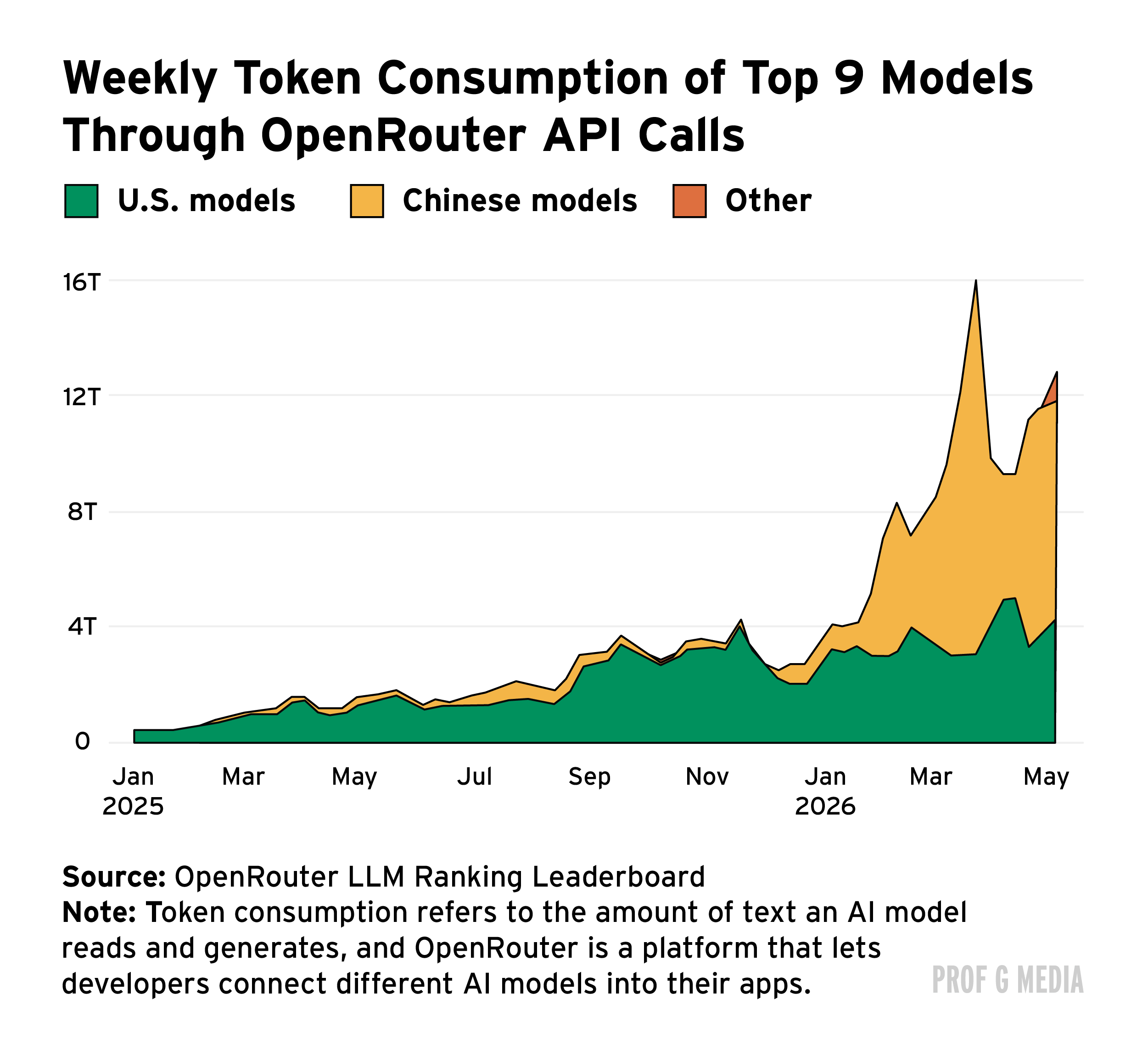
Here’s what I think is gonna happen: companies will start to resort to the cheapest models, which are Chinese LLMs. Chinese models are 10x to 30x cheaper than U.S. models. We’re already seeing evidence of this: Chinese models went from about 1% of developer usage in 2024 to more than 60% in May, and 80% of U.S. AI startups are now using Chinese open-source AI models.


Netflix vs. the Clip Economy
Long-form content is under siege. The new competitor? Short-form video. Since 2019, the amount of time Americans spend watching short-form video has more than doubled. TikTok’s revenues have grown tenfold, YouTube now beats Netflix on TV watch time, and Reels now account for 50% of all time spent on Instagram. For more on the clip economy, check out Ed’s piece in his newsletter, Simply Put.
No company has more to lose from this shift than Netflix. With 325 million subscribers and $45 billion in annual revenue, it is the world’s dominant long-form streaming platform — and investors are starting to worry about this new threat.
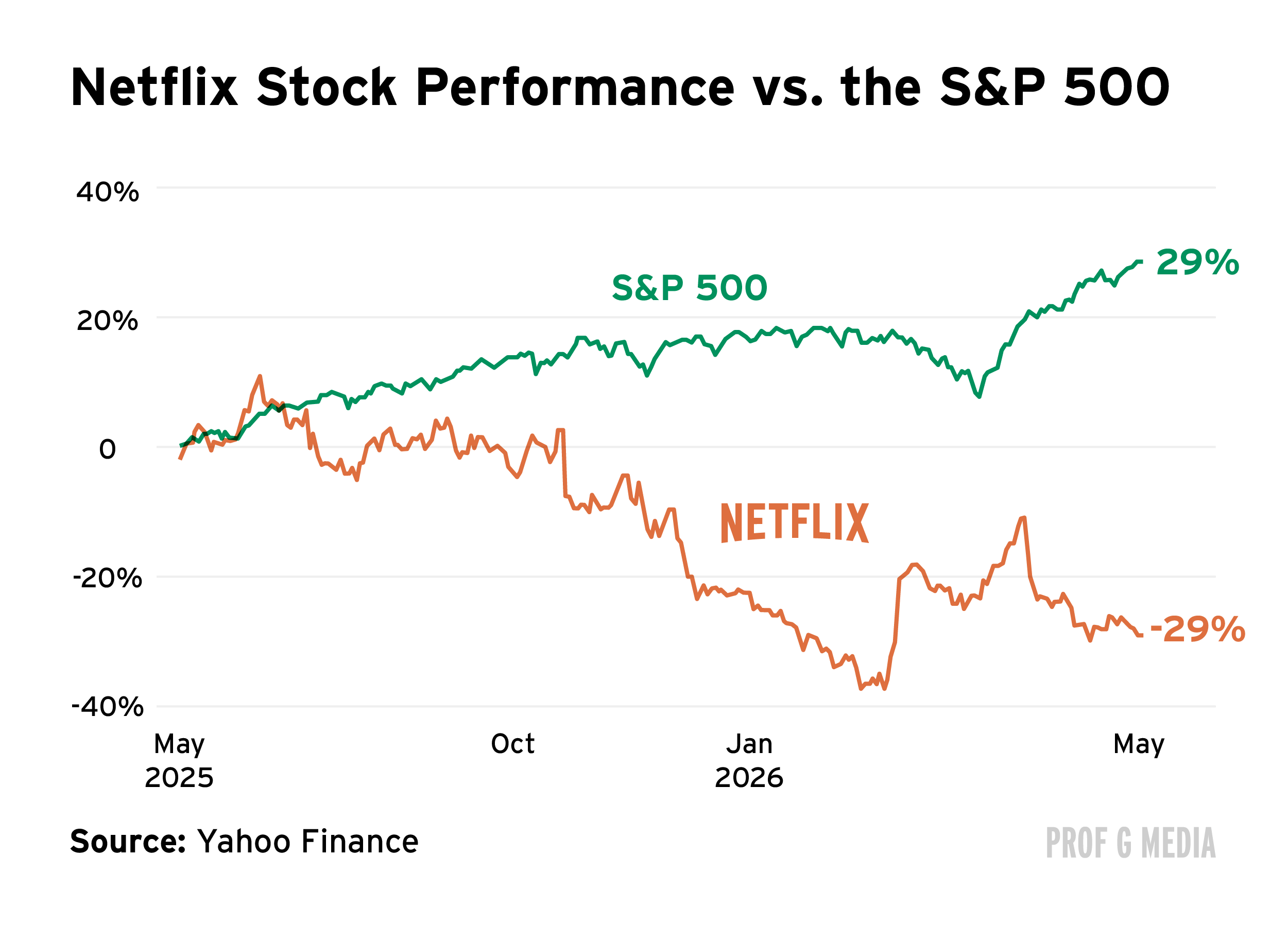
Despite reporting strong revenue growth and profitability gains, Netflix has underperformed the market over the past year and now trades at a 25% discount to its 5-year average price-to-earnings multiple.
The question is, how will the largest streaming service in the world respond?
Netflix is expanding beyond its traditional business model. Its ad tier now has 250 million subscribers, up 30% from November, and the company is on track to double its ad revenue to $3 billion in 2026.
It’s also building out a suite of more than 30 video podcasts. Just last week it announced a joint $100 million deal with Spotify for Jay Shetty’s self-help podcast, On Purpose.
Thirteen percent of U.S. Netflix households have watched at least a minute of a podcast on the platform. For context, 21% of Netflix households watched KPop Demon Hunters within 30 days of its release.
Note: This interview with Ted Sarandos, co-CEO of Netflix, is condensed for clarity.

Ed: Netflix is competing with YouTube for TV time, but, increasingly, people aren’t even turning on the TV. They’re taking their phones out and scrolling. For Gen Z, we’re spending around eight hours a day on our phones. How are you thinking about competing with short-form content?

Ted: What’s really remarkable is that through the entire advent of the internet, phones, YouTube, and all these free options — television consumption and movie watching on bigger screens is remarkably stable. How is that possible? People are multitasking.
There’s this idea that people don’t have the attention span for TV anymore — well, wait till the new season of Wednesday comes out. People will sit in front of their TVs and watch eight hours straight. It happens every season.
Netflix provides entertainment worth paying for. Our big mantra was always that our content has to be better than free.

Scott: You made a big bet on advertising back in 2022. A lot of people said Netflix needs to stay premium. How did you think about that decision?

Ted: The one part of the audience we were not addressing was the one who wanted a lower price point and didn’t care about ads — and there’s a lot of them, it turns out.
The reason we were not in the advertising business at the beginning was that “no ads” was a counterposition. When we got into streaming, our competition was TV. What didn’t people like about TV? Advertising, and having to wait till next week for an episode. So we were the no-ads company.
When we first got into DVD, our competition was Blockbuster Video. What did people hate about video stores? Late fees. So we were the no-late-fee company.

Scott: What is your counterposition today?

Ted: People are already complaining about AI slop, so I think people will increasingly value high-quality production.
You also have to remember everything is being viewed through the lens of affordability. And I’d say we have the highest-quality programming at [an] unbelievably low price. If you take what you spend for Netflix every month and how much time you spend watching it, it ends up costing about 30 cents an hour. It’s probably one of the greatest values in the history of entertainment. So the counterposition really is: You can afford it.



Trump is going to ban or restrict Chinese LLMs. He has too much to lose if the American AI trade collapses.

Switching to lower-cost LLMs may be part of the solution, but it is not that straightforward. A weaker model can easily end up costing more once you factor in rework, extra supervision, longer workflows, and lower-quality outputs.
I believe the real path is different. The “send a task and forget it” approach, especially with an unlimited budget, does not work — and the same applies to multi-agent setups. Breaking work into sub-tasks, giving only a high-level task description, and leaving AI agents to sort everything out by themselves can quickly become inefficient and expensive if there is no clear process behind it.
It is like having an empty closet at home — you will always find a way to fill it. The same applies to token budgets: people and tools will use whatever capacity they are given.
Without proper processes, clear task design, and a real understanding of which tool, LLM, thinking level, and task granularity are efficient for each type of work, there will always be waste. Users, tools, and models will improve, but the process is at the heart of making AI cost-effective.
Personally, I spend around £100/month of my own money on AI tools, and in my AI engineering work it gives me at least a 5x efficiency gain. That is the kind of ROI companies should be aiming to understand and measure.
I wouldn’t be surprised if the RIF’s labeled as “AI” were just an easier message (and market signal) then “these layoffs were part of the normal employment randomness that happens every year in large corporations.”
Expect all layoffs in 2026 to come with the AI label attached. And, In 2027 it will be “AI is pushing us to hire more people” #AIsignaling