




~4,400
That’s how many current and former SpaceX employees became millionaires after its record-breaking IPO last week.

SpaceX IPO: Everything you need to know
World Cup 2026 by the numbers: $9 billion for FIFA, $50 billion in bets, and $38,000 tickets
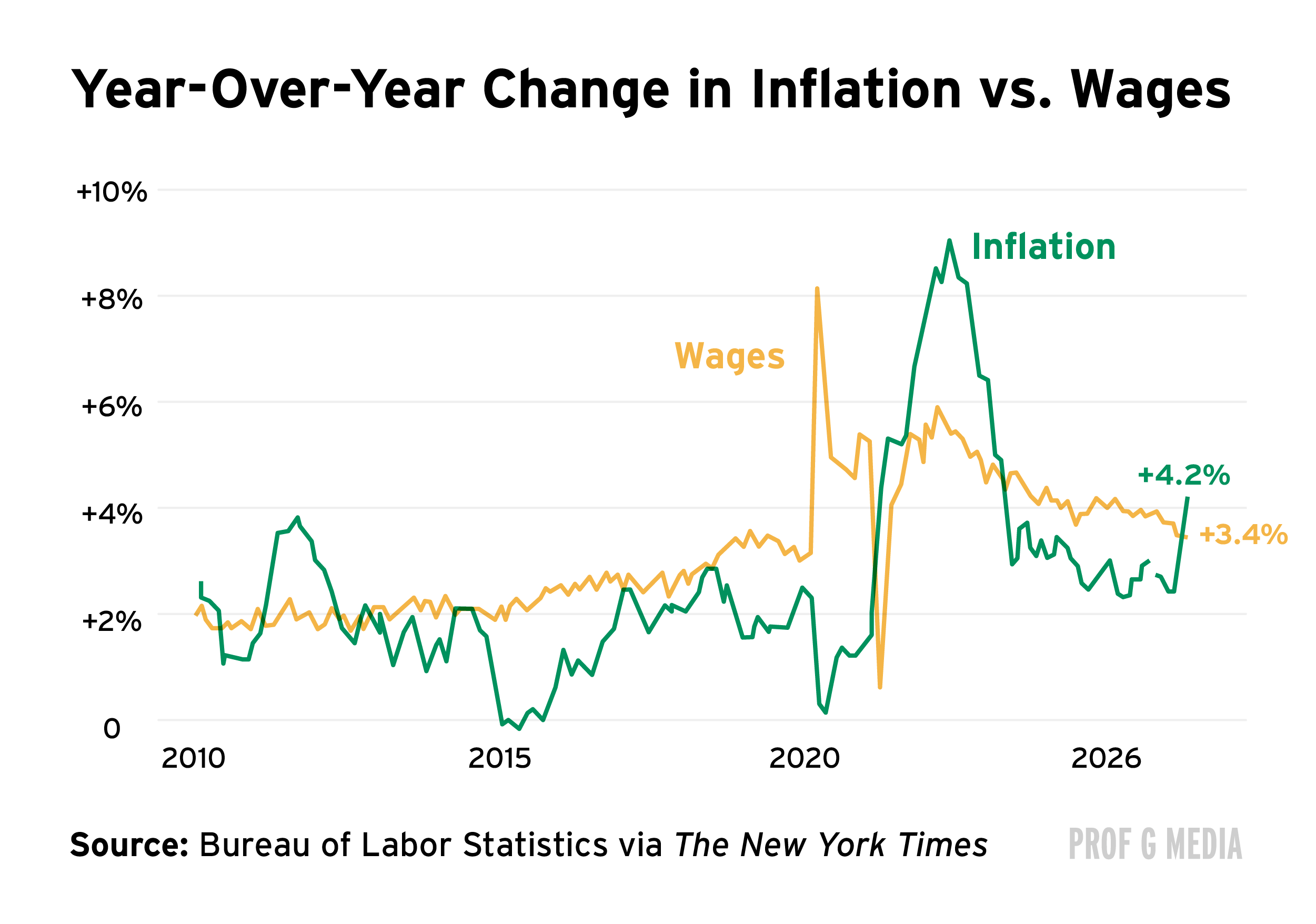
U.S. inflation surges to a three-year high as wages fall

SpaceX’s IPO Just Made Elon Musk a Trillionaire
We have blastoff for the biggest IPO in history. SpaceX began trading under the ticker SPCX at $150 on Friday, an 11% jump from its IPO price, and ended the day up 19%. As of Friday’s close, SpaceX’s market cap was $2.1 trillion, making it the 6th most valuable public company in the U.S.
IPOs often start strong but typically fizzle over time. According to JP Morgan, the average IPO this decade popped 32% on the first day of trading — but was down 26% from its offering price after one year.
The debut marks a historic milestone for Elon Musk, whose net worth has now surpassed $1 trillion. That makes Musk richer than the bottom 46% of humanity, and worth 3.4% of U.S. GDP. At peak wealth, John D. Rockefeller was worth 1.5% of GDP.
It’s also a major moment for the broader market. After years of waiting for the biggest private companies to go public, investors are finally getting their chance. With Anthropic and OpenAI expected to follow, SpaceX is the first in a wave of blockbuster IPOs that could define the next era of the public markets.
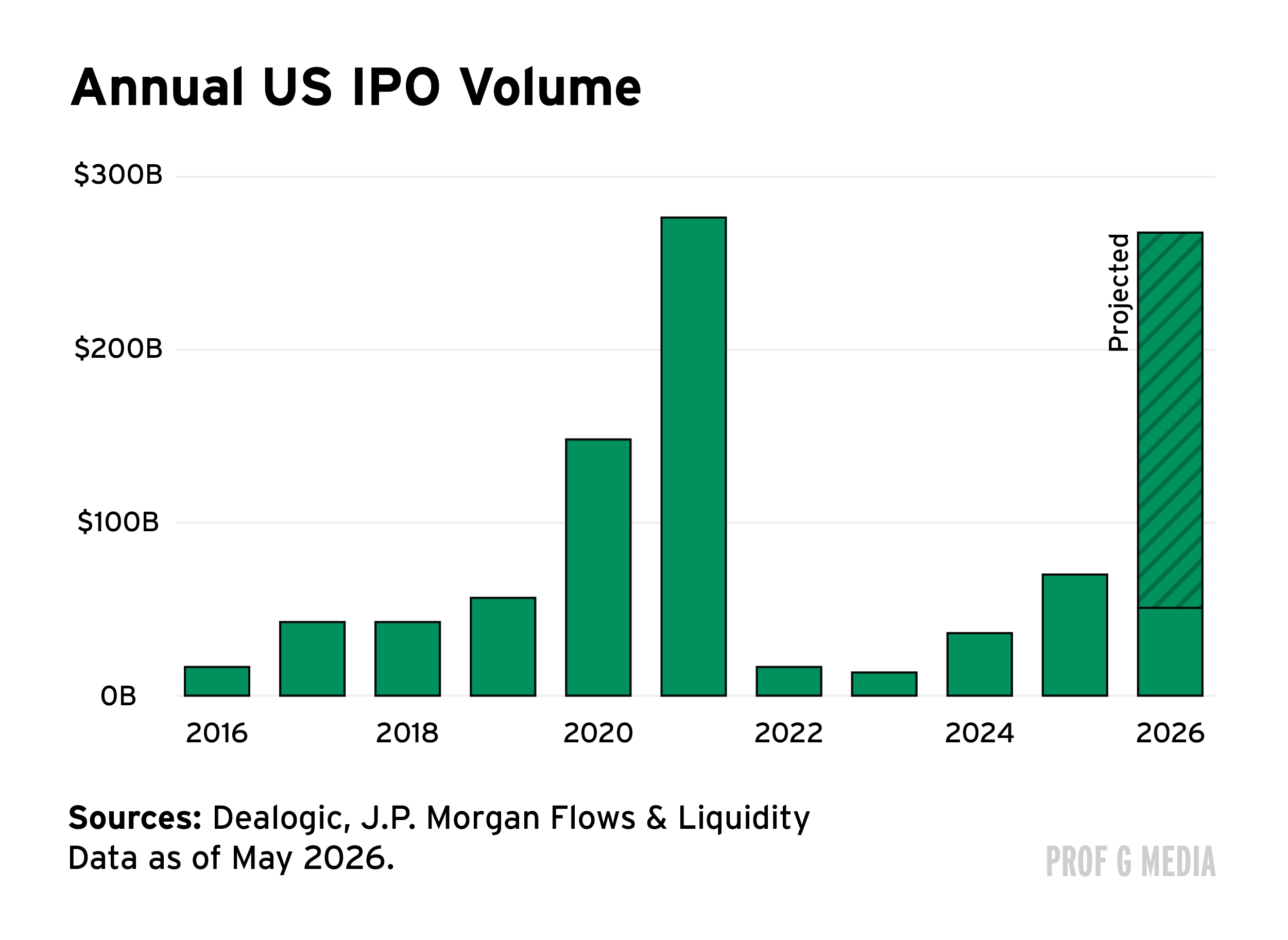
SpaceX is currently trading at 112x revenue, growing at 33% year over year. Google went public at 10x revenue growing at 240% a year, and Meta at 28x revenue growing 88% a year.
Despite the astronomical valuation, SpaceX’s IPO was nearly 5x oversubscribed. Orders from retail investors hit $70 billion — almost enough to fund the entire $75 billion IPO.
Part of SpaceX’s big first-day pop was a function of simple supply-and-demand dynamics. SpaceX sold just over 4% of the company’s total shares on Friday — most companies going public sell 10% or more of their shares. Heavy demand for the relatively small float led to a sharp increase in price.
Strong demand will likely continue over the short term, as SpaceX will be eligible for inclusion in the Nasdaq 100 index after just 15 trading days — after the index changed its listing rules.
The key tipping point will be SpaceX’s first earnings report in late July or early August. Two days after that, insiders will be allowed to sell the equivalent of 7% of outstanding shares — nearly double the amount sold during the IPO.

Float is the number of shares a company has available for public trading. Generally, a larger float means less price volatility.

What freaks me out isn’t the SpaceX lockup period. What freaks me out is that a man who is estranged from one or more of his children, has a substance abuse issue, sleeps with a loaded gun next to his bed, and believes there’s a white genocide taking place in South Africa is now the most powerful person to ever exist on the planet.
Wealth in a capitalist society means power, and my guess is Donald Trump has had many conversations with Elon Musk in advance of him becoming a trillionaire about the different ways they can help each other.

When a massive new position hits the market, like this SpaceX IPO, people who want to buy in have to fund it somehow. They’re not selling their house, they won’t sell their defensive positions — they’ll sell their existing tech stocks.
That’s why you saw Rocket Lab, EchoStar, and SpaceMobile decline as much as 10%, 12%, and 14%, respectively, on Friday. You’ll start to see this same pressure across the Mag 7 and chip stocks, and it will only get worse when OpenAI and Anthropic go public.
Also — to clarify, retail investors that bought in can sell their SpaceX shares immediately, but supposedly if they do sell, then they’re not gonna be allowed to buy into future IPOs.

Whatever your take is on the morality of trillionaires or the valuation of SpaceX, the world is a more scientifically advanced — and better — place with SpaceX in it. In this moment, it’s worth considering the economic and political decisions that made SpaceX possible. Specifically: This is a company founded by a genius immigrant. His enterprise wouldn’t have been possible without the U.S. government, specifically NASA, which provided loans, grants, and tax subsidies, and, ultimately, became a paying customer.
Thanks to the Trump administration, the next SpaceX founder will be barred from entering the U.S. or will run out of money after its grants get canceled.
Anyone who wants to see the next SpaceX should also want to see a change in DC.
For more on how the Trump administration is canceling funding for science, check out my colleague Kristin’s latest piece here.


The 2026 World Cup Is the Most Expensive in History. Here’s Why.
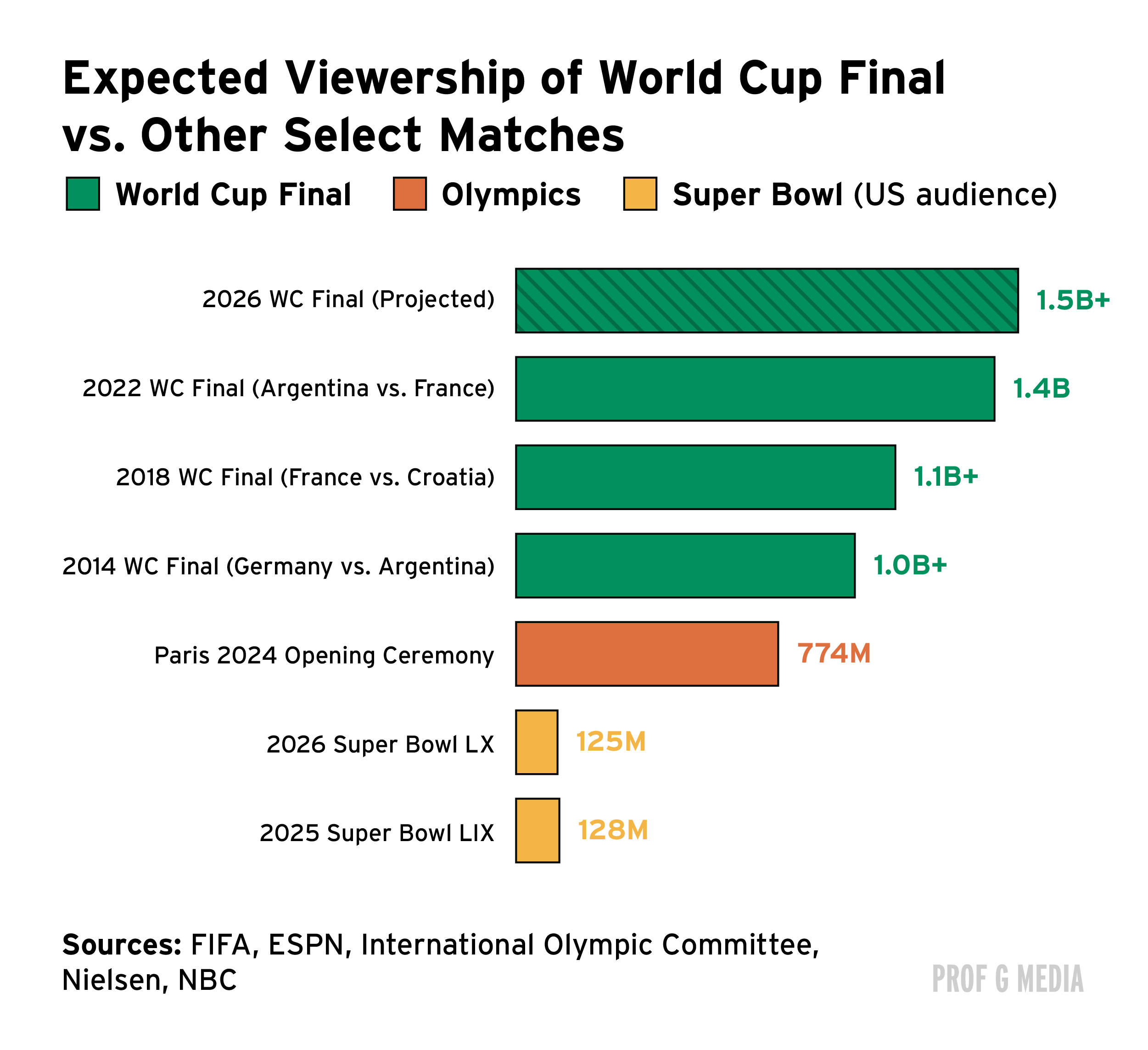
The FIFA World Cup has officially started, and it will be the most watched and most lucrative sports event ever.
An estimated 6 billion people — almost three-quarters of Earth’s entire population — will engage with the tournament, and FIFA will rake in almost $9 billion, 54% more than its payoff from the 2022 Qatar World Cup.
Football (soccer) fans are lining FIFA’s pockets. Adjusted for inflation, ticket prices are up an estimated 1,000% since the U.S. last hosted in 1994. The cheapest seats this year range from $450 to $990. In 2022, tickets started at $262. If you want to watch the final match, it’ll cost you at least $10,000.
Ticketing historically accounts for around 10% of World Cup revenue; this year it will account for 27%.
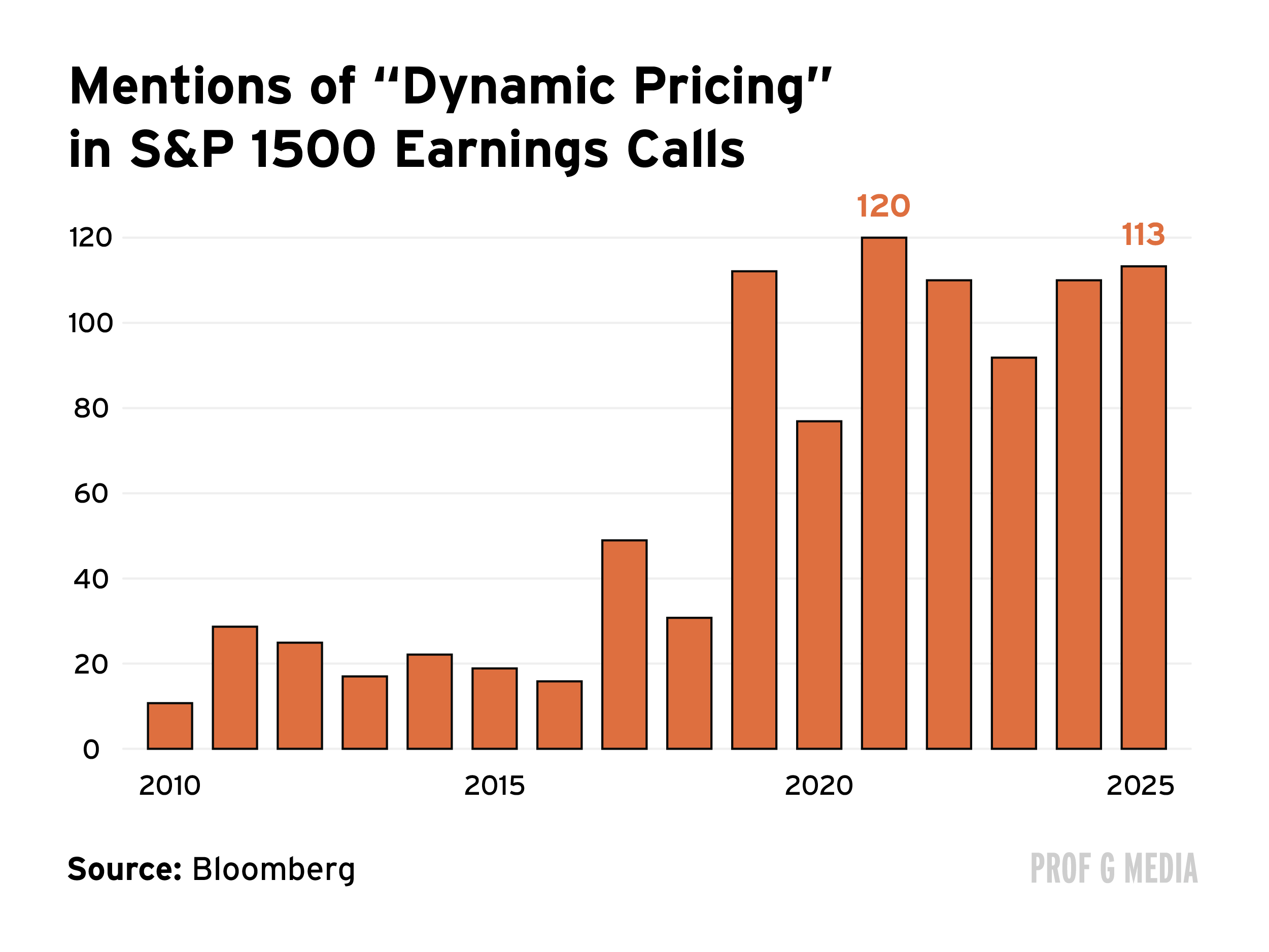
Two strategies are driving this increased haul. FIFA used to sell tickets at a fixed price, but this year, they’re using dynamic pricing, algorithmically adjusting ticket prices based on supply and demand. FIFA is also running its own resale platform, where it takes a 15% cut from both the buyer and the seller on every transaction.
These new practices have generated backlash. Sixty-nine members of Congress signed a letter to FIFA President Gianni Infantino calling it the most “financially exclusionary” World Cup to date, and attorneys general in New York, New Jersey, and Texas have opened investigations into the pricing strategy.
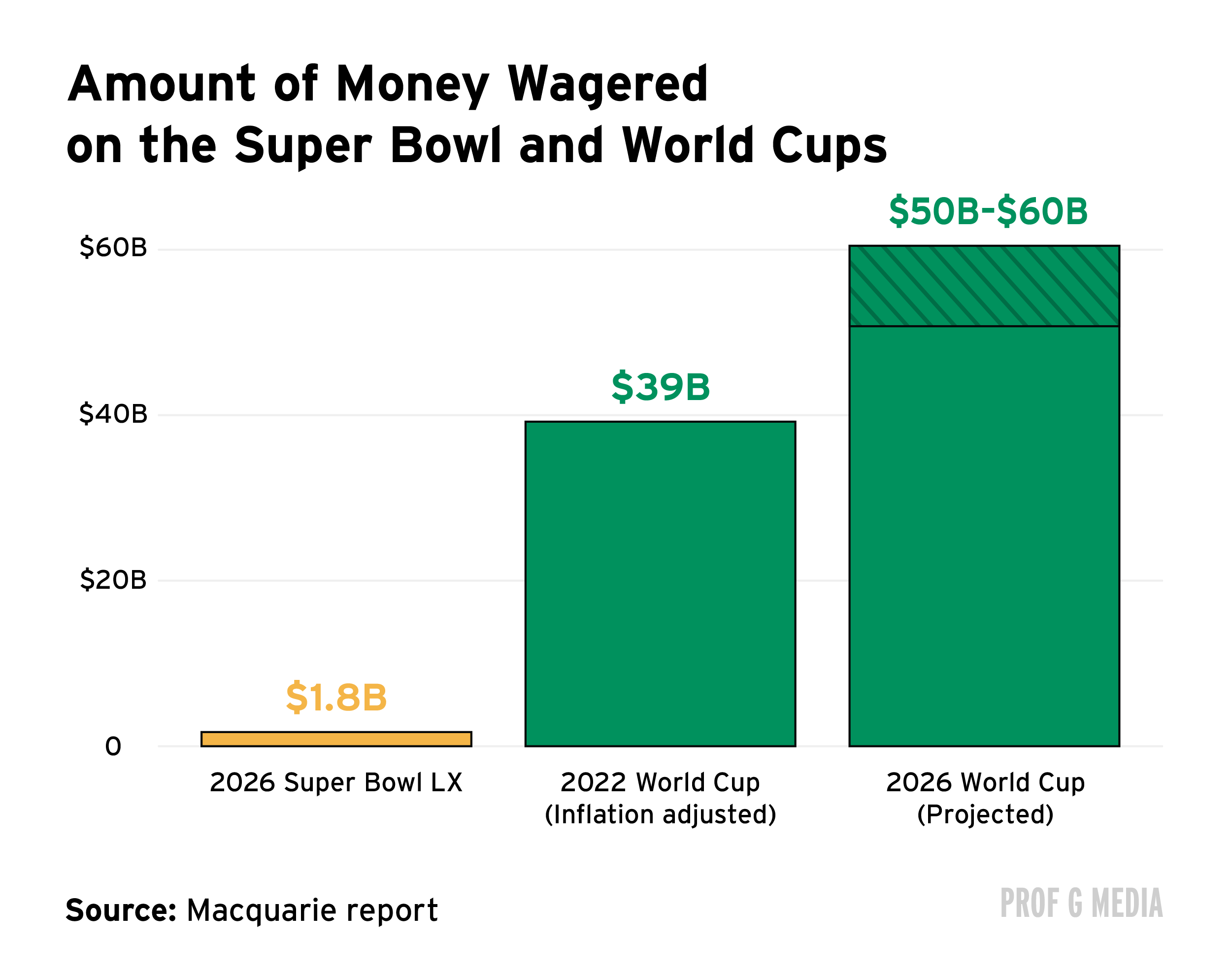
It might be more advantageous to be a second-order beneficiary of this spending frenzy. The World Cup is set to be the biggest betting event in history with an expected $50 billion in wagers, up from $35 billion wagered in the 2022 tournament.
Video game maker Electronic Arts is also well positioned. During the 2022 World Cup in Qatar, sales of EA’s FIFA video game grew by 40% in the U.S.
The Scots are also winners. King Charles approved June 15 as a national bank holiday so Scots can watch their country’s first match against Haiti without worrying about making it to work the next day.
This will be my fourth World Cup. I take my boys every time, and I’m absolutely going. But here’s the math. The first time I went to the World Cup, in 1994, the average ticket cost $58 and the most expensive final ticket was $475. Inflation-adjusted, that’s $131 and about $1,069. Now it’s $38,000.
That number tells you who FIFA is pricing this tournament for. The rich have seen an explosion in their wealth, and when you have a scarce asset that appeals to rich people, your pricing power is out of control.
FIFA has made a choice to take every dollar off the table and, in doing so, sacrifice the vibe and electricity of a live game. Because here’s the thing: Nobody buying a $38,000 seat paints their face. Those are people invited by corporations, sipping Pimm’s Cups and asking who this Ronaldo character is.
It’s easy for me to say, but I don’t think that’s what a steward of the beautiful game — and a nonprofit — should be doing.
I hope they get stuck with a lot of tickets, similar to F-1 in Vegas, where they vastly overestimated demand and sold only 40% of capacity.
Let’s be clear about one thing: FIFA already crushed it. The headline about 180,000 unsold tickets is misleading. Those tickets were sold; they’re now sitting on the resale market, where prices have fallen 20% over the past month. That decline doesn’t hurt FIFA at all. It sold those tickets once, and through its own resale portal it will sell them a second time. As a pure exercise in extracting profit, this was a master class.
The real question is which parts of it should be legal. The congressional letter is mostly constituent theater, but the state investigations cite opaque pricing, artificial scarcity, and dynamic pricing that quietly raises rates, and all of that sounds valid to me.
FIFA President Gianni Infantino’s defense was essentially that if this is a problem for FIFA, it’s a problem across all of America. He’s right, and that’s exactly why this matters. Target, Walmart, and Whole Foods are experimenting with digital price labels that adjust prices instantaneously.
With AI and personal consumer data, a store could recognize that a wealthy customer walked in and raise the price on the spot. State legislatures are now asking whether pricing regulation needs a fundamental rethink, and the World Cup has become the case study for that debate.

Energy Prices Are Driving the Worst Inflation in Three Years
Inflation rose 4.2% in May from a year ago, marking the highest reading in three years. Meanwhile, real wages fell for the second straight month, meaning Americans are once again seeing prices rise faster than their incomes.
Adjusted for inflation, Americans’ hourly earnings have now fallen 0.7% over the past year.
When President Trump was asked about the inflation report, he quipped: “I love the inflation” and promised that prices would come down “like a rock” once the war with Iran ended.
Most of the inflation surge came from energy, which increased nearly 24% year over year. This has had a trickle-down effect on the rest of the economy: Gas prices are up more than 40%, airfares are up 27%, and grocery prices have increased more than 6% year over year.
The report adds pressure on the Federal Reserve ahead of Wednesday’s interest rate decision, the first with Kevin Warsh serving as Fed chair. On Kalshi, the odds of a rate hike before 2027 have climbed to roughly 50%, up from single digits at the start of the year.
Inflation is also yet another transfer of wealth from earners to owners. Inflation has been out of control in Argentina since the end of World War II, yet the same wealthy families are still wealthy, because if you own land and assets, you’re hedged. As prices rise, so does rent, so does the price of an iPhone, so my real estate and my Apple shares go up.
Those who get hurt are earners, because their wages don’t keep pace with inflation. Revolutions aren’t started by the unemployed. They’re started by people working two jobs who are still hungry. Inflation literally brings down nations.
The consensus among the analysts and economists I speak with is that this inflation increase is temporary because Trump will cut a deal with Iran, the oil blocked in the Strait of Hormuz will flow again, and prices will come back down.
I think that is wrong. They said Iraq would be eight weeks; it was eight years. They said Afghanistan would be a few months; it was two decades. Trump said this would be four weeks; it’s been 14. Why are we all assuming this won’t last multiple years?
So the oil will stay blocked, and inflation will keep rising. The oil price increases we’ve already seen still need time to funnel through the rest of the economy, and the longer this drags on, the higher oil price expectations climb, which raises prices outright.
Earlier this year I predicted 4.5% inflation by year-end and was told I had Trump derangement syndrome. We’re at 4.2%. I’m updating the call: at least 5%, sustained for at least six months. Rate hikes are inevitable, especially with unemployment coming in better than expected.


The World Cup will spark a relationship boom as young people get together in bars and parks to watch the beautiful game.

California’s public universities spent $16.9 million on A.I. and the result has been chaos
Today’s biggest tastemakers predict the trends of the summer
The adult in the room at SpaceX
Regarding the World Cup, dynamic pricing is just the enabler. The real cause is a mismatch between supply and demand. The first WC was played in 1930 (almost 100 years ago), and since then we've had only one WC every 4 years. In the meantime, the world has become fabulously wealthy, but our supply of WCs is still the same: one every four years. The same dynamics happens with access to Ivy League colleges, international travel and single-family homes. There are too many people with too much money, and our physical world hasn't scaled accordingly.
I knew I liked Mia! Perhaps she benefits from the fact I’ve heard the boys’ takes on SpaceX so many times already (hey, that’s the podcasting biz, not a complaint!) but I appreciate her bringing up what I find to be a criminally underemphasized fact:
the world’s first trillionaire was created through government spending.
From the tax credits and loans that made Tesla, through the space flight research and experience at the foundation of SpaceX, US government spending many called wasteful has created in the world what market genius, oil riches, and even oligarchic crime could not.
The sad irony our open-minded largesse as a country has rewarded a couple of the world’s most selfish, small men should not keep us from returning to our position as the world’s rich bumbling uncle, just smart enough to know if he keeps his pantry stocked and a “cooks wanted” sign on the open kitchen door he will eat like a king every night.