


“Insanity is doing the same thing over and over again and expecting different results.”
— Albert Einstein
Ten days ago, the U.S. launched a massive military strike on Iran. While the administration didn’t articulate its ultimate objectives, President Trump made clear that regime change is probably one of them. This view is also supported by the fact that we took out the nation’s supreme leader, Ayatollah Ali Khamenei, too. In sum, we’re at war with Iran.
For those familiar with American history, this is nothing new. Since 1900, the U.S. has conducted nearly thirty formally authorized regime changes — a third of the world’s total. This does not include many of the more than sixty covert regime changes that were attempted during the Cold War and the more than forty mostly-covert attempts that were tested in Latin America. Americans are familiar with regime change, as we’ve done it a lot.
Have we been successful? The answer isn’t complicated: no. Out of the 28 regime changes we’ve been responsible for, only three have ever led to a lasting democracy. The rest have resulted in dictatorships and authoritarian regimes, many of which destabilized their regions ever further. By the way, this is a global trend: More than 80% of regime changes imposed by any nation have ultimately resulted in a dictatorship. In other words, the odds that regime change in Iran will lead to democracy are (significantly) worse than a coin flip.

In addition to not working, regime changes lead to more violence. Roughly a third of them have been followed by civil war. Even when a nation successfully installs a new leader, he or she ends up violently removed from office half of the time. This all sounds shocking until you think it through logically: If your own nation’s leader were forcibly removed or assassinated by a foreign entity, do you believe things wouldn’t get violent?
The empirical record on regime change is robust and definitive: It doesn’t work. And yet here we are, trying it again, and expecting different results. The definition of insanity.
Lessons Unlearned
The great irony is that the guy going to war is the same guy who built his career on not going to war. Indeed, Trump’s contention wasn’t just that we shouldn’t go to war, but that we shouldn’t go to war in the Middle East. In 2016, he told us he was “totally against the war in Iraq,” calling it a “big, fat mistake.” He later repeated it was the “worst decision ever made.”

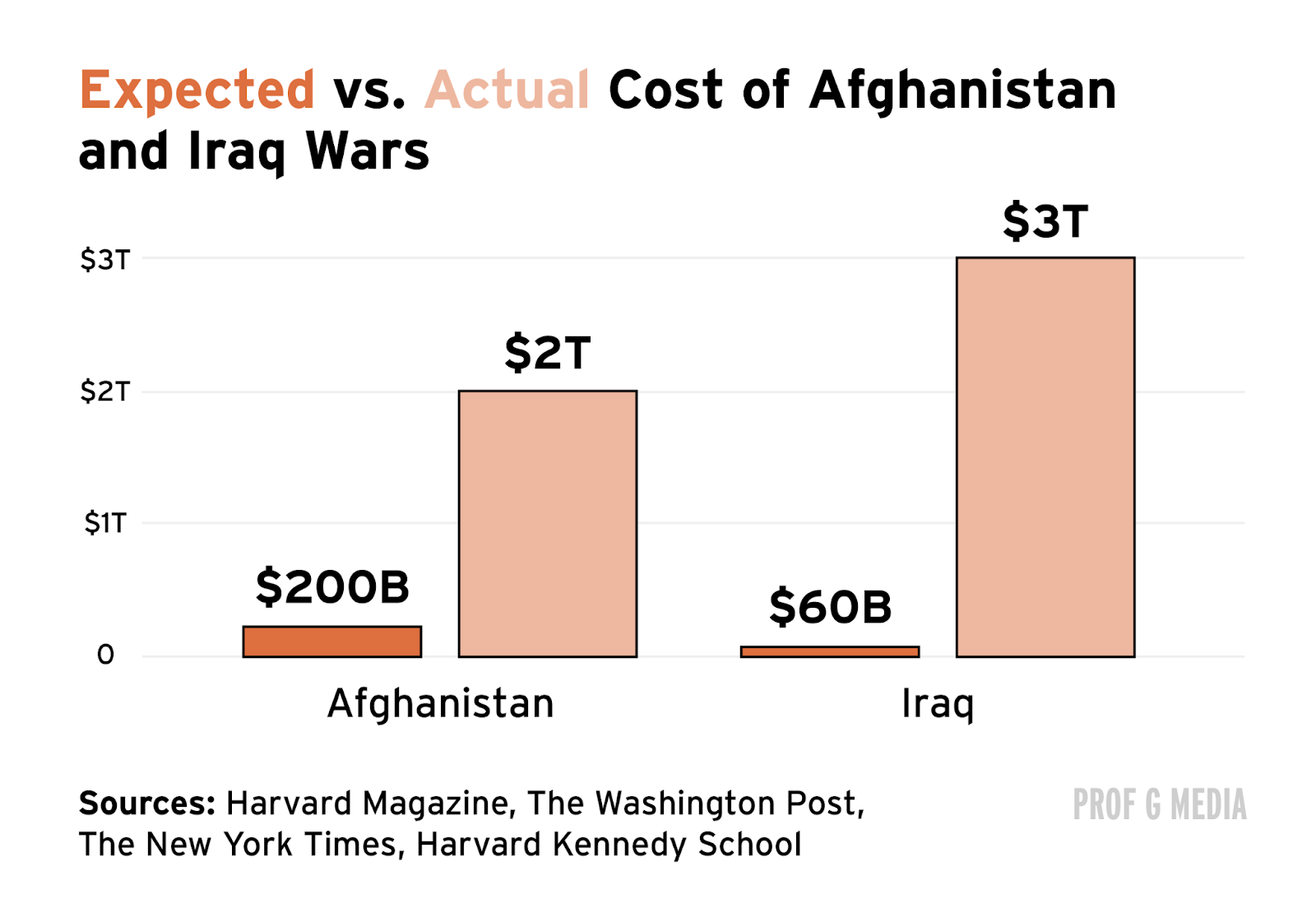
Trump’s message wasn’t just popular — it was also correct. The Iraq war, which Defense Secretary Rumsfeld originally estimated would cost $60 billion and last six weeks, ended up costing $3 trillion and lasting eight years. It also killed roughly 4,500 American troops and almost 200,000 Iraqi civilians. Afghanistan was no different, spanning two decades, costing $2 trillion, and killing nearly a quarter of a million people. In both cases, the strategic outcome was essentially the same: We achieved nothing.
How did the anti-war President become pro-war? Did he change his mind? Was he lying before? The answer isn’t clear, though I’m inclined to believe his position is similar to those of deficit spending, big tech, crypto, and more: He never really had one. And so, ultimately, he landed wherever the wind (money?) blew him.
Are You Sure?
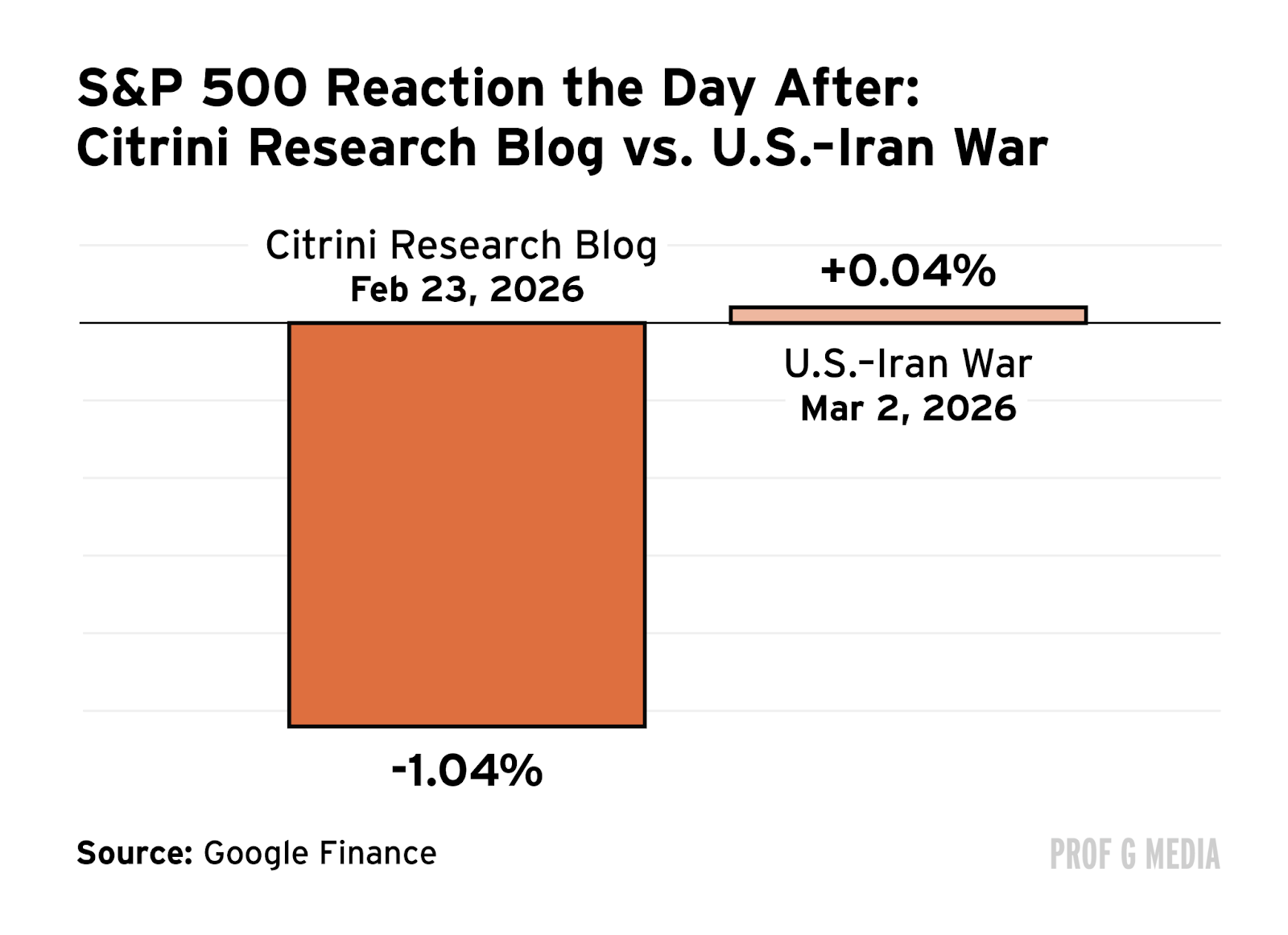
Markets have been temperamental in recent days, but in the immediate aftermath of the strikes, they made their perspective on Iran very clear: not worried at all. While oil prices initially climbed, they didn’t rise as much as many had expected. Meanwhile, gold and treasuries — the safe haven assets that usually rise during military conflicts — actually sold off, and the S&P 500 (the same S&P that had just lost a trillion dollars to a sci-fi blog post) somehow rallied. Last week I asked legendary investor Steve Eisman how the war had changed his investment strategy, if at all. His answer: “Not by a single dollar.”
I couldn’t understand it. While it’s true that wars generally have less impact on markets than you’d think, how could investors be so certain that this would have, essentially, no impact? When I pressed experts on this, I received different flavors of the same answers: that it’s a big deal for Iran, but not really for everyone else. “Why?” I asked. Because supposedly 1) the war is “contained,” 2) it will soon be over, and 3) America can put a stop to it whenever it wants.
That’s when I started to get frustrated. In what world has any of the above been true? Since when has America ever launched a “quick” and “contained” war in the Middle East? Investors seemed unusually optimistic about this whole Iran thing.
What Could Go Wrong
Over the weekend, markets started to get on my wavelength. Stock prices fell; oil prices surged. Perhaps reality was setting in? But then Trump declared the war “complete, pretty much,” and prices normalized again. At that point it became clear to me that the market was genuinely uninterested in entertaining what could go wrong in Iran. They were very happy to ask that question when it came to AI, but for whatever reason, not this.
So, I’ve decided to do it for them. Here’s a list of everything that could go wrong in Iran.
1) Nuclear escalation: If history is any guide, the war in Iran is far from over. That means spending hundreds of billions of more dollars and sacrificing thousands of more lives. I’m not saying this will lead to a nuclear event, but it might. In fact, according to Polymarket, the probability of a nuclear detonation before year’s end (as of last week) was 24%. We could argue that the Polymarket bettors are stupid and misinformed, but that would be quite the reversal from our previous position, which was that the prediction markets are smarter than the experts. In sum: Nuclear warfare is on the table.
2) Non-nuclear escalation: Even if we don’t drop nukes, we could keep dropping bombs — and there’s a very real possibility that other nations could get roped in. China, for example, depends on the Strait of Hormuz for oil more than anyone else. What if they decide to support Iran? Alternatively, what if Russia decides to capitalize on our distractions and launch an offensive on NATO? Or if China does the same, but with Taiwan?
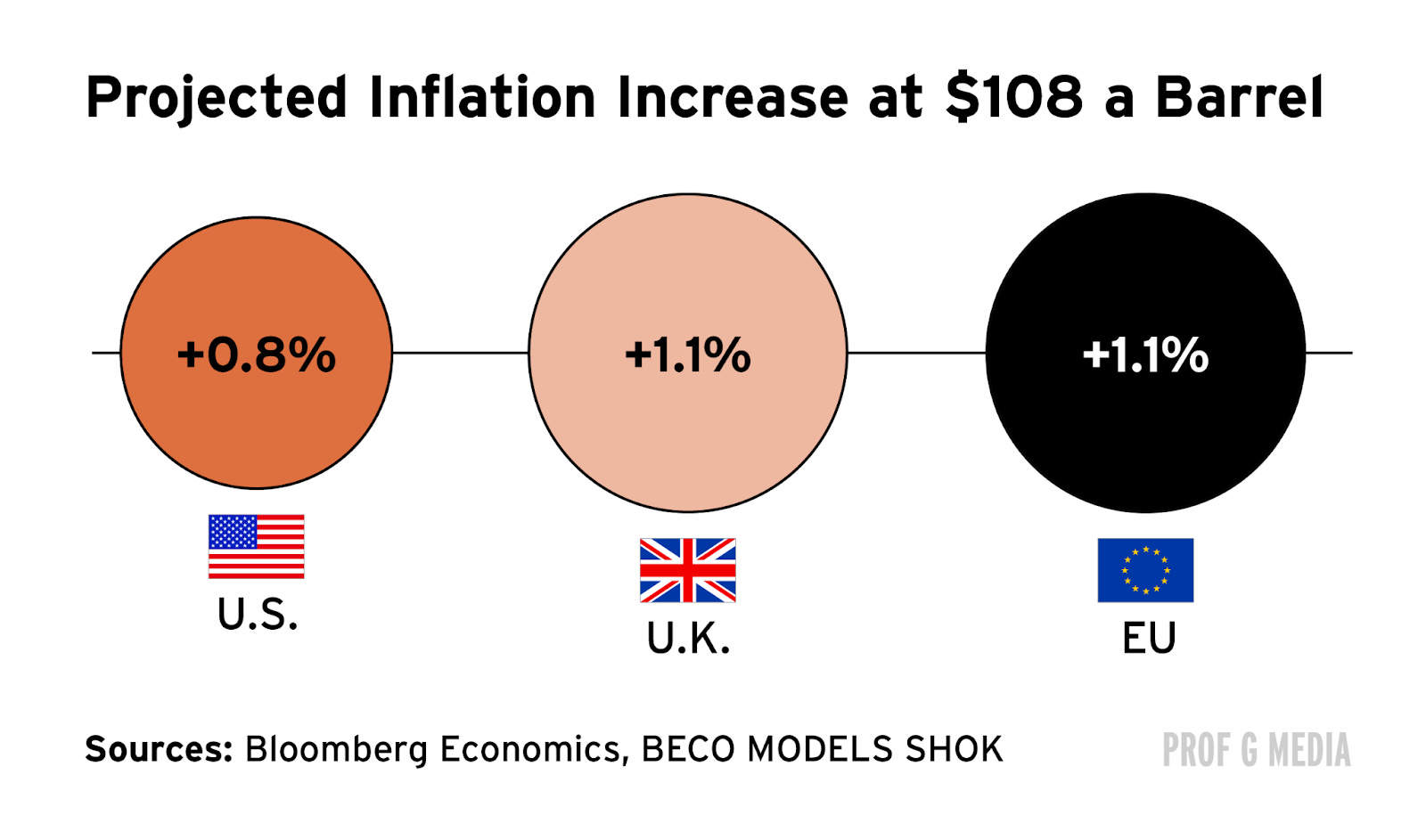
3) Oil crisis: This is the most obvious externality and is already happening. Oil prices have breached $100 per barrel and could easily go higher if Israel and Iran continue to trade blows. This will massively destabilize the U.S. economy, as each $10 increase in per barrel prices results in a 25 cent increase per gallon at the pump. At $108 per barrel, U.S. inflation will rise by nearly a percentage point. If the Fed then decides to raise rates, we will have a potentially stagflationary crisis on our hands as we battle the double-whammy of rising prices and low growth.
4) Cyber warfare: The two oceans that protect us from gunfire offer no reprieve in the world of cyber. Now that we fight battles with autonomous drone networks, it could be argued cyberattacks are worse than bombs. Two days after striking Iran last year, Israel experienced a 700% increase in cyberattacks. Iran has a secret weapon and they’ve demonstrated they’re willing to use it.
5) Refugee crisis: Say we keep bombing their civilians — any thoughts on how many will leave? A 2023 survey found that 93% of the 90 million people who live in Iran have considered emigrating. That was before we blew up their cities, so what’s the number now: a hundred percent? If we were worried about Europe’s refugee crisis (and the right-wing populism it has provoked), we should be a lot more worried now, as a nation larger than Germany might be about to move in.
6) Sovereign investment meltdown: I’m not personally worried about this, but the VCs might be. America’s investment infrastructure has become increasingly dependent on the sovereign wealth of the Gulf states. Last year they poured $70 billion into U.S. companies, the highest ever. They’re also responsible for investments in Anthropic and xAI, and the $2 trillion in “future investment” Trump keeps talking about. If we’re the reason their houses, hotels, and desalination plants are on fire, do we think they’ll keep giving us money?
Lessons From Einstein
I began this post with an Einstein quote that (spoiler) he never actually said. I have no idea how or why it was attributed to Einstein, but it’s still a great quote. We humans do have a tendency to make the same mistakes over and over, and it’s nice to have an adage that calls this behavior out for what it is: insane.
There is, however, another (real) Einstein quote that is also relevant. I stumbled upon it in my friend (role model) Andrew Ross Sorkin’s latest book, 1929. The quote was used to describe our love-hate relationship with financial bubbles, but it could also describe our addiction to foreign wars.
“The ordinary human being does not live long enough to draw any substantial benefit from his own experience. And no one, it seems, can benefit by the experiences of others. Being both a father and teacher, I know we can teach our children nothing … Each must learn its lesson anew.”
— Albert Einstein
Here’s to learning this lesson anew.
See you next week,
Ed
Ed, again, great post. One small correction. Israel assassinated the Iranian leadership. It is illegal for anyone, including the President to assassinate a head of state. This resulted from the Church Committee investigation of CIA activities. 18 U.S.C. § 1116: This U.S. statute criminalizes the killing or attempted killing of foreign officials, official guests, or internationally protected persons.
"Regime Change: It doesn’t work. And yet here we are, trying it again, and expecting different results. The definition of insanity."
Thanks for courage to speak out.