


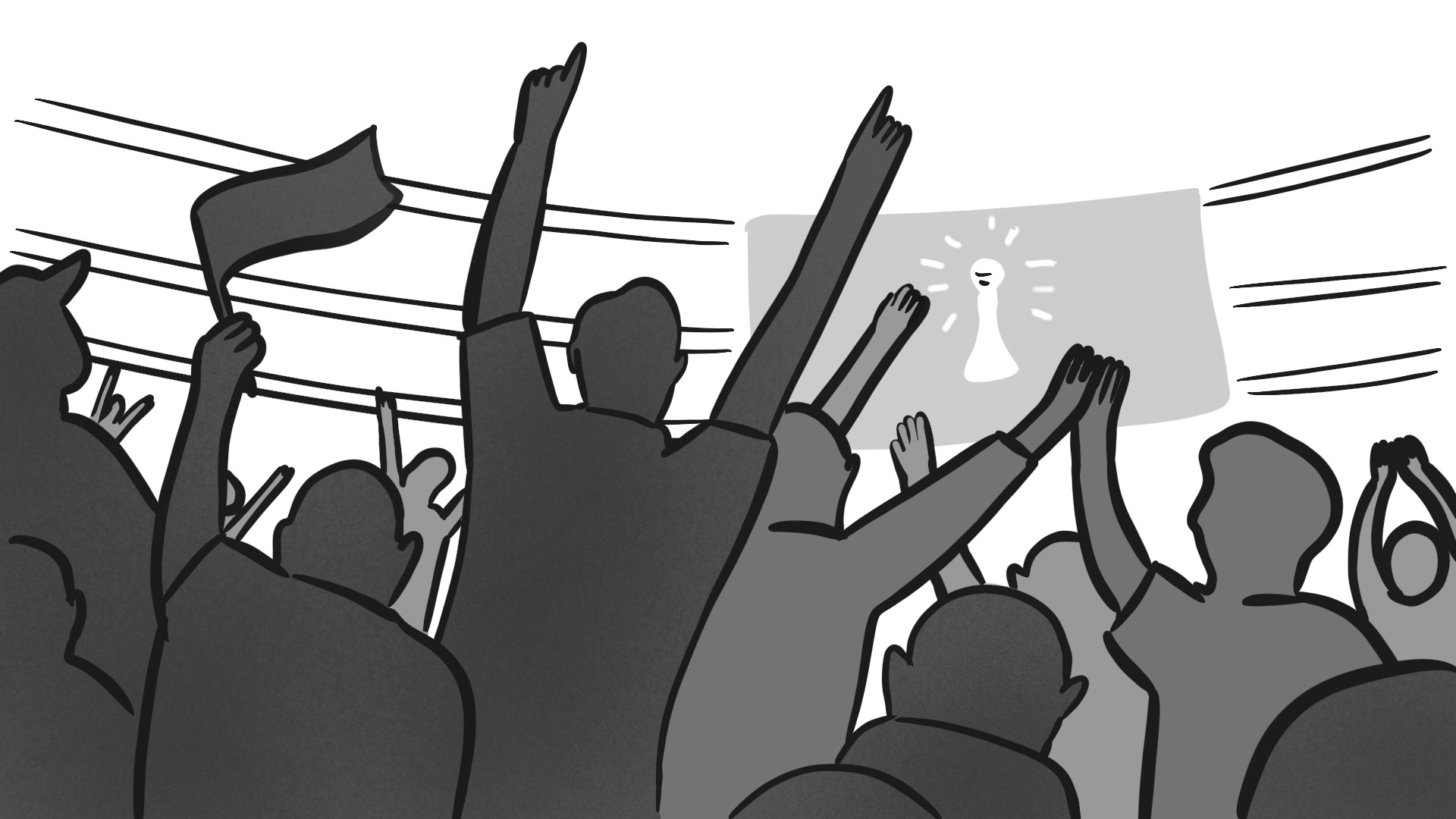
I’ve seen more men embrace during the past two weeks than in the past two years. The beautiful game (football) generates a beautiful by-product … togetherness. The World Cup isn’t an anomaly. The biggest trend of 2026 isn’t AI chatbots, it’s IRL experiences.
Experience Economy
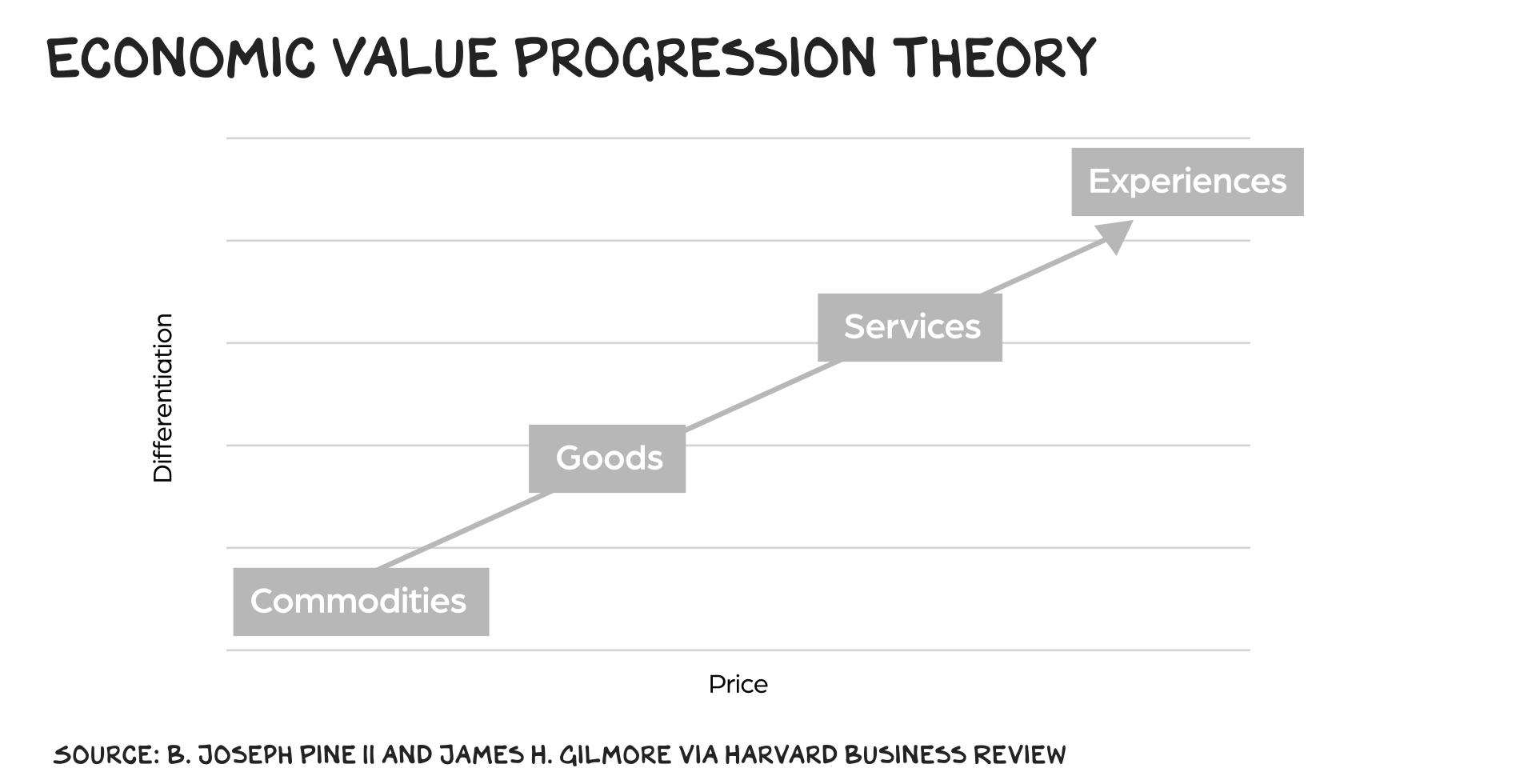
In a 1998 Harvard Business Review article, Joseph Pine and James Gilmore coined the term “experience economy.” Their thesis: Economies progress from extracting commodities to manufacturing goods to delivering services and, ultimately, to staging experiences. With each evolution, value becomes more personalized, immersive, and emotionally resonant. As they wrote, “Commodities are fungible, goods tangible, services intangible, and experiences memorable.” Since 1960, U.S. consumers have increased their share of discretionary spending devoted to experiences by 60%, while the share devoted to goods has fallen by 35%.
Pendulum
Writing the same year Google was founded, Pine and Gilmore couldn’t have anticipated a society atomized by smartphones and social media. Digital technologies, supercharged by pandemic-era social distancing measures, rendered in-person experiences scarce, i.e., more valuable. In 2021, as the world began to lift Covid restrictions, consumers embraced “revenge travel.” The following year, a spokesperson for the American Society of Travel Advisors told CNN, “It’s another way of saying, ‘Life is short. I want to explore the world and seek experiences that make me feel alive.’” The YOLO attitude persists, especially among young people. A 2026 American Express report found that 74% of millennials and Zoomers consider travel nonnegotiable, while two-thirds said they would take a job with fewer benefits if it gave them more flexibility to travel. That says a lot about the value young people place on experiences, but it also suggests that young people are spending money on what they can (experiences), as opposed to saving for purchases that are increasingly out of reach (homes).
It took significantly longer for the pendulum to swing in the other direction with respect to digital technology. Only in recent years have schools begun restricting smartphone use. In 2025, Australia became the first country to ban social media for anyone under 16; this year, another 13 countries are taking similar steps. The side effects of the digital revolution act as an accelerant to the trend Pine and Gilmore first identified in the 1990s. According to a 2026 Mastercard survey of 27,000 European consumers, 60% prioritize offline experiences to “balance out” time spent online. According to a 2026 McKinsey report, consumers are prioritizing experiences that make them feel connected, relaxed, or excited, and those feelings often “translate to a desire to splurge.” But in a K-shaped economy, splurging is relative. The same McKinsey report found that the “prolonged cost-of-living squeeze” has led more than three-quarters of consumers to engage in trade-down behavior. This has significant consequences for the loneliness epidemic, as live experiences tap into the hardwiring that drives us to seek out and sustain relationships. Digital experiences are low-cost, low-friction. By comparison, IRL experiences are high-friction, but to the extent that they’re also high-cost, the antidote for loneliness is sequestered to those who can afford it.
Theaters and Live Entertainment
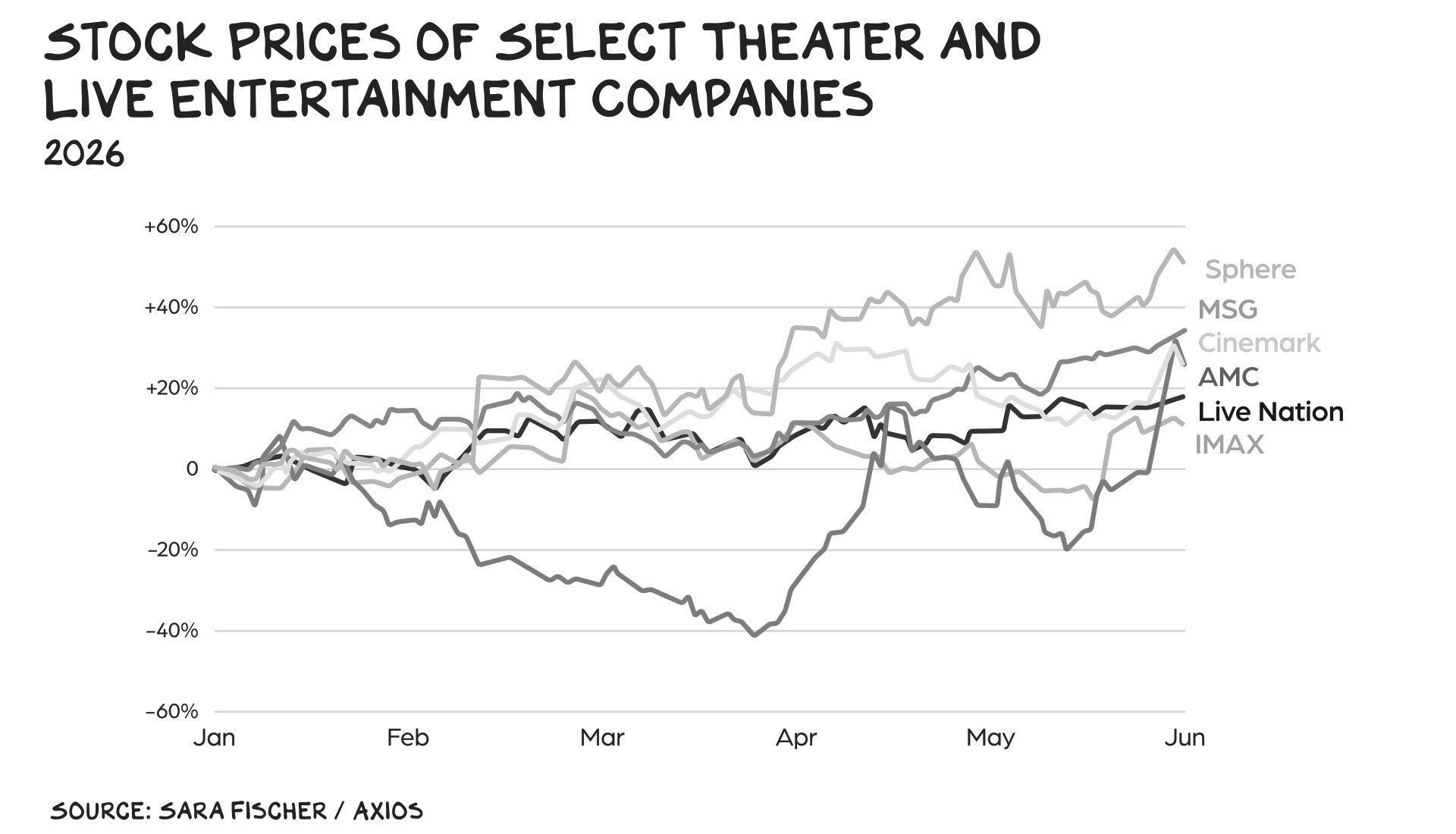
In January, after investing in a live events company that produces themed music shows, Mark Cuban said, “It’s time we all got off our asses, left the house, and had fun. In an AI world, what you do is far more important than what you prompt.” Hard agreement. Also, the amount of time you spend at home is inversely correlated to your success, professionally and romantically. As it happens, out-of-home entertainment is booming. “Real-world experiences are the hottest premium on Wall Street right now,” Axios media correspondent Sara Fischer recently told me. “Streaming is plateauing — that’s why we’re seeing bundling and price hikes. Where’s the growth? It’s in live experiences.”
Case in point: It’s turning out to be a strong summer at the movies, with this year’s domestic box office on pace to earn $10 billion — the highest total since the pandemic, and only 10% off the pre-pandemic peak. Inflation is one factor, but the bigger driver is increased attendance: The average ticket price rose 3% YoY, while total ticket sales rose 7% YoY. It helps that Hollywood has produced a strong slate, including two acclaimed low-budget horror films — Backrooms and Obsession — directed by YouTubers. According to a Fandango report, young people view moviegoing as an affordable social experience. In 2025, Zoomers and millennials saw an average of seven movies in theaters — more than any other generational cohort. For young people the “social experience really outweighs the movie itself,” an AMC executive told CNBC, adding that Zoomers are becoming the most important audience segment for exhibitors.
It’s a similar story for the live concert business, albeit with a monopolistic twist. Live Nation and its Ticketmaster subsidiary reported an 11% YoY increase in ticket sales. The combined entity, which a jury found guilty of violating federal antitrust laws in April, controls 70% to 80% of ticketing for major U.S. concert venues. As a 2025 Goldman Sachs report cautioned, demand for live music is expected to grow by 7% annually until 2030, but the 76% rise in ticket revenue between 2019 and 2024 was largely fueled by a 50% rise in the average ticket price over the same period. Translation: Fans at the low end of the market are being priced out.
Pricing Goals
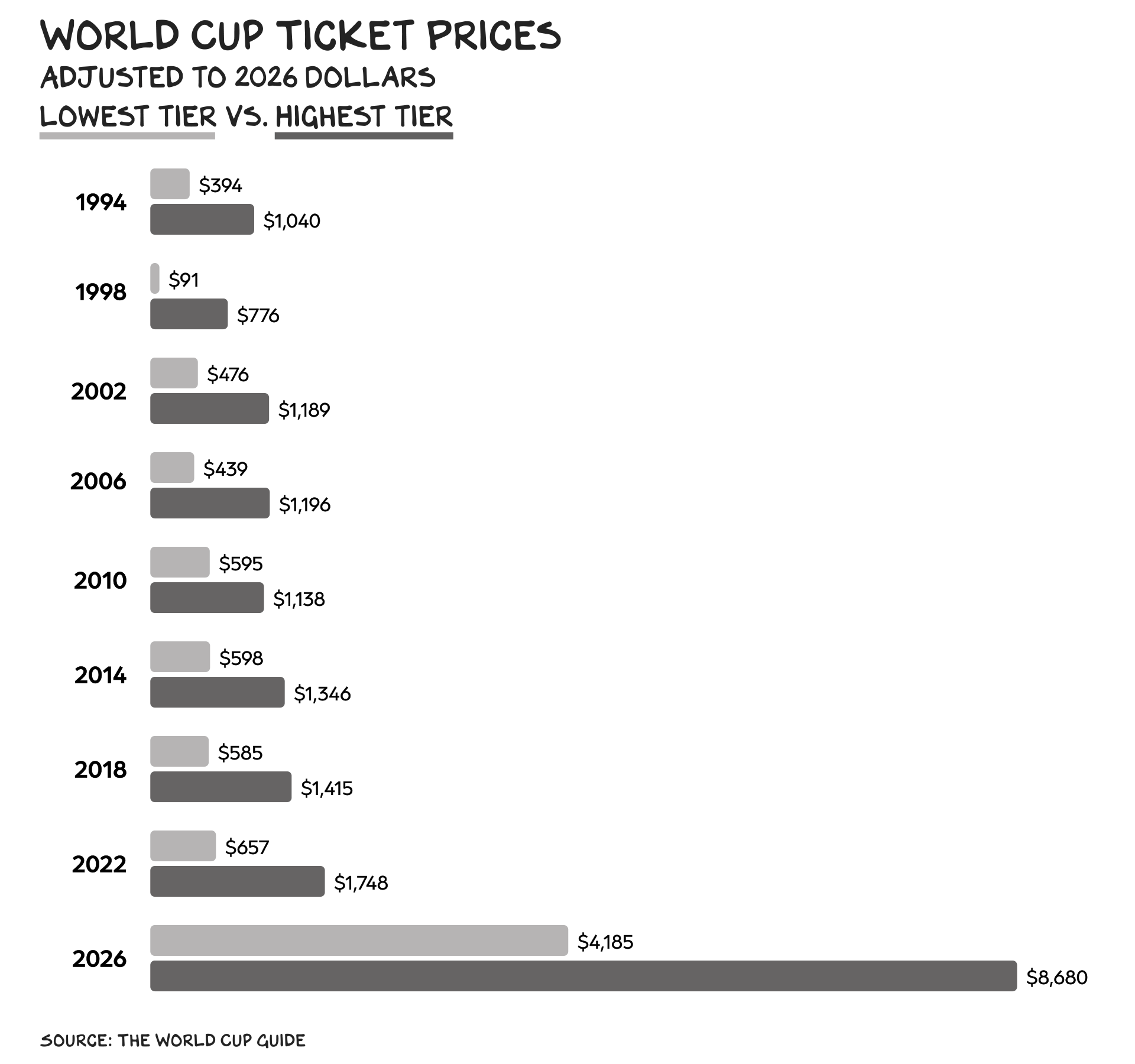
An estimated 6 billion people are watching the World Cup, in one form or another, making this year’s tournament FIFA’s most popular and economically impactful to date. According to Bloomberg Intelligence, the tournament could drive $9 billion in revenue for FIFA and another $80 billion in global sales across tourism, hospitality, retail, advertising, and consumer goods. As New Jersey Governor Phil Murphy put it in 2023 while bidding to host the final match, each World Cup game is equivalent to a Super Bowl. But, like the Super Bowl, where the average ticket price last year was $8,200, seeing a World Cup game in person is an experience the overwhelming majority of fans can’t access. As a Scotland fan told the Wall Street Journal, “FIFA’s taken it away from the ordinary fan, and are selling it to the highest bidder.” For its part, the Wall Street Journal wrote that FIFA’s dynamic pricing model and service fee on ticket resales has “unleashed a summer of price gouging.”
United Nations of Fun
Soccer has been the sport of the future since the 1970s, but in America that future never arrived. My (casual) fandom is a function of my sons’ passion for the game, and the value I take from it is the experience we share. My team is Scotland — that’s a nod to my father, who was born in Glasgow. I can afford tickets, but I don’t want my sons to conflate access to the experience with membership in a community. Hint: The latter is orders of magnitude more valuable. As my Markets co-host Ed Elson, a diehard football fan, wrote, “Many of my greatest football memories have happened in front of a screen — sometimes at the pub, other times in a living room, but always in the company of other fans, aka a community.”
What’s unique about the World Cup is that, more than any other sport, it does what the UN can’t — unify people and nations around a common pursuit. Coming in, there was real concern that America would export its political dysfunction. To a degree it has — fans and support staff from 11 of the 48 countries that qualified for the World Cup have encountered visa refusal rates above 40%. Zooming out, the story improves, as the matches feature fans coming together to transcend the politics of division.
My World Cup highlight reel:
Norway supporters doing the ‘ro,’ a coordinated Viking-style rowing movement set to a beating drum.
Japanese fans going viral cleaning the stadium after their team defeated Tunisia. The practice, known as gomi hiroi, reflects an emphasis on taking responsibility for shared spaces; for a world that lives the tragedy of the commons daily, online and IRL, there’s a lesson there.
And, of course, Scotland’s Tartan Army, which has drained Boston of beer, won over the locals by cheering on the Red Sox at Fenway, and raised $30,000 for local charities in Rhode Island, where many are staying. In the words of my (father’s) people: No Scotland, no party.
Meanwhile, fans from all over the world are going viral for posting videos that — wait for it — celebrate America. People who have good reason to be angry with America are instead embracing Americans. Finally, there’s Iran’s national team. After playing two games at SoFi Stadium in Los Angeles, they left a thank you note in the locker room. “We came to Los Angeles with pride, competed with honor, and leave with dignity. Thank you, Los Angeles, for your hospitality.”
Mascul-unity
In the U.S., soccer skews young and male — 56% of fans are under 34 and two-thirds are men. Participating in or watching sports plays an outsized role in male friendships.
The prevailing (dark) definition of masculinity in America involves dominance, cruelty, and an inability to show emotions other than rage. Soccer isn’t our game, but it offers an alternative view of masculinity, where players demonstrate strength, service, cooperation, emotion, and devotion to one another, their country, and the game. What I want my sons to take from the beautiful game isn’t a love of Scotland — it’s permission. Permission to feel emotions, hug friends, and find common ground with people they may not have much in common with. The men we’ve watched the past two weeks aren’t exceptions to Western masculinity. They’re the correction.
And … go Scotland!
Update: Go England! ;-)
Life is so rich,

P.S.
At the start of every year, I make predictions. This year, I’m doing a mid-year check-in and adding some new prognostications for the rest of 2026. Join me live on Substack on Tuesday, June 30, at 3 p.m. ET. The livestream is exclusive to paid subscribers. Register here. And if you aren’t a paid subscriber, but want in, upgrade here.
Nice to read a Galloway article where America doesn’t suck
Wow, a whole column without blaming Trump for the state of disrepair in the world, and consequently, the first column I 've read uninterrrupted like I used to, before you got infected by TDS. (a byproduct of hanging out with Kara too much). Beautiful piece, Professor. thank you. but for the love God, spell it right: futbol.